

What Did This Reroof Project Actually Involve?
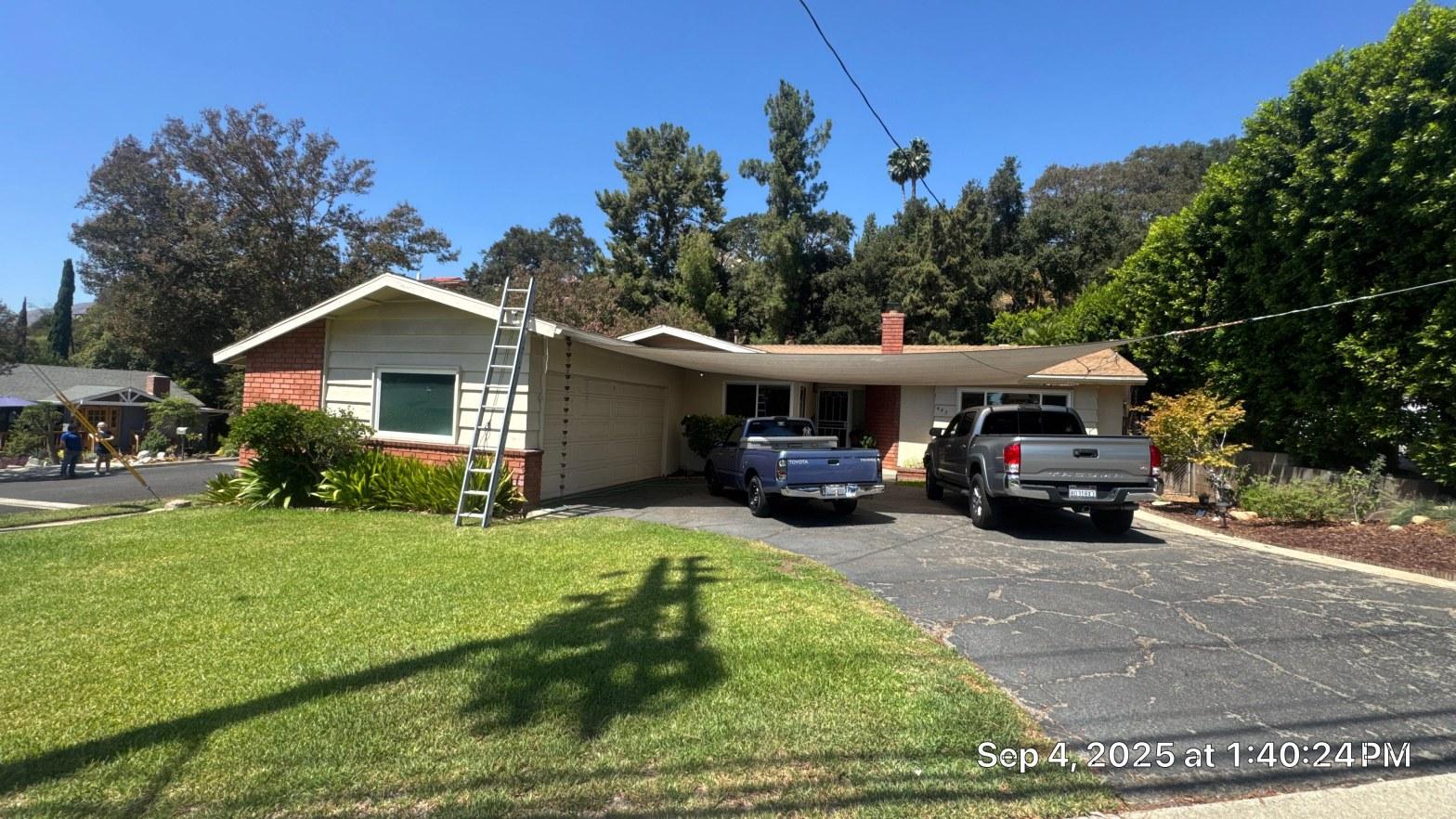
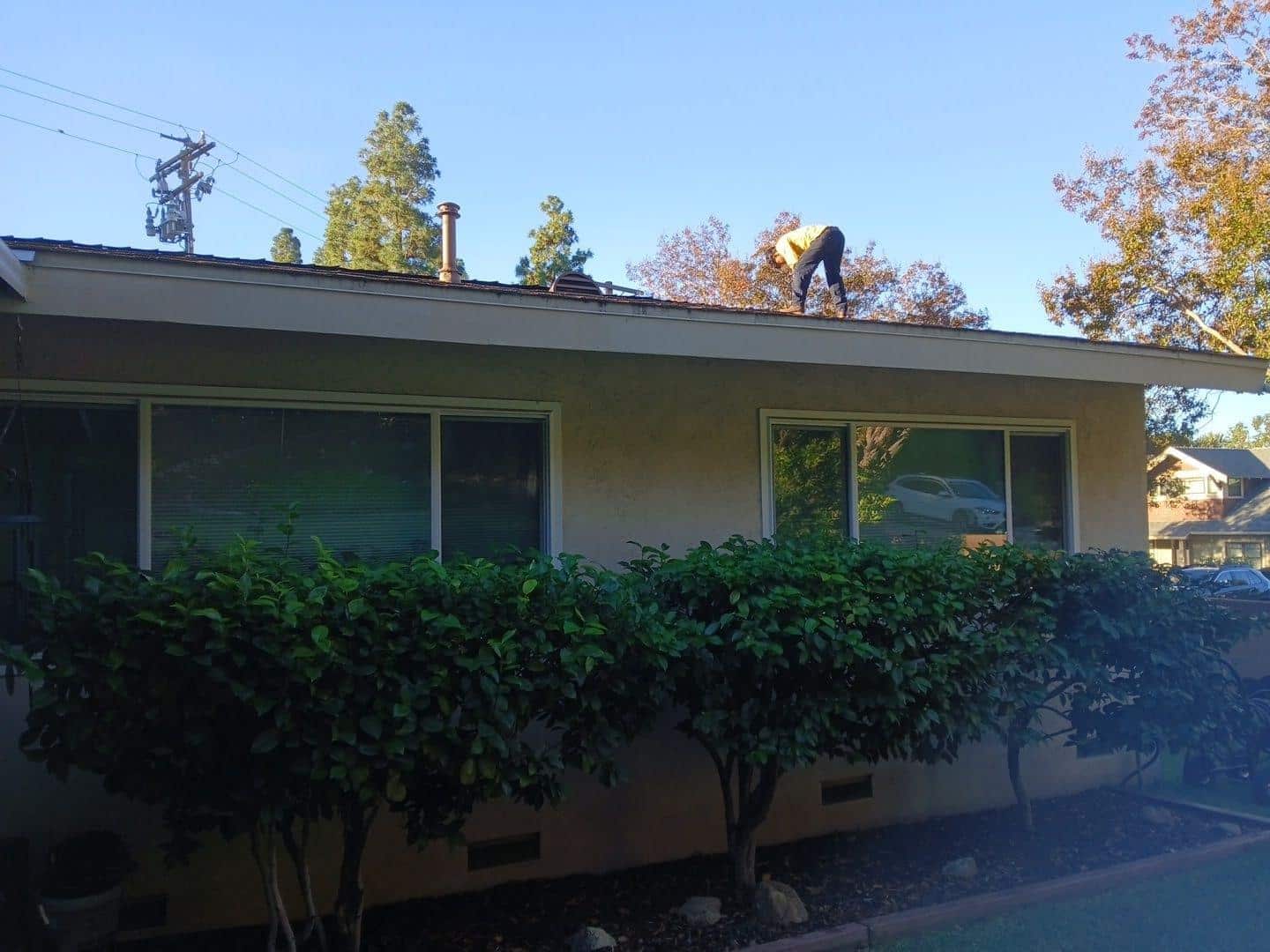
This was a complete tear-off reroof on a single-family home in Los Angeles County, not a layover. Every layer of old shingles came off, the wood decking was inspected board by board, and a full new system went down from scratch. The homeowner’s primary goal was straightforward: stop recurring leak problems at the vent penetrations and get a roof with a real manufacturer-backed lifespan, not another temporary patch.
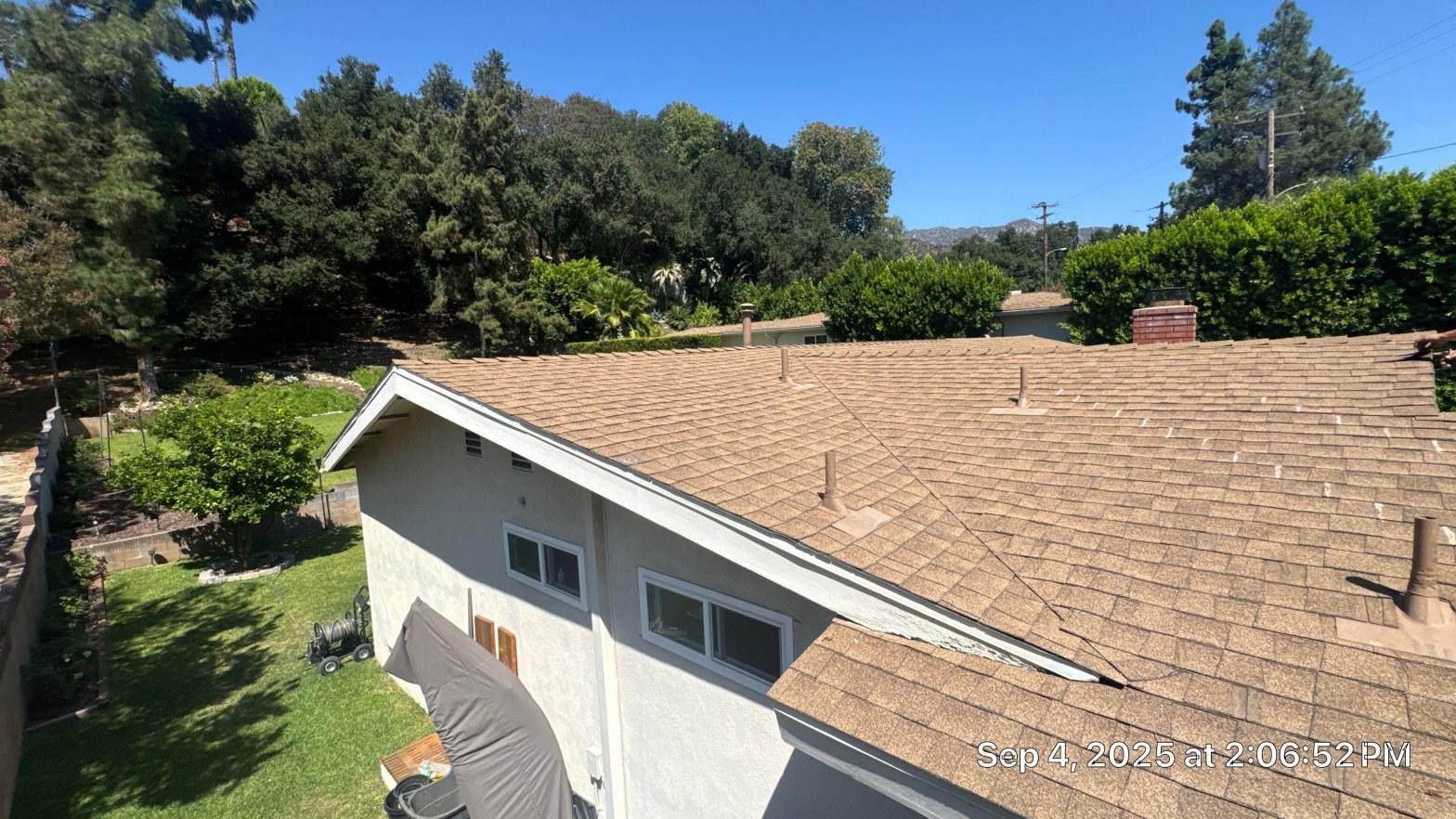
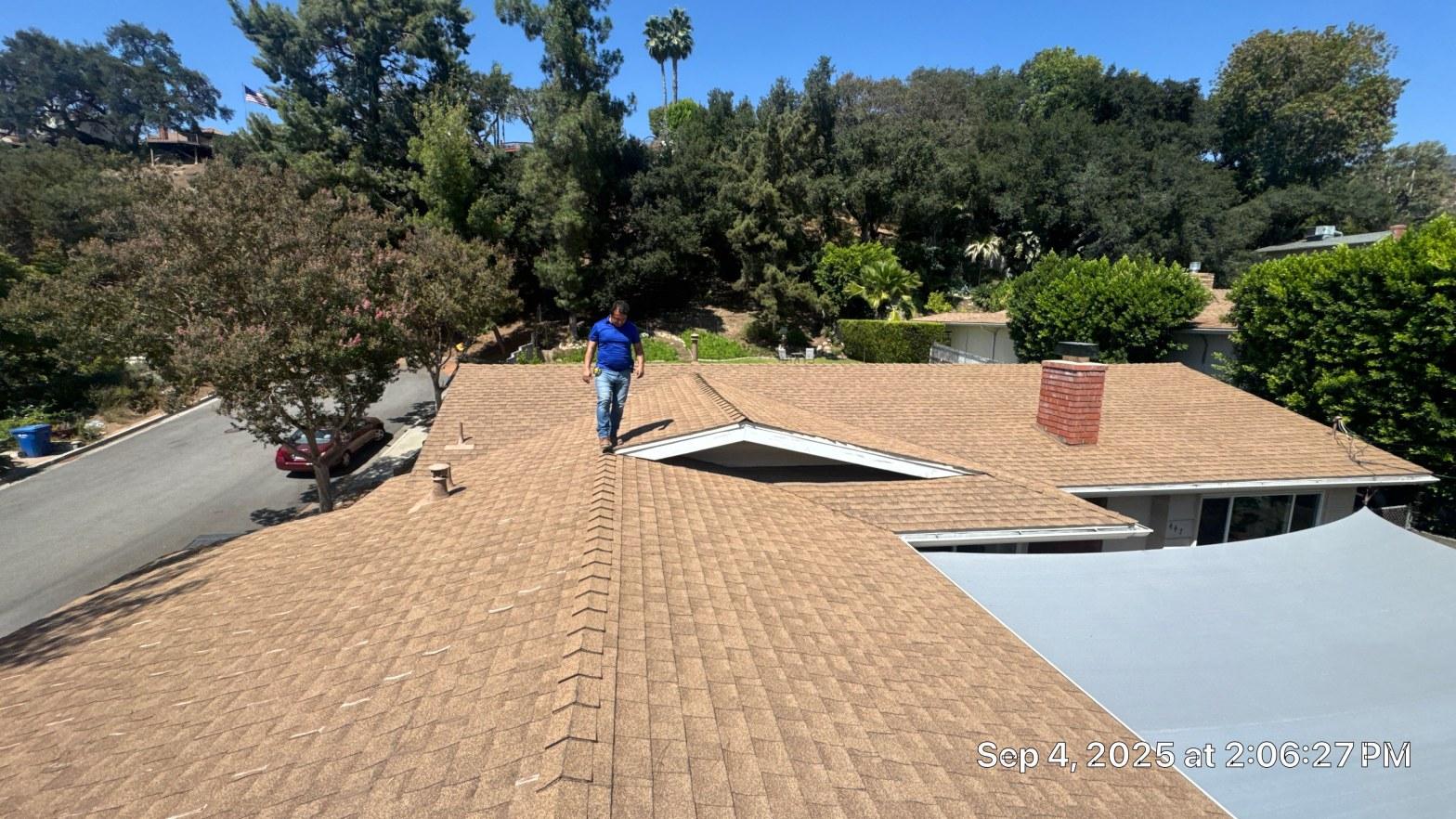
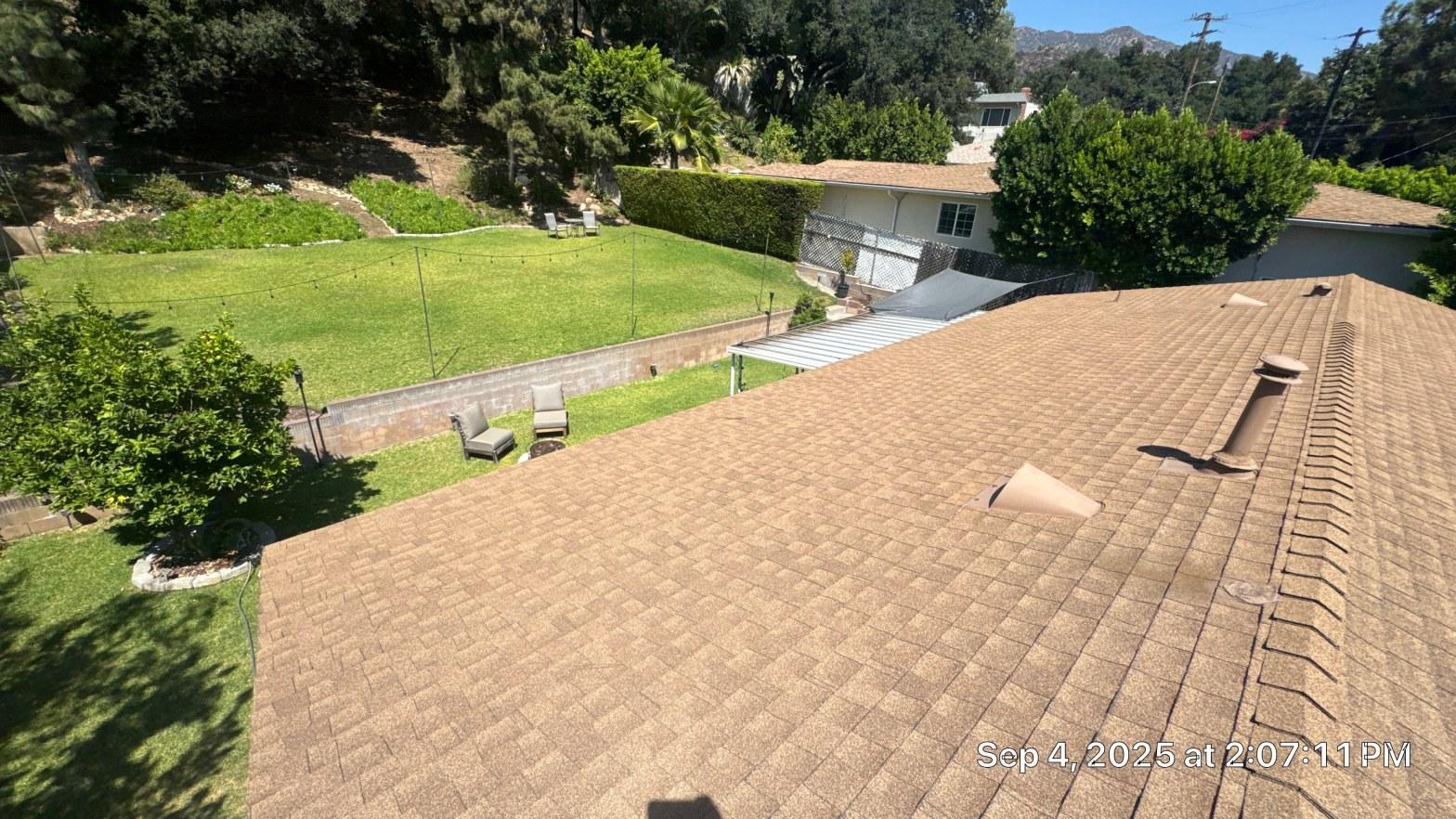
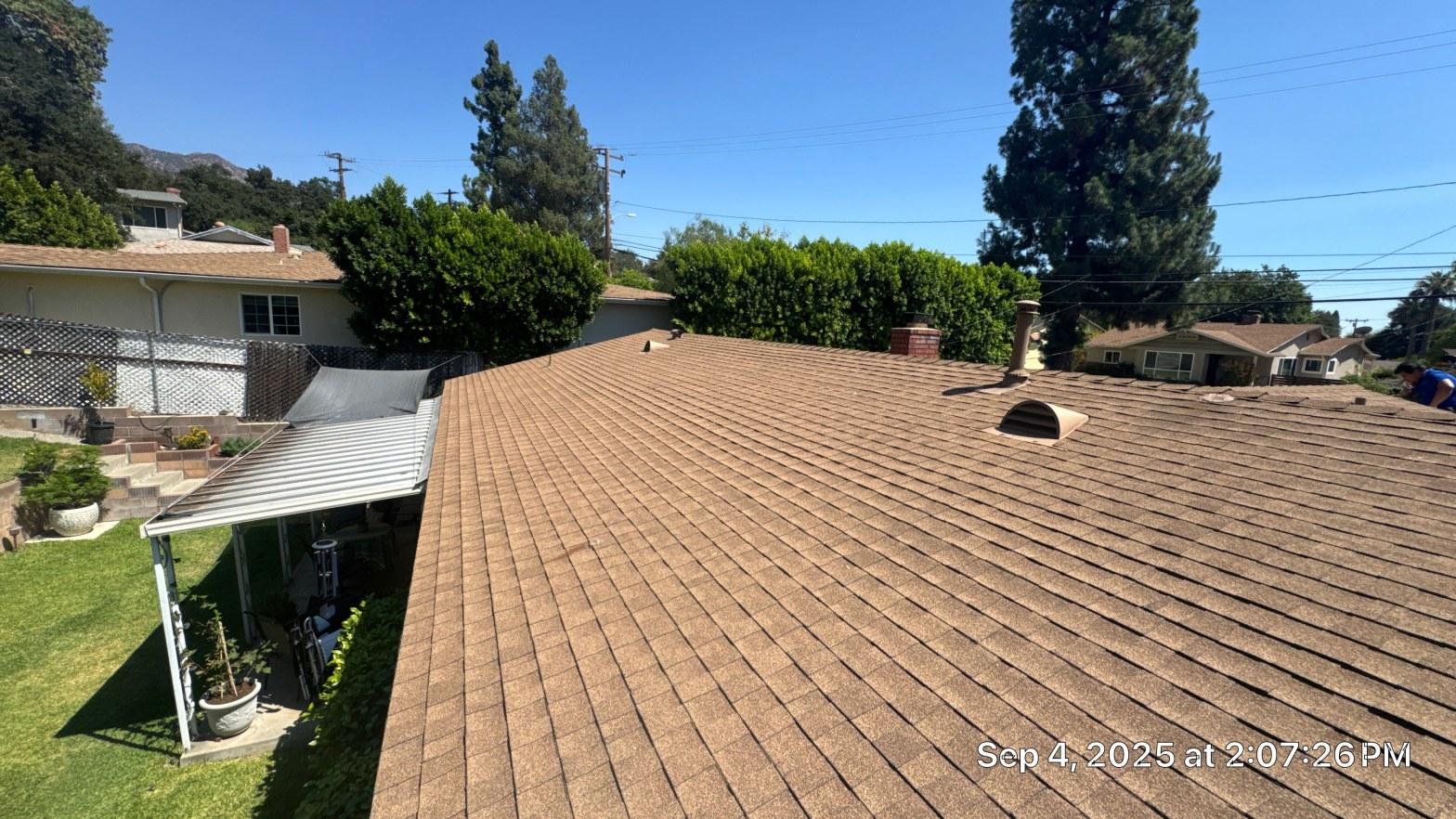
The home is a one-and-a-half-story structure with a moderately pitched multi-plane roof, the kind common to mid-century suburban neighborhoods across the San Gabriel Valley. Several pipe vents penetrated the field of the roof, and the original pipe boot flashings had cracked and separated, which is one of the most common entry points for water in Southern California. Daytime temperatures in the region routinely reach the upper 80s to low 100s Fahrenheit from June through September, which accelerates neoprene boot degradation significantly. According to the National Weather Service, inland Los Angeles County averages more than 280 sunny days per year, meaning UV exposure alone puts consistent stress on rooftop rubber components.
Project Gallery




What Did We Find When We Stripped the Old Shingles?
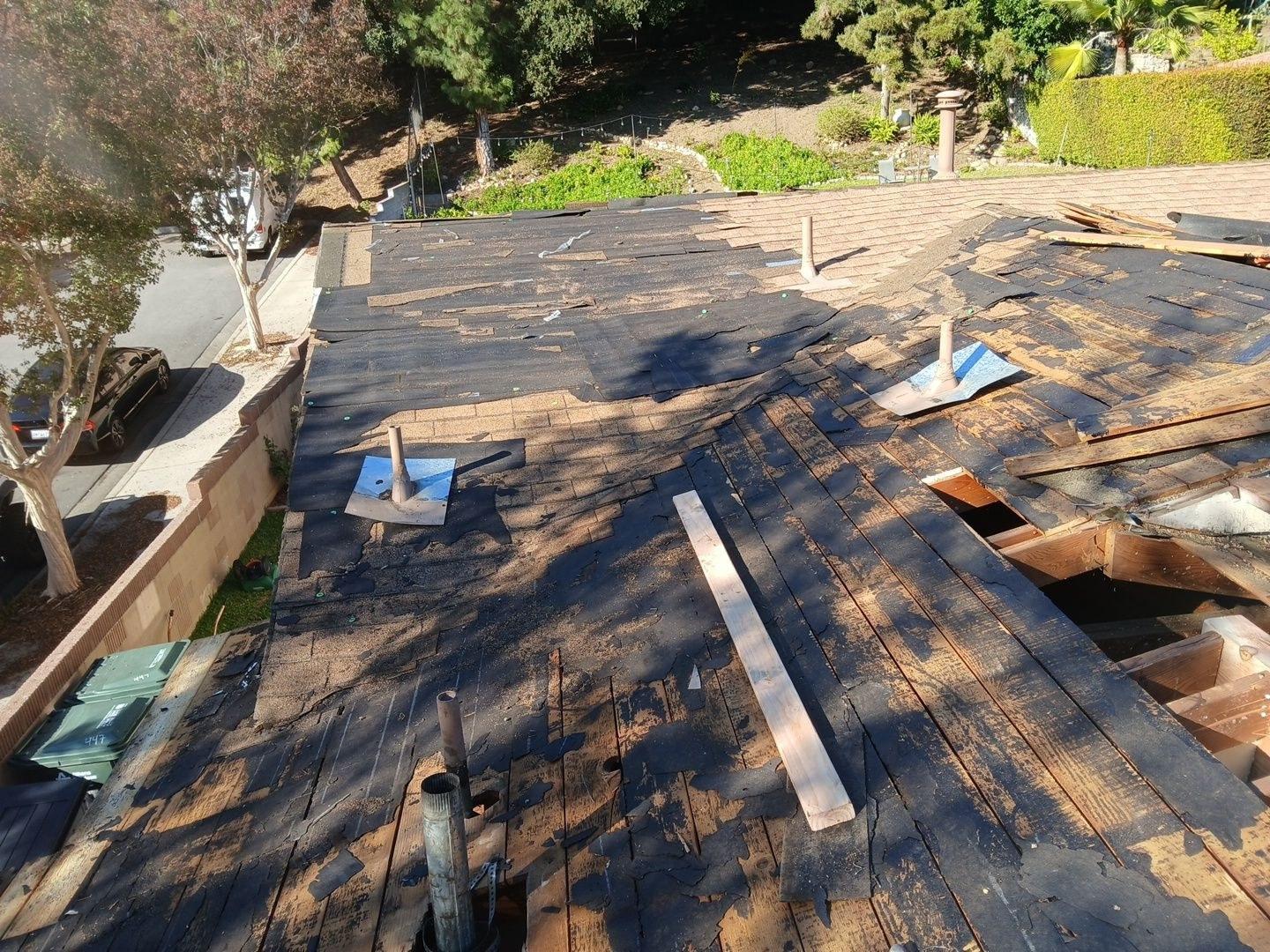
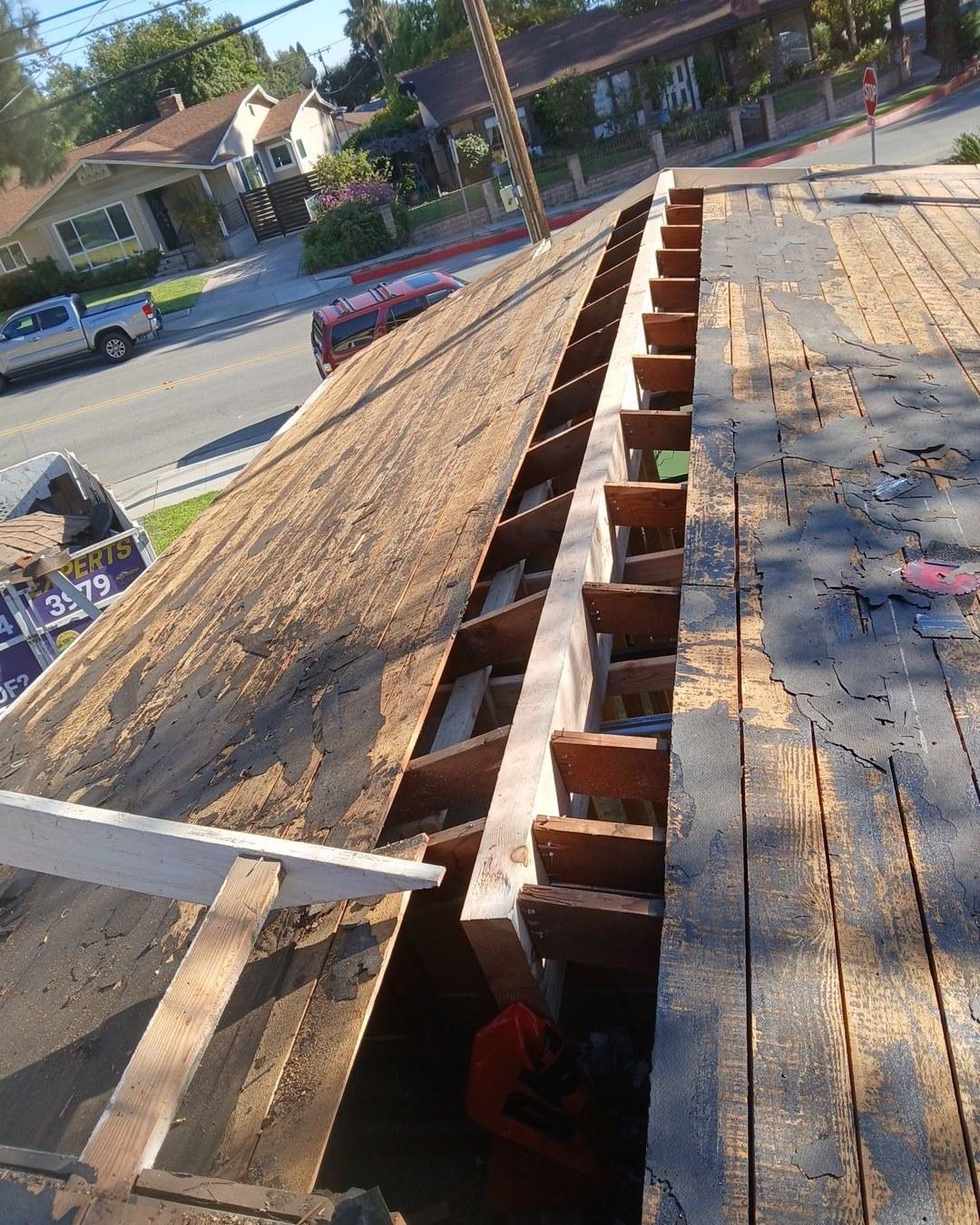
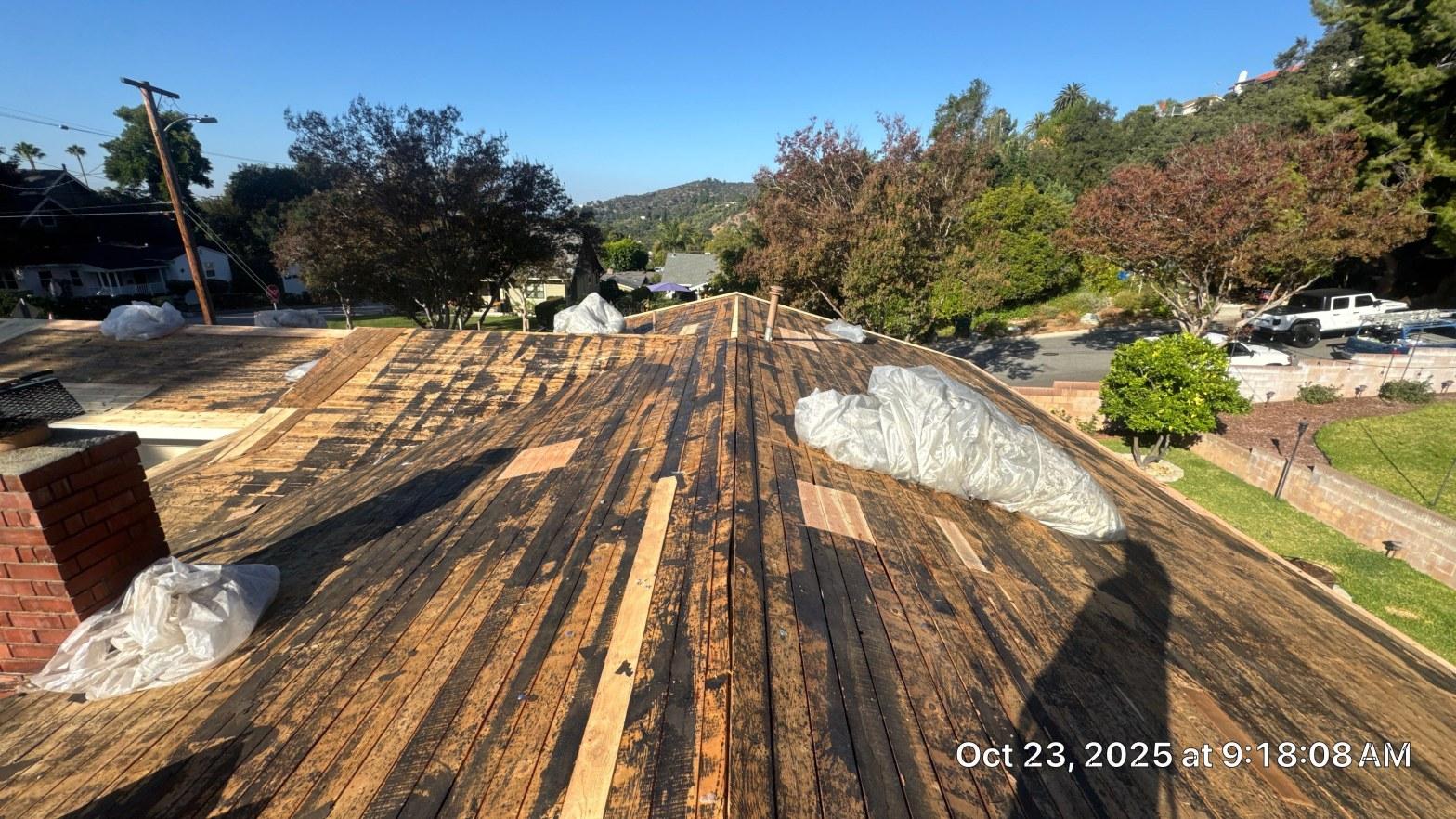
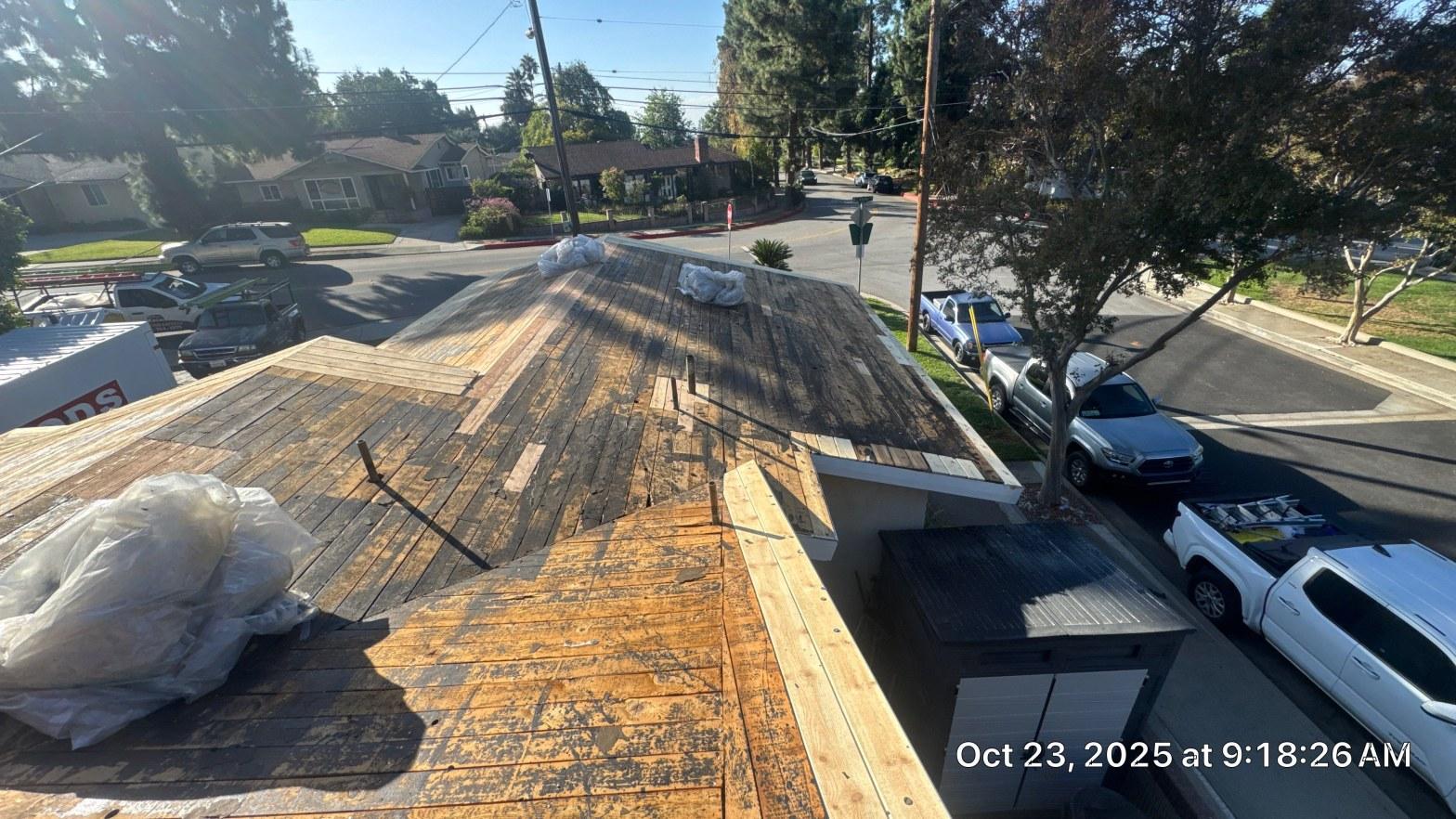
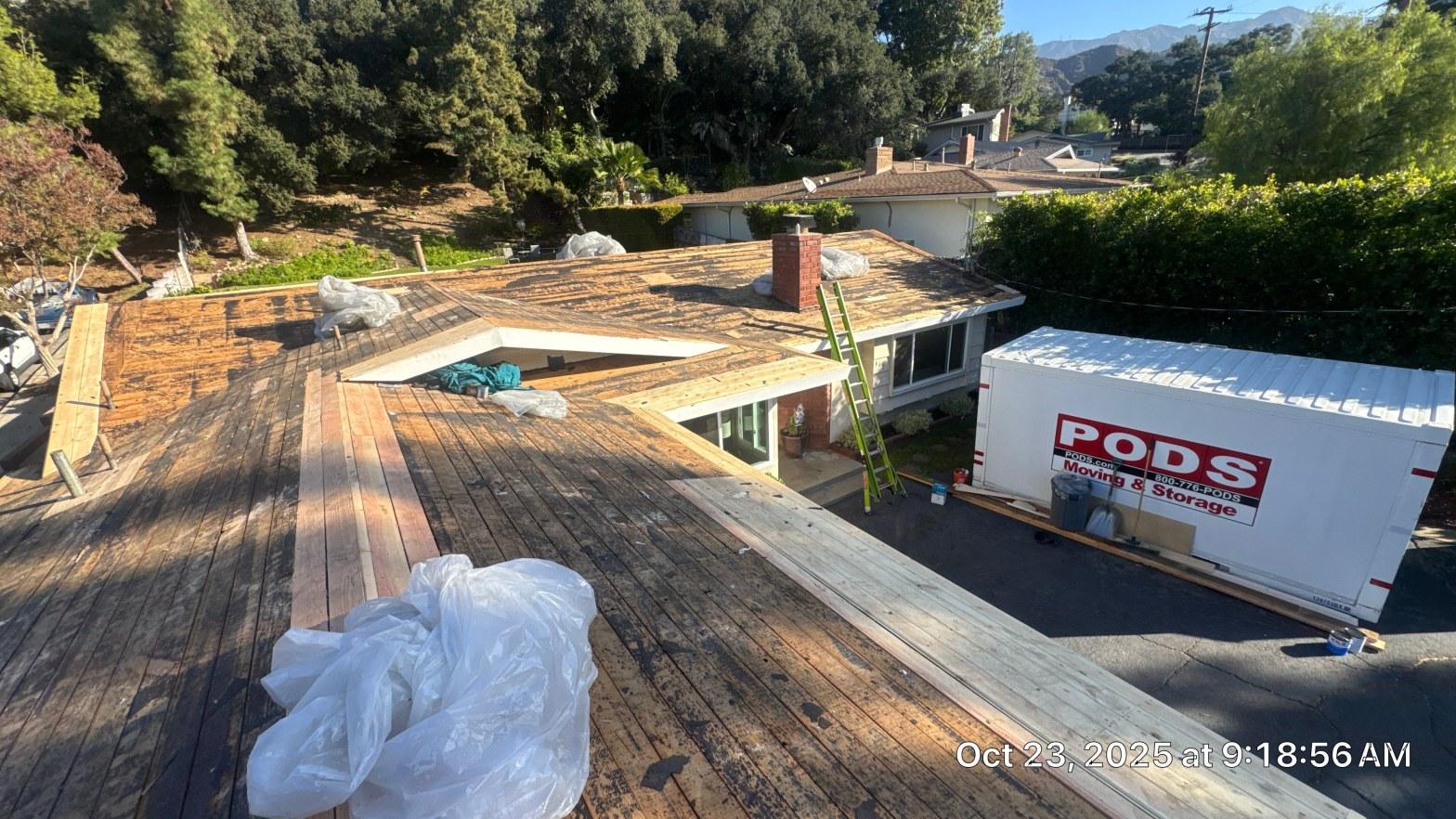
Stripping the old surface revealed aged board-and-batten wood decking with visible checking, cracking, and at least two areas of soft wood that required new sheathing before any underlayment could go down. The condition was typical for a roof that had been re-covered at least once without a proper tear-off.
As the photo below shows, once the shingles and felt were pulled back, the decking told the whole story. Dark staining ran along several board seams near the pipe vent locations, confirming that water had been tracking under the old boots for a long time. The existing metal pipe flashings themselves were original to the home, likely installed decades ago, and the collars had corroded through at the base.
Rot like this rarely shows from the ground; it only comes into view once the old roofing is stripped, which is why a full tear-off matters on a roof this age. Skipping the tear-off saves a day of labor on the front end but typically results in premature failure and the same water intrusion problems within 5 to 8 years.
As of 2024, the California Residential Code limits asphalt shingle roofs to a maximum of two layers before a full tear-off is required, so many older homes in the region are already at that threshold.
How Were the Pipe Boots and Ventilation Handled?
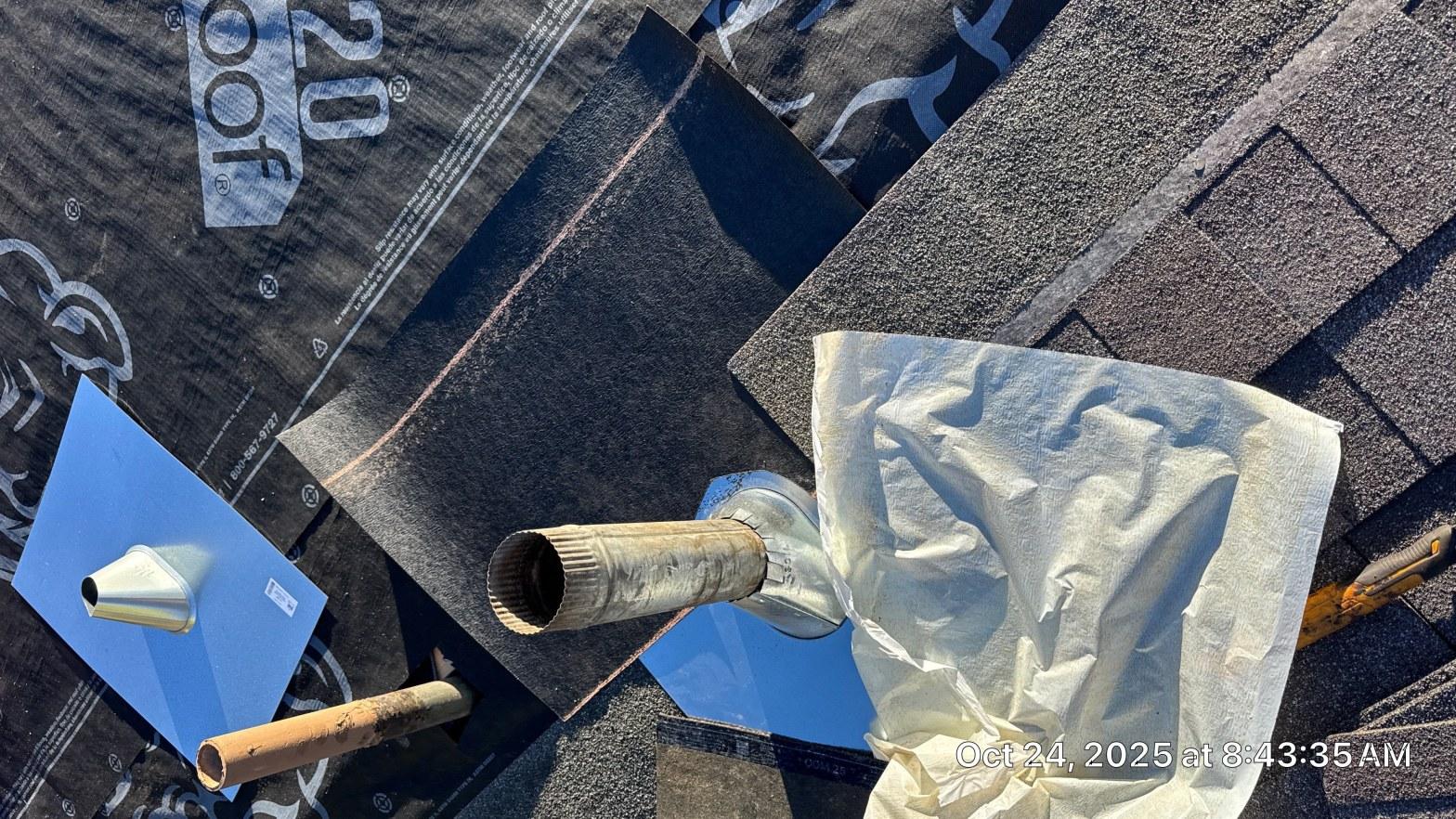
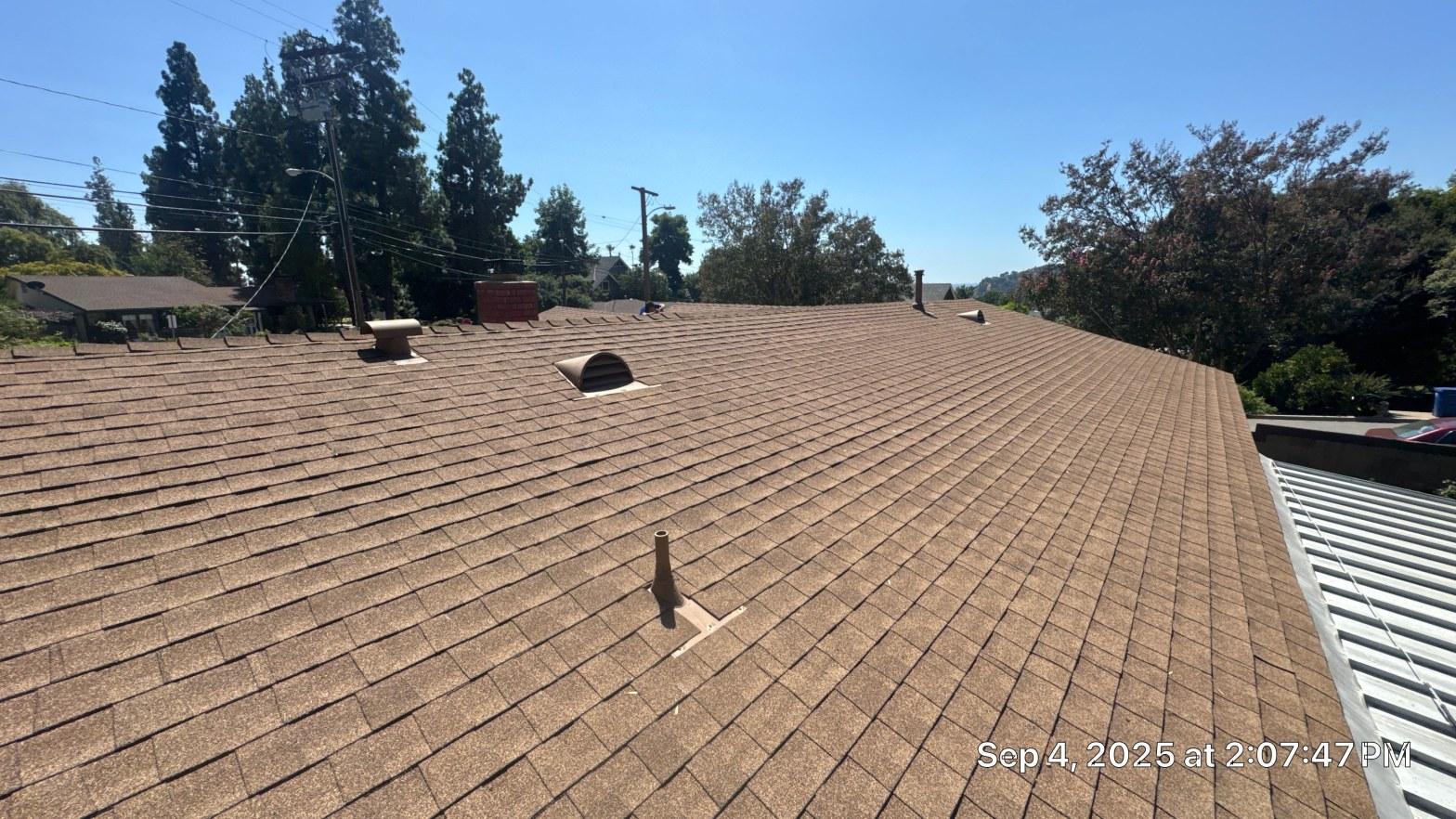
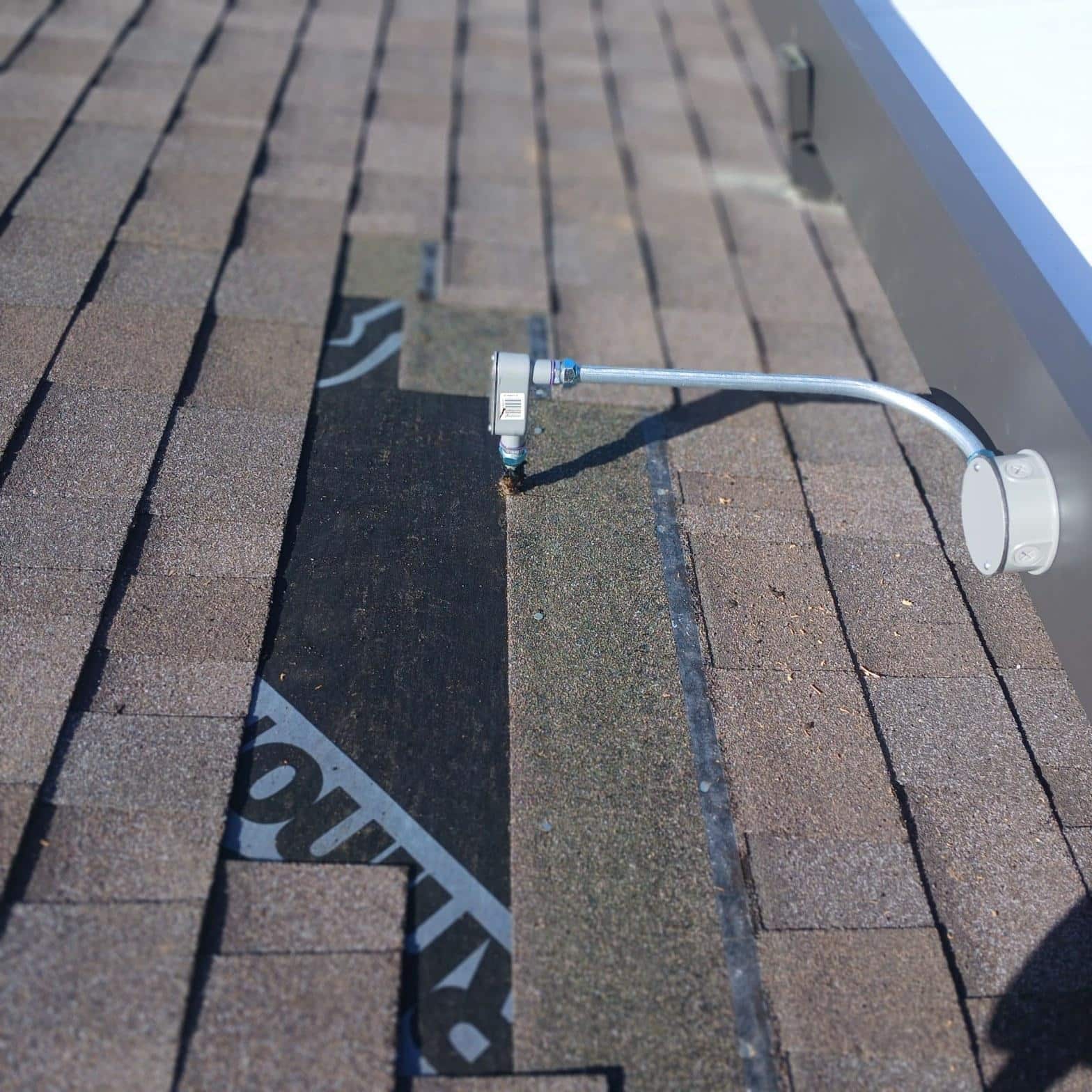
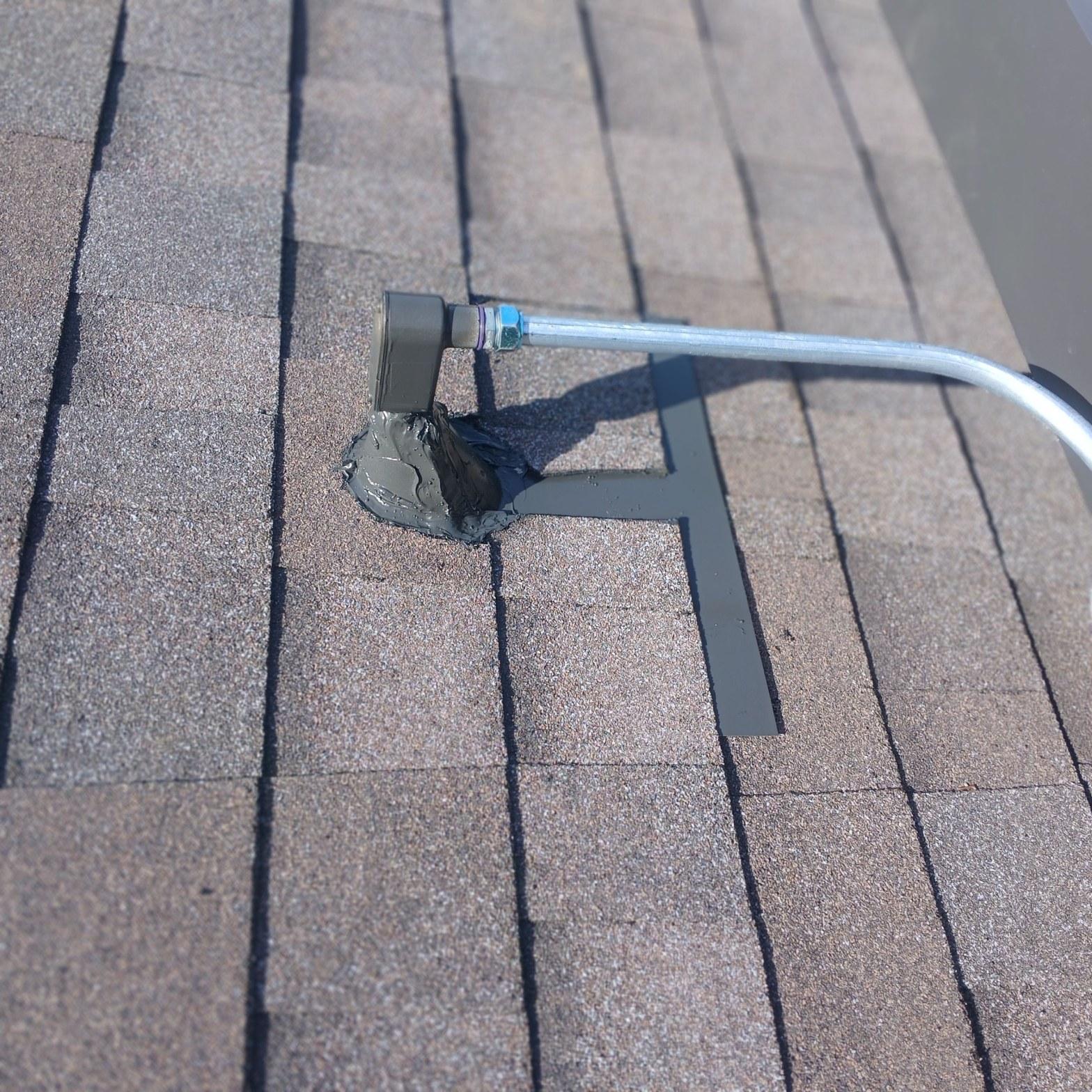
Every pipe penetration received a new pipe boot flashing, set over fresh underlayment and woven into the surrounding shingle courses so water sheds away from the collar on all four sides. No sealant-only repairs, no reuse of the corroded original metal flanges.
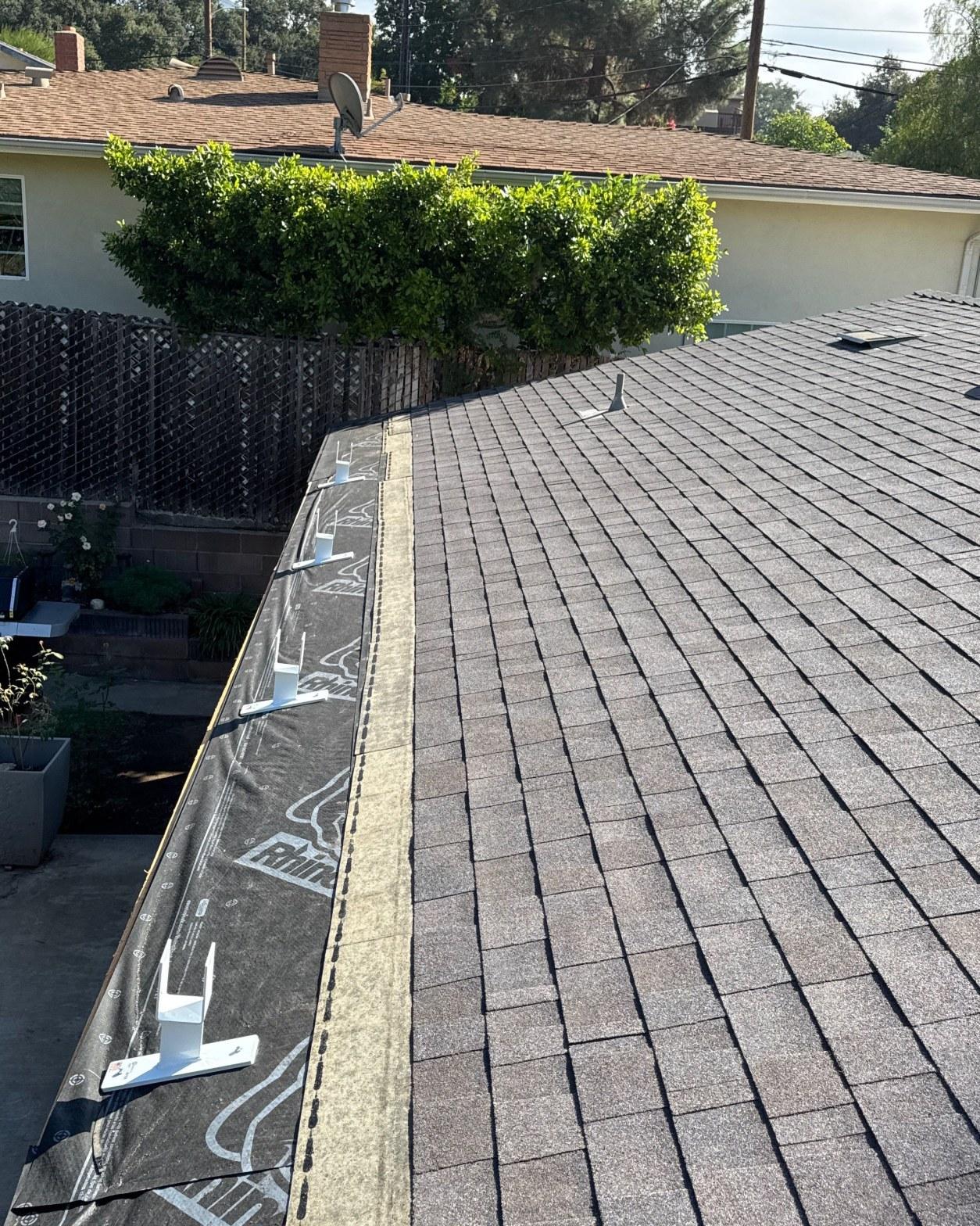
The photo from October 24, 2025 shows the new boot going on mid-installation, with 2UD synthetic underlayment laid to the field and the new collar seated directly over the vent pipe. The synthetic underlayment performs significantly better than traditional 15-pound felt in high-UV environments, resisting UV degradation for up to 6 months of exposure, which matters during a multi-day installation on a larger roof plane.
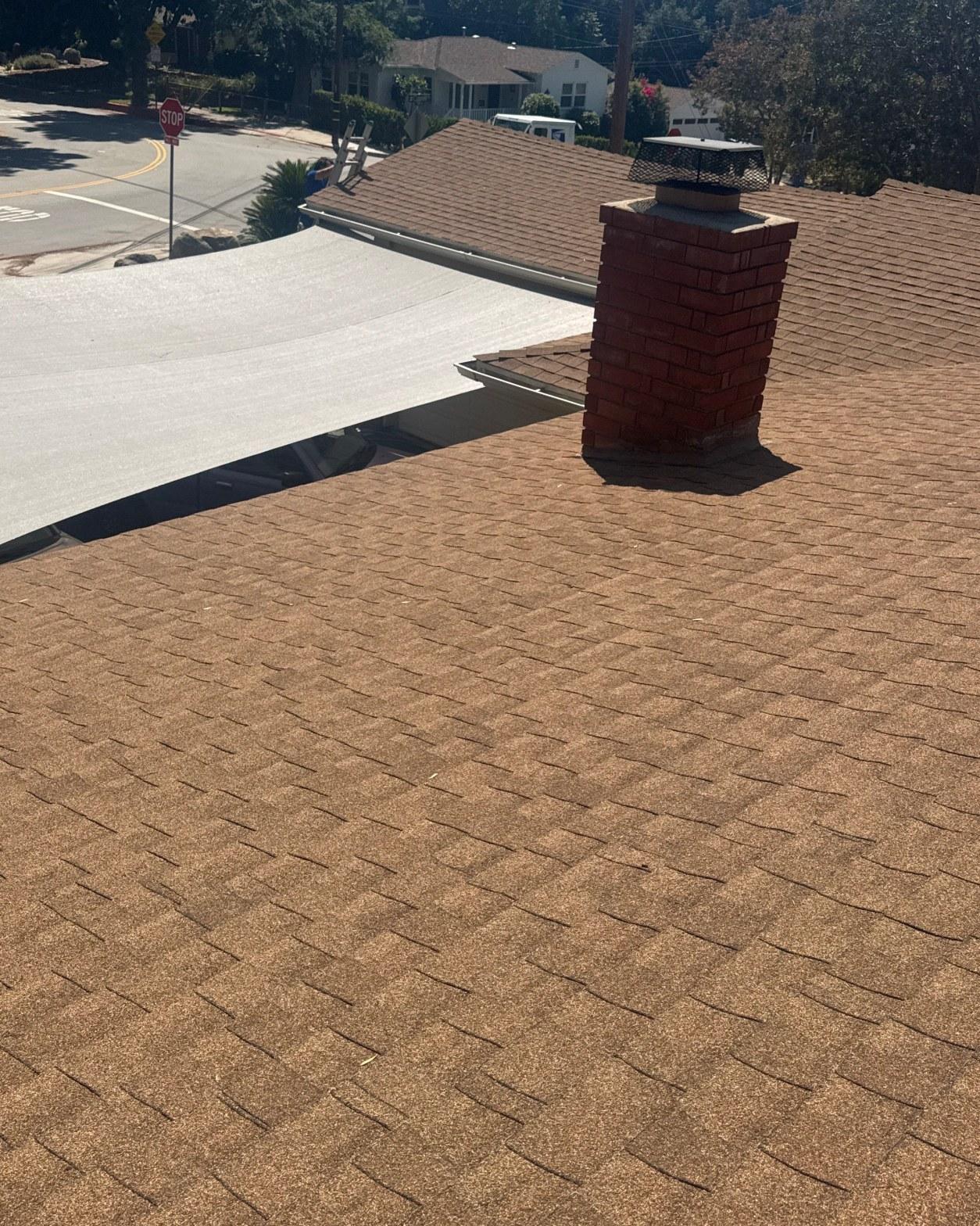
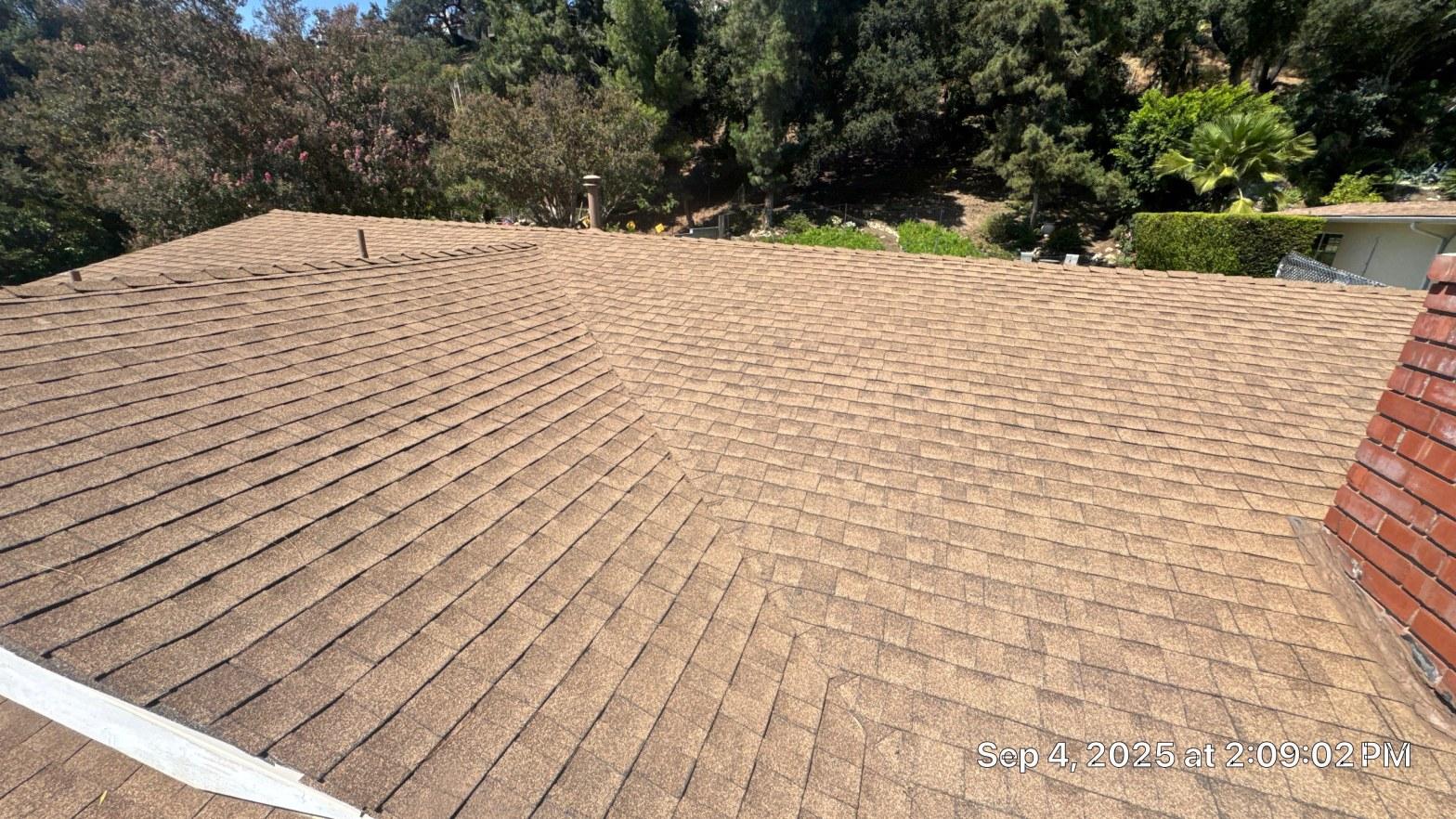
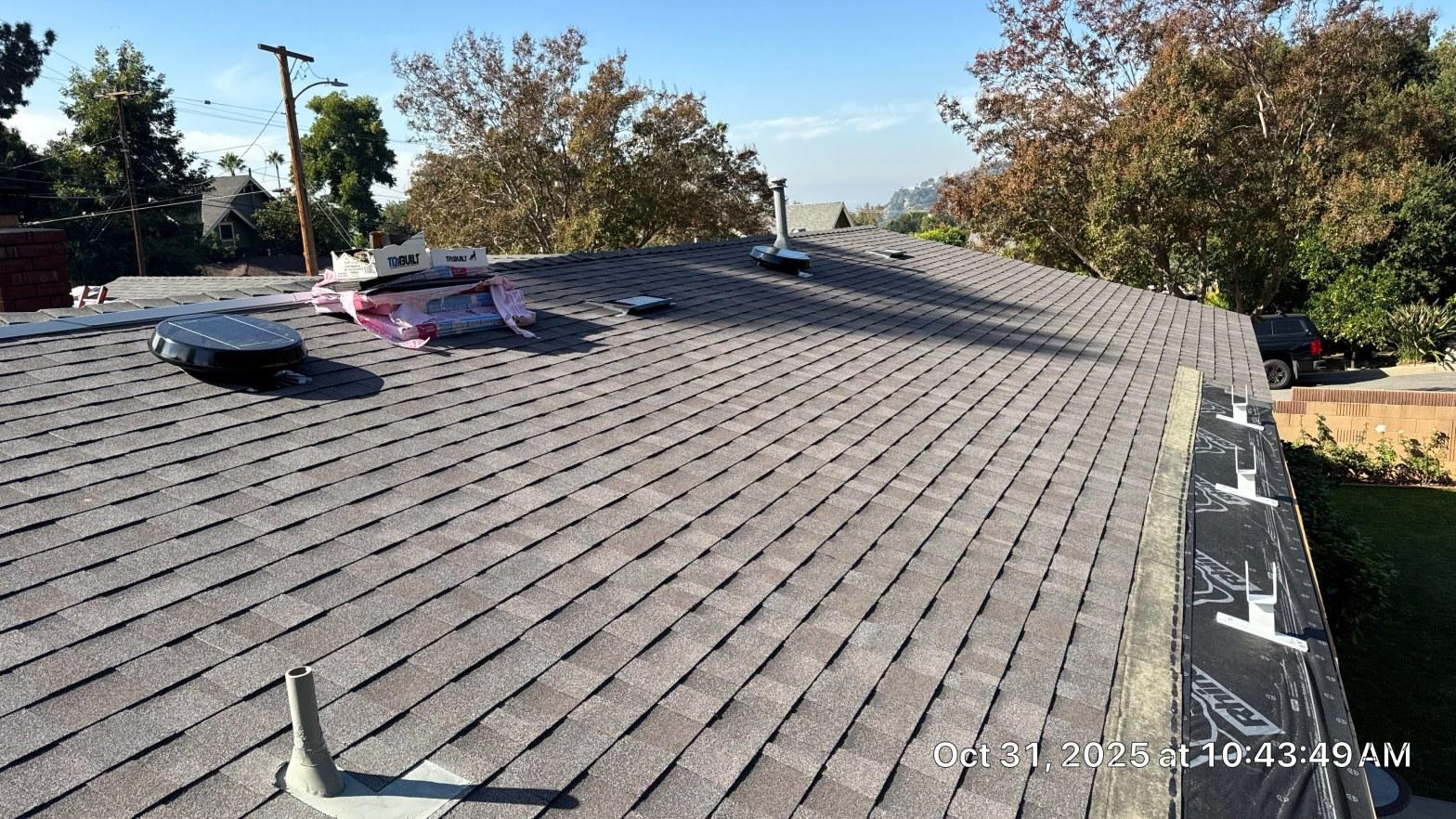
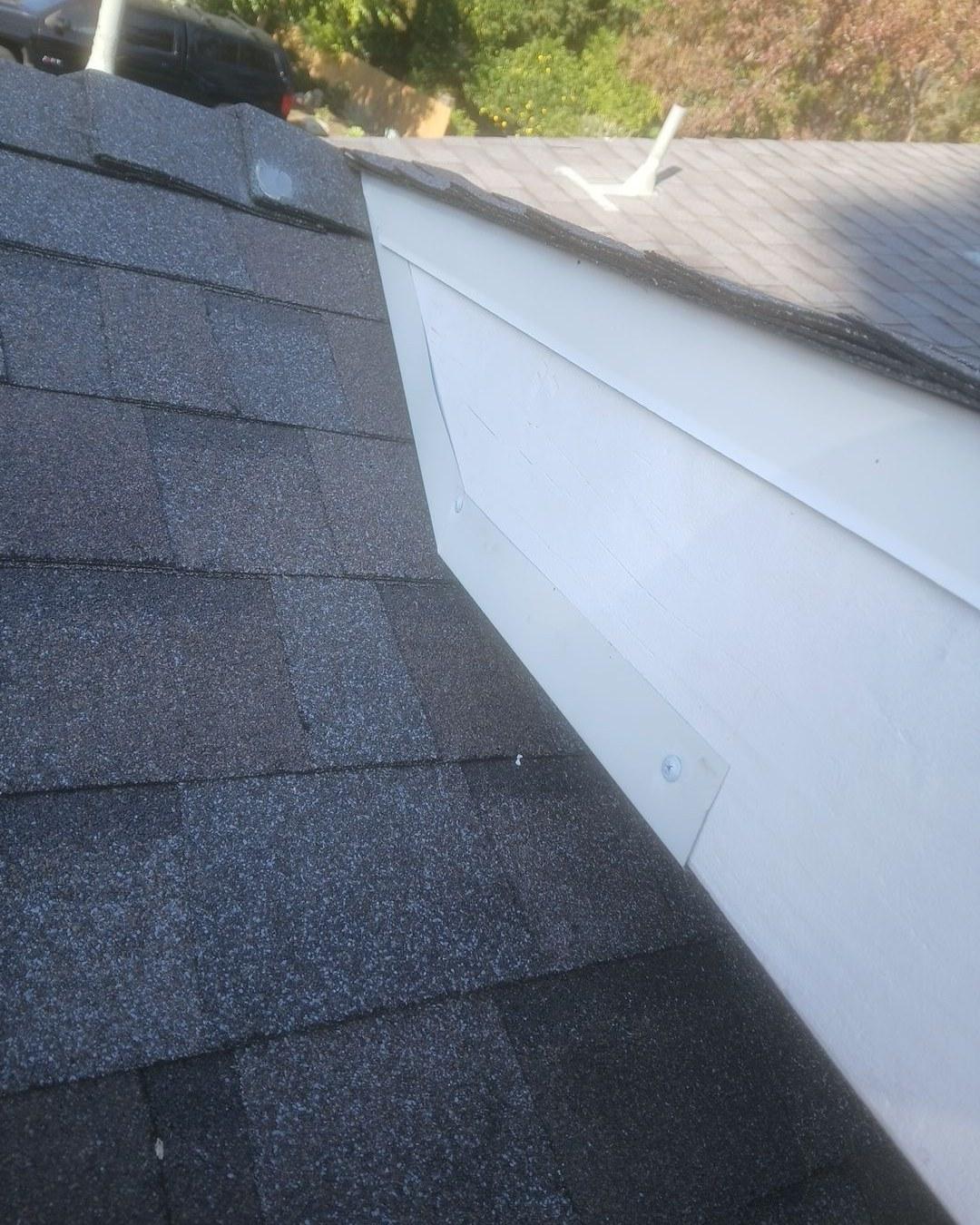
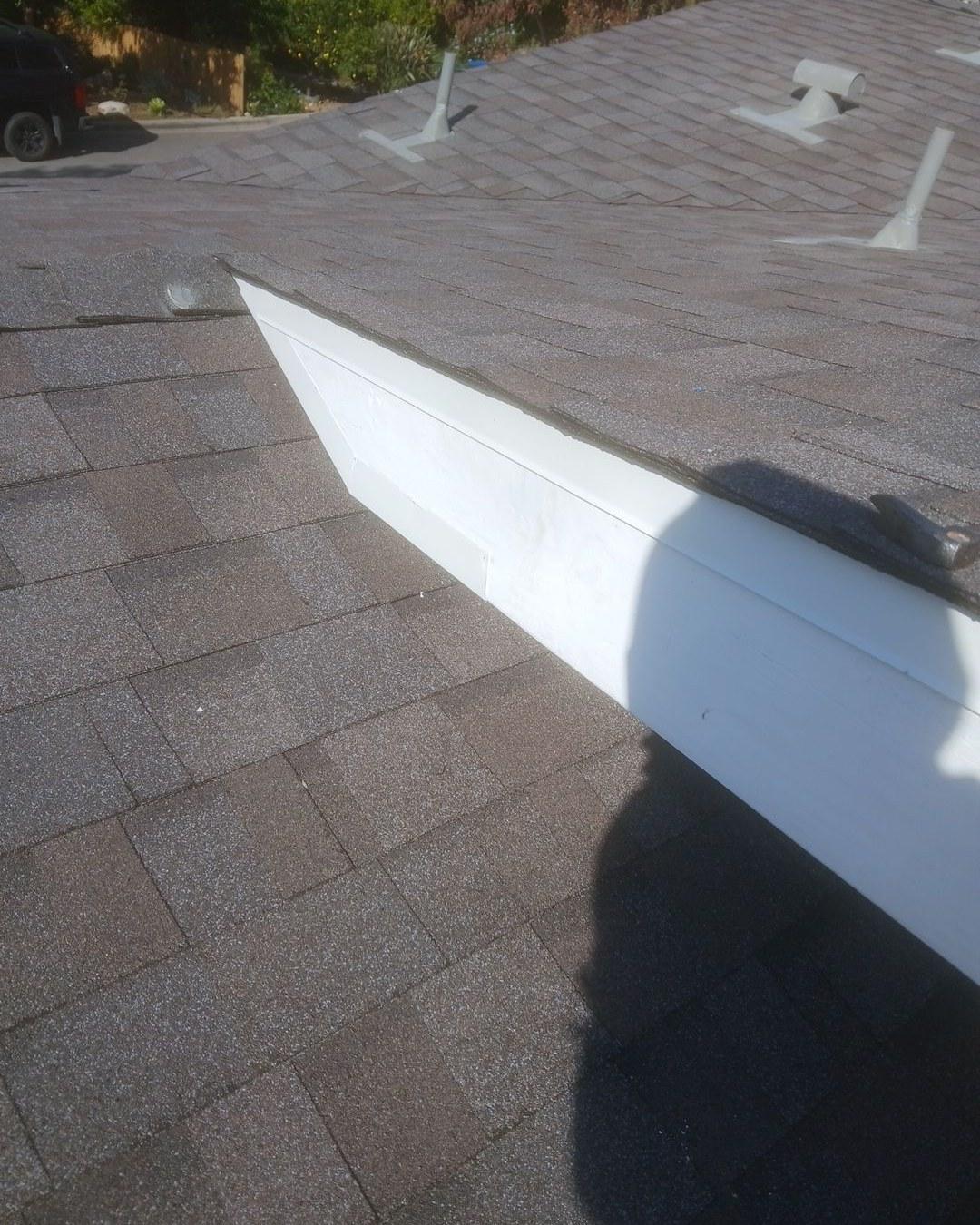
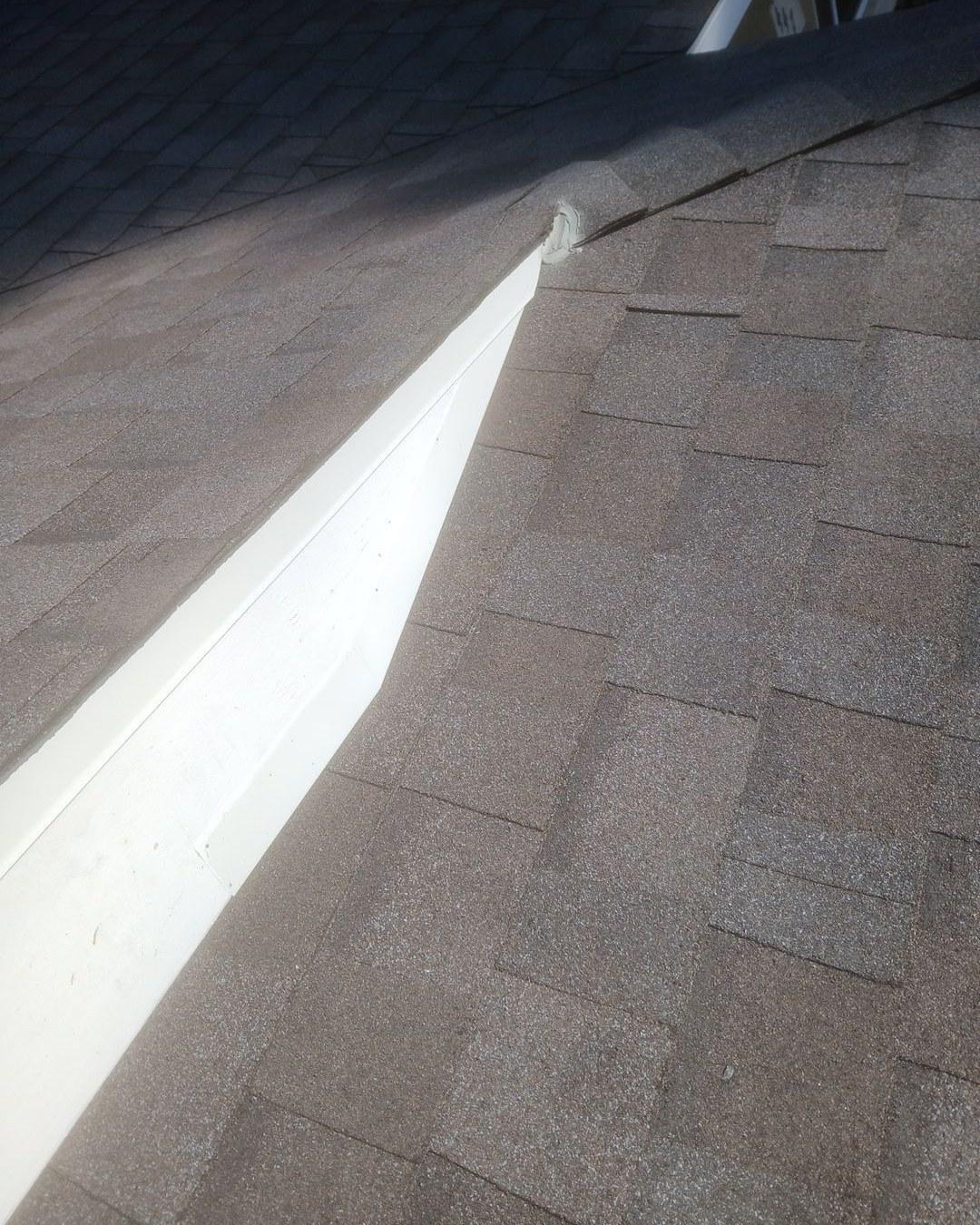
In addition to the pipe boots, low-profile roof vents were installed at measured intervals across the upper field of the roof to provide passive attic ventilation. Proper attic ventilation keeps summer attic temperatures from exceeding 150°F, a threshold above which shingle adhesive strips can soften and cause premature granule loss. The finished gray shingles visible in the featured photo show clean alignment across all planes, with the vents and pipe boots integrated flush into the field.
Licensed by the California Contractors State License Board (CSLB), Roof Replacement Inc carries the credentials required to pull permits and perform inspected roofing work throughout Los Angeles County. Homeowners should always verify a contractor’s CSLB license number at cslb.ca.gov before signing any contract.
The Finished Roof
The completed project delivered a clean, properly ventilated gray asphalt shingle roof with zero exposed fasteners at the penetrations and a full new underlayment layer across every square foot of deck. The homeowner went from a leaking, patchwork surface to a warranted system in a single mobilization.
If your home has multiple vent pipes, aging pipe boots, or shingles that have been re-covered before, this project is a close parallel to what your own reroof could look like. Call Roof Replacement Inc at 447 N Canyon Blvd, Monrovia, CA 91016 to schedule a free roof inspection and written estimate before the next rain season arrives.