- Understanding Moss And Algae: What They Are And Why They Grow
- The Real Risks: How Moss And Algae Damage Your Roof
- DIY Moss And Algae Removal: Safe, Step-by-Step Method
- Professional Roof Cleaning: When To Call The Experts
- Long-Term Prevention Strategies
- Eco-Friendly Roof Cleaning Options
- Common Mistakes To Avoid In Roof Moss and Algae Removal
- When Cleaning Isn’t Enough: Repair And Replacement Considerations
- FAQs
On Southern California roofs, moss and algae are common, especially on shaded or older roofs. While they might look harmless at first, they can trap moisture, weaken shingles, and shorten your roof’s life if left untreated.
In this guide, we’ll walk you through how to remove moss from roof safely, prevent it from coming back, and keep your home looking its best. You’ll find out more about the right tools, methods, and long-term maintenance steps.
Key Takeaways
- Moss on roof traps moisture and can damage shingles if left untreated.
- Algae mainly affects appearance but can lead to energy inefficiency.
- DIY moss removal requires safety precautions and gentle cleaning methods.
- Professional roof cleaning ensures safe, effective moss and algae removal.
- Prevent moss growth by trimming trees, cleaning gutters, and improving ventilation.
- Eco-friendly cleaning solutions like vinegar or oxygen bleach are safe and effective.
- Regular roof maintenance helps prevent moss and algae buildup before it becomes a problem.
Understanding Moss And Algae: What They Are And Why They Grow
Algae and moss on roof may look similar, but they’re two very different problems for your roof.
Moss is a small, soft plant that grows in damp, shaded areas. It spreads quickly, forming thick green clumps that hold moisture against your roof’s surface.
Algae, on the other hand, are microscopic organisms (most commonly Gloeocapsa magma) that appear as dark streaks or stains. It thrives in warm, humid conditions and feeds on the limestone filler found in many asphalt shingles.
Both tend to grow where moisture lingers: under overhanging branches, in areas with poor sunlight, or near clogged gutters that don’t drain properly. Poor ventilation inside the attic can also trap humidity, creating the perfect environment for growth.
Algae on roof surfaces mainly affects how your home looks, dulling your roof’s color and curb appeal, whereas moss is more serious. It can lift shingles, block drainage, and cause leaks over time.
The Real Risks: How Moss And Algae Damage Your Roof
Moss and algae can seem harmless at first, but they can quietly damage your roof. Moss holds moisture against the surface. This allows water to seep under shingles and cause leaks or rot. As it spreads, it can lift and crack shingles, weakening your roof’s protection.
Unlike moss, algae don’t usually cause leaks, but they darken the roof and make it absorb more heat, which can raise cooling costs in warmer months. Over time, this trapped moisture can harm the wood deck beneath the shingles and shorten the roof’s lifespan. It also affects how your home looks. A stained or moss-covered roof can bring down curb appeal and resale value. Some insurance policies may even deny claims if a roof shows signs of neglect.
Yet the good news is that regular cleaning and simple preventive care can stop these problems before they start.
Also, read:
DIY Moss And Algae Removal: Safe, Step-by-Step Method
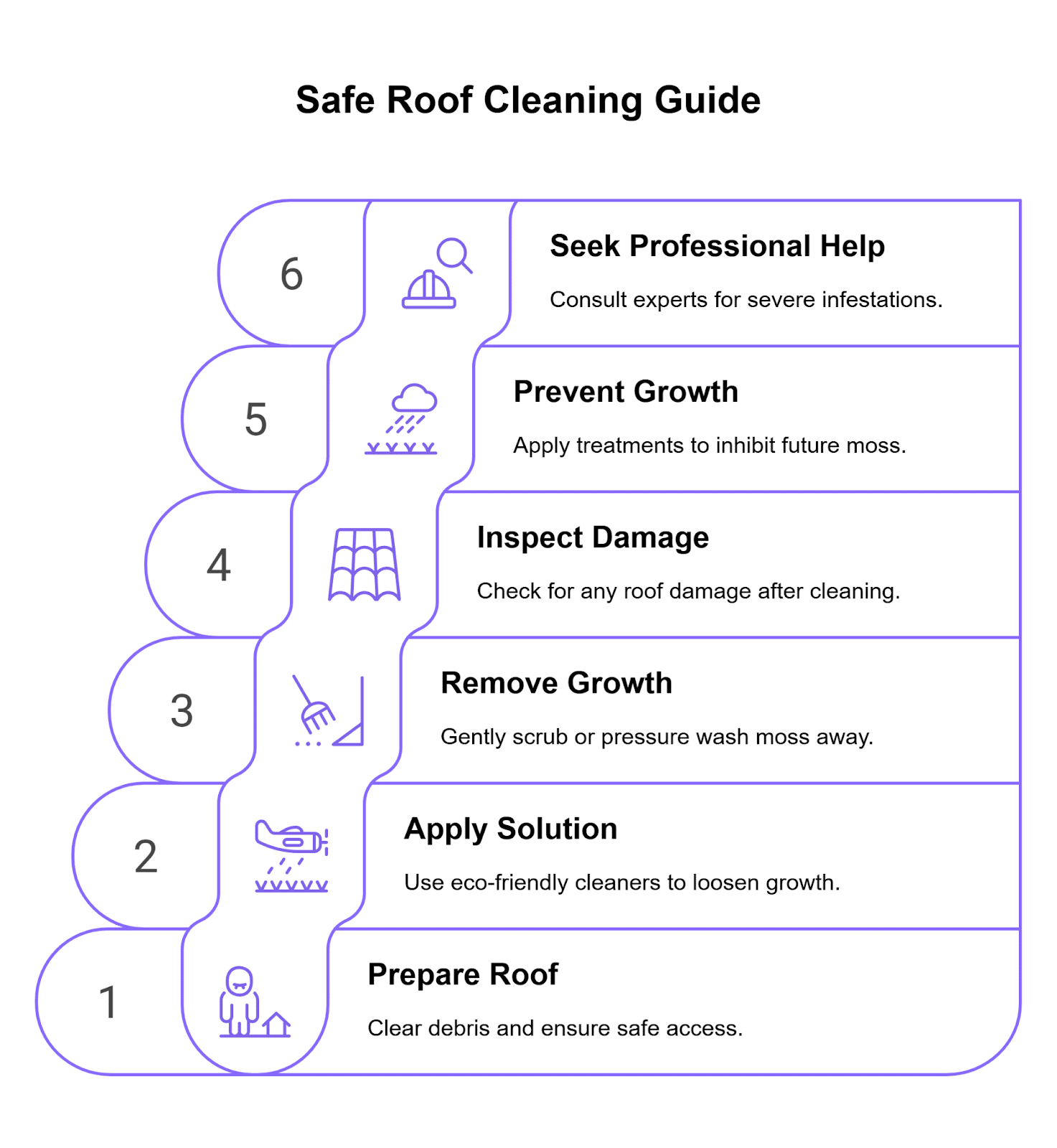
Cleaning algae and moss on roof is not complicated, but it does need to be done carefully. A gentle, step-by-step approach can restore your roof’s look and prevent future damage without risking your safety or your shingles. With a few simple tools and the right technique, you can handle light buildup on your own and keep your roof in good shape for years to come.
- Stay safe: Safety always comes first when working on your roof. Use a sturdy ladder placed on stable ground. Wear non-slip shoes to prevent slipping. Gloves and protective eyewear will keep your hands and eyes safe from cleaning solutions and debris. Always have someone nearby to assist or steady the ladder. If your roof feels unstable, steep, or wet, don’t take the risk, it’s best to call a professional roofer who has the proper training and equipment.
- Prepare the area: Before applying any cleaner, gently wet the roof with a garden hose. This helps keep moss spores from becoming airborne and spreading to other parts of your roof. Cover your plants, shrubs, and outdoor furniture with tarps to protect them from chemical runoff. Make sure gutters and downspouts are clear so the water can drain freely. The best time to clean is on a cool day, because direct sunlight can dry your cleaning solution too quickly and reduce its effectiveness.
- Apply a cleaning solution: Choose the right moss and roof algae cleaner based on how much growth you’re dealing with. For heavy moss or algae, mixing a 50/50 bleach and water solution will be effective. Be sure to cover any nearby plants or surfaces to prevent damage. For moderate growth, use oxygen bleach. It is a safer, eco-friendly choice, and it won’t harm your roof. If the buildup is light, a simple white vinegar and water mixture can remove stains naturally without harsh chemicals. Spray your chosen solution evenly across the affected areas and let it sit for about 15 to 20 minutes so it can loosen the moss and algae.
- Remove the growth: After soaking, use a soft-bristled brush or broom to scrub the roof gently. Work from the top down along the slope to avoid pushing water under the shingles. Take your time and focus on one small section at a time. Avoid using pressure washers, because they can strip protective granules from shingles and cause leaks .
- Rinse and inspect: Once you’ve loosened the moss and algae, rinse the roof thoroughly with low-pressure water. Check for any shingles that may have lifted, cracked, or curled. You will need to repair or replace the damaged shingles to prevent water from getting in.
- Clean gutters: Finish by clearing leaves and debris from your gutters and flushing downspouts with water. Good drainage helps keep moisture from collecting on the roof, which is key to preventing moss from growing again.
PRO TIP: Take your time and move carefully. Rushing can damage shingles or cause slips. A slow, steady cleaning is always safer and more effective than trying to finish fast.
Professional Roof Cleaning: When To Call The Experts
Sometimes it’s best to leave roof cleaning to the professionals, especially when safety or long-term protection is a concern. If your roof is steep, multi-story, or heavily covered in moss, a DIY approach can be risky and less effective. This is also true for roofs with visible water damage or soft spots, as when you step on them, the problem worsens.
Professional moss and roof algae cleaners have the right equipment, roof safety training, and insurance to handle the job safely. They use low-pressure cleaning systems that remove moss and algae without stripping shingle granules or damaging the surface. Most roofers also use eco-safe products designed to protect your roof and landscaping from harsh chemicals.
In addition to cleaning, many experts offer treatments like zinc-based sealants or algae-resistant coatings to help prevent regrowth for years. This makes professional cleaning a smart investment in your roof’s health and longevity.
Long-Term Prevention Strategies
Keeping moss and algae off your roof isn’t only about having a clean roof, it’s also about preventing the future appearance. A few simple habits can help you protect your roof and extend its life.
- Trim overhanging branches. Trees that hang over your roof block sunlight and drop leaves, trap moisture, and create perfect conditions for moss on roof surfaces. Trimming them back allows more airflow and sunlight, helping your roof stay dry and clean.
- Keep gutters clear. Clogged gutters cause water to back up and pool near the edges of your roof. That moisture encourages moss and algae growth. Clean gutters at least twice a year, and after storms. This will help the water flow properly.
- Improve roof ventilation. Good airflow inside the attic helps balance temperature and humidity, keeping the roof drier and less prone to growth. Make sure vents aren’t blocked and insulation isn’t trapping heat or moisture.
- Install zinc or copper strips. If you’re replacing your roof or making upgrades, ask your roofer about adding these strips near the ridge. When it rains, metal ions naturally wash down the roof and prevent moss and algae from forming. Since improper installation can cause leaks, it’s best to have this done by a licensed roofer.
- Inspect after rainy seasons. Have your roof checked once a year or after heavy rain to catch any early signs of buildup or damage.
- Schedule regular cleanings. A gentle wash every one to two years keeps your roof looking good and prevents growth before it starts.
PRO TIP: If you’re planning a roof replacement, ask about algae-resistant shingles. They’re made with copper granules that provide long-term protection against moss and algae, saving you maintenance time down the road.
Eco-Friendly Roof Cleaning Options
If you prefer a more natural way to clean your roof, there are several eco-friendly options that are safe and effective. These methods protect your roof while keeping your yard, plants, and local waterways free from harsh chemicals.
Oxygen bleach: This is one of the best choices for environmentally conscious homeowners. It’s non-toxic, biodegradable, and safe for plants and pets while still strong enough to remove moss and algae on roof surfaces. For lighter growth, a simple vinegar and water solution can help. It’s chemical-free and easy to apply with a spray bottle or garden sprayer.
Potassium salts of fatty acids: This is a gentle algae and roof moss killer, and it is often used in organic gardening. It breaks down quickly and carries little risk of runoff pollution.
When cleaning your roof, don’t forget to protect storm drains and nearby soil by covering them or collecting rinse water. Professional moss and roof algae cleaners can also use eco-safe products correctly and dispose of waste responsibly, ensuring both your home and the environment stay protected.
Common Mistakes To Avoid In Roof Moss And Algae Removal
Even with the right intentions, a few common mistakes can cause more harm than good when cleaning moss and algae from your roof. Knowing what to avoid helps you protect both your roof and your safety.
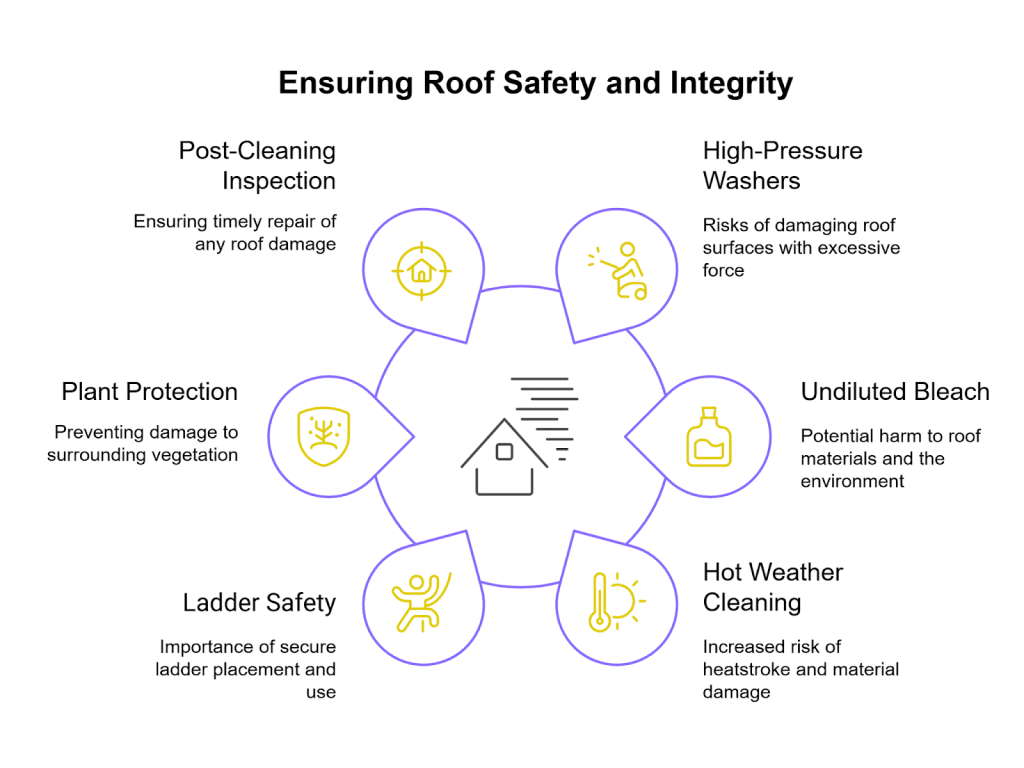
- Avoid using a high-pressure washer. The force of the water can strip away the protective granules on shingles, leading to early wear and even voiding your warranty.
- Avoid using undiluted bleach. It can discolor shingles, corrode metal flashing, and harm surrounding plants.
- Safety comes first. Slippery surfaces, chemicals, and heights can all lead to injuries if you’re not properly prepared. Cleaning during hot or sunny weather can also make cleaning solutions dry too quickly, leaving streaks or residue behind.
- Inspect your roof after cleaning. Missing or lifted shingles can worsen over time if you don’t repair them promptly.
When Cleaning Isn’t Enough: Repair And Replacement Considerations
Sometimes, cleaning isn’t enough to fix the problem. If your roof has persistent leaks, visible rot, or curled and broken shingles, it may need more than a surface clean. Repeated moss growth can also be a sign of deeper issues, such as aging materials, poor ventilation, or water damage beneath the shingles.
In these cases, it’s best to call a licensed roofing expert for a full inspection and honest advice. At Roof Replacement Inc., we repair and protect your roof. Our team provides roof inspections, repairs, complete roof replacements, cool roofing solutions, and new roof installation to keep your home safe and energy-efficient. If your roof got damaged by moss or algae, we’ll help you find the best long-term solution.
Schedule your free roof inspection with Roof Replacement Inc. today and let our experts restore your roof’s strength, beauty, and peace of mind.
FAQ
Is it safe to use bleach to remove moss from my roof?
A 50/50 bleach and water mix is effective in removing moss, but it must be used with care. Be sure to protect your plants and surrounding areas from the bleach, as it can damage them. Always wear protective gear and use caution to avoid harming your roof or landscape.
How often should I inspect my roof for moss or algae growth?
It’s recommended to inspect your roof at least twice a year, especially after heavy rain or storms. Early detection helps you address issues before they cause significant damage. Regular checks also allow you to keep an eye on any potential problems with your shingles or gutters.
What are some eco-friendly methods to remove algae or moss on roof?
Eco-friendly options include oxygen bleach, which is safe for plants and pets, and a vinegar-water solution for light growth. These methods are effective without harming the environment or your roof. They are great alternatives to harsh chemical treatments that can be damaging over time.
Can algae or moss on roof affect my home’s energy efficiency?
Yes, moss and algae can cause your roof to absorb more heat, increasing your home’s cooling costs during summer. The moisture retained by moss also prevents your roof from reflecting sunlight properly. As a result, you might notice higher energy bills and reduced energy efficiency.
Should I hire a professional to remove moss or algae from my roof?
If the moss or algae coverage is extensive or if you’re unsure about cleaning your roof safely, it’s best to hire a professional. Roof cleaning experts have the proper equipment and experience to do the job without damaging your roof. They also use safe cleaning methods to protect your roof and landscaping.
Explore our full range of roofing services across Southern California.




What Our Clients Say








Roof Replacement Inc. offers professional, high-quality work, guaranteed (call for details); ensuring all clients projects meet all code and design requirements. We are dedicated to exceptional customer service and will strive to ensure you with the highest quality roofing services. Roof Replacement Inc. offers lifetime warranty (call for details) on all of our workmanship to ensure the quality of our work. With over 40 years of combined experience within the roofing and construction industry, Roof Replacement Inc. has grown and developed in all areas of roofing construction, including roof inspections. As a leading residential and commercial roofing company in LA, we have hundreds of references from previous clients, so rest assured, that your roofing job will be done right the first time. Replacing an old roof can help add curb appeal and will increase the perceived value of your home. First impressions are vital when selling your home, especially when your roof takes up more than half of the exterior of your residence or business. Not only is the return of investment on a new roof attractive for potential buyers, but can be as beneficial as remodeling the kitchen or bathrooms within your residence.

