

What Was the Condition of This Roof Before We Started?
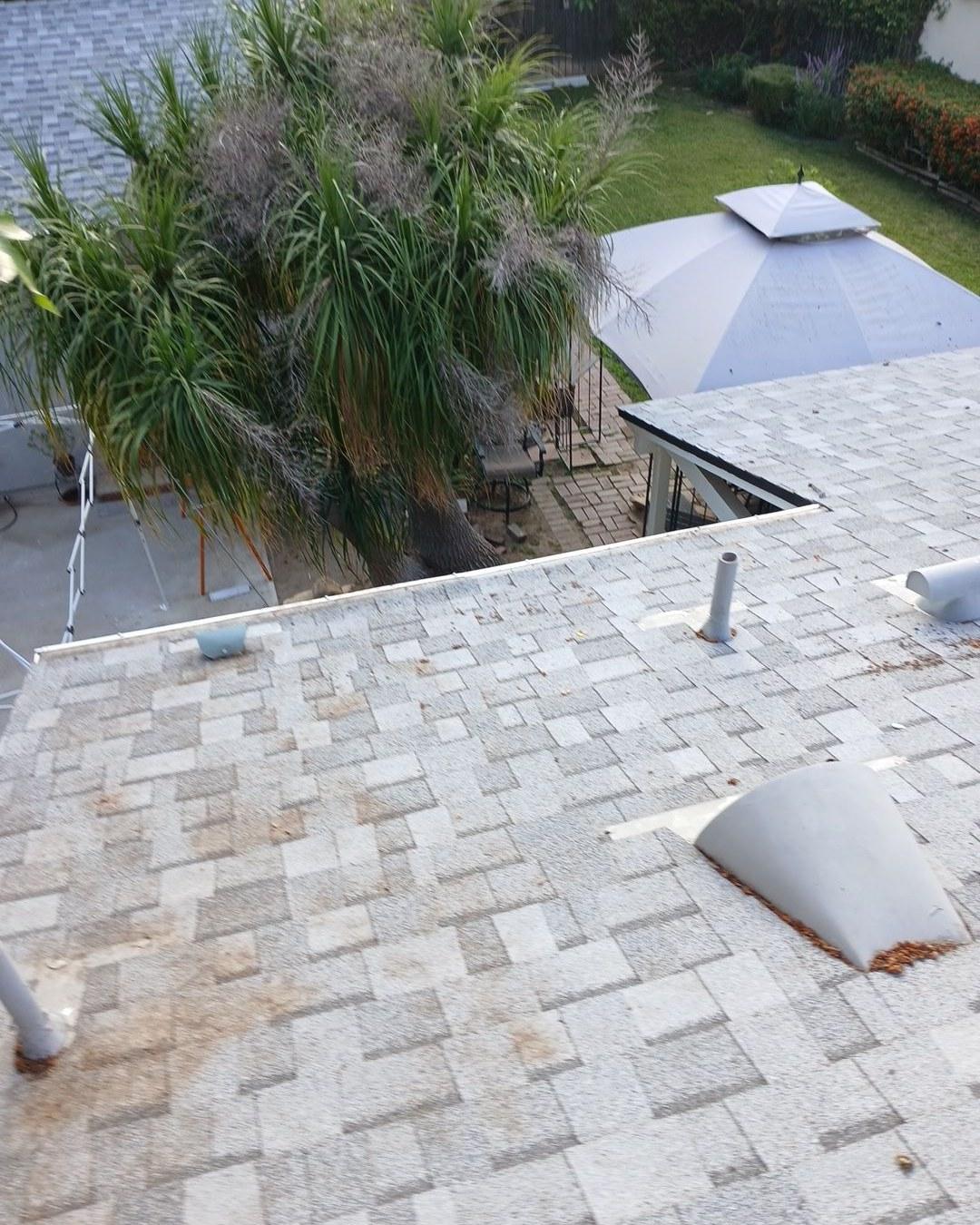
The existing asphalt shingle roof at 6643 Saloma Ave in Los Angeles had reached the end of its serviceable life — and then some. Severe granule loss had left the shingle surface nearly bare, and at least one section of the roof decking had developed a through-hole visible from above.
The homeowner’s goal was straightforward: get a complete reroof done before the next rain season. As of 2025, the National Weather Service Los Angeles forecast office notes that Southern California’s wet season typically runs October through April, meaning a May start date left a reasonable window — but not an unlimited one.
Project Gallery
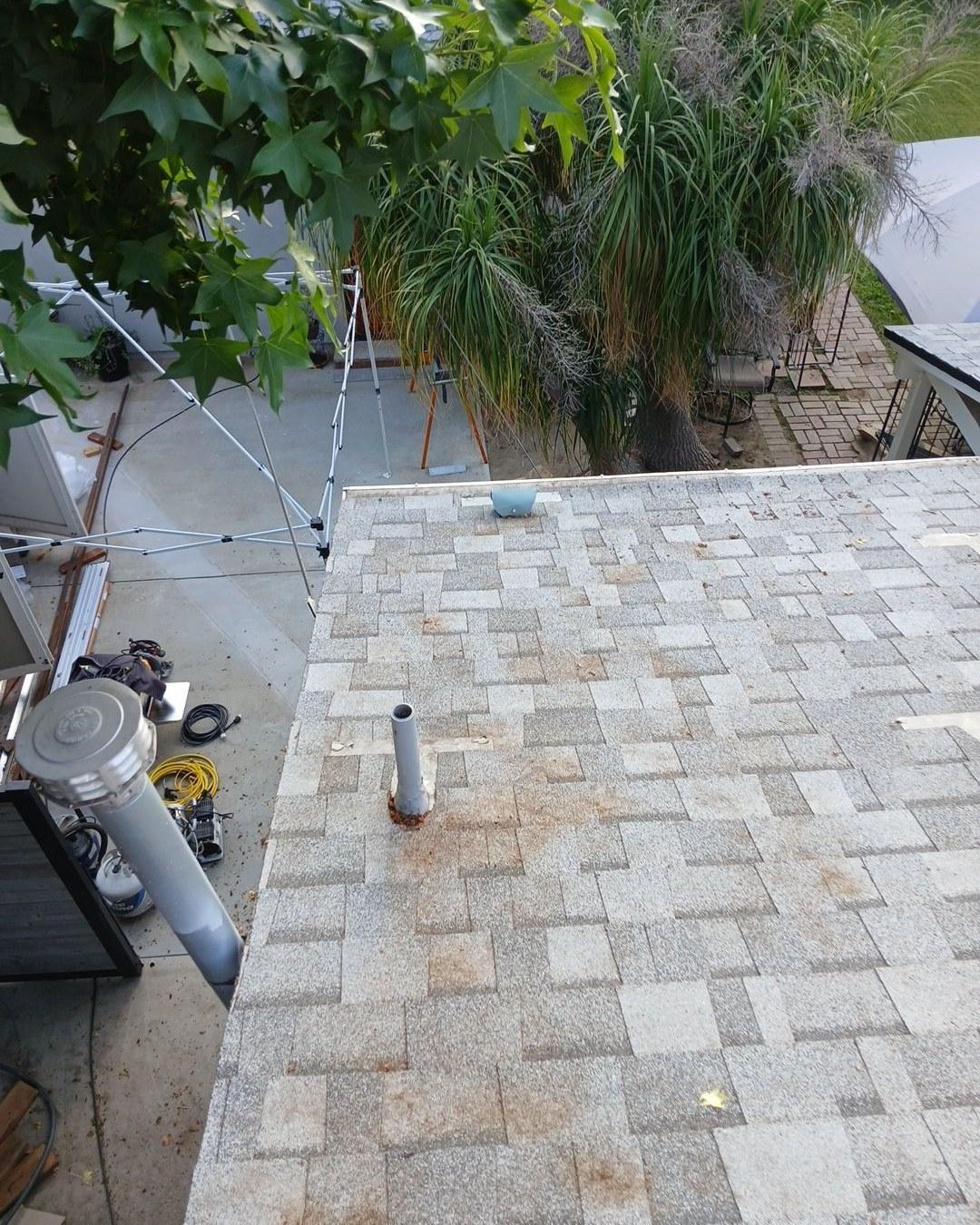
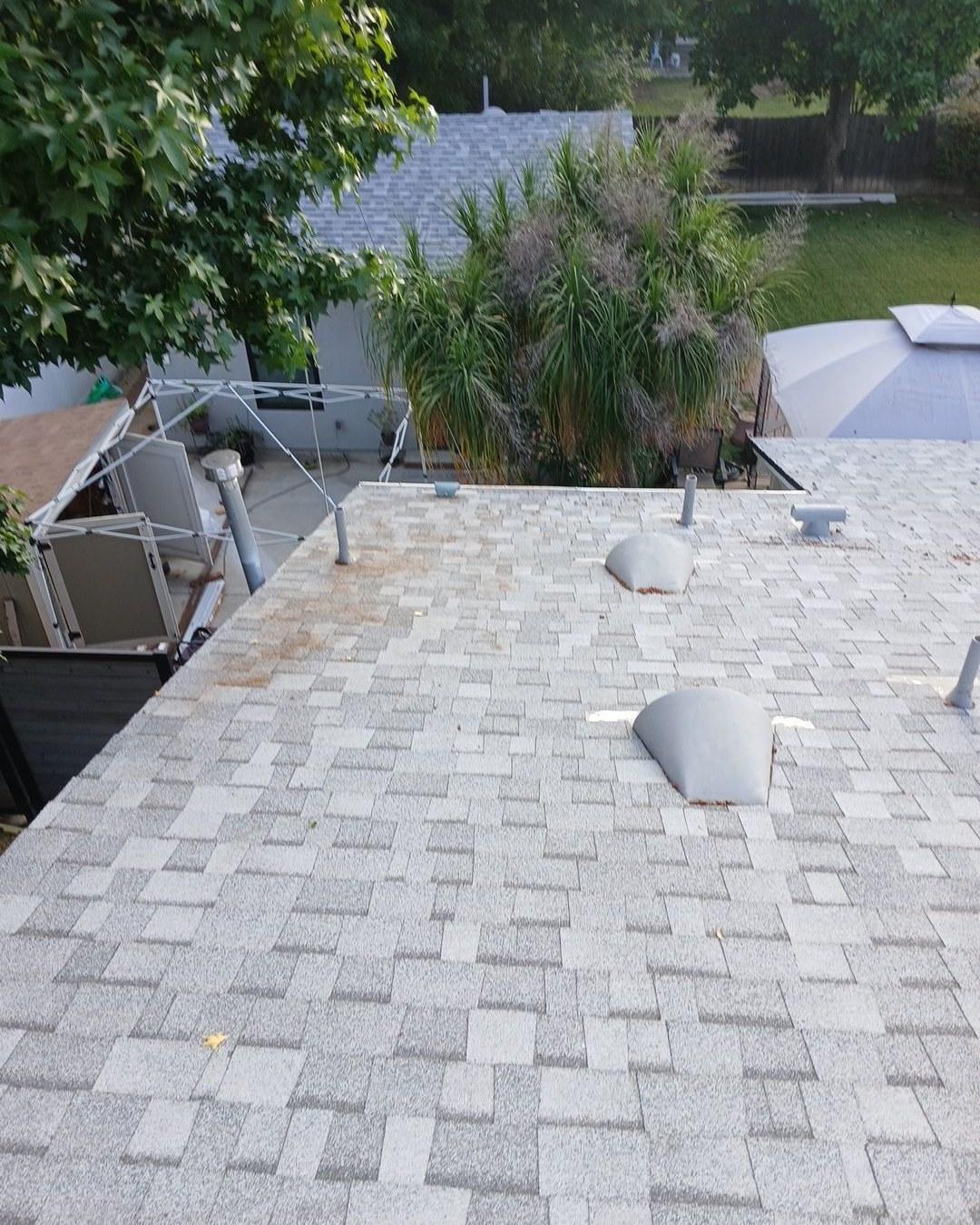
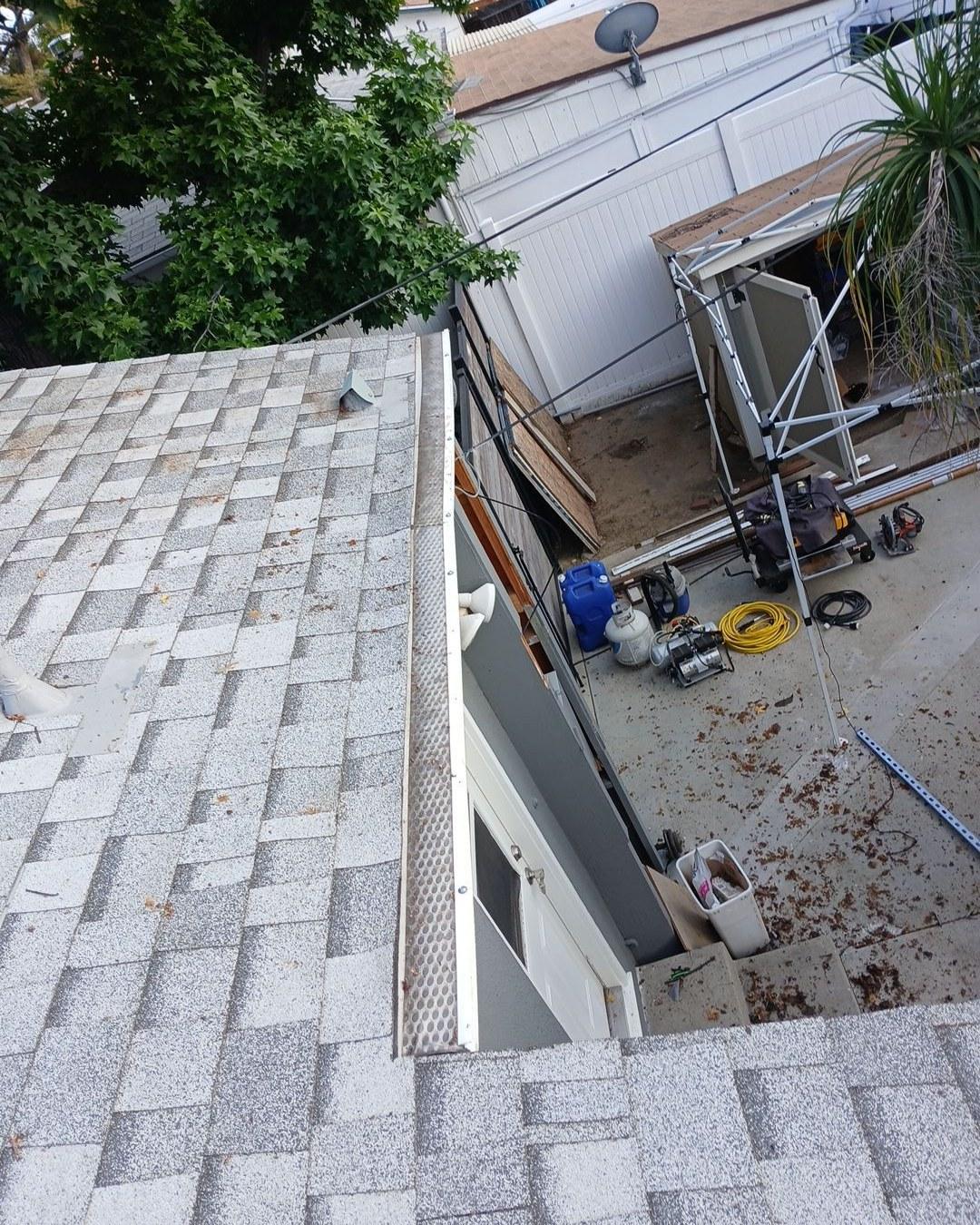
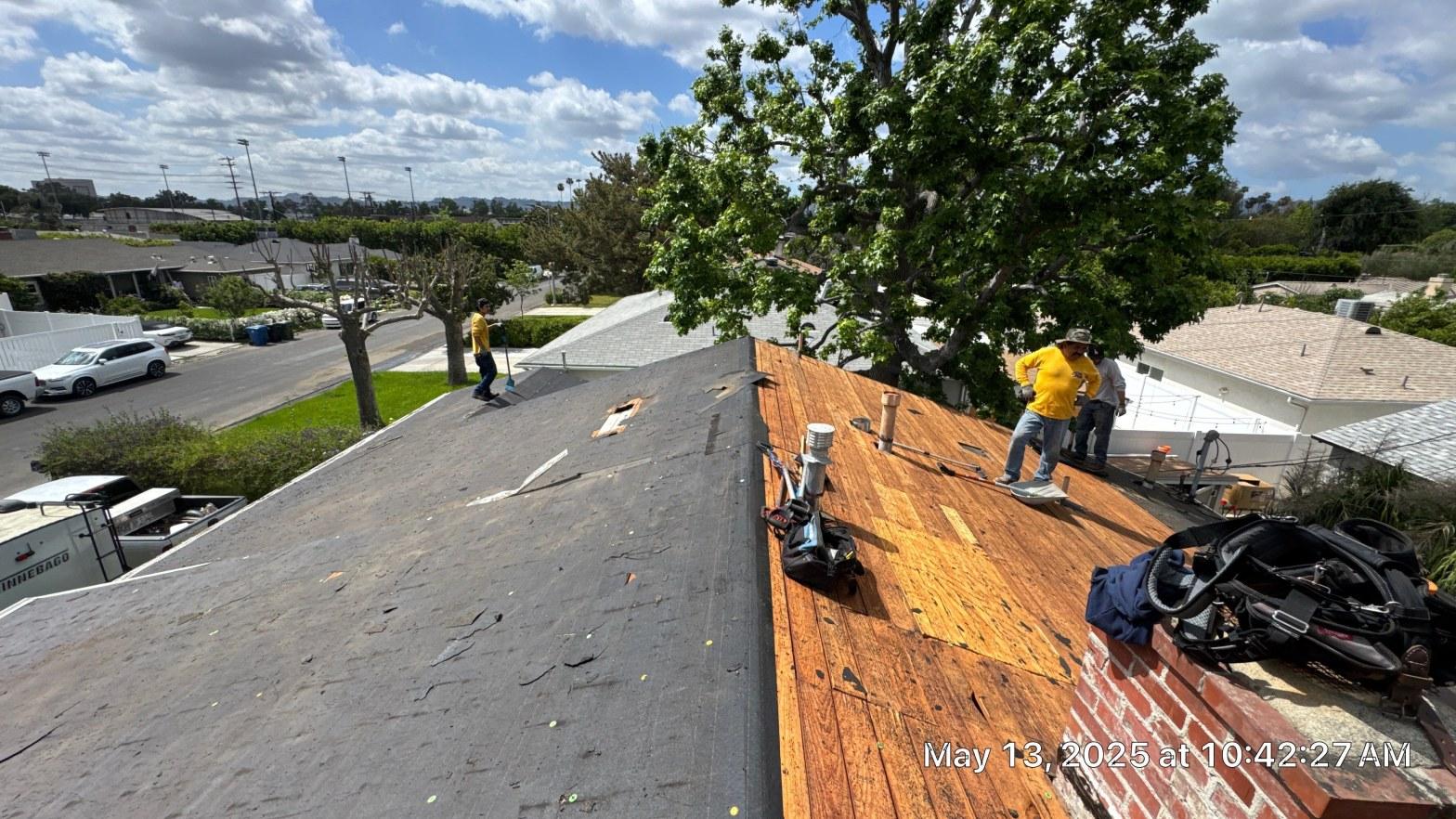
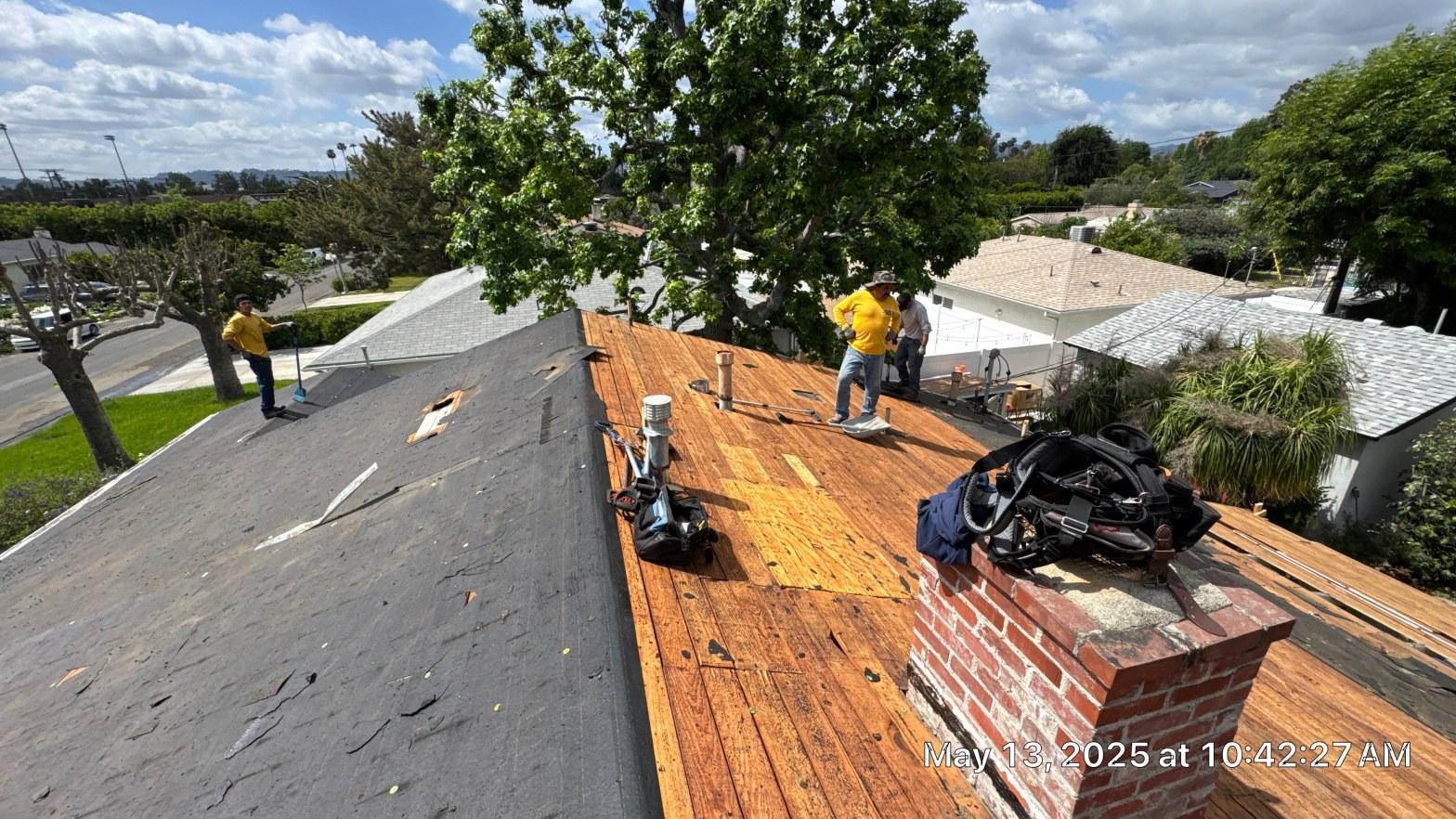
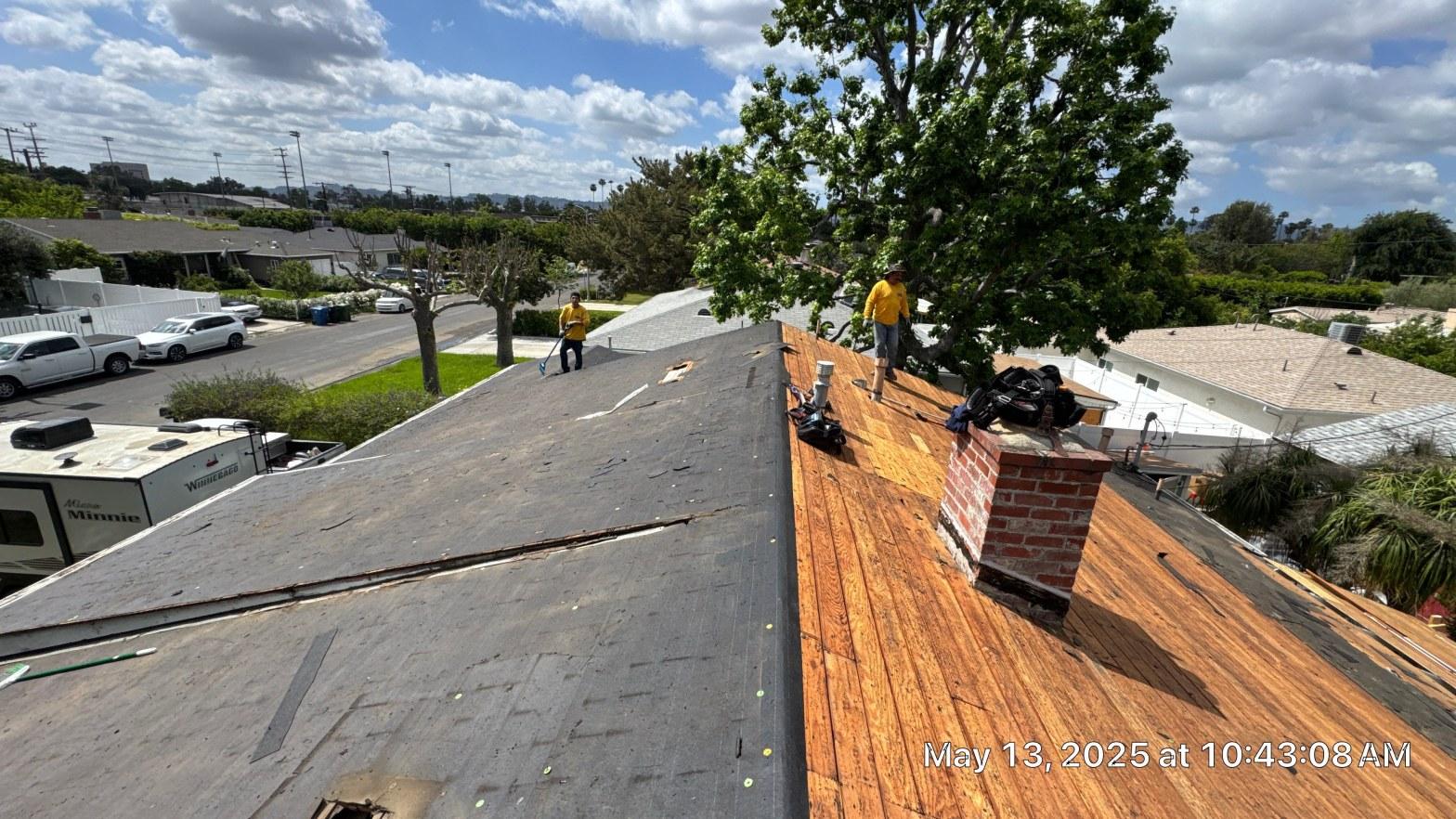
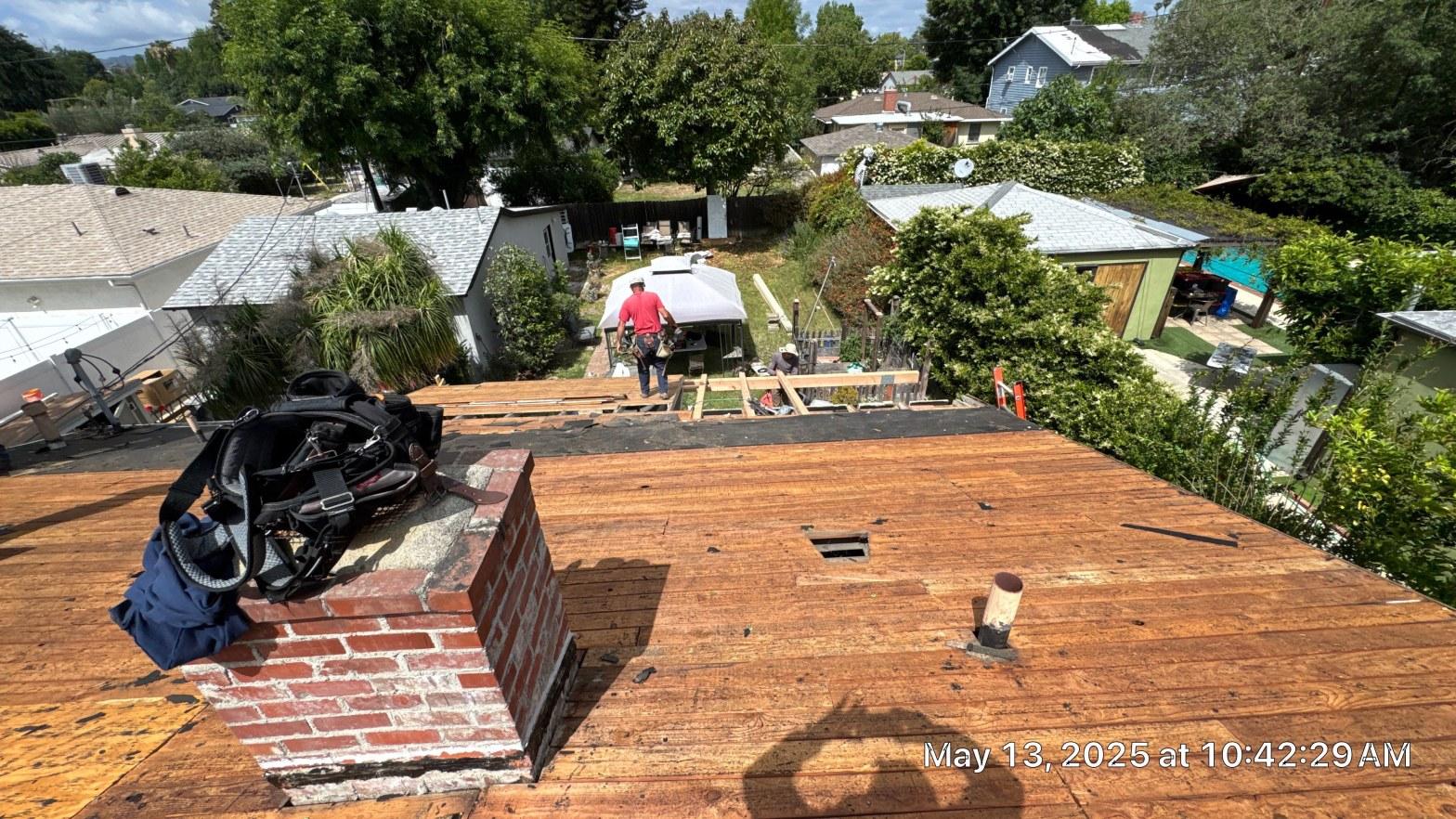
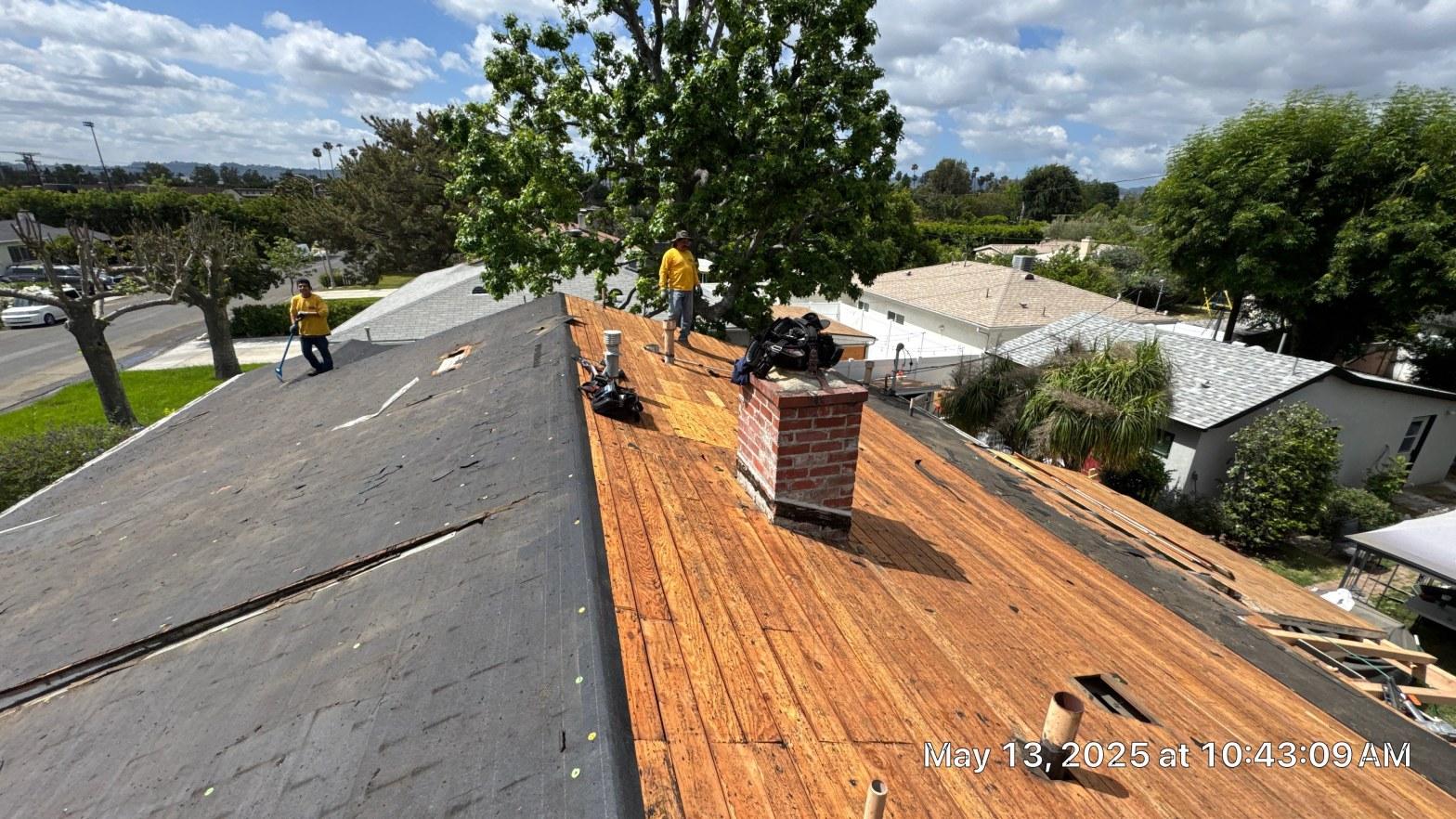
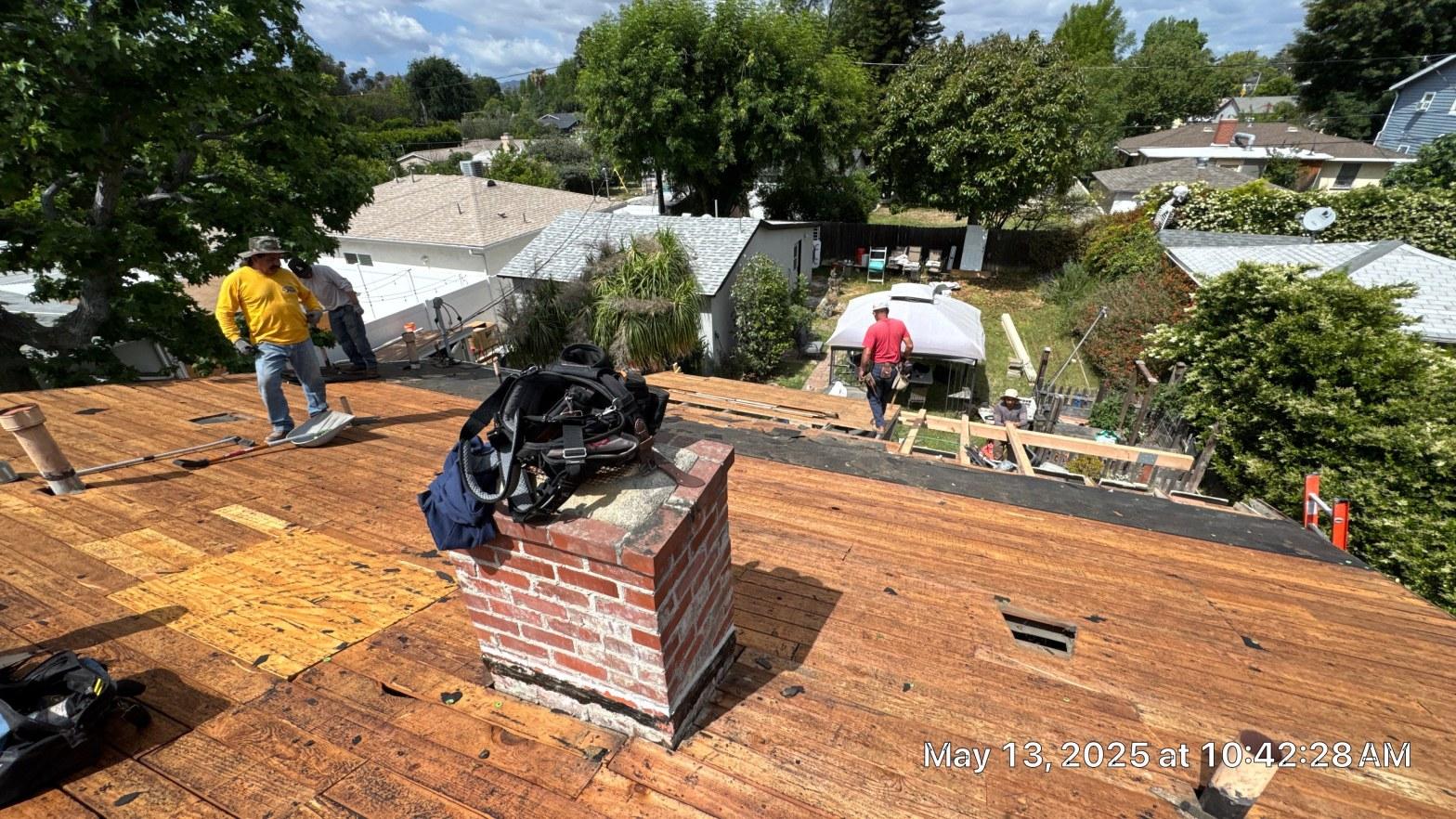
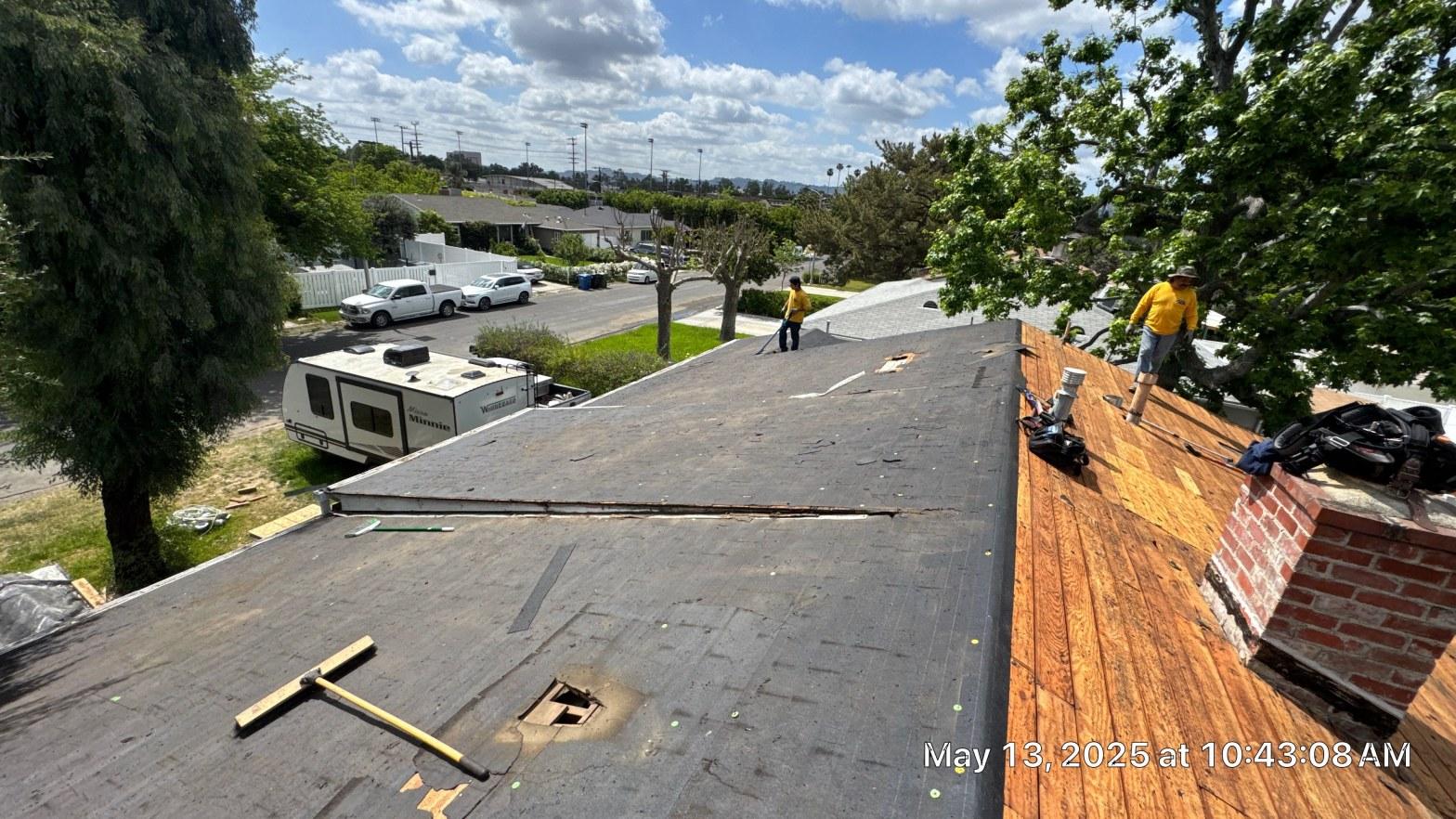
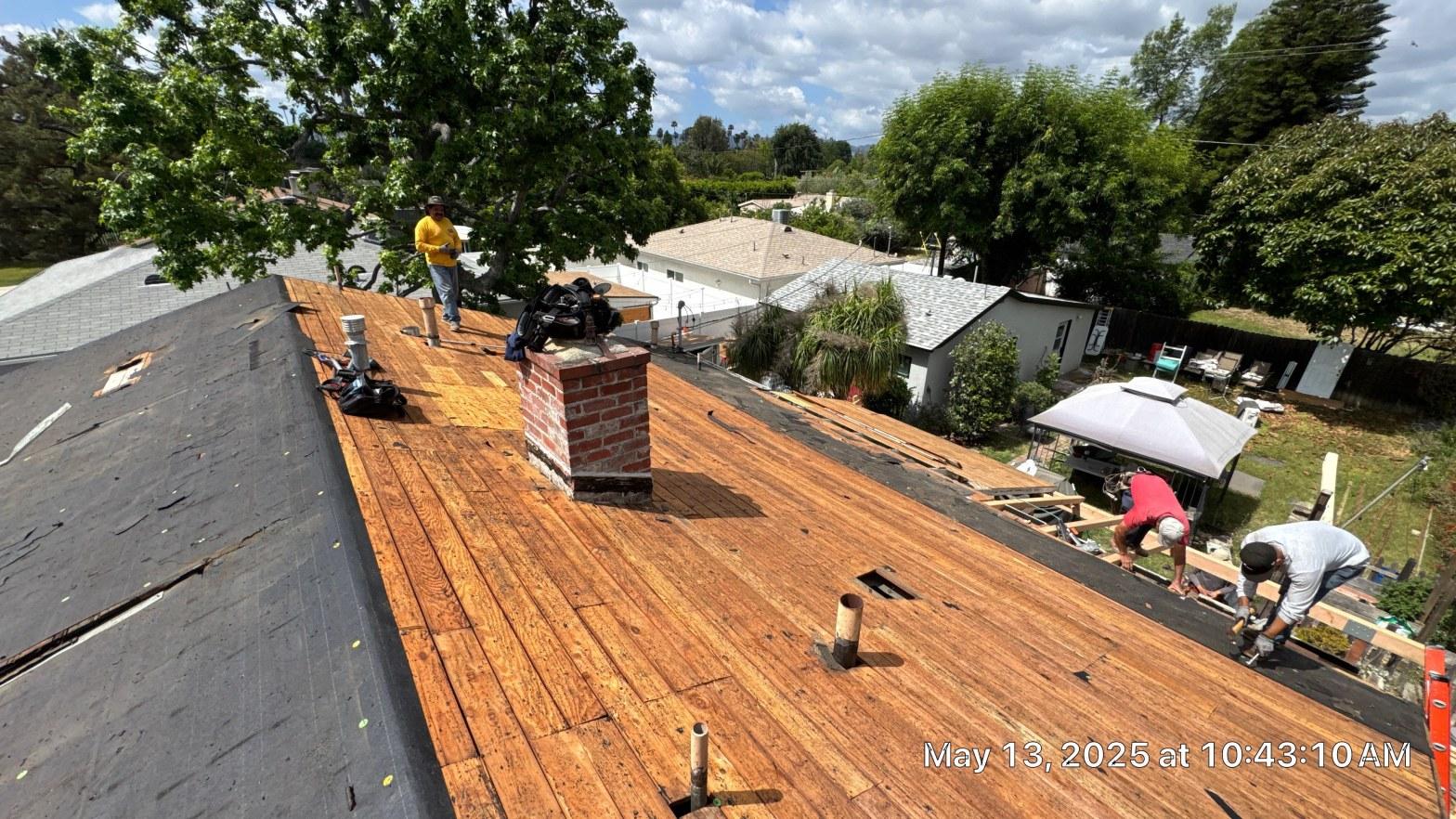
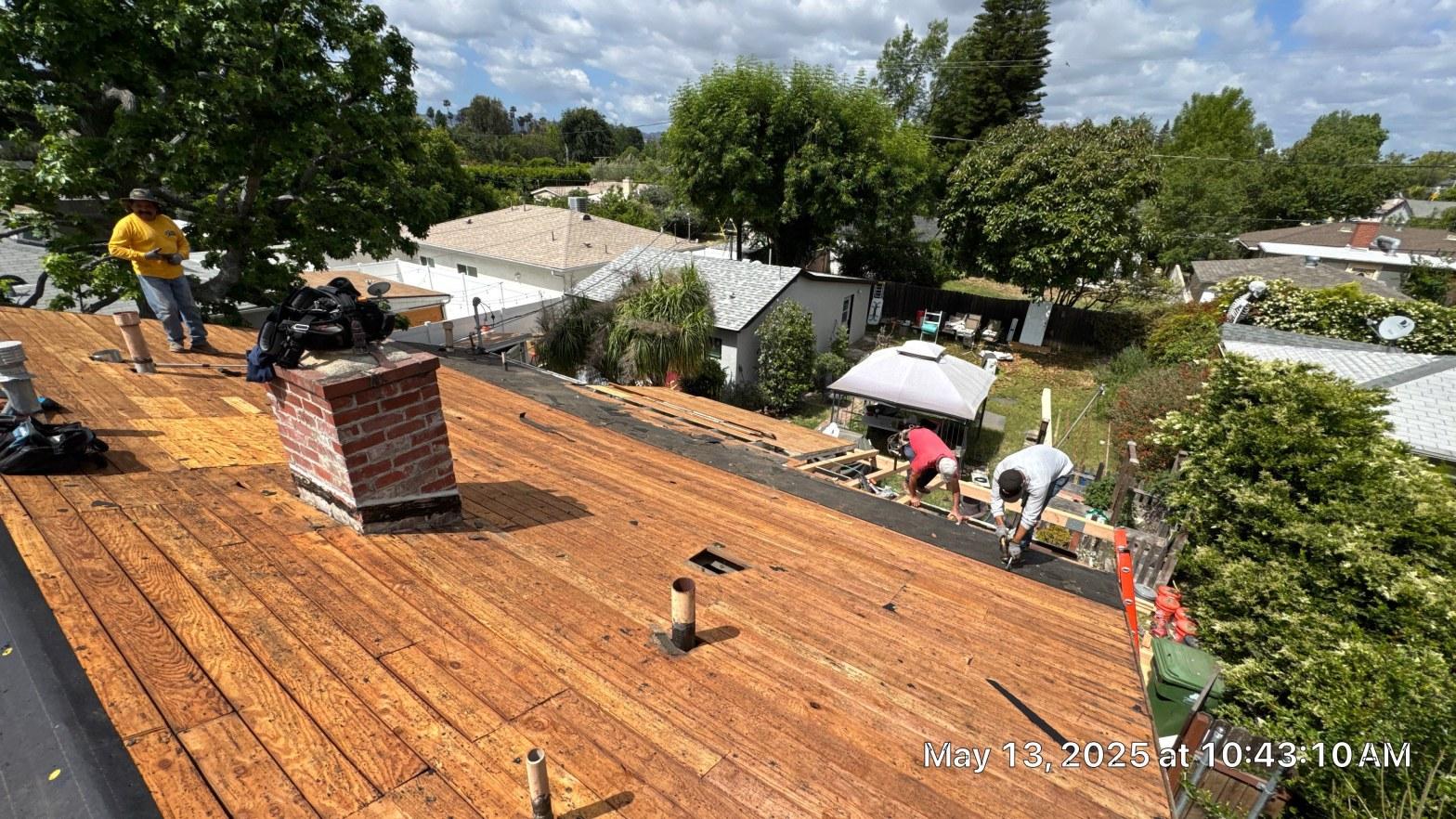
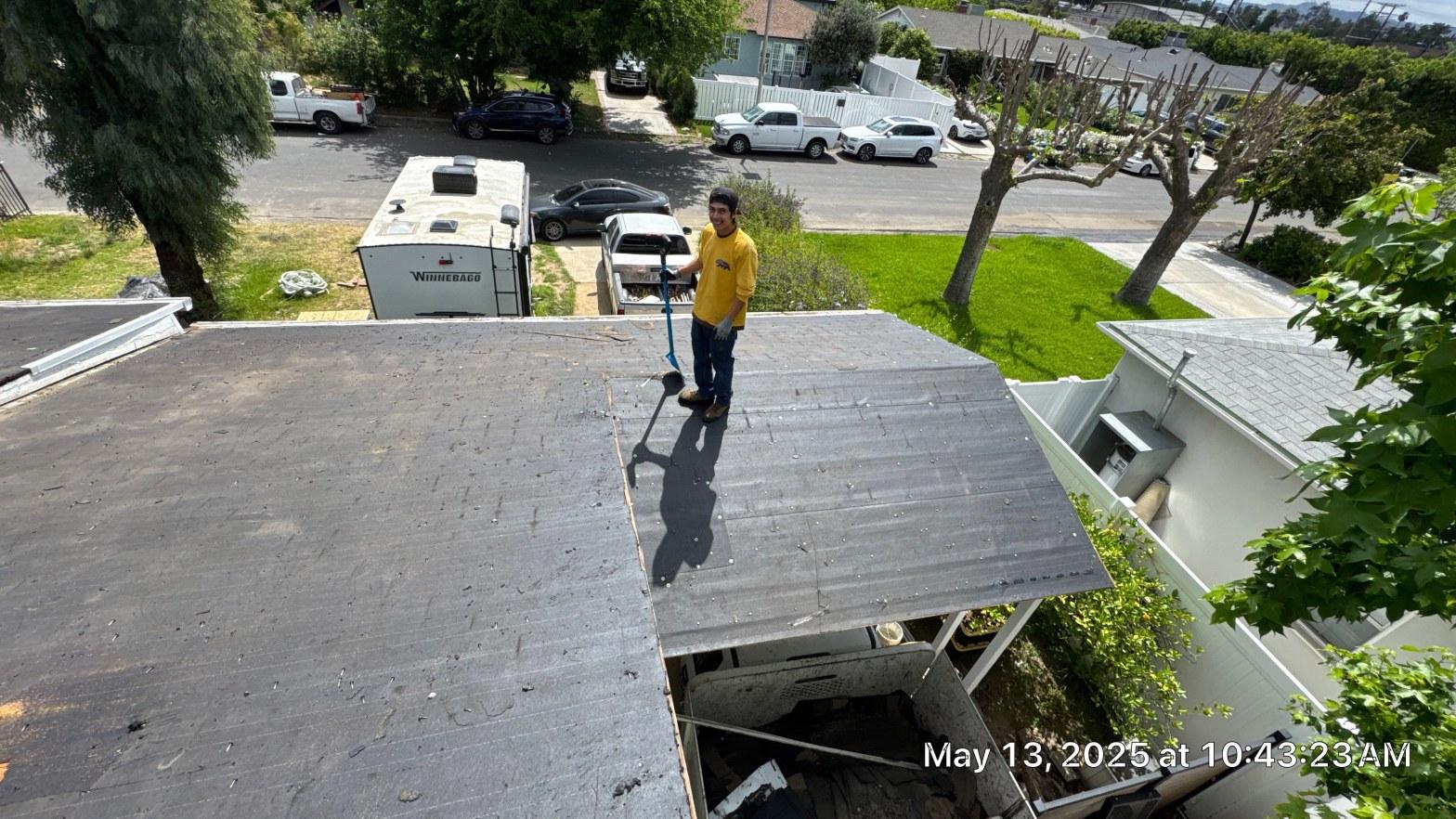
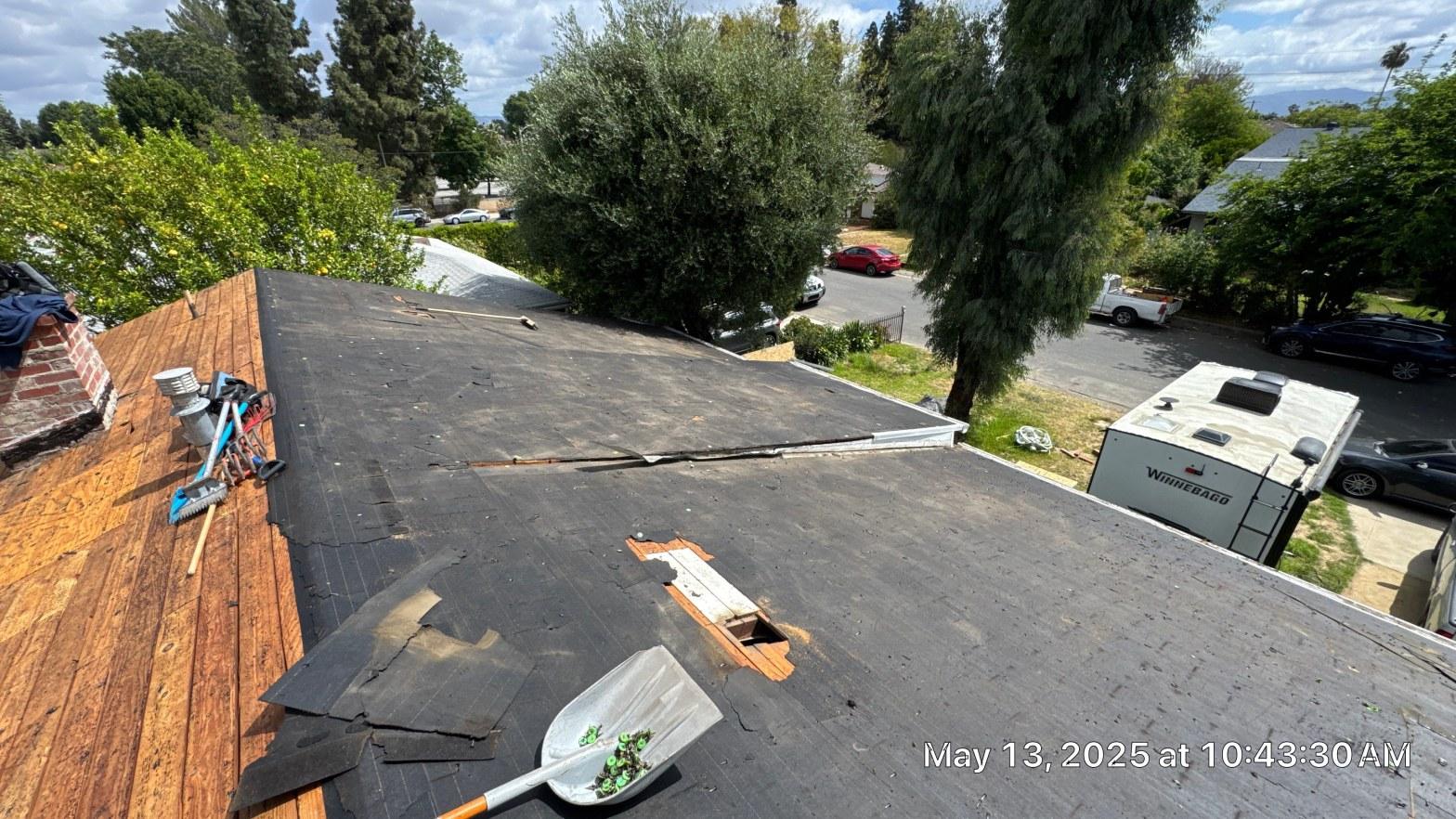
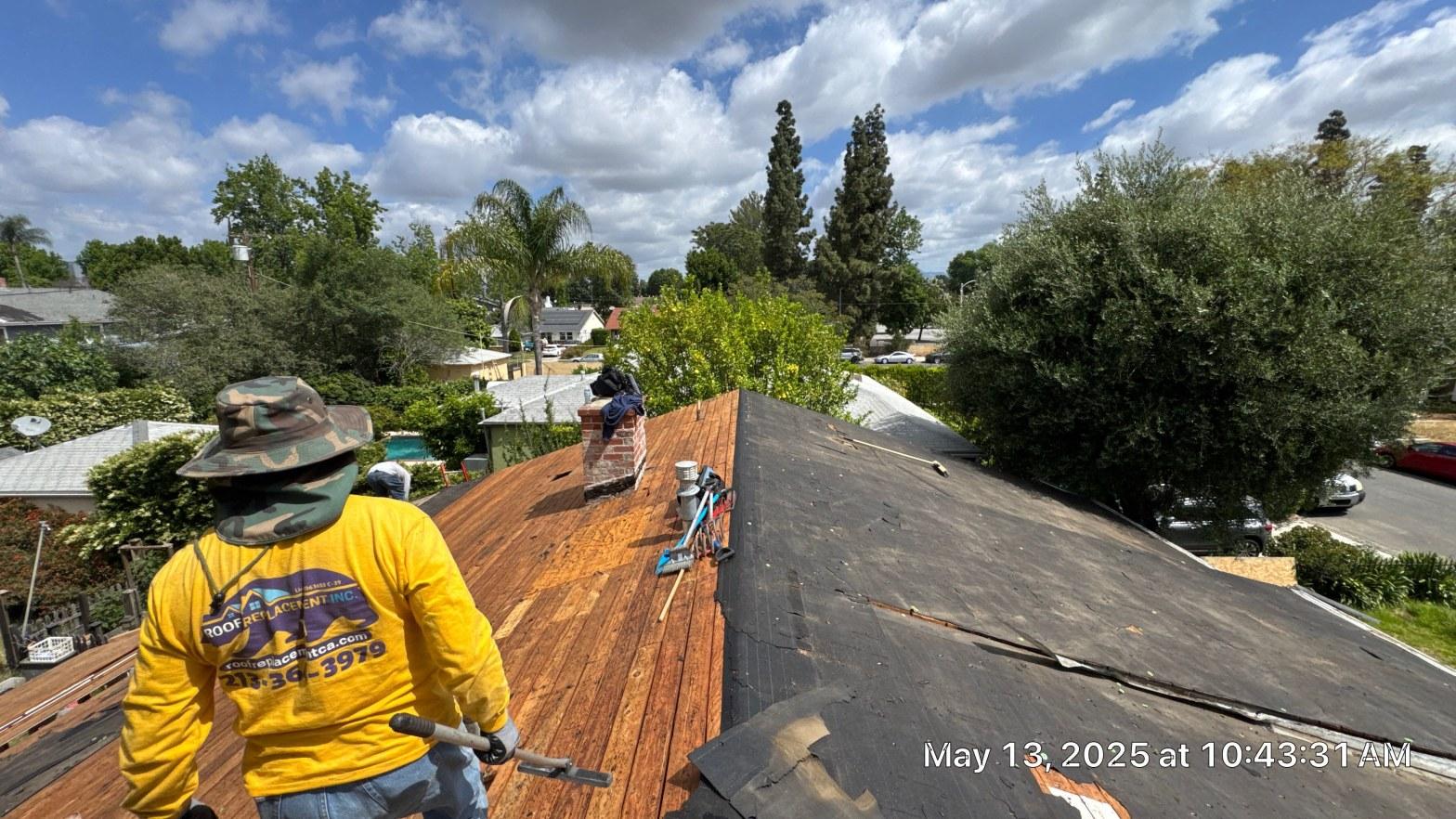
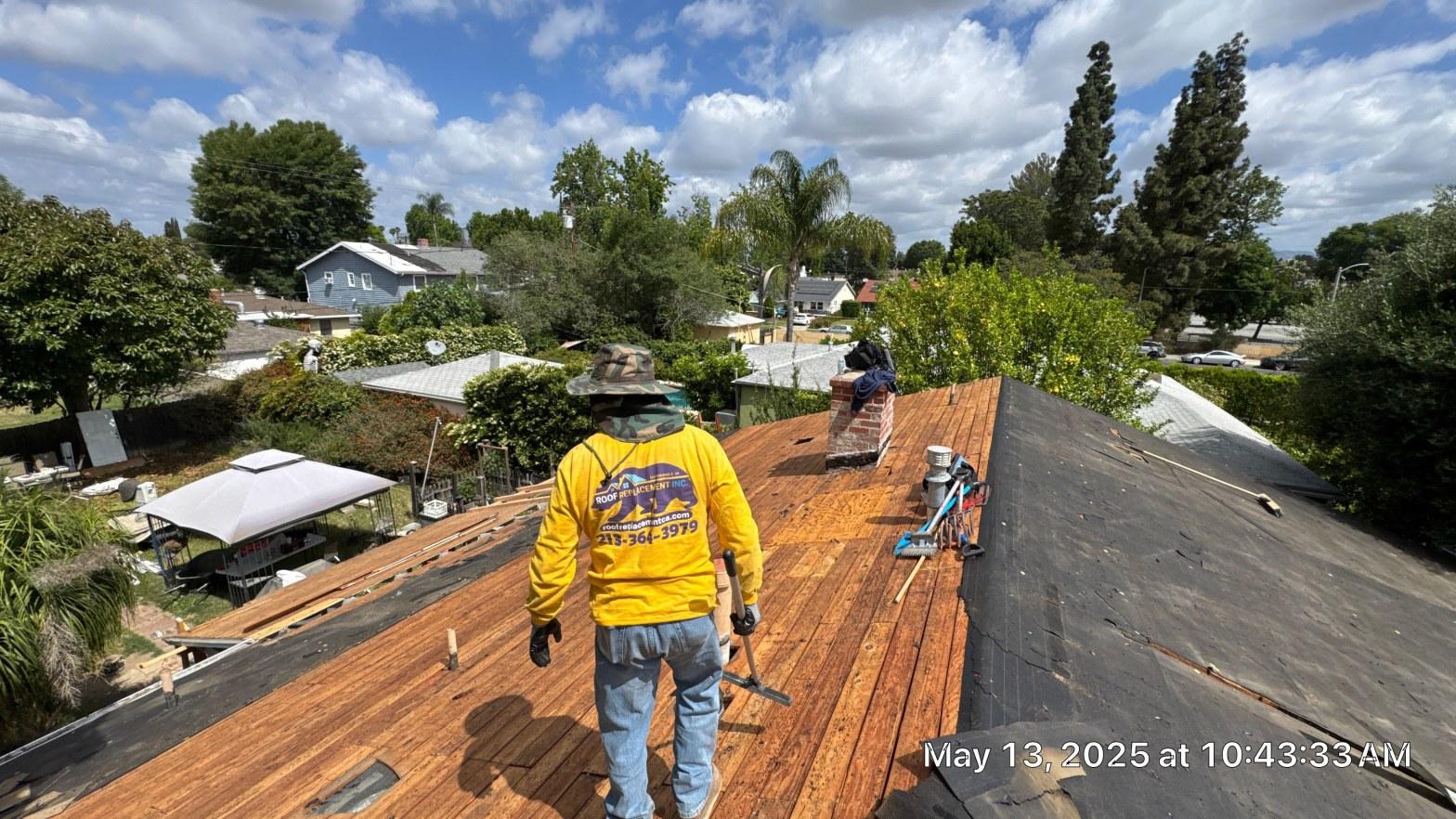
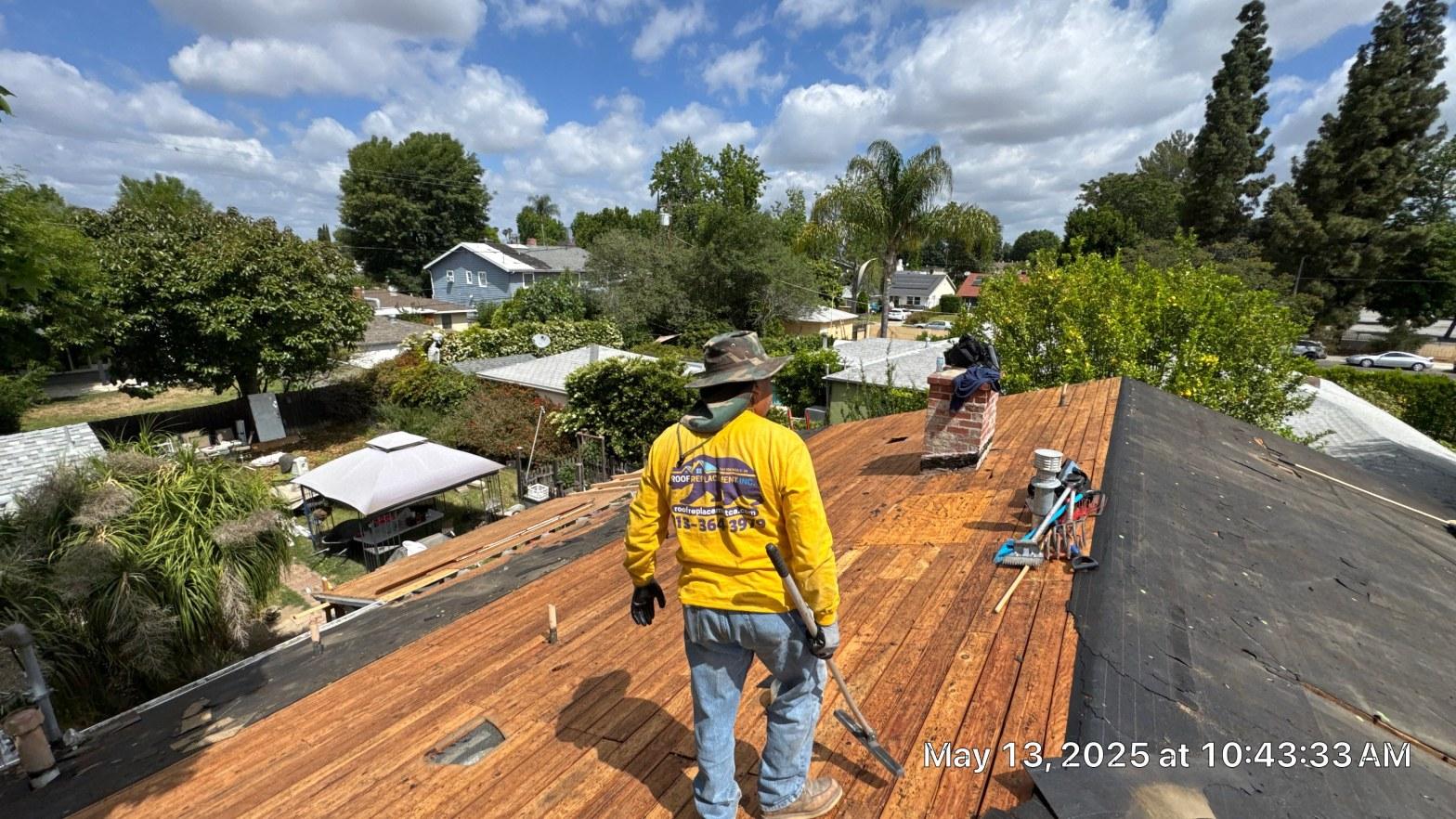
The shingles themselves told the story clearly. Heavy whitening and patchy granule loss across the entire field indicated the roof was likely 20 or more years old. Once shingles shed their granule coating at this scale, UV degradation accelerates rapidly and the underlying mat becomes brittle. There was no repairing this roof — it needed a full replacement.
What Did We Find When We Pulled the Old Shingles?
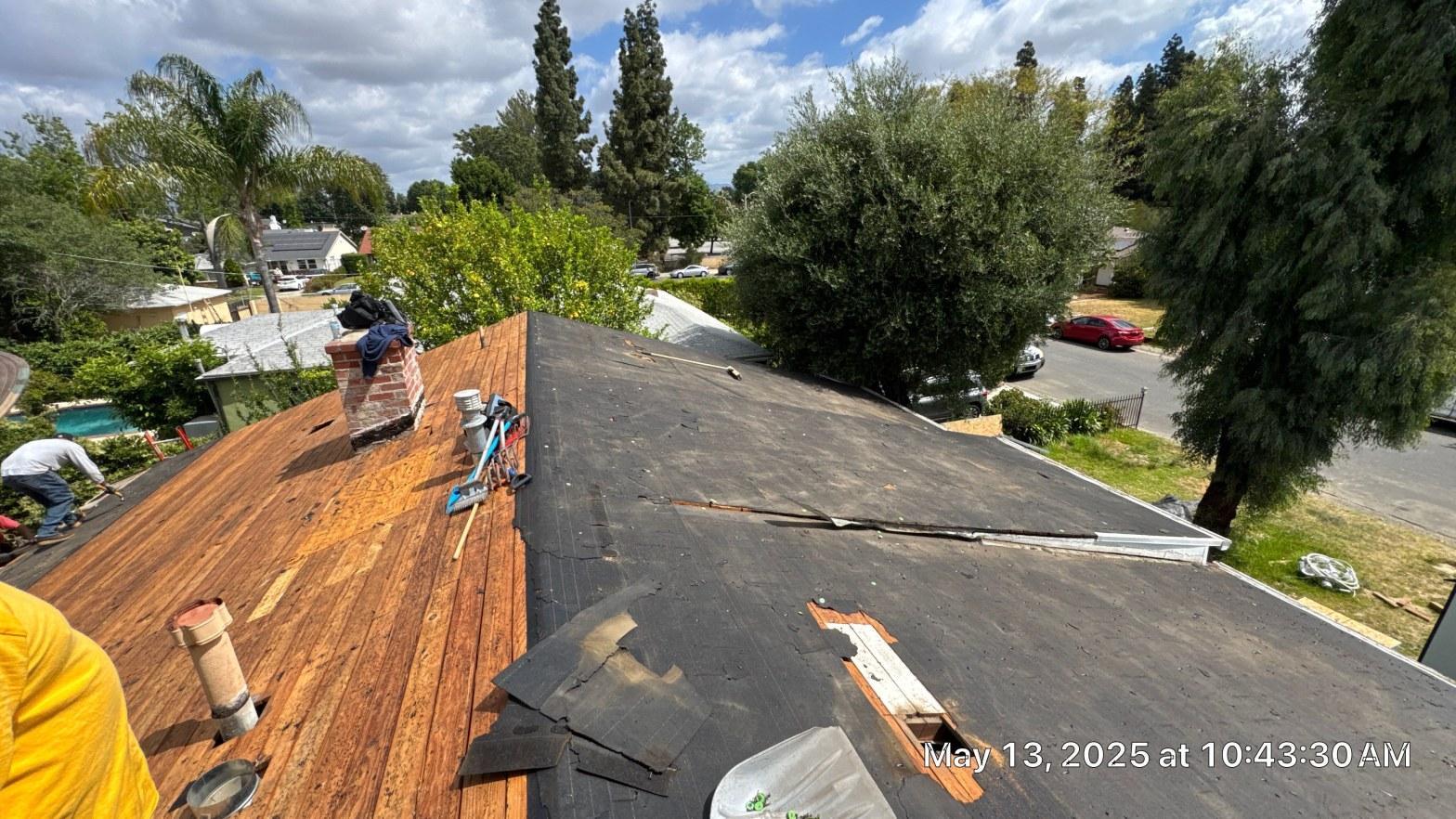
Tearing off the old shingles on May 13, 2025 confirmed what the surface condition had suggested: the decking underneath had sustained structural damage, including a hole roughly 18 inches across that had opened through the plywood field.
Our crews see this pattern on roughly 1 in 4 tear-offs on Los Angeles homes where the roof has gone more than 5 years past its replacement window — the moisture that creeps under failing shingles eventually rots or compromises the decking beneath. On this project, the affected section was cut out and replaced with new plywood before any underlayment went down.
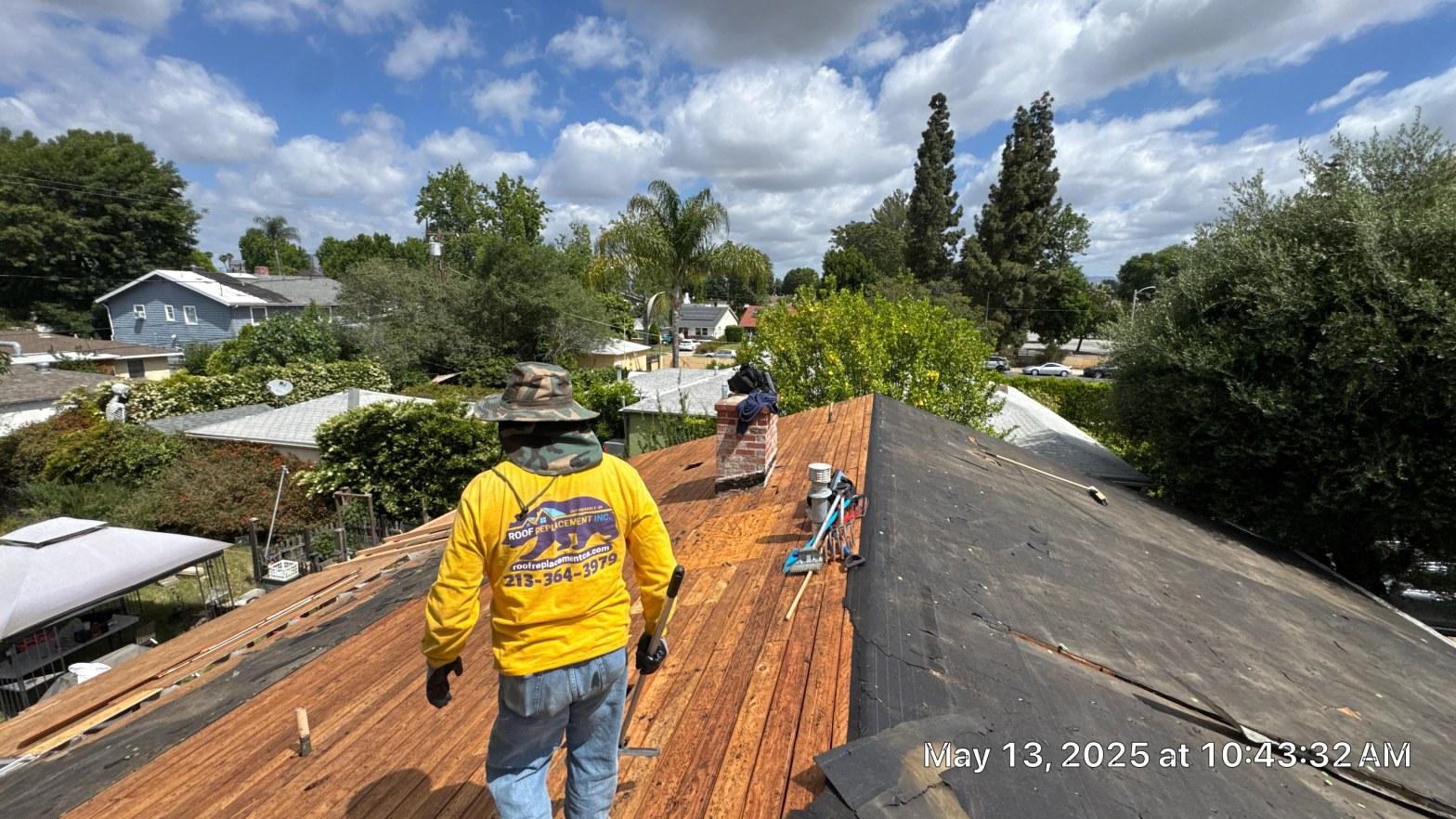
The tear-off also exposed the original board sheathing on part of the roof structure, and the crew documented a brick chimney still in place along the ridge. Both the chimney base and the pipe penetrations — there were at least 3 pipe vents visible across the field — required new flashing and boot seals as part of the reroof scope.
California’s building code, administered under California’s Title 24 building energy standards, requires that roofing products installed on residential structures meet minimum cool-roof reflectance thresholds in many climate zones. Los Angeles falls within a zone where these requirements apply to low-slope sections, which guided underlayment and product selection on the flat portion of this roof.
How Was the Reroof Executed?
Once the decking repairs were complete and inspected, the crew installed new underlayment across the full field before laying fresh asphalt shingles.
The sequence on a project like this runs: full tear-off → decking inspection and repair → underlayment → drip edge and flashing → shingles from eave to ridge. The photos from May 13 at 10:42 and 10:43 AM capture the midpoint of that process — one section already stripped to bare wood, the adjacent section still mid-tear with the old black underlayment and damaged shingles in place.
Pipe boot flashings at each of the 3 vent penetrations were replaced as part of the standard scope. Reusing old boots on a new roof is a common shortcut that leads to leaks within 2 to 4 years; on every reroof we complete, all penetration flashings are replaced, not reused.
Roof Replacement Inc is Licensed by the California Contractors State License Board (CSLB), which requires all roofing contractors operating in California to carry valid licensure and insurance before performing work like this.
How Did the Project Turn Out?
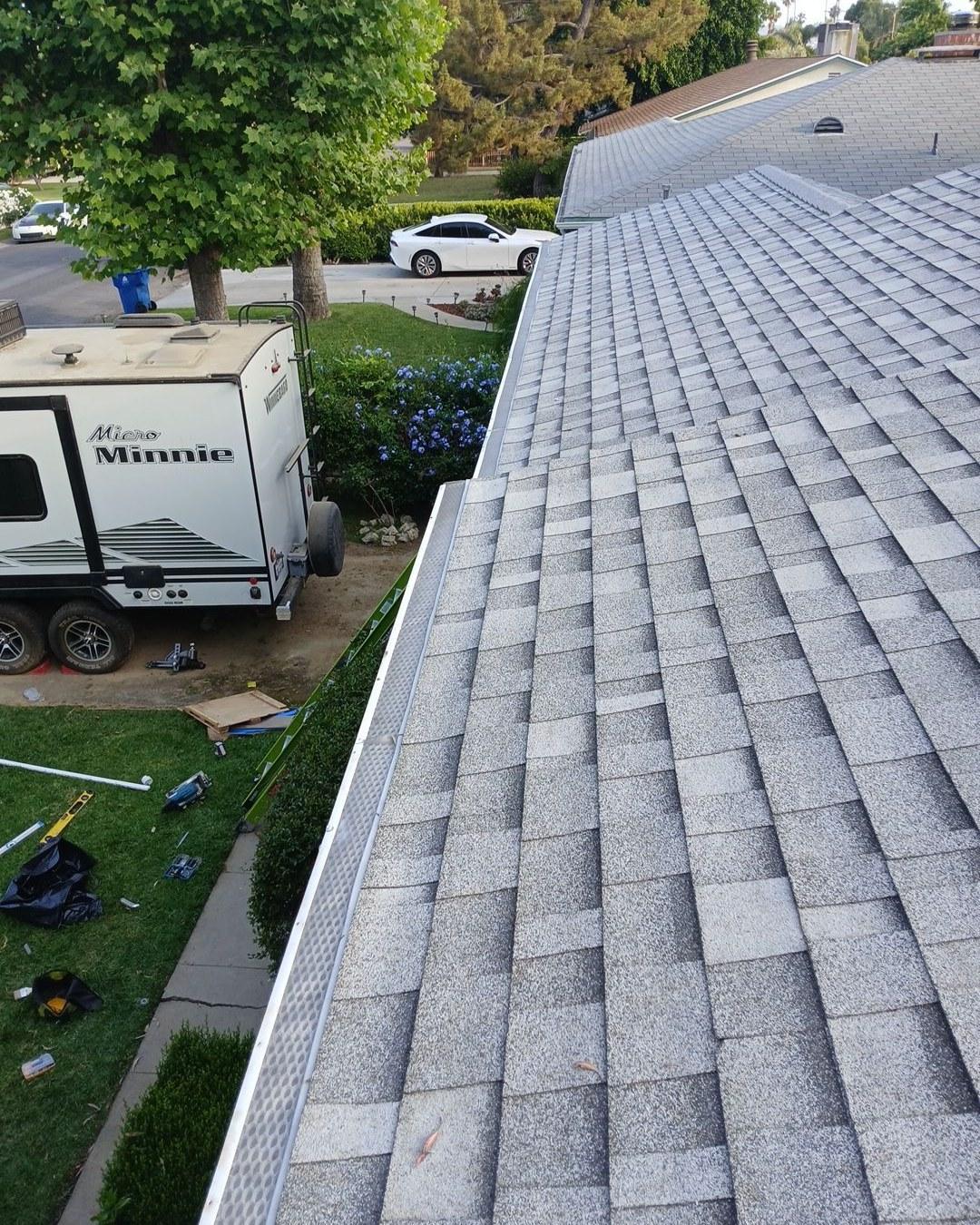
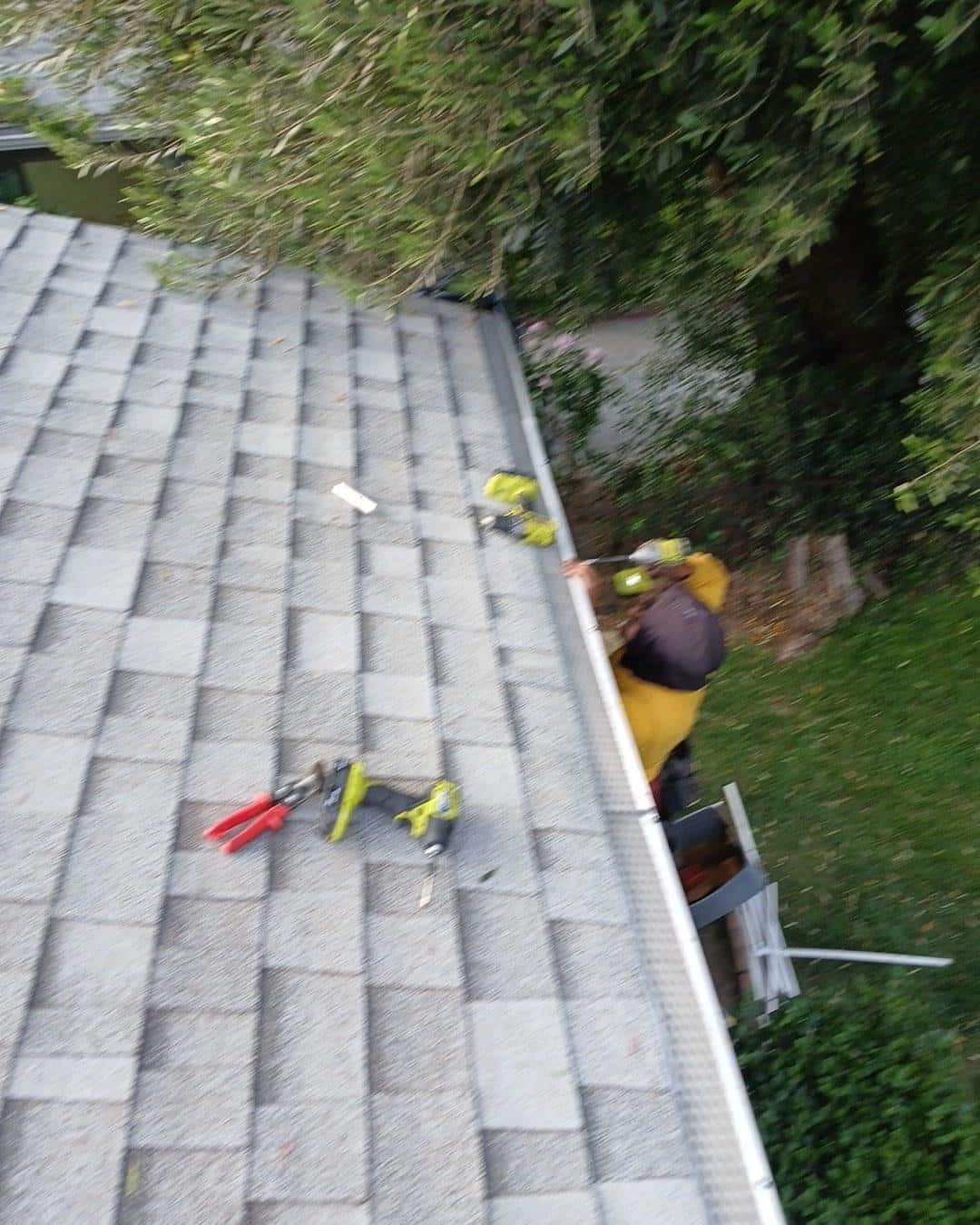
By the end of the project day, the full shingle tear-off was complete, all decking repairs were in place, and the new roof was installed across the entire surface of the home at 6643 Saloma Ave.
The homeowner went from a roof with a visible hole in the decking and shingles that had shed most of their granule protection to a fully replaced system ready for the next rain season. New pipe boots, fresh underlayment, and properly seated shingles at all transitions and the ridge mean this roof should deliver 25 to 30 years of service life under normal Los Angeles conditions.
If your home’s roof shows the same signs — heavy granule loss, whitened or brittle shingles, or any soft spots when walked — call Roof Replacement Inc for a direct assessment. We’ll tell you what we find and give you a written scope before any work begins.


