What Was the Condition of This Roof When We Arrived?

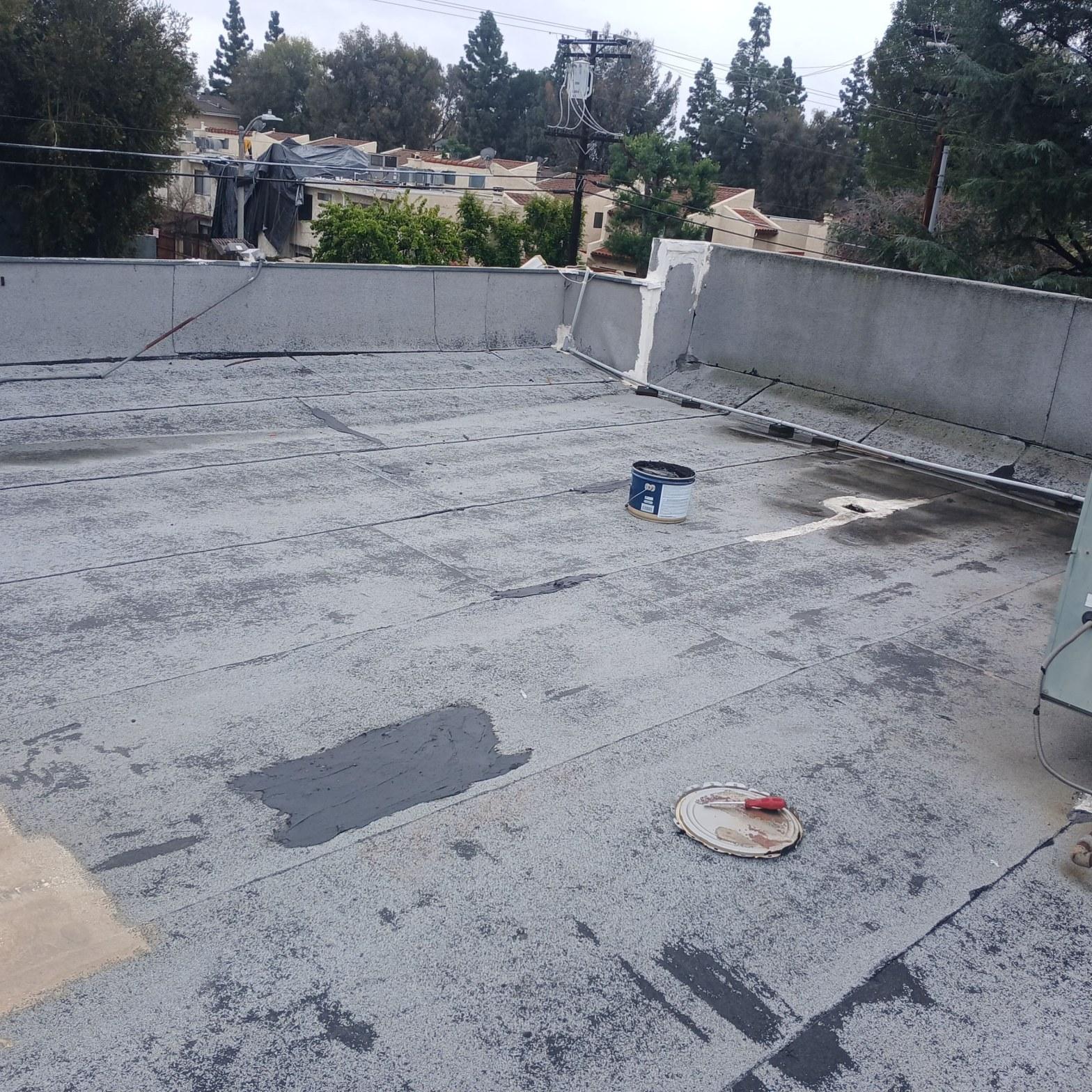
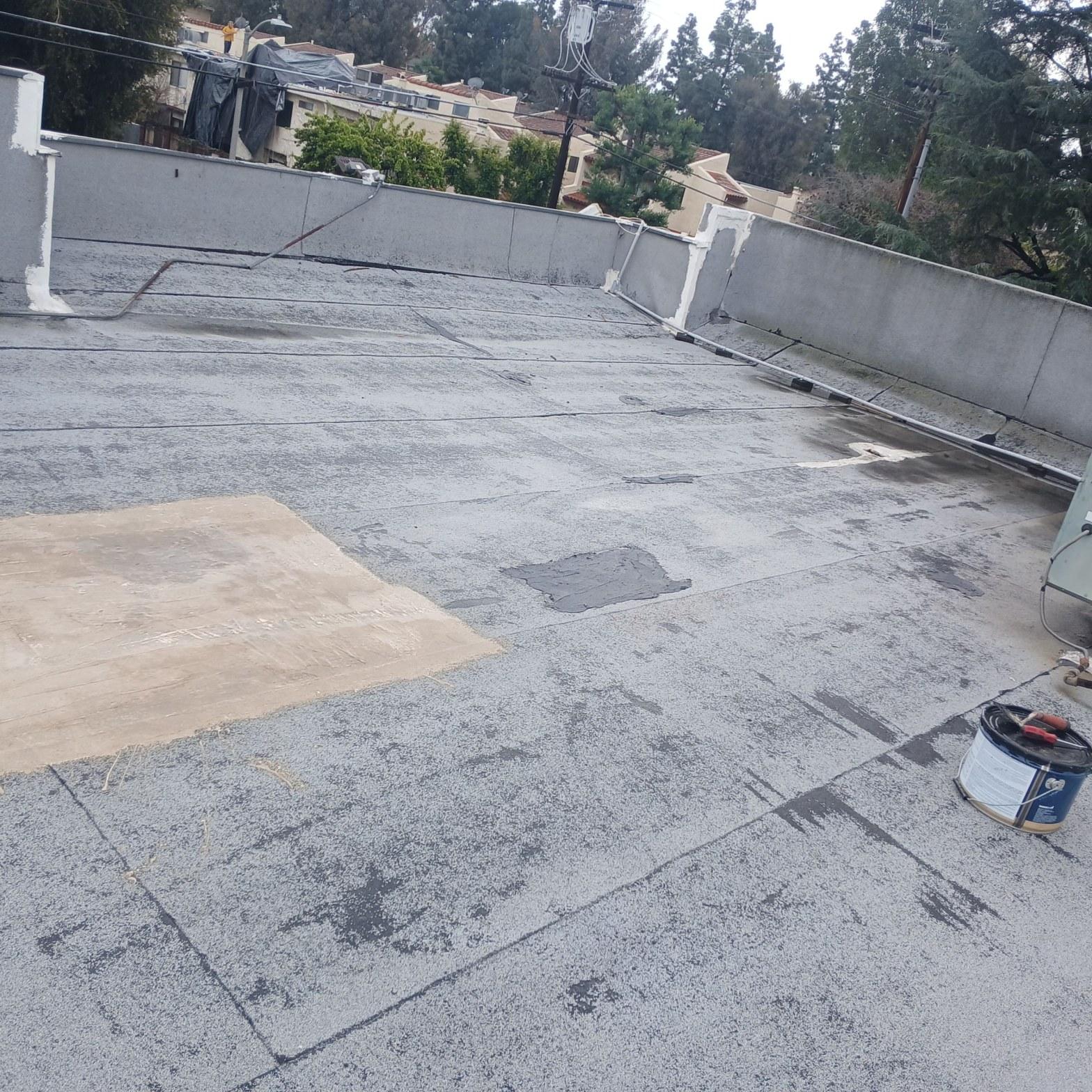
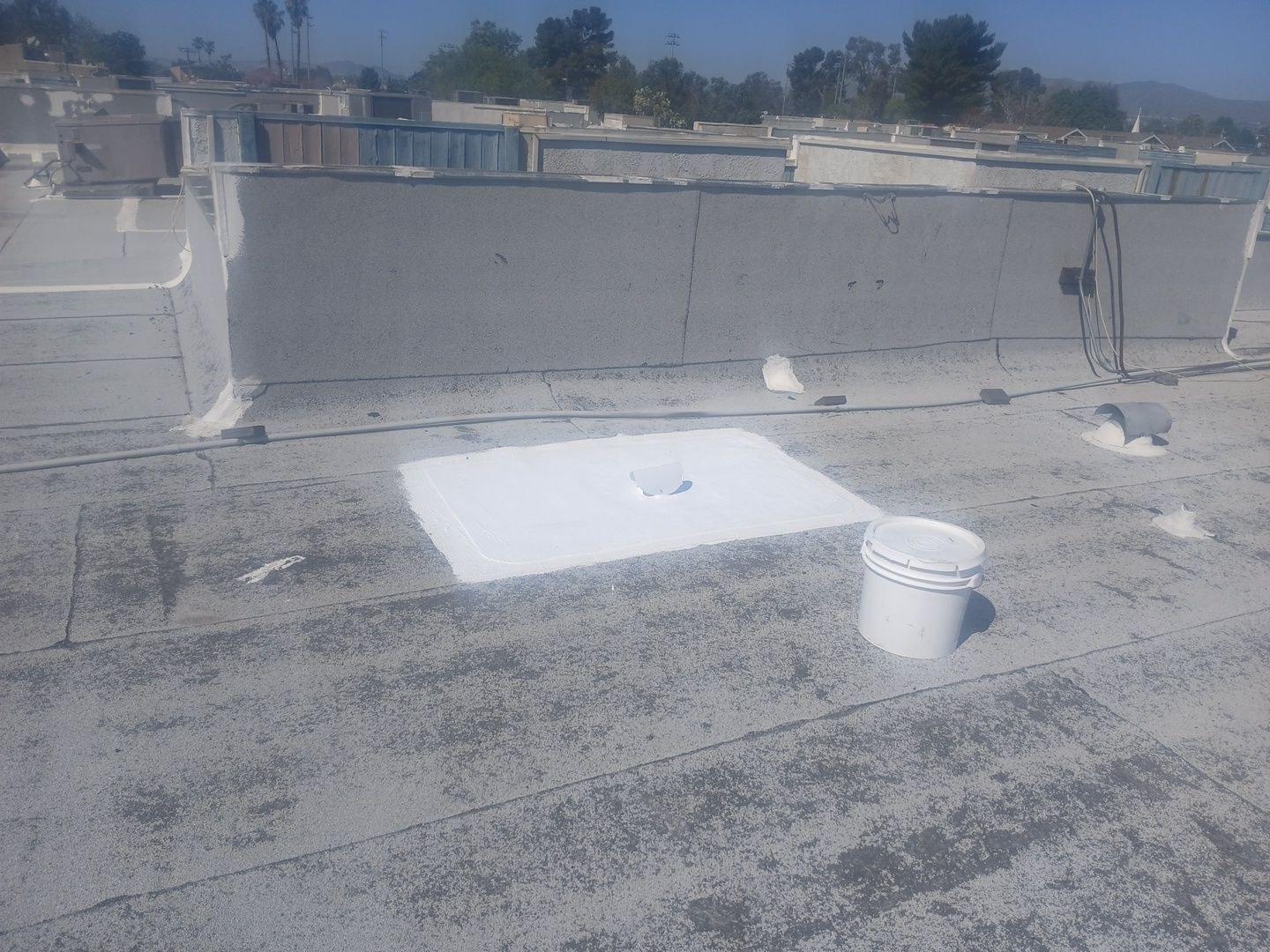
The torch down membrane at 8801 Willis Ave in Los Angeles was showing multiple failure points: open seams, surface granule loss across roughly 60–70% of the visible deck, and delaminated flashing at the parapet walls. The building owner had been tracking interior water intrusion and needed the leaks stopped before the next rain event. Southern California’s Los Angeles basin receives the bulk of its annual rainfall between November and March, leaving a narrow window for flat roof remediation work each fall.

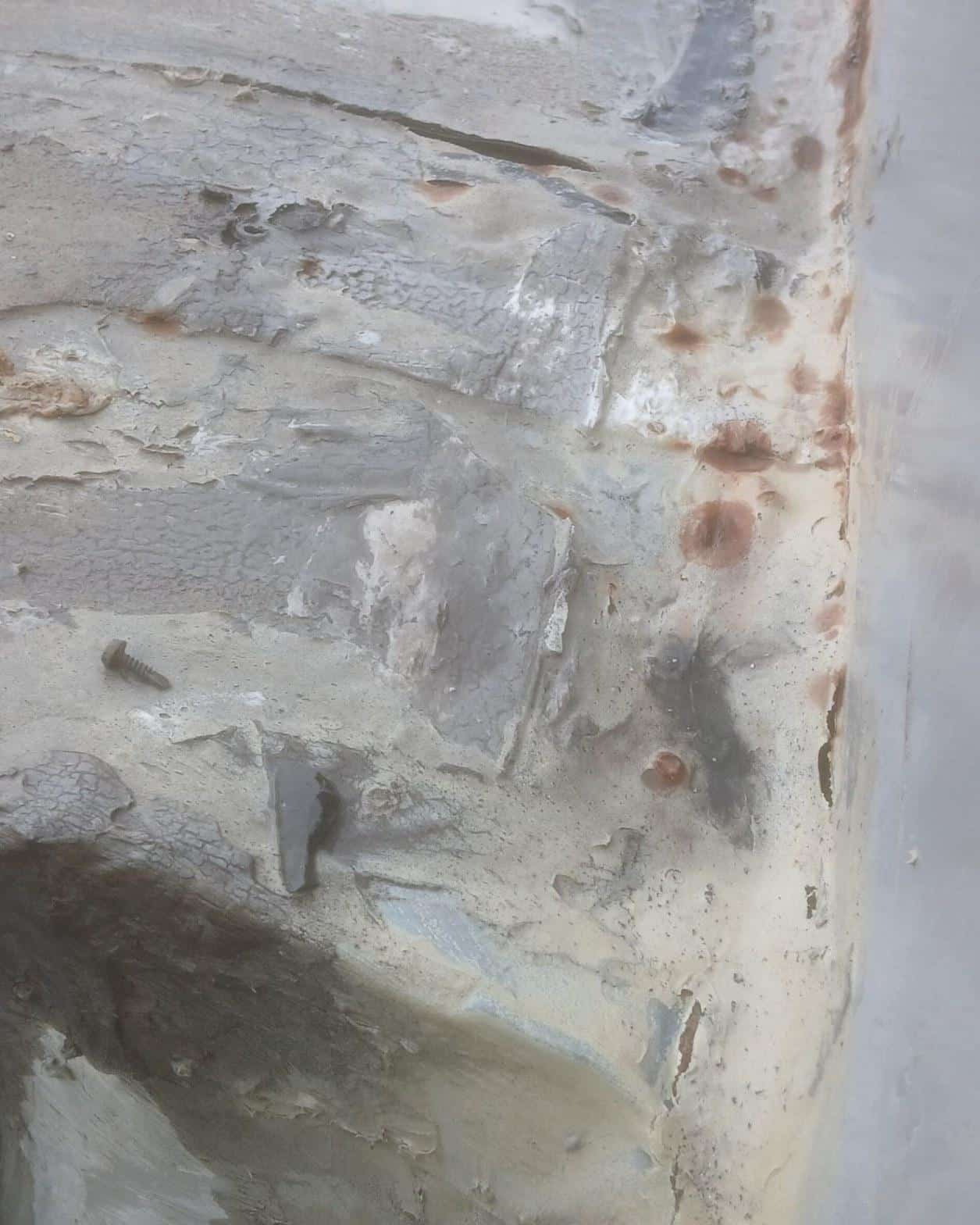
The membrane itself was an older torch-applied modified bitumen — a material common on low-slope residential and light commercial roofs built or re-roofed in the 1990s and early 2000s. After 20-plus years of UV exposure and California’s documented trend of intensifying heat cycles, the surface had oxidized significantly, with visible cracking at lap joints and around the roof drain area near the center of the field.
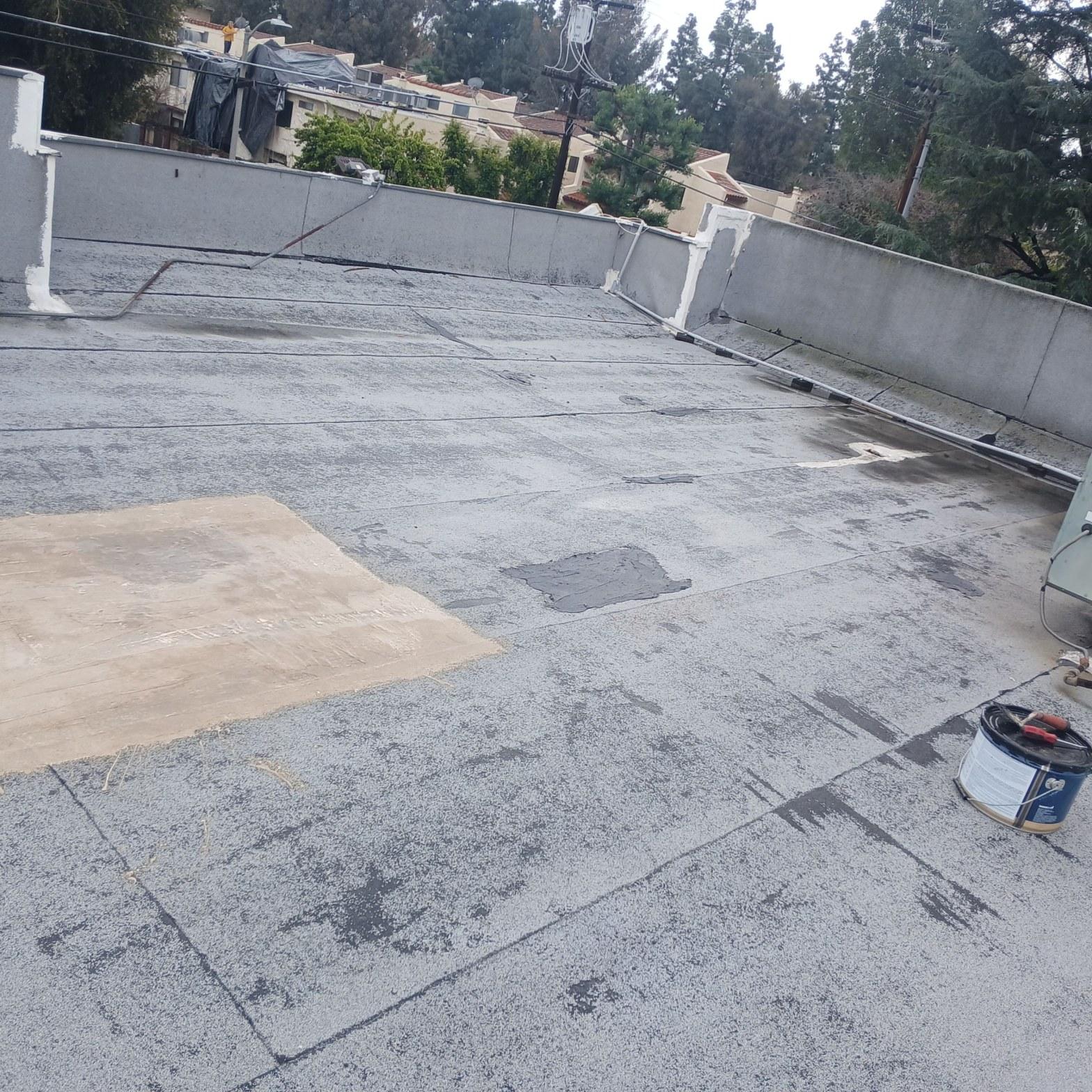
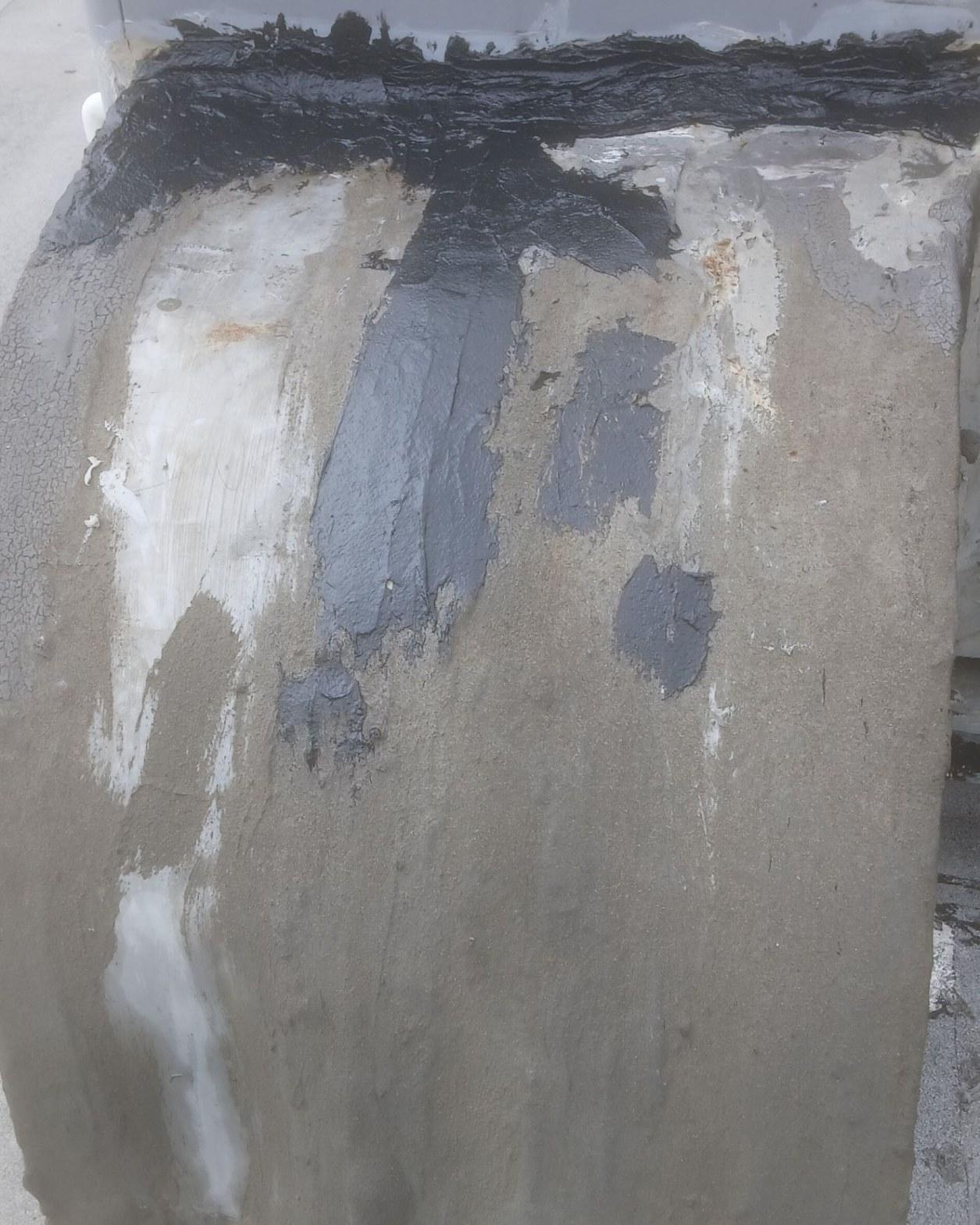
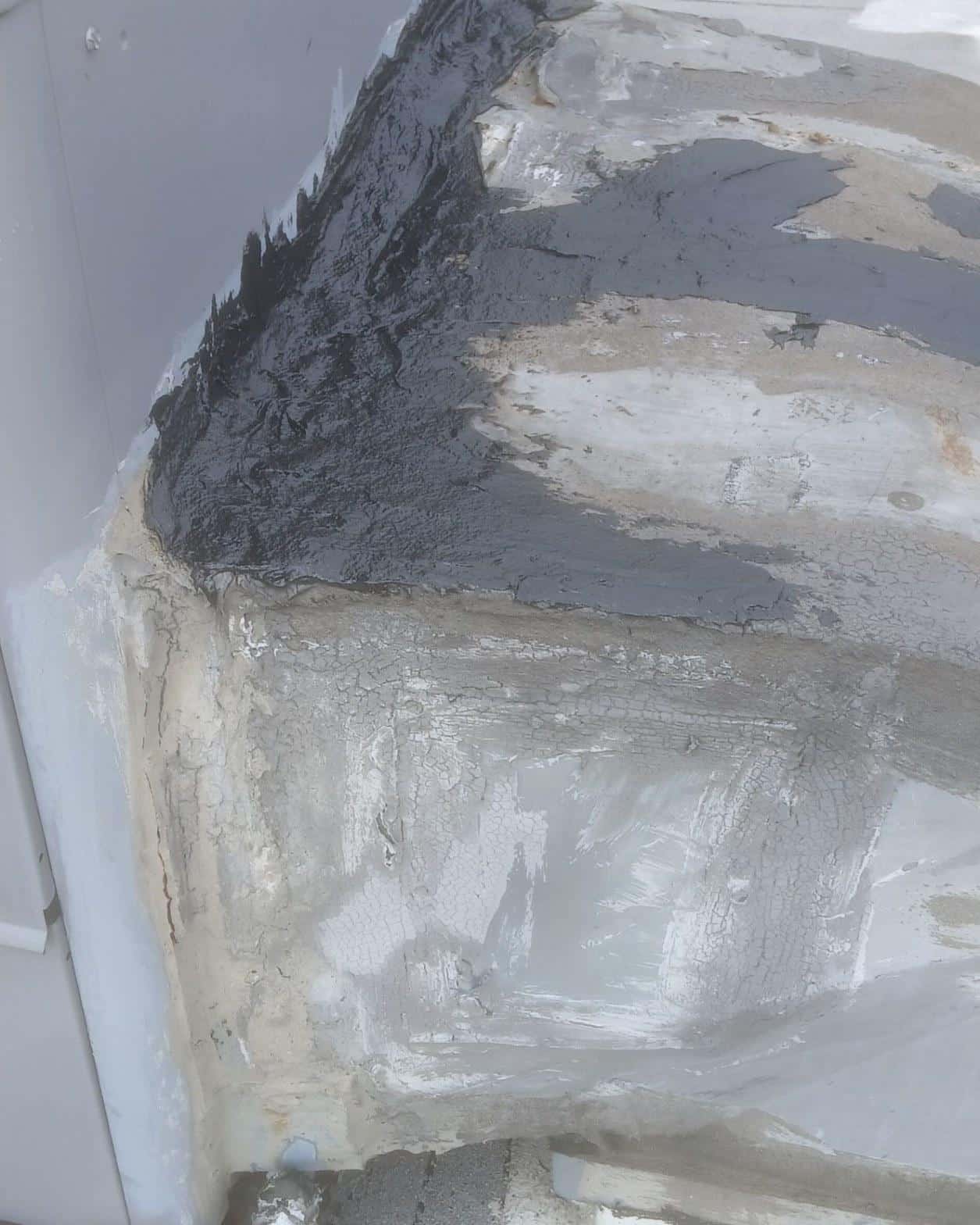
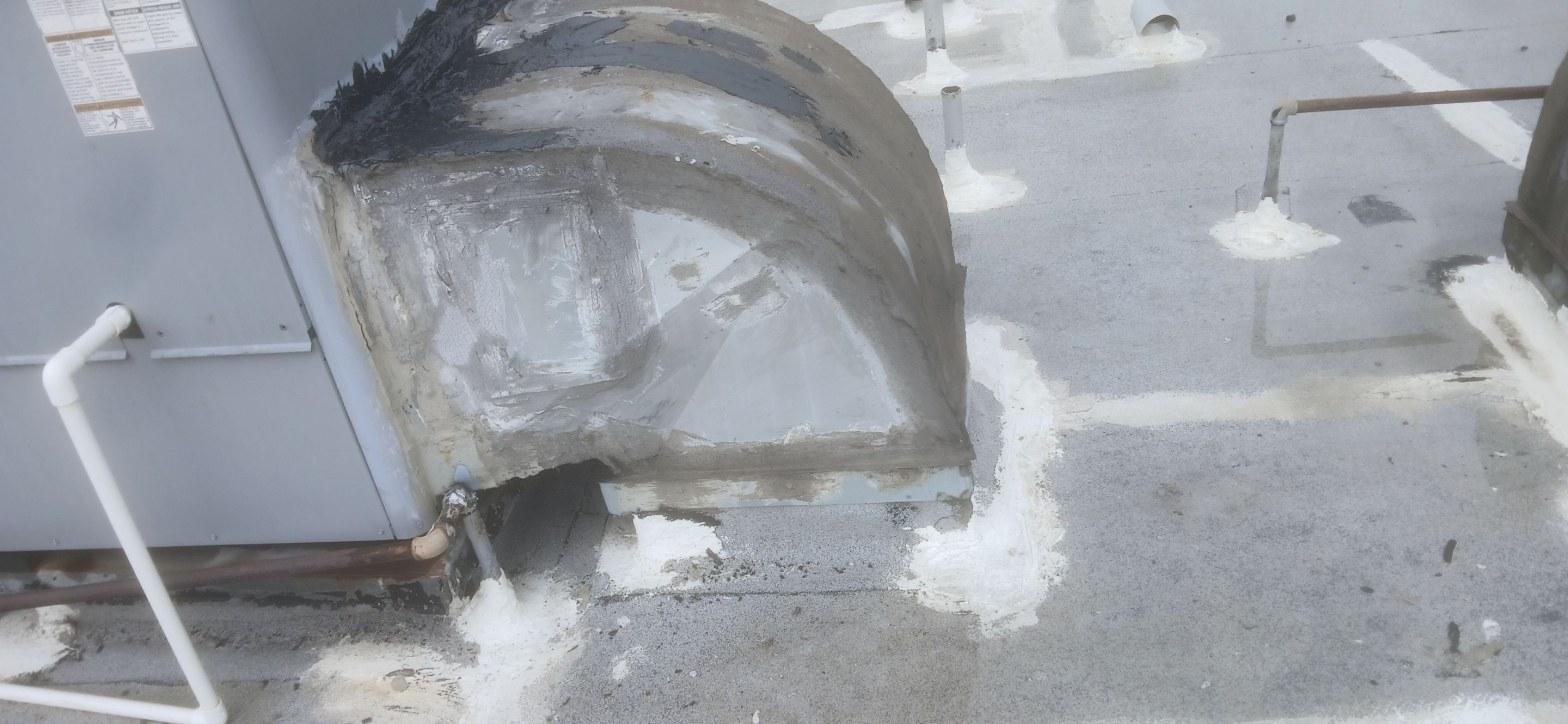
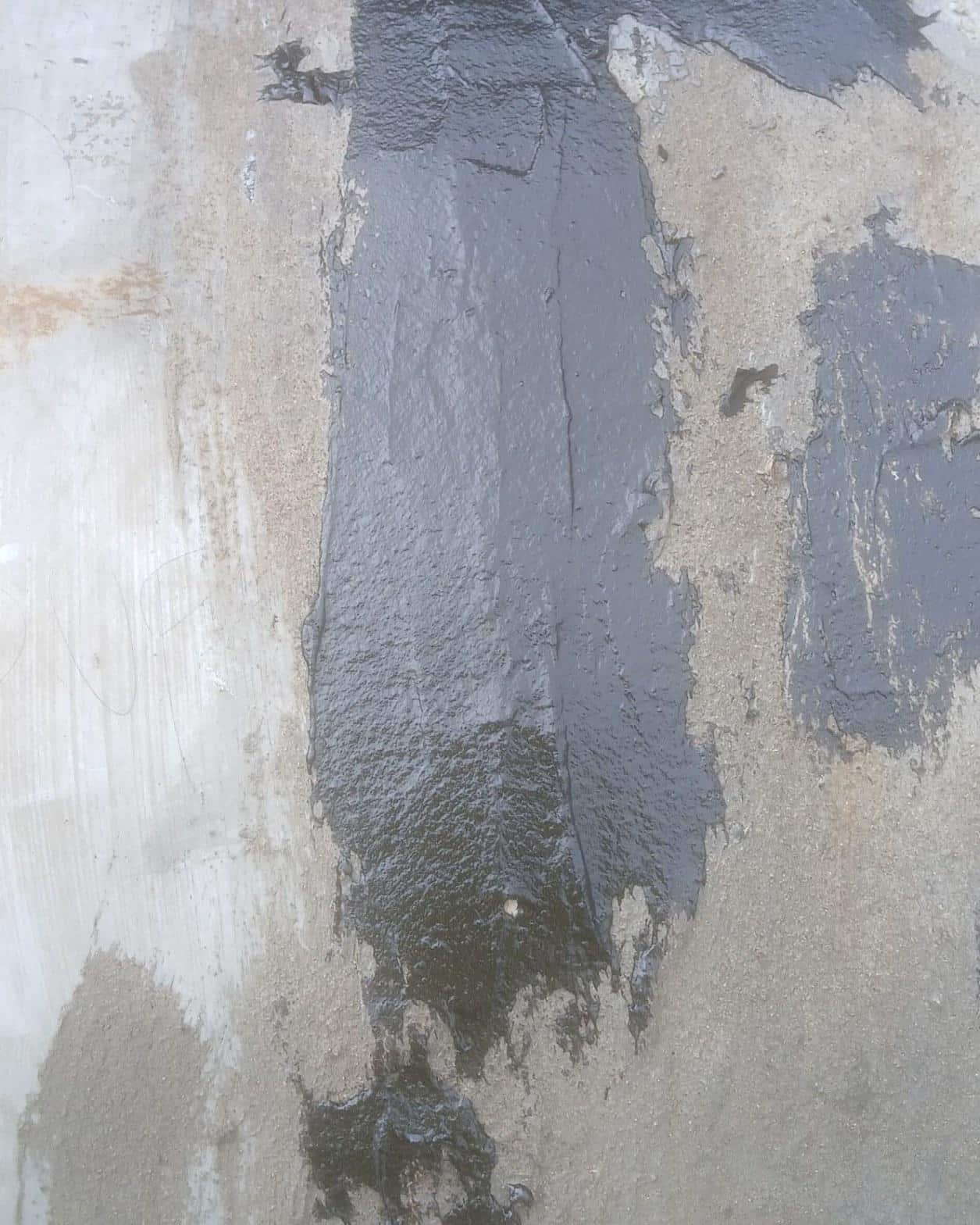
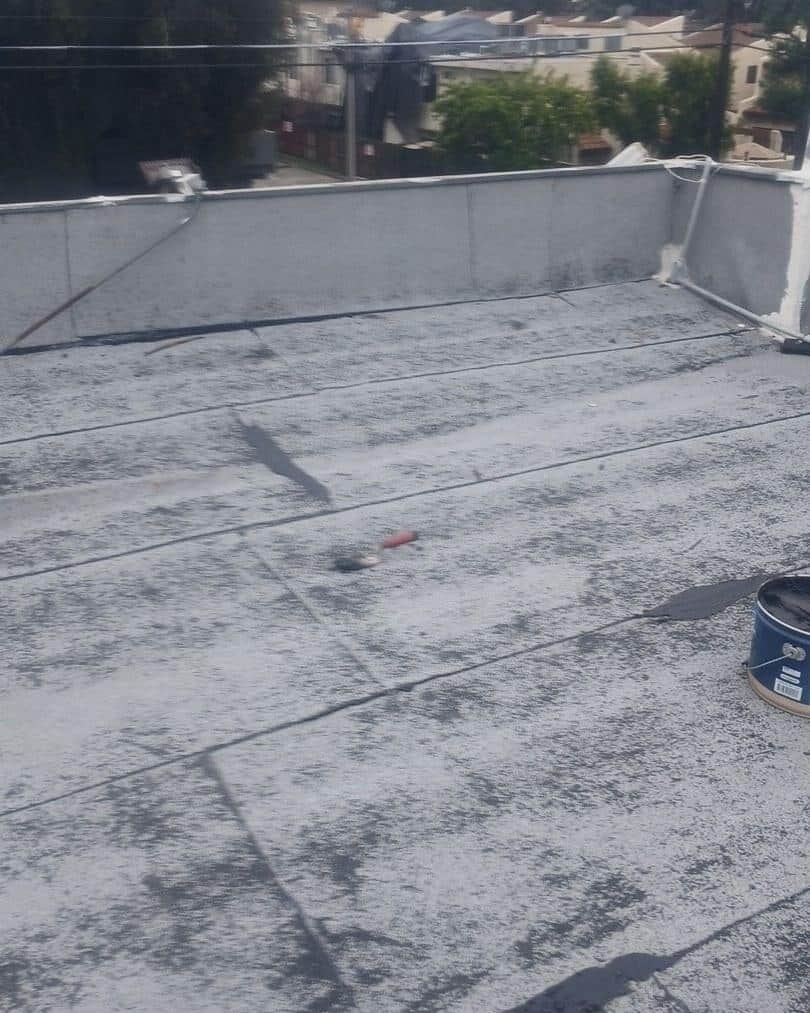
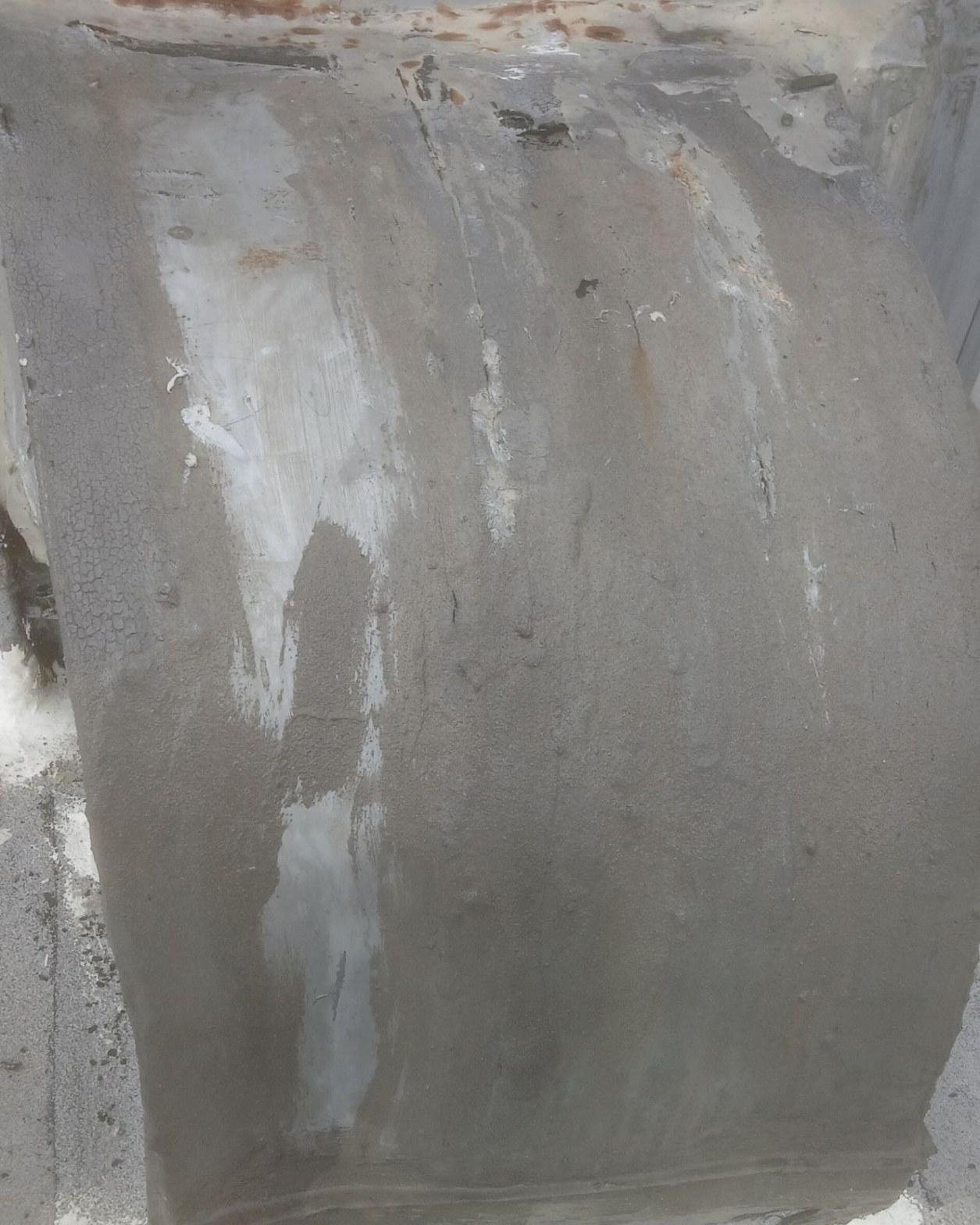
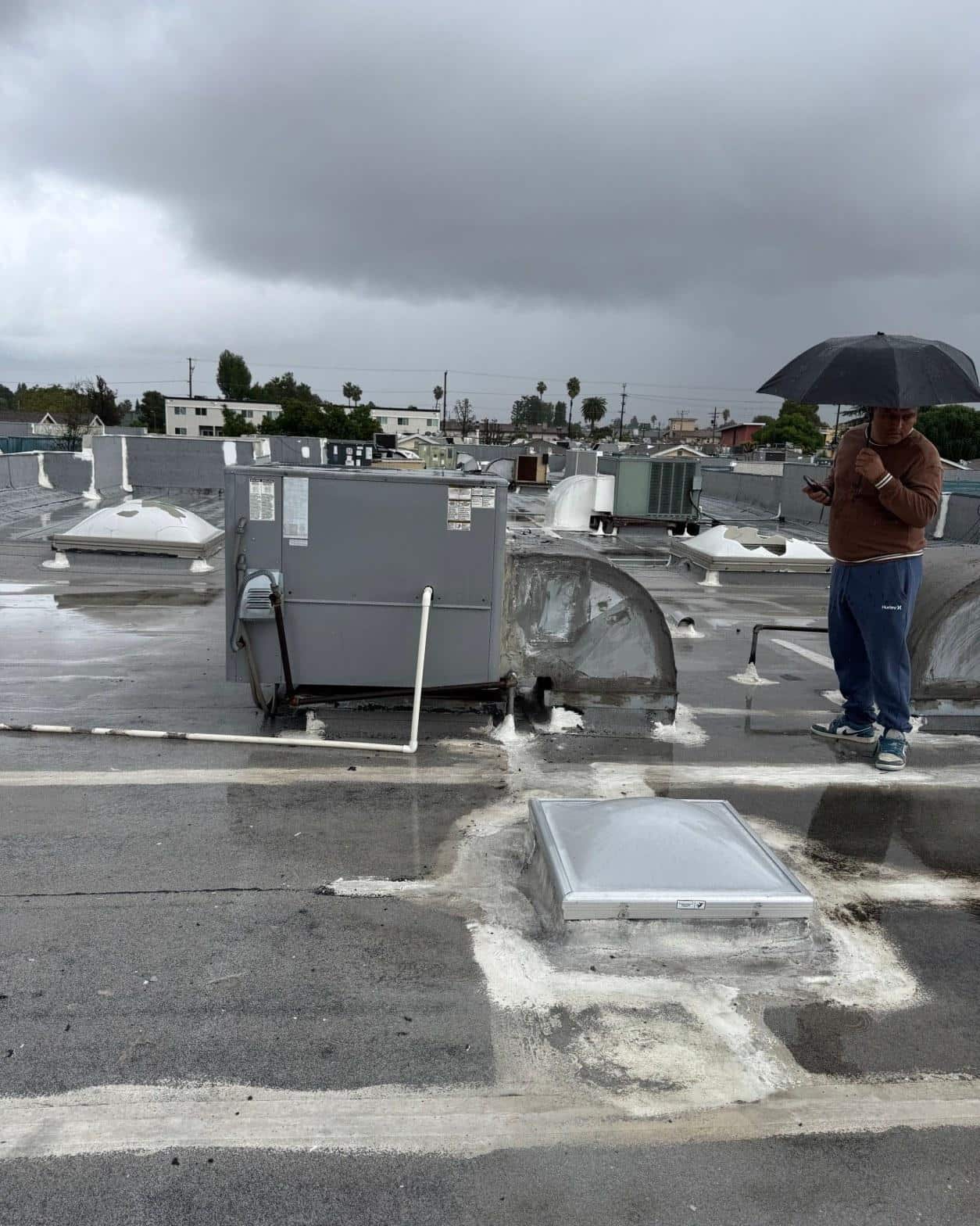
Worn torch down flat roof with bituminous patch areas and exposed substrate visible, 8801 Willis Ave Los Angeles
Worn flat roof with patched areas and a paint can nearby.

Project Gallery
How Did We Approach the Patch Repair?

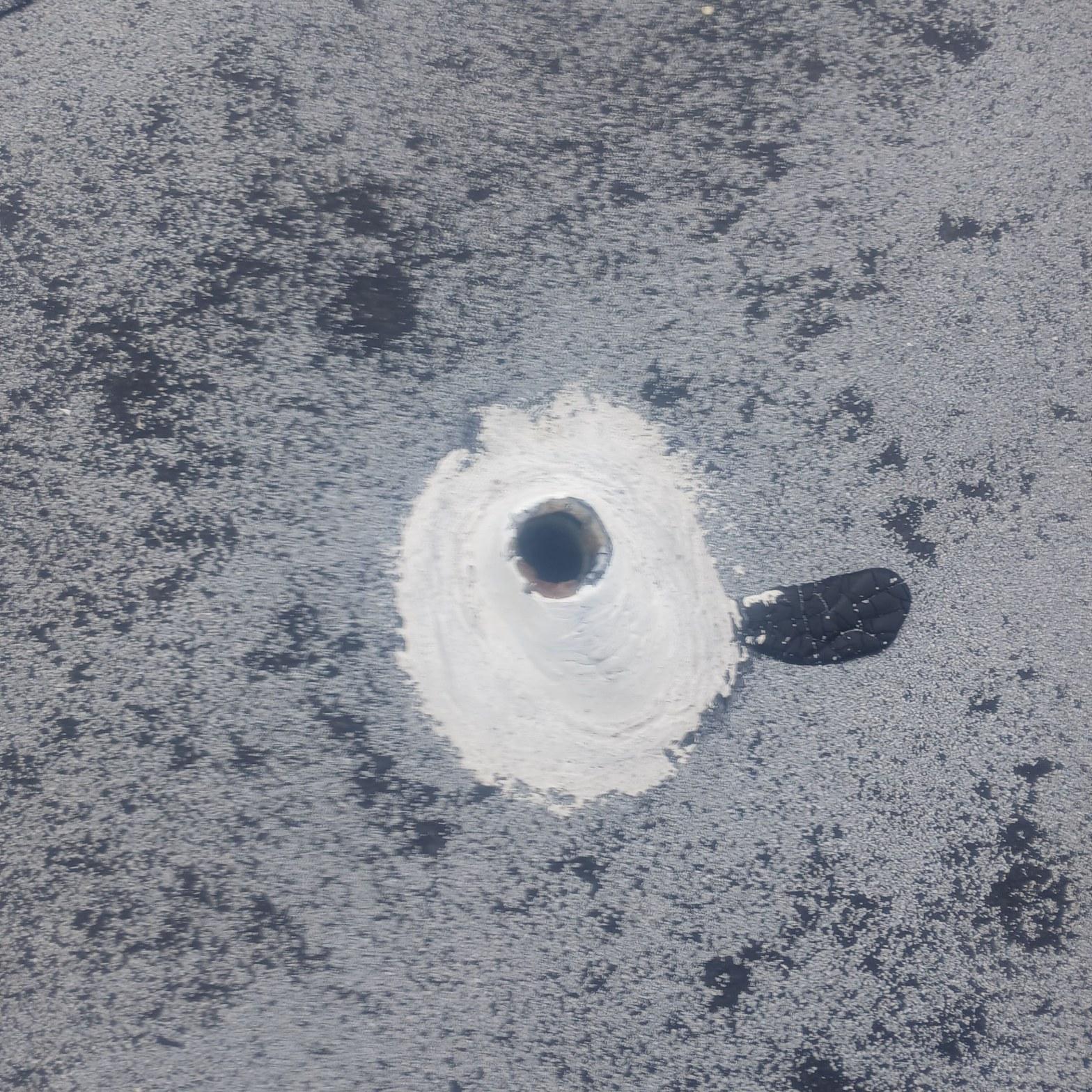
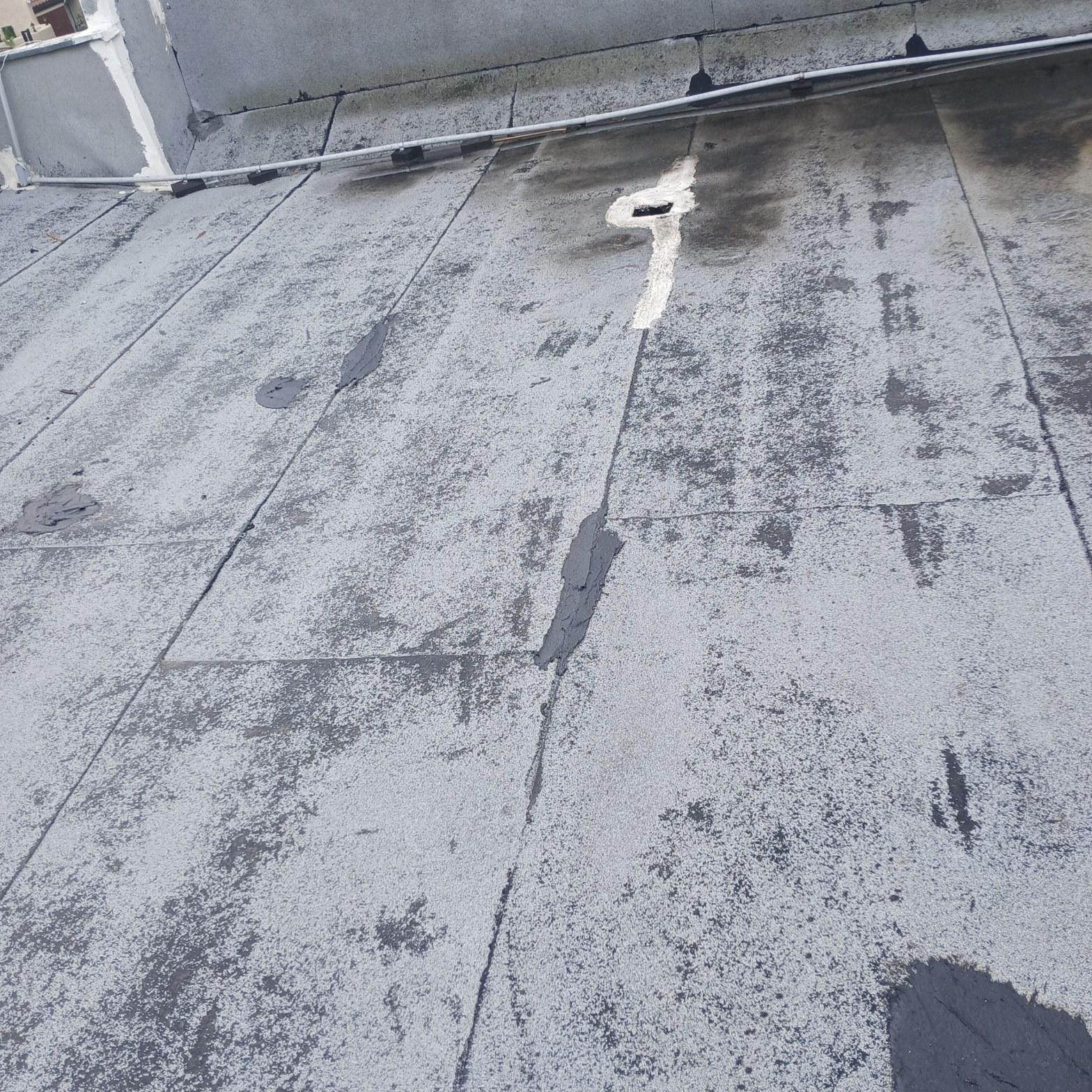
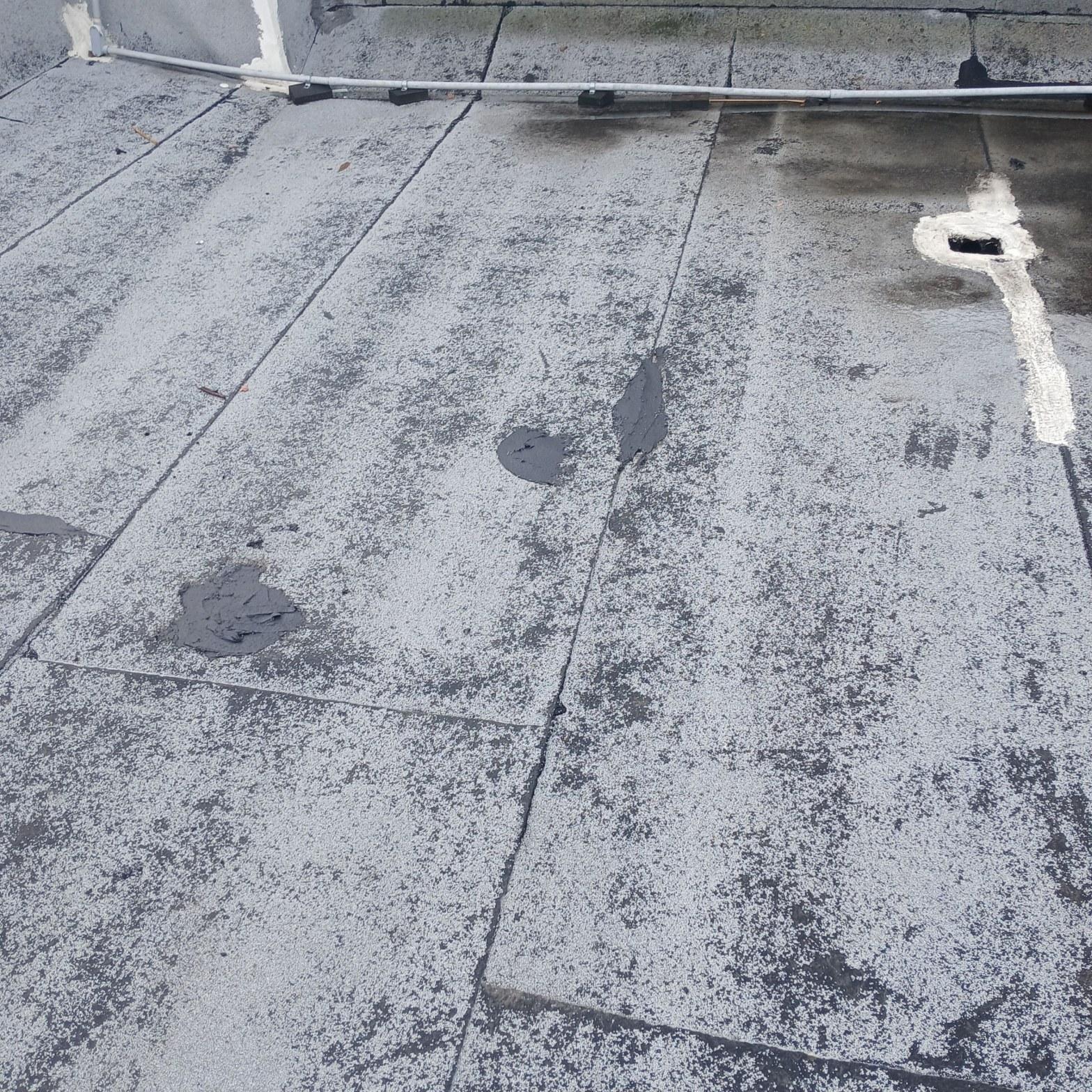
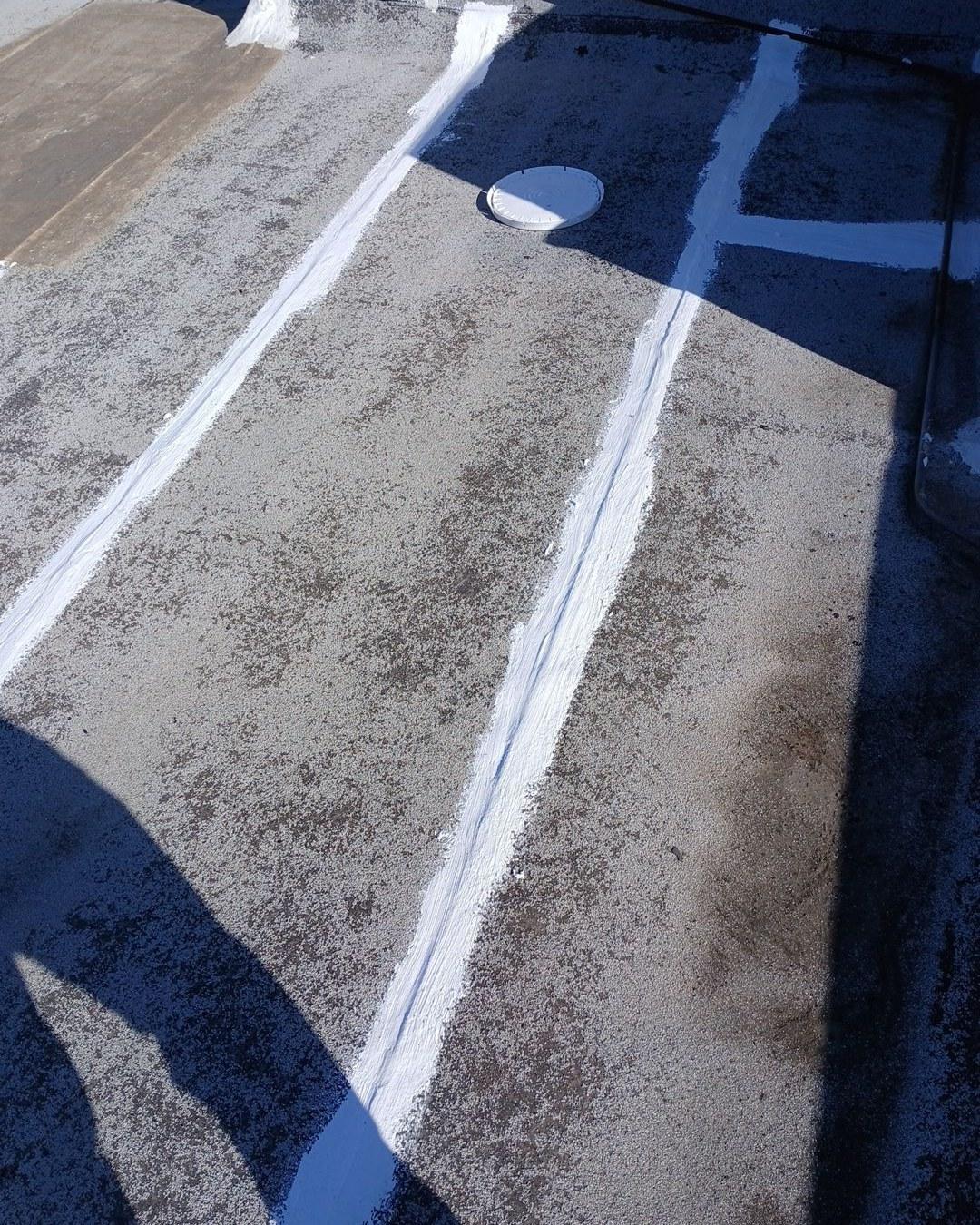
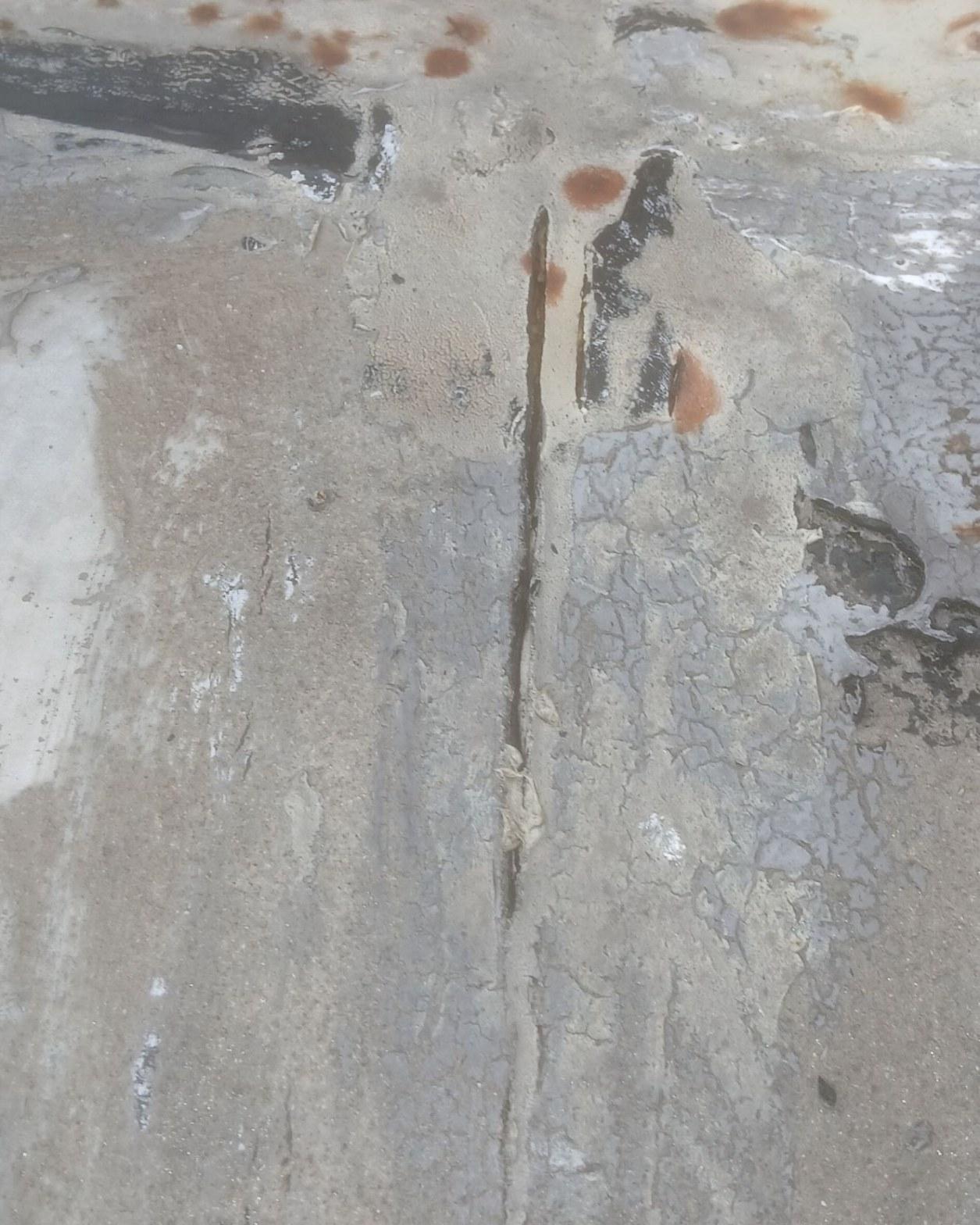
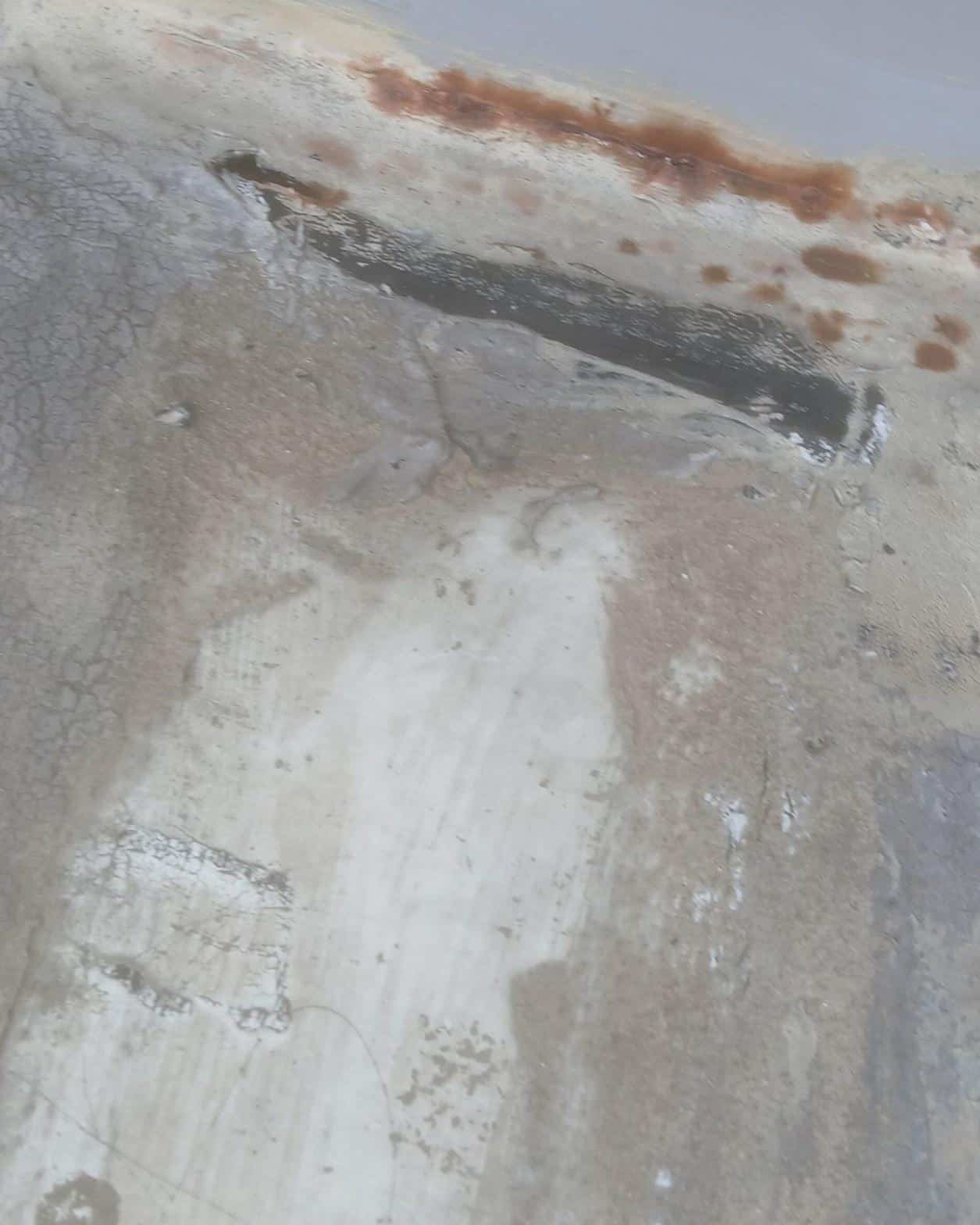
We mapped 4 discrete breach zones before opening any material: two field cracks in the mid-deck, one failed seam running approximately 8 feet along the parapet base, and a compromised drain collar. Each zone was wire-brushed clean, primed, and filled with fibered roof cement before receiving a reinforcing fabric layer and a finish coat of bituminous patch compound.

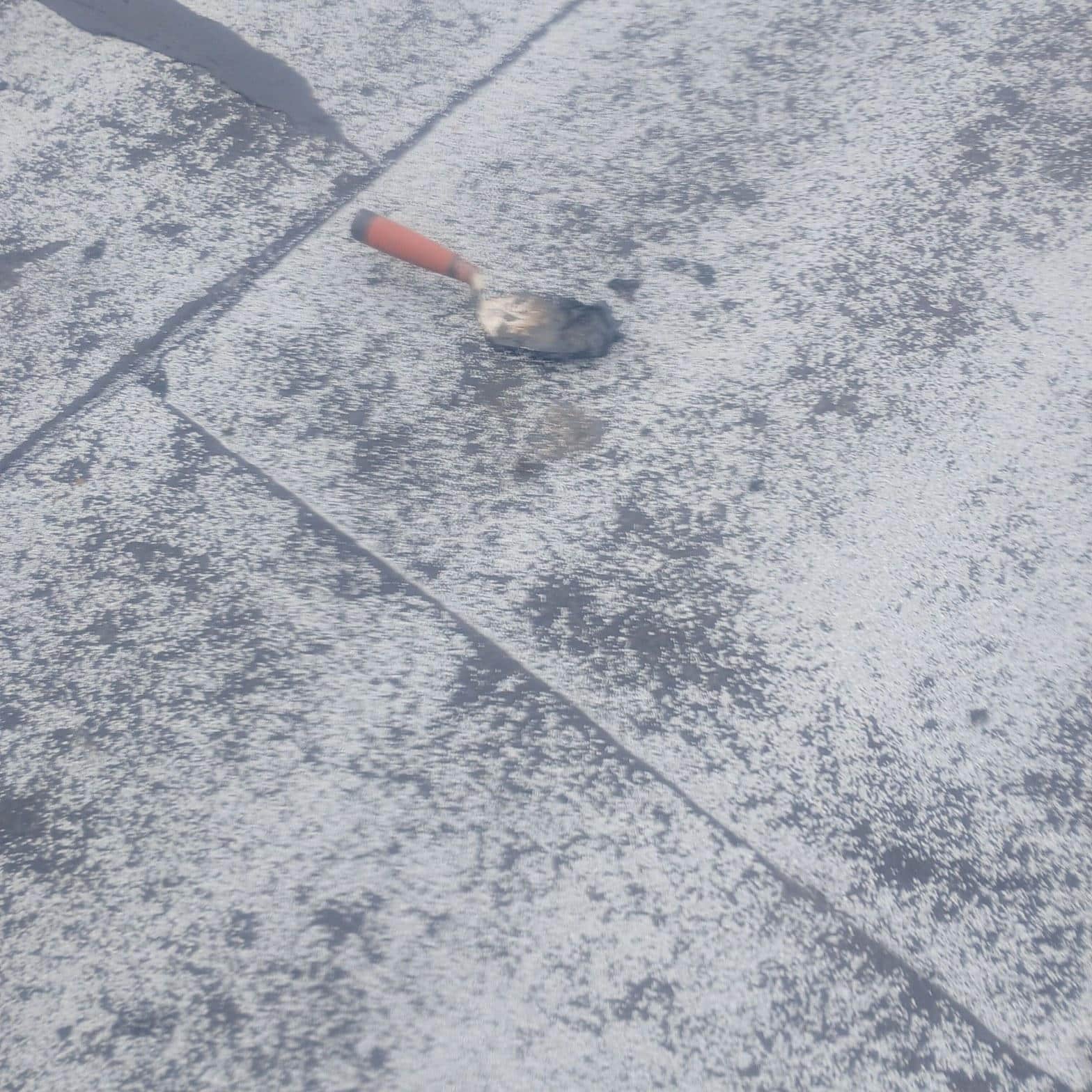
The dark, wet-looking patches visible in the photos reflect fresh compound that had not yet cured at the time the images were taken — this material typically reaches full adhesion within 24 to 48 hours under 65–85°F conditions, which is standard for Los Angeles in the shoulder seasons. A 5-gallon bucket of elastomeric sealant was staged on the deck for the perimeter and penetration work.

As shown above, one section of the deck also had a lifted or missing membrane section — visible as the exposed tan substrate in the upper-left quadrant of the roof field. That area was re-covered with a compatible torch-applied patch, bonded and sealed to the existing field membrane on all four edges.

Our crews handle roughly 15–20 torch down patch calls per month across the greater Los Angeles area, and delaminated substrate sections like this one almost always trace back to a failed drain or parapet cap that went unaddressed for more than one wet season.

What Did the HVAC Curb Repairs Involve?

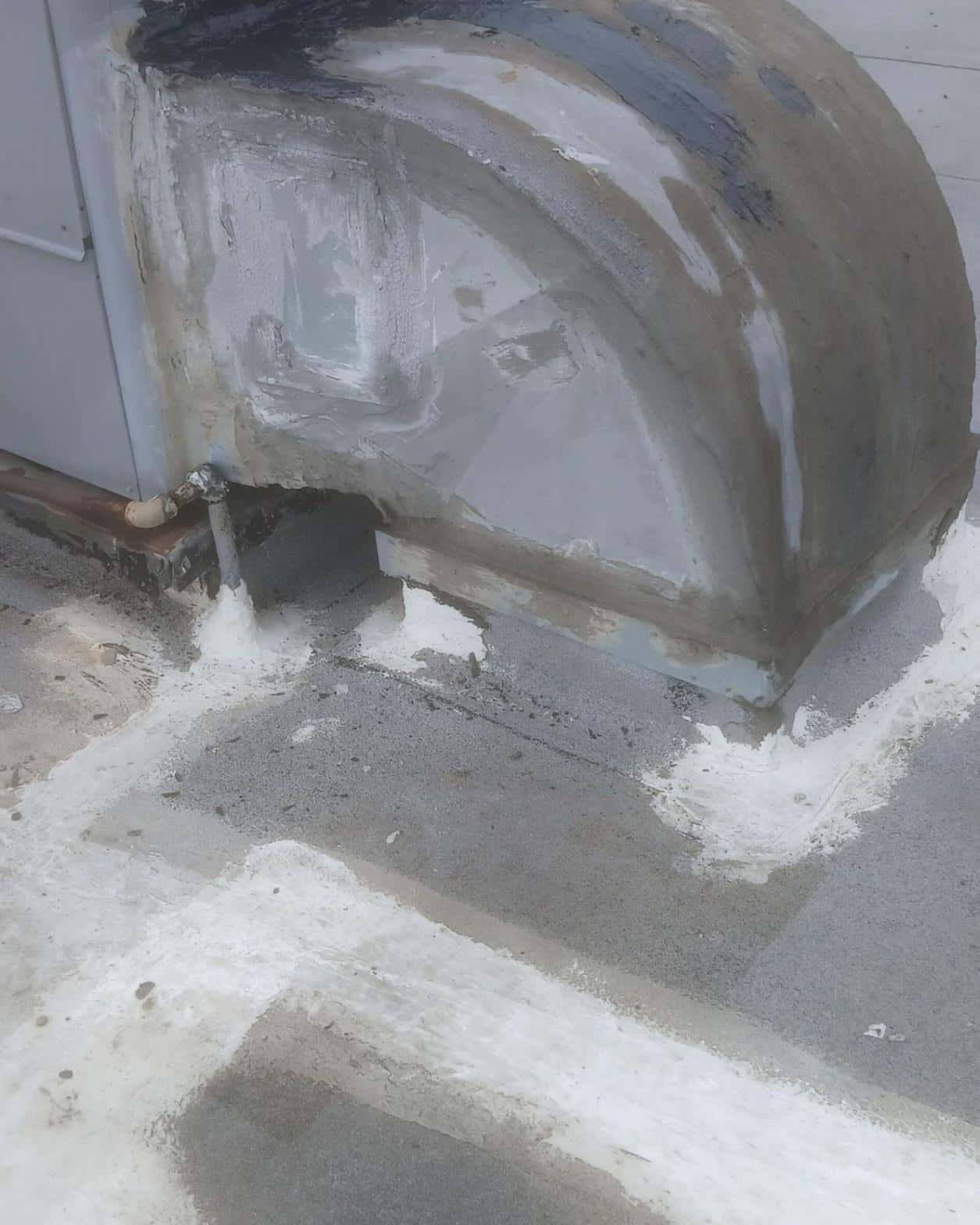
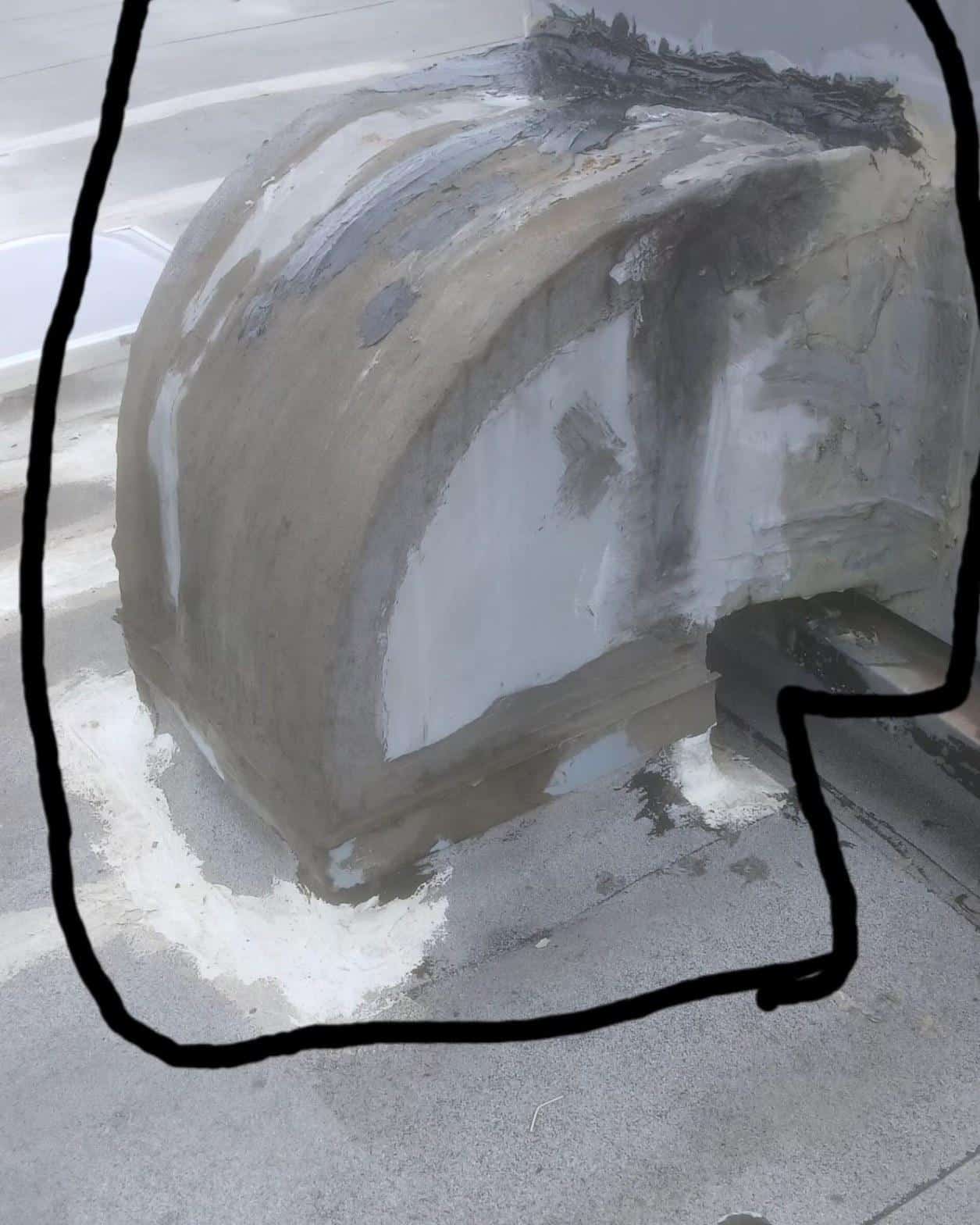
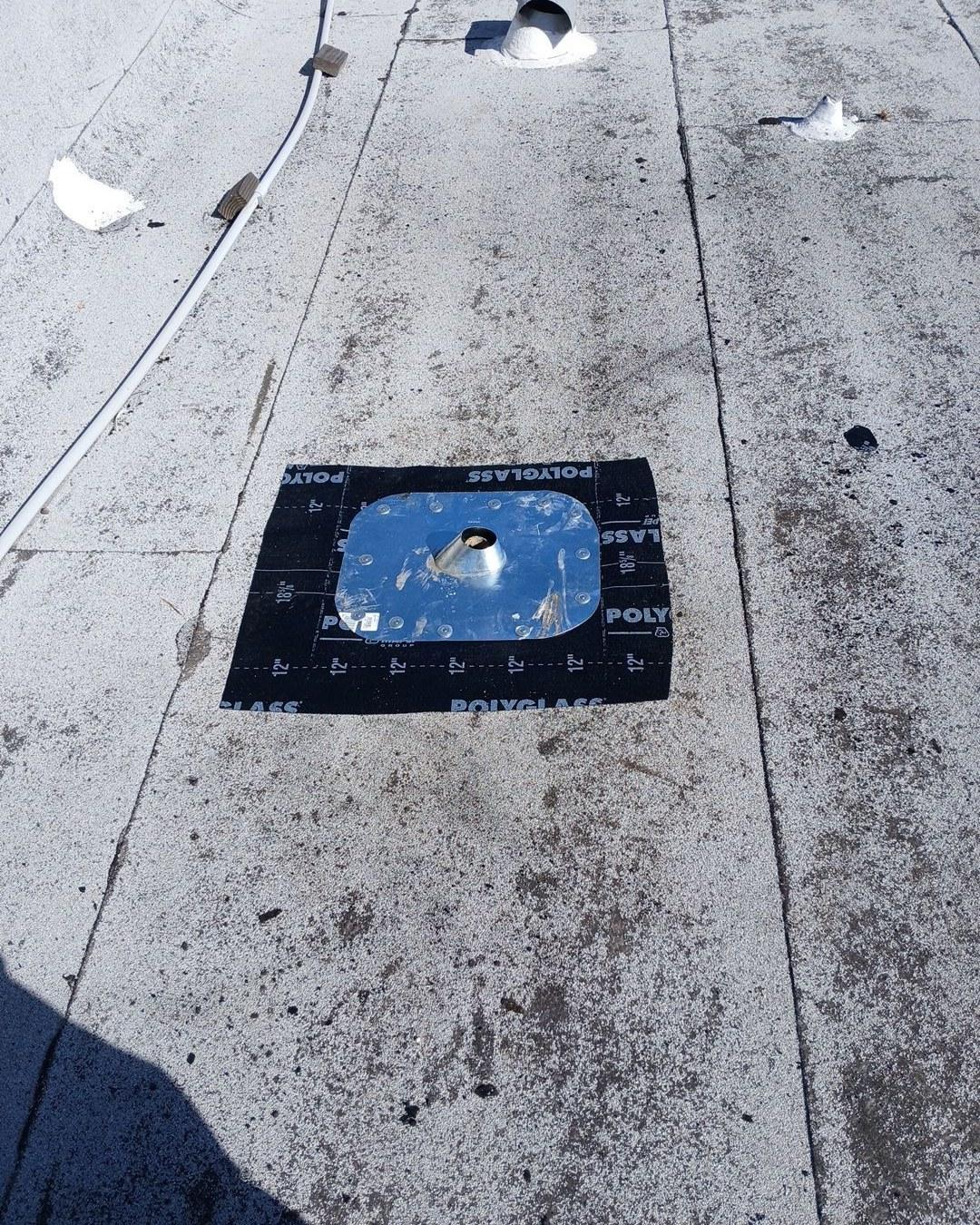
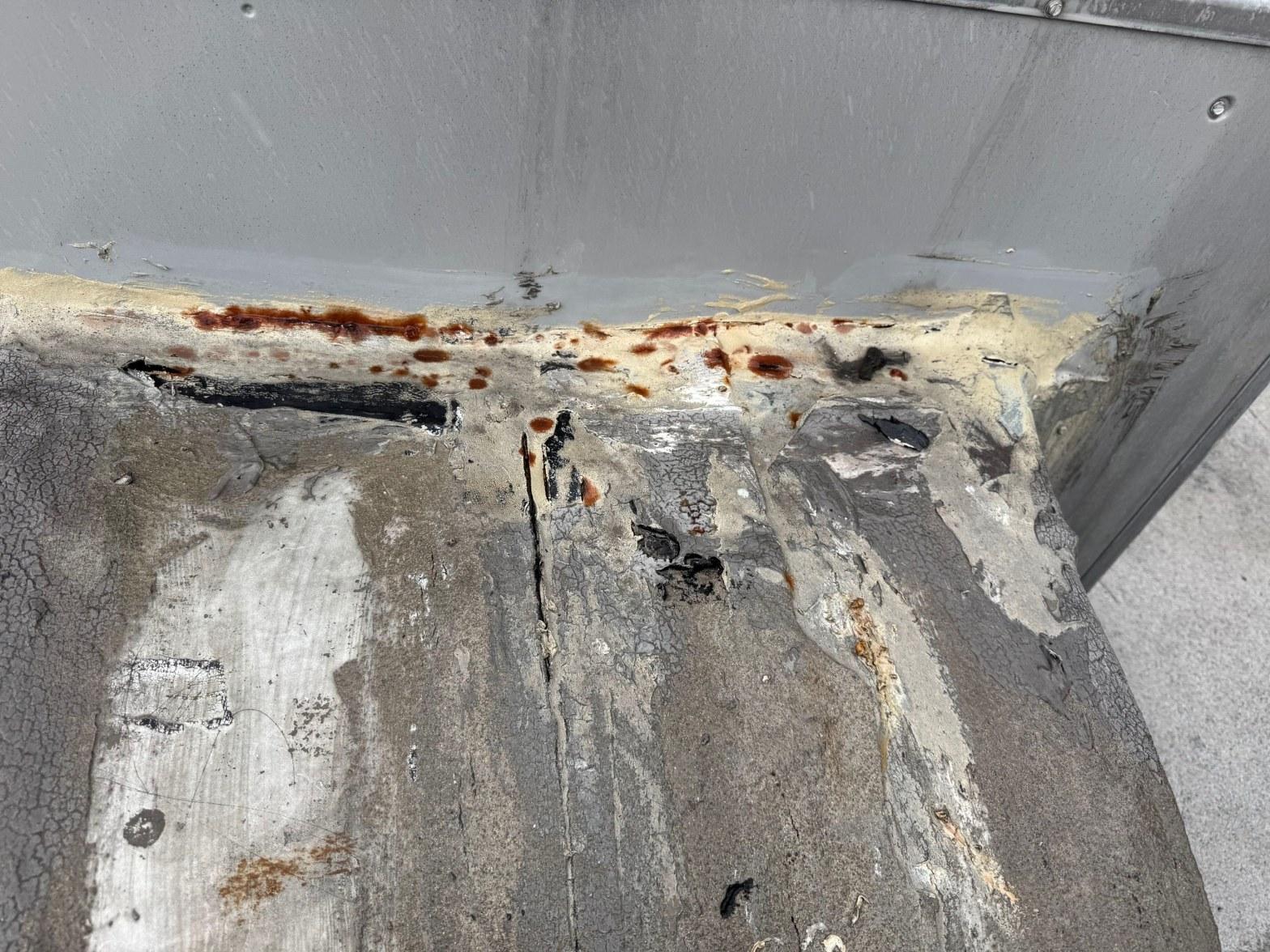
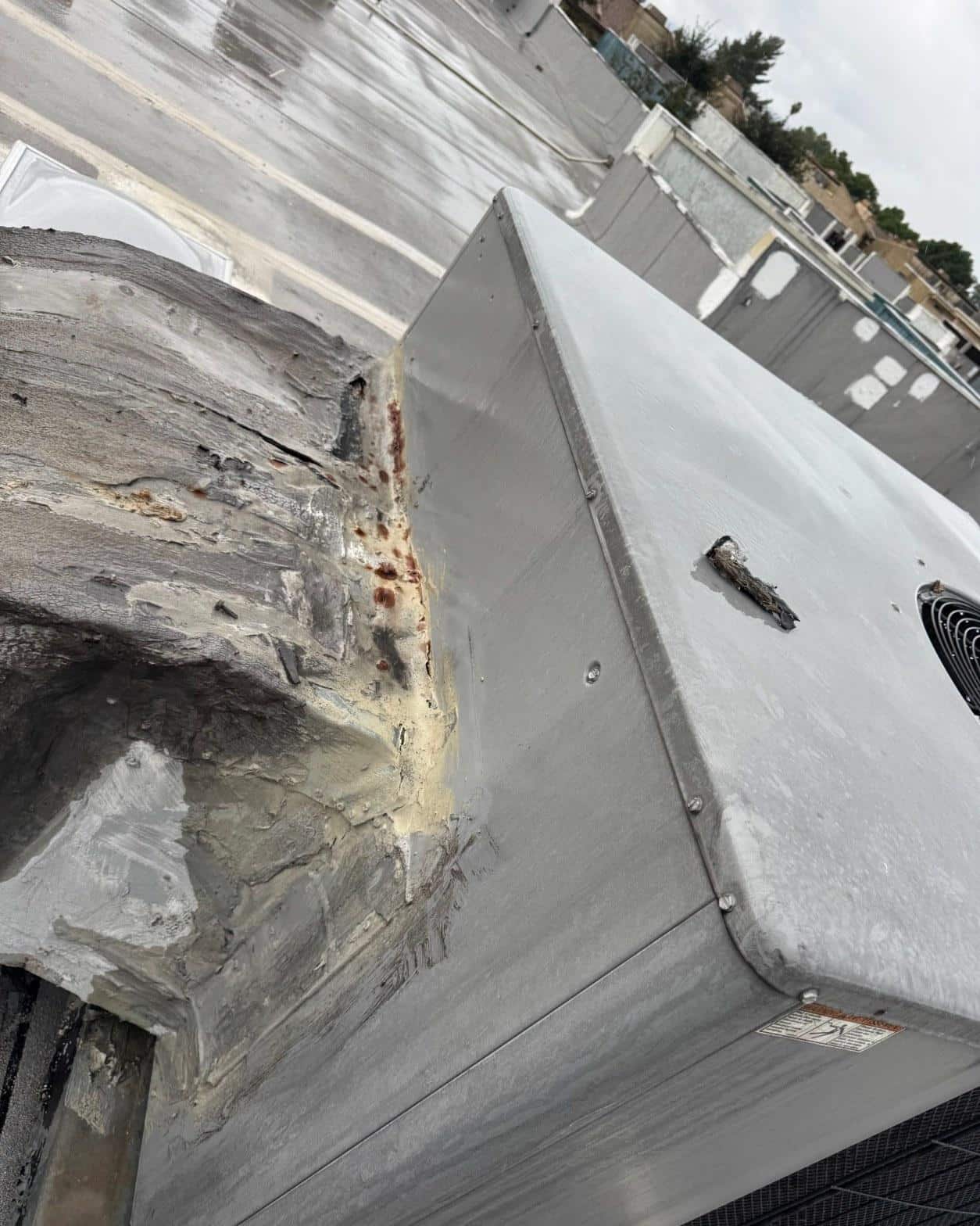
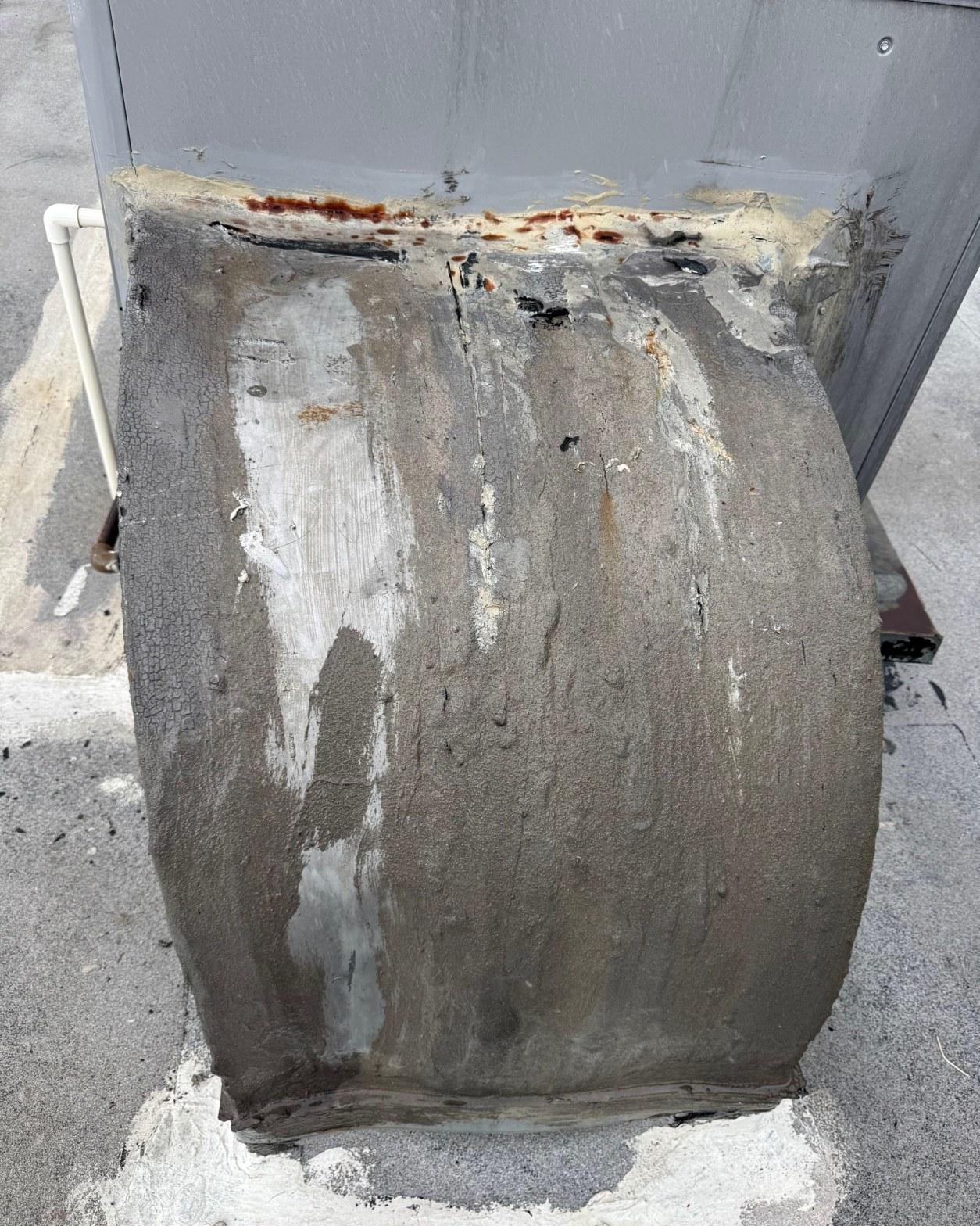
Two rooftop HVAC curbs had failing flashing boots — the most common secondary leak source on flat roofs with aging equipment. The curb housings had been previously patched with what appeared to be a fiber-reinforced elastomeric product, but the coating had cracked along the curved radius of the curb skirt and was no longer bonded to the metal base.

We ground back the failed coating, applied a fresh bed of compatible elastomeric sealant, and worked it into full contact with both the metal curb face and the surrounding membrane field — extending the seal at least 4 inches onto the roof surface on all sides. The base of each curb was also treated with white elastomeric to match the existing coating visible on the parapet walls, which helps reflect heat and slows future UV degradation.

In our experience, curb flashings on HVAC units older than 10 years account for more than 40% of the leak calls we receive on torch down roofs — the thermal cycling of the equipment causes the metal to expand and contract independently of the membrane, eventually breaking whatever seal was originally applied.

As of 2026, the California Contractors State License Board (CSLB) requires all roofing contractors performing this type of work to hold a valid C-39 Roofing license. Roof Replacement CA is Licensed by the California Contractors State License Board (CSLB) and carries all required insurance for work at occupied residential and commercial properties.

The Finished Result

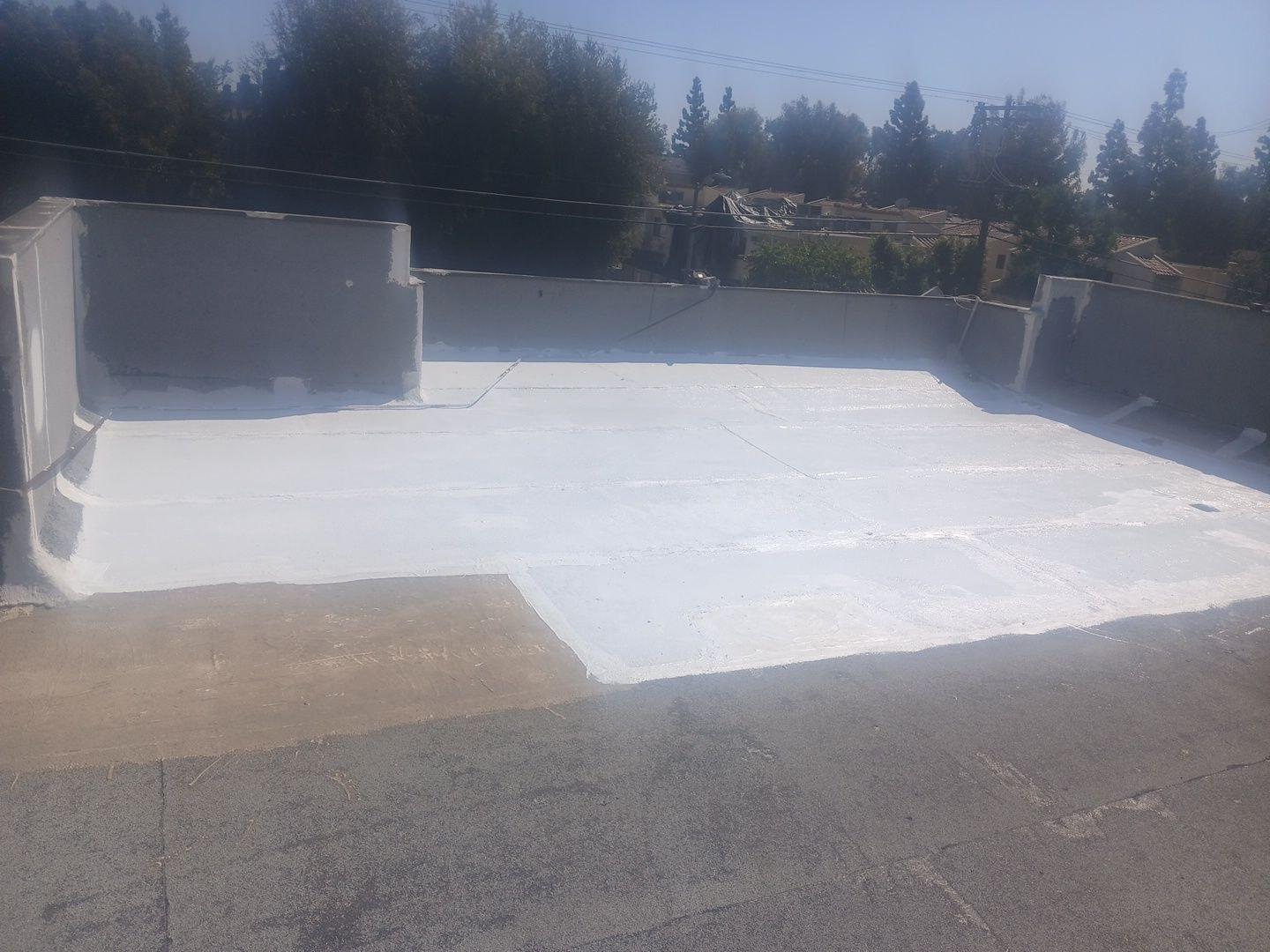
All 4 breach zones were sealed, the delaminated substrate section was re-membered, and both HVAC curb flashings were re-coated and re-bonded — leaving the roof watertight ahead of the November–March rain window.

The owner can expect the patched areas to perform for 5 to 8 years under normal Southern California conditions, assuming the drains are kept clear and the parapet caps are re-inspected annually. A full torch down re-roof would be the longer-term solution for a membrane of this age, but targeted patch work is the right call when the substrate is sound and the budget favors phased investment.

Schedule Your Flat Roof Inspection

If your flat roof is showing cracked seams, granule loss, or water stains on interior ceilings, don’t wait for the rainy season to confirm the problem. Call Roof Replacement CA to book a roof inspection at your Los Angeles property. We provide written assessments with photos and a clear scope of work before any repair begins.

Project Details

ScopePatch repair of an existing torch down flat roof membrane including crack sealing, surface recoating, and waterproofing of HVAC equipment curbs and penetrations.
ServiceTorch Down Roof Repair
Property TypeResidential multi-unit or commercial low-rise building
LocationLos Angeles
Materials UsedBituminous patch compound, elastomeric roof coating, fibered roof cement, seam tape

Our Service Area: Los Angeles

Frequently Asked Questions

A targeted patch repair on a torch down flat roof in Los Angeles typically runs between $400 and $1,500 depending on the number of breach zones and whether HVAC curb flashings need to be re-sealed. Full field repairs covering delaminated substrate sections will sit toward the higher end of that range. A written quote after an on-roof inspection is the only reliable way to nail down the number for your specific property.
If the membrane substrate is still intact and bonded — meaning it feels firm underfoot and doesn’t show widespread soft spots — patch repair is usually viable for another 5 to 8 years. When more than 25–30% of the membrane surface is cracked, blistered, or delaminated, a full torch down re-roof is the more cost-effective long-term choice. A licensed C-39 roofing contractor can assess this in a single visit.
HVAC curb flashings are one of the most common leak sources on flat roofs — the metal curb expands and contracts with heat cycles, eventually cracking the sealant or coating bonded to the membrane around its base. On torch down roofs older than 10 years, this flashing failure accounts for a large share of active leaks. The fix involves grinding back the failed material and applying a fresh elastomeric seal that extends at least 4 inches onto the roof field on all sides.
Most patch repair jobs on a single-family or small multi-unit flat roof are completed in one full day. Projects with multiple breach zones, HVAC curb work, and a delaminated substrate section — like the one at 8801 Willis Ave — typically take 6 to 8 hours on the roof. Cured adhesion of the bituminous patch compound is reached within 24 to 48 hours depending on temperature.
September through November is the ideal window — temperatures are still in the 65–85°F range that allows sealants and patch compounds to cure properly, and the work is completed before the November–March rainy season. Repairs done during or immediately after rain events carry higher risk of adhesion failure because moisture trapped under the membrane prevents proper bonding.
Torch-applied modified bitumen repairs involve open-flame equipment and require a valid C-39 Roofing license in California for commercial or multi-unit work. Even for single-family homes, improper torch technique is a leading cause of roofing fires, and improperly bonded patches often fail within a single wet season. Cold-applied roof cement is available for very minor cracks as a temporary measure, but any repair involving delaminated sections or HVAC flashings should be handled by a licensed contractor.

Project Details

DATE

June 19, 2026

CLIENT
Work Done
CITY

What Our Clients Say

Roof Replacement Inc. provided outstanding service for our roofing repair. The roofing contractors were quick to respond and conducted a thorough inspection before starting the repairs. The roof repair was completed promptly, and the quality of the work was excellent. The team was professional and respectful, ensuring that the area was clean after the job was done. We are extremely satisfied with their service and will definitely use them again if needed. Highly recommend.

Ryland Bear CustomerRyland Bear

Researched for 2 years and chose because they had a Better Business Bureau A+ . That and they didn’t time pressure me at all, in fact , Adolpho graciously came back out when I asked if just coating it all over with Silicone would work . He explained everything without rushing or ever making me feel like I was taking up his time. As a single woman homeowner I appreciated that. He is a man of integrity and has gone above and beyond before during and now after the work has been done. I believe him when he says he’ll be there if there’s any other concerns . Highly recommend Adoloho and his team.

Smiling woman close-up, partial viewCorine Bohrer

We hired Roof Replacement for a complete roof replacement on our home,,, and they exceeded expectations. The local roofing companies we contacted couldn’t match their level of expertise and professionalism. The roofing services included a comprehensive assessment and a detailed plan for the replacement. The new roof is of high quality, and the roof replacement cost was very reasonable. The team was efficient and finished the project ahead of schedule. We highly recommend their services.

Brady Benedict CustomerBrady Benedict
Google Reviews for Roof Replacement Inc

What Our Clients Say