What Did This Project Involve?
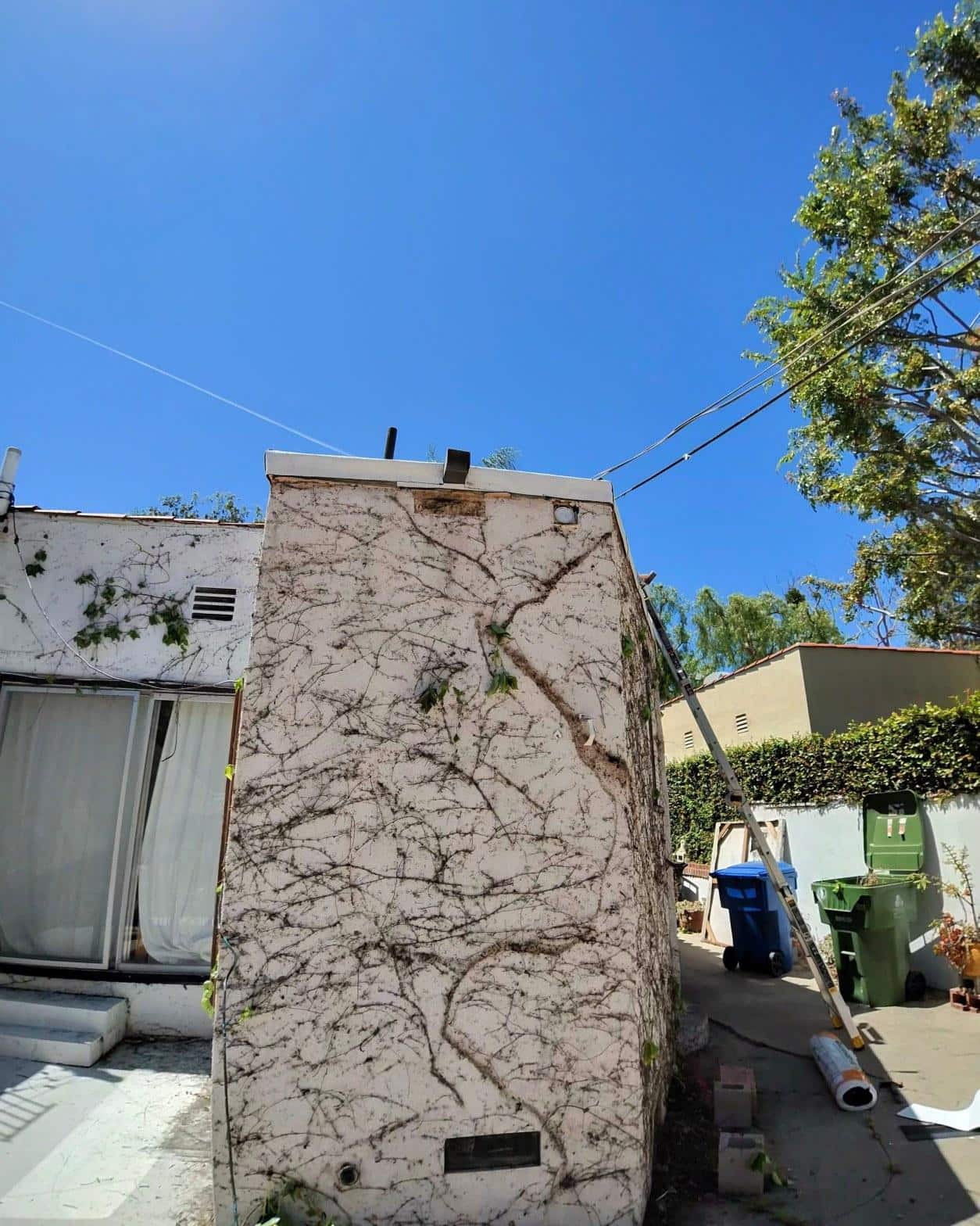
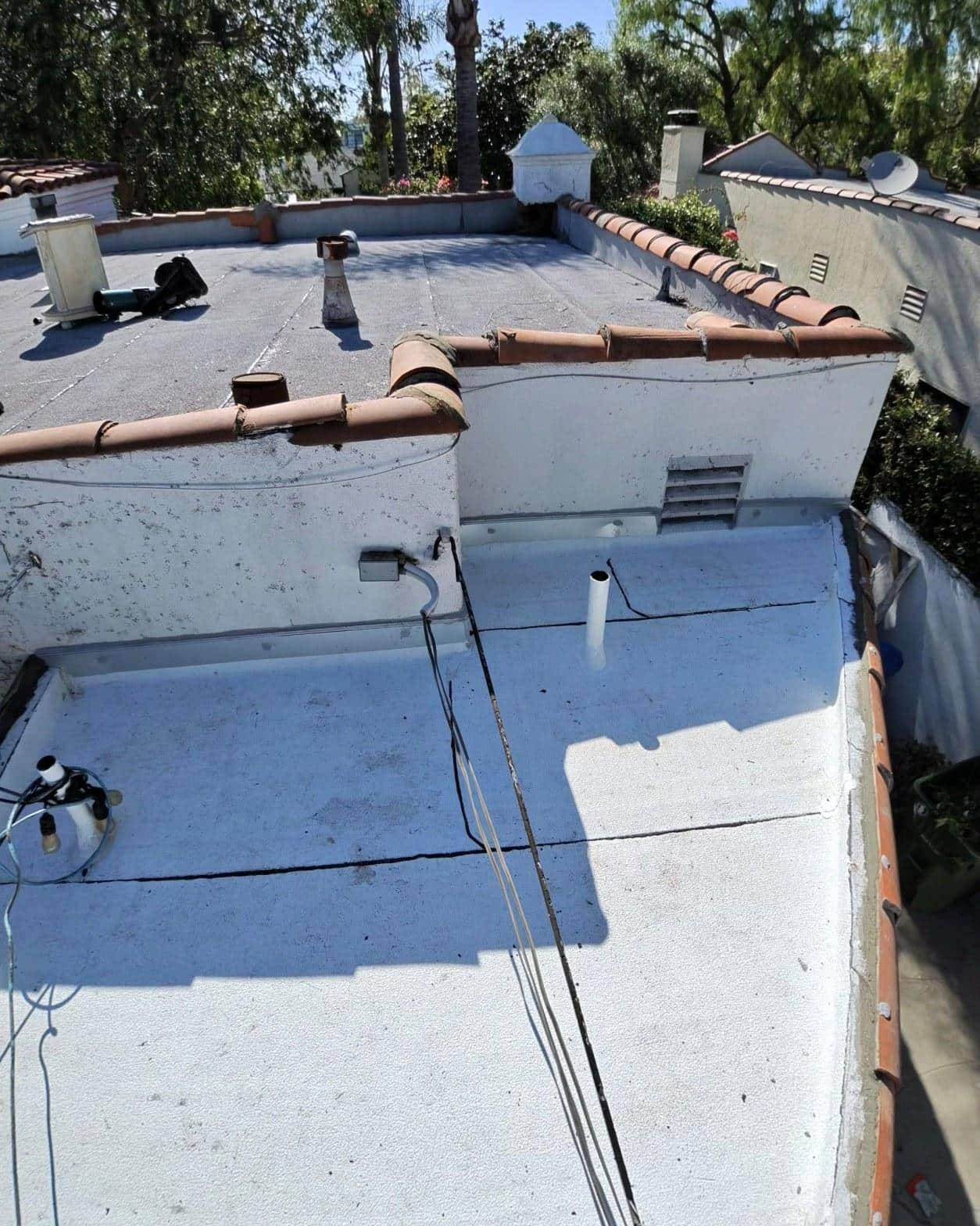
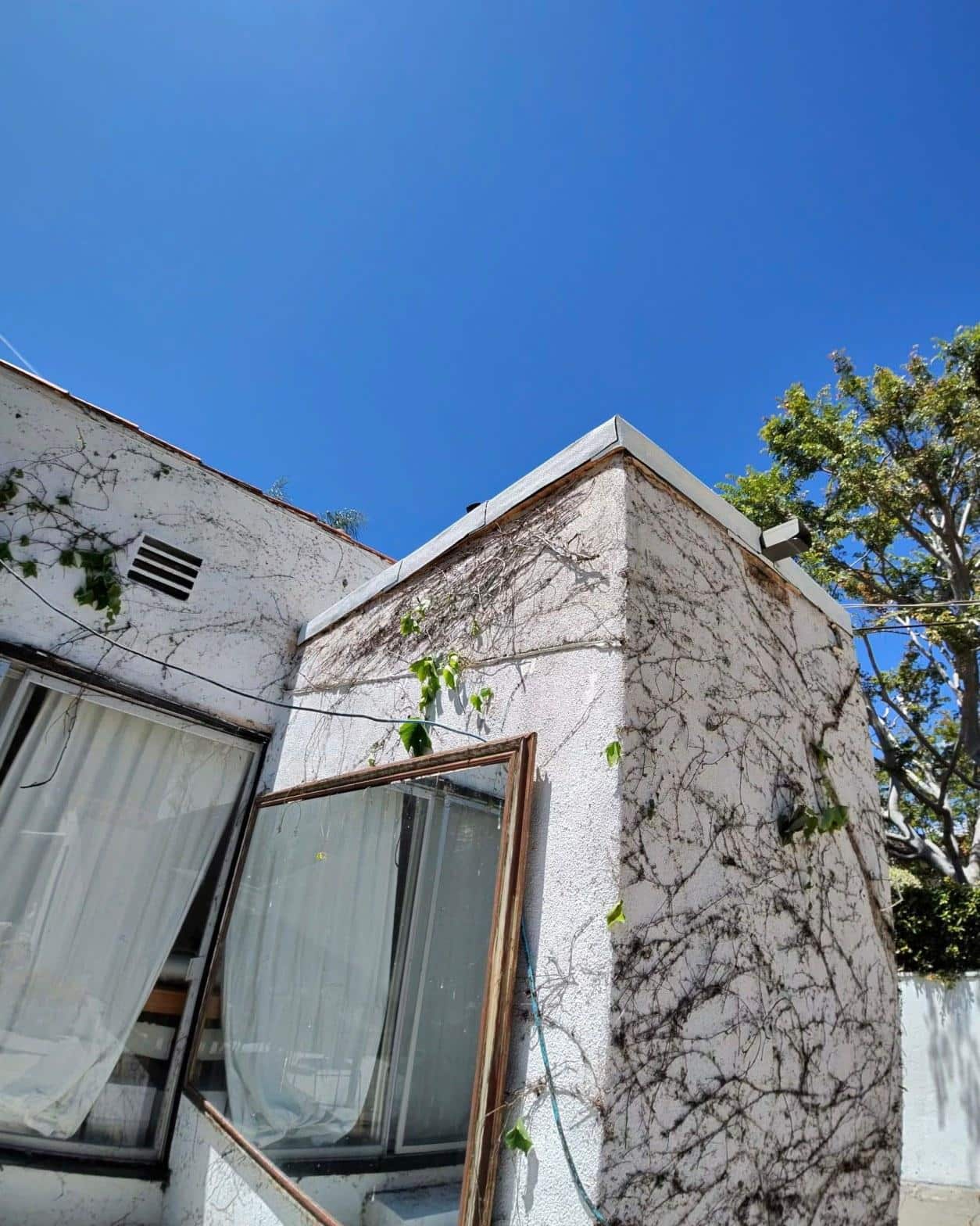
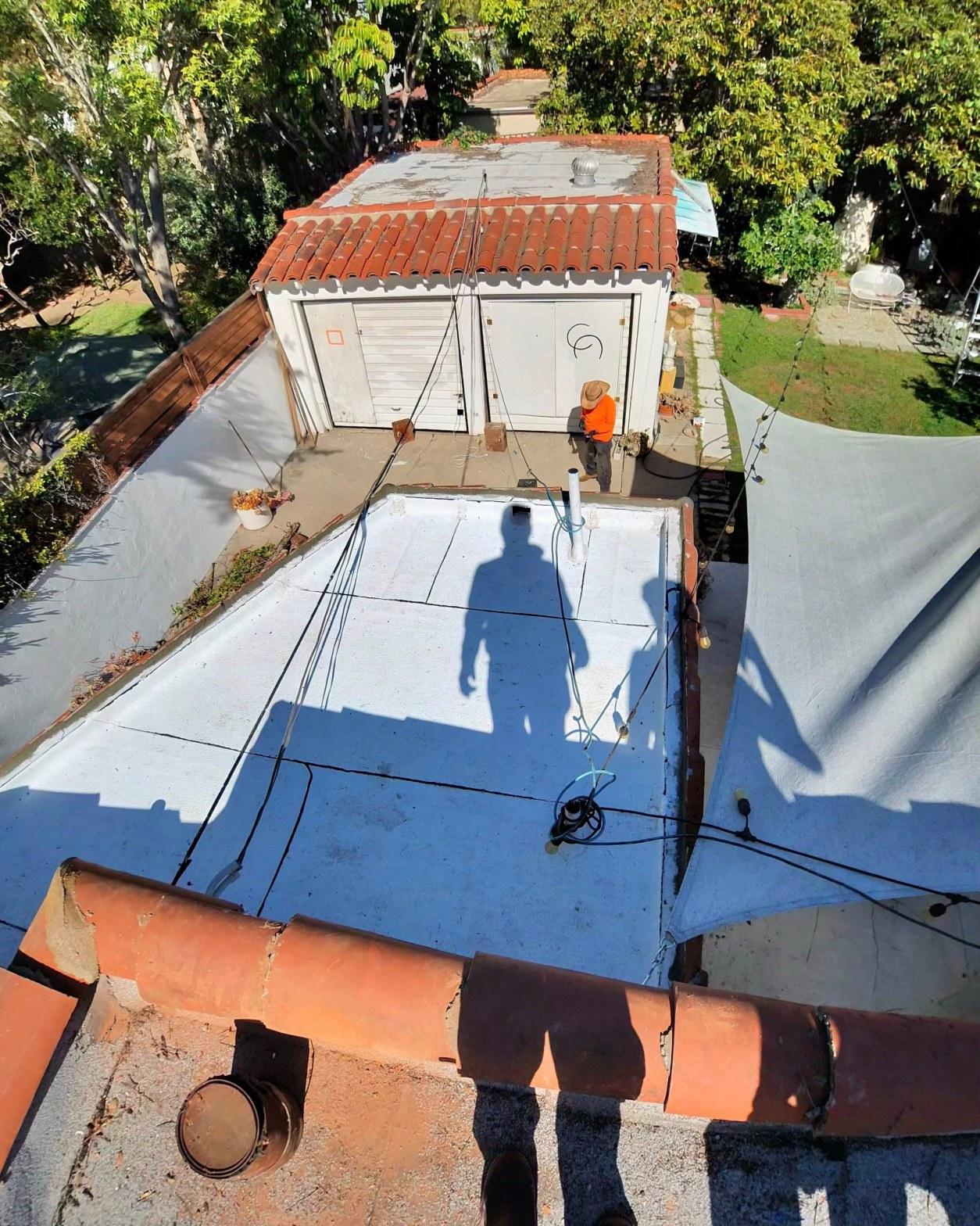
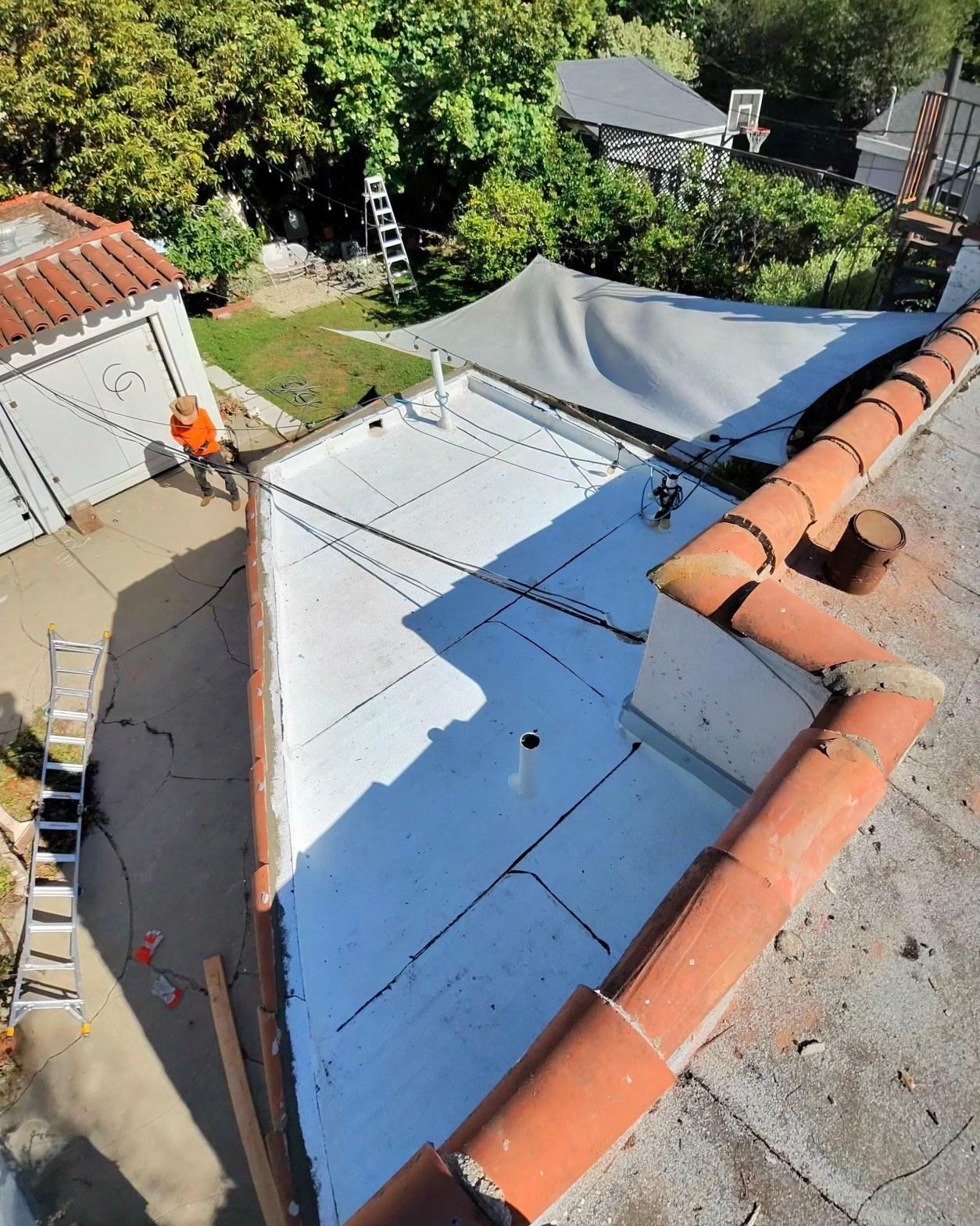
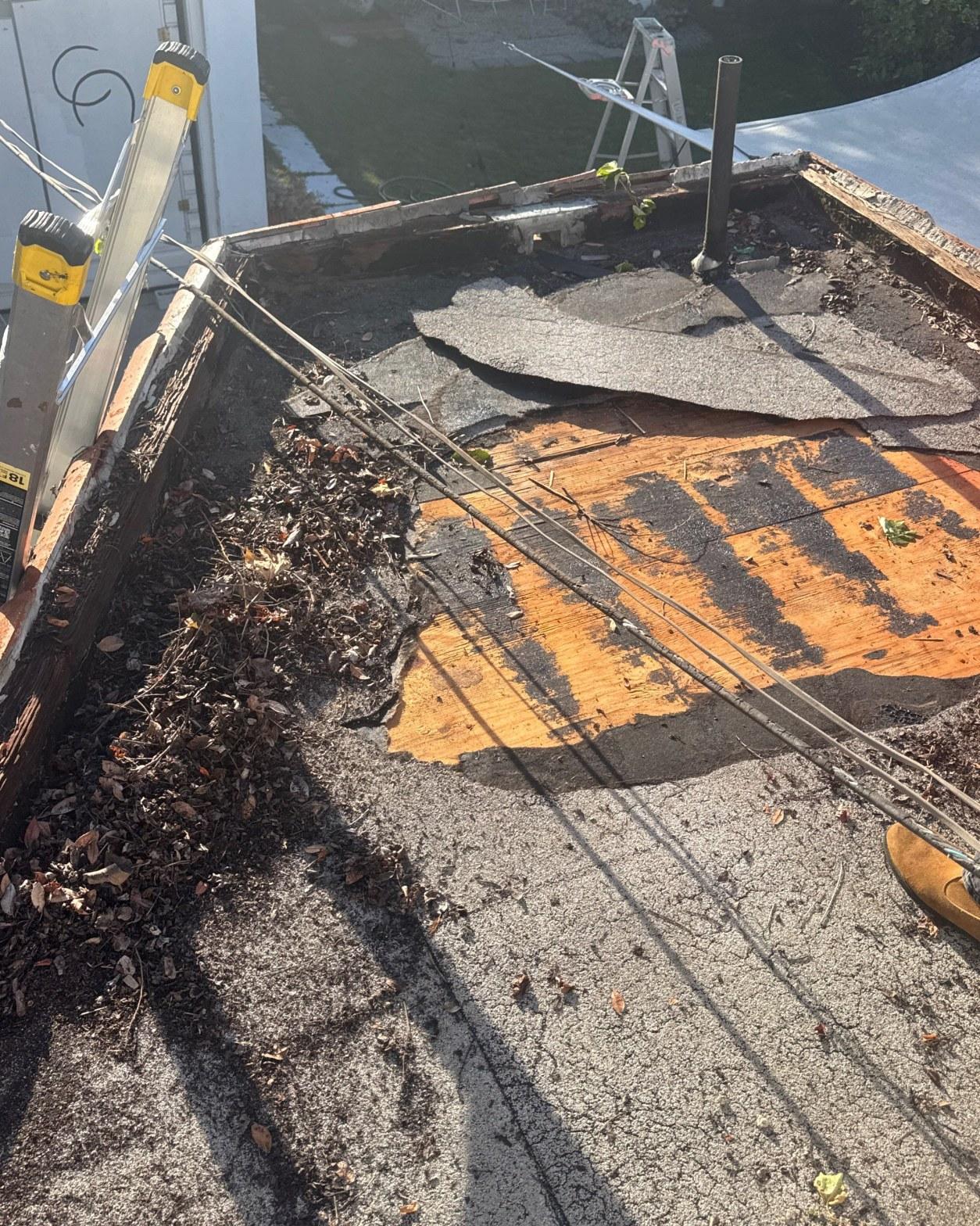
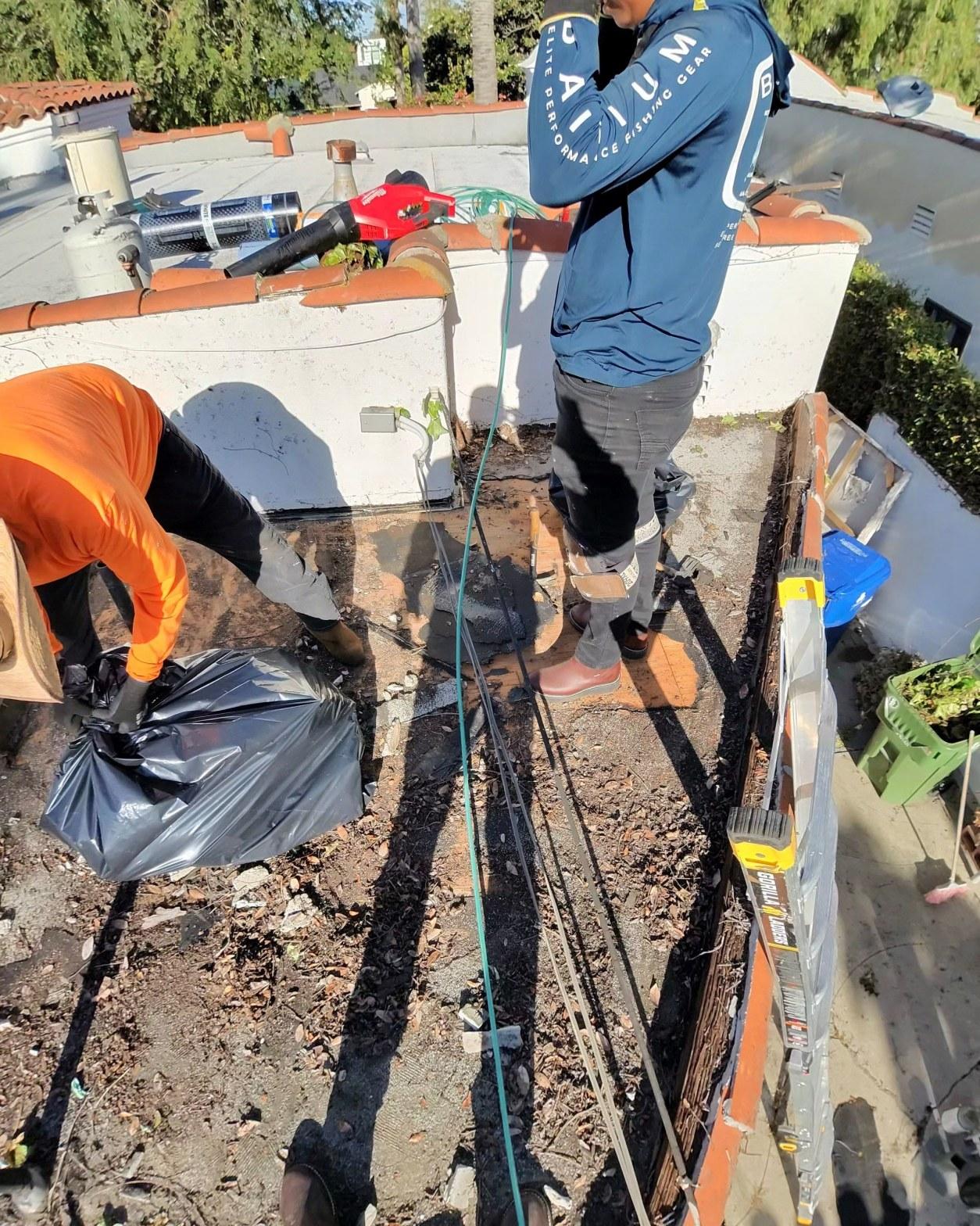
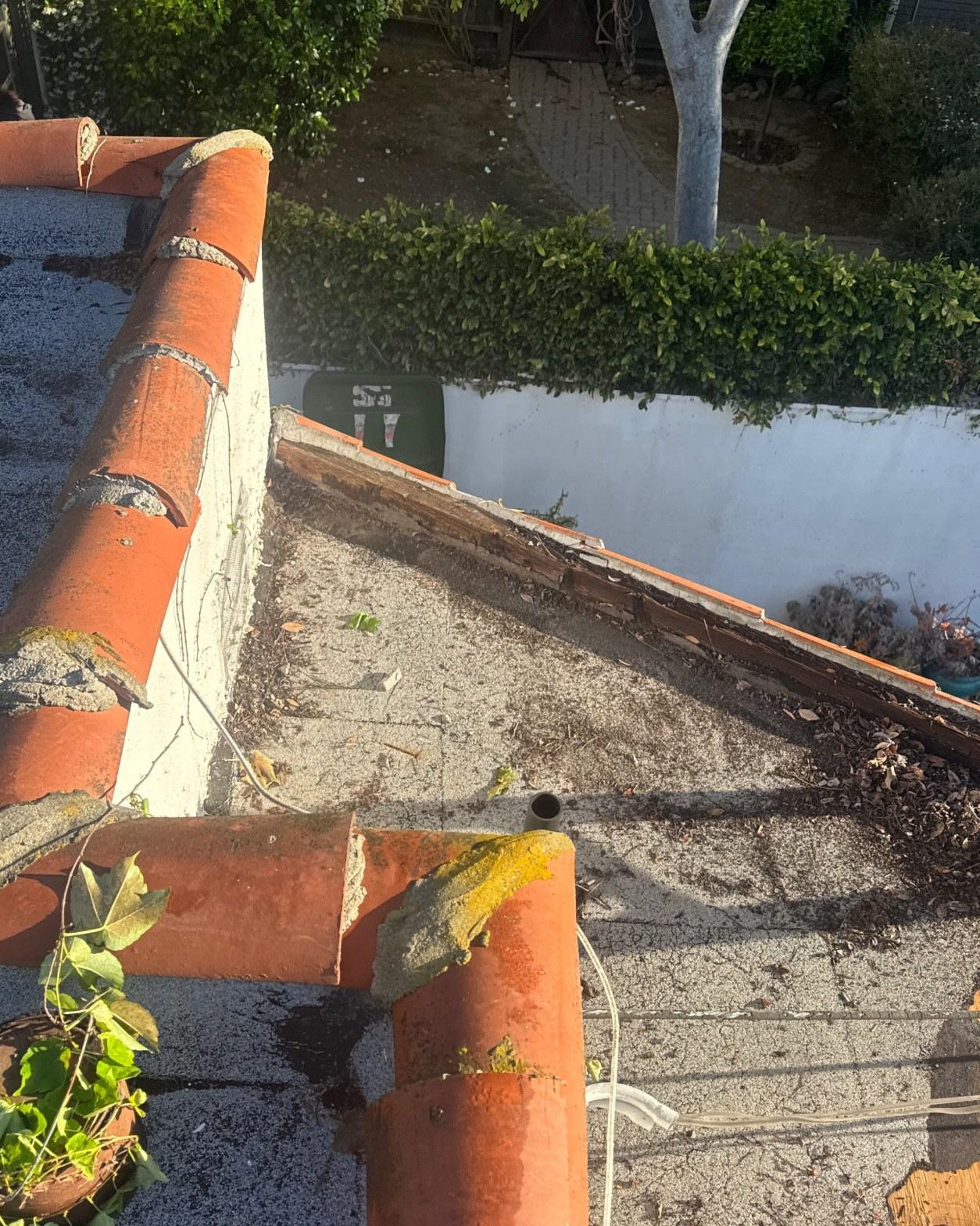
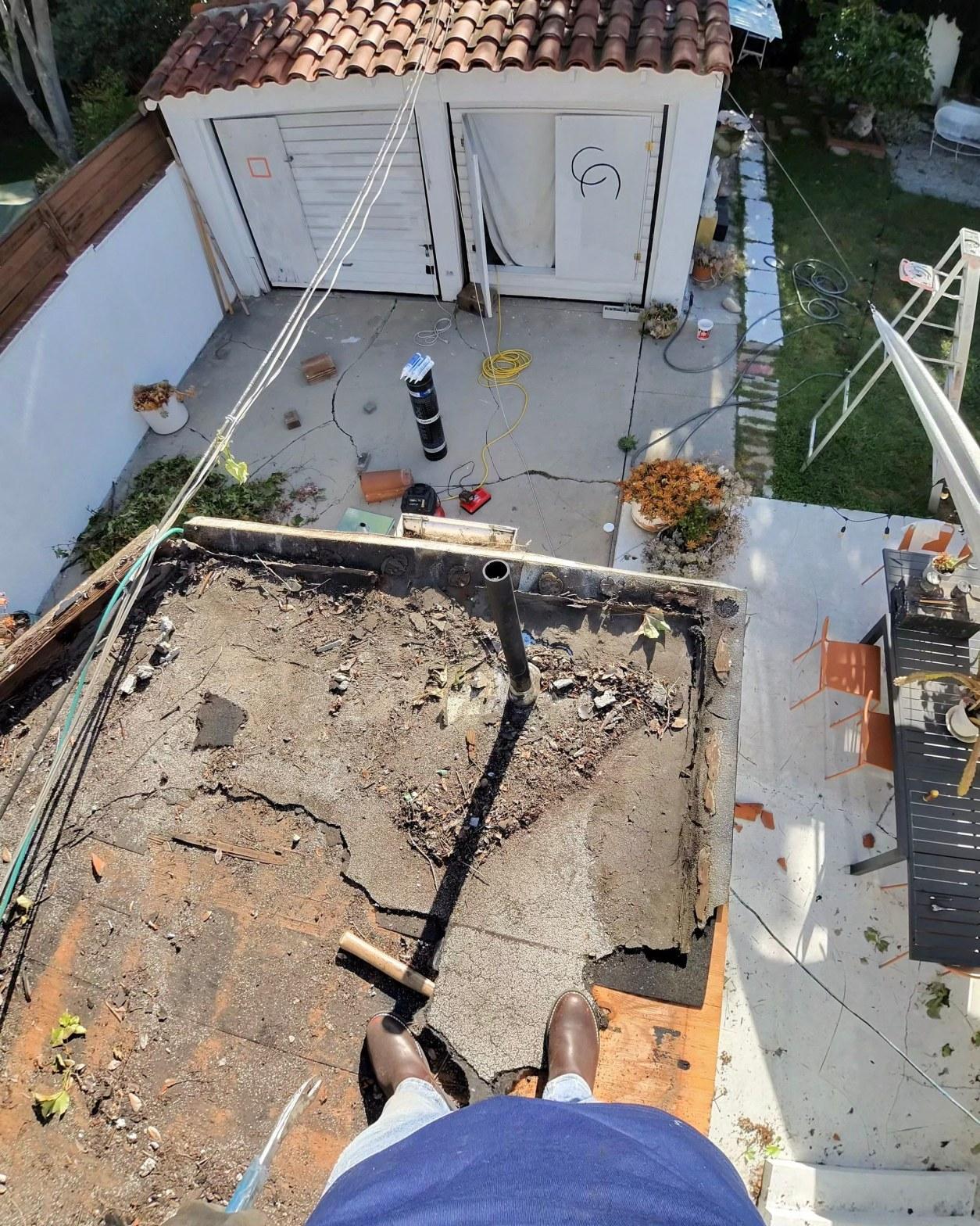
This job was a complete flat roof tearoff and torch-down replacement at a residential property on Flores St in Los Angeles’s 90048 ZIP code. The homeowner had been dealing with an aging flat roof system that had outlived its useful life — surface cracking, debris accumulation around the drain stack, and water infiltration were all in play. The goal was a clean, full replacement down to the structural framing level, not a patch or overlay.
Flat roofs in this part of Los Angeles are extremely common on mid-century homes, and when they fail, they tend to fail gradually — small leaks that grow over years. By the time the decking comes off, the story underneath is rarely a surprise, but it’s almost always worse than the homeowner expected.
Project Gallery
What Did We Find When the Decking Came Off?
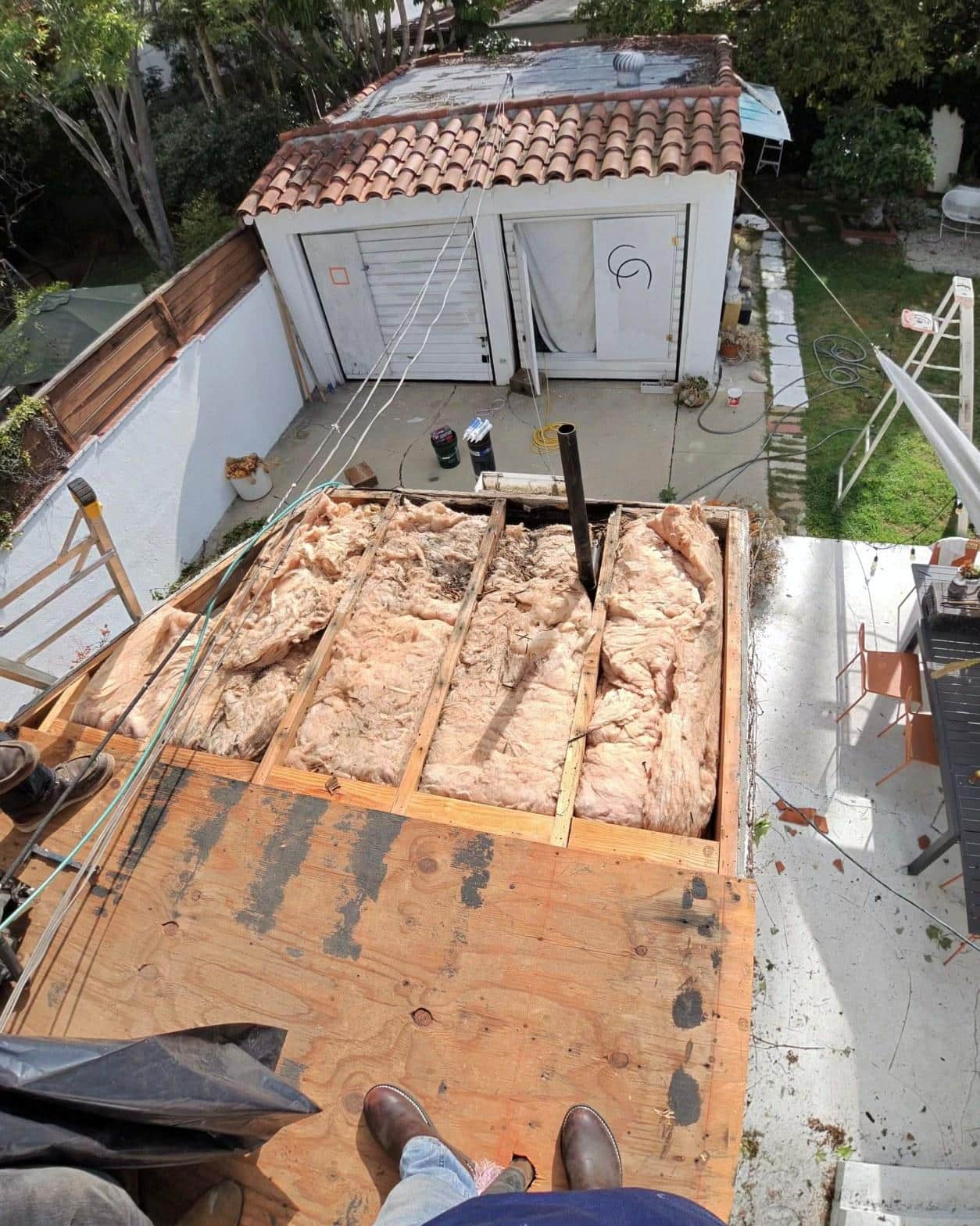
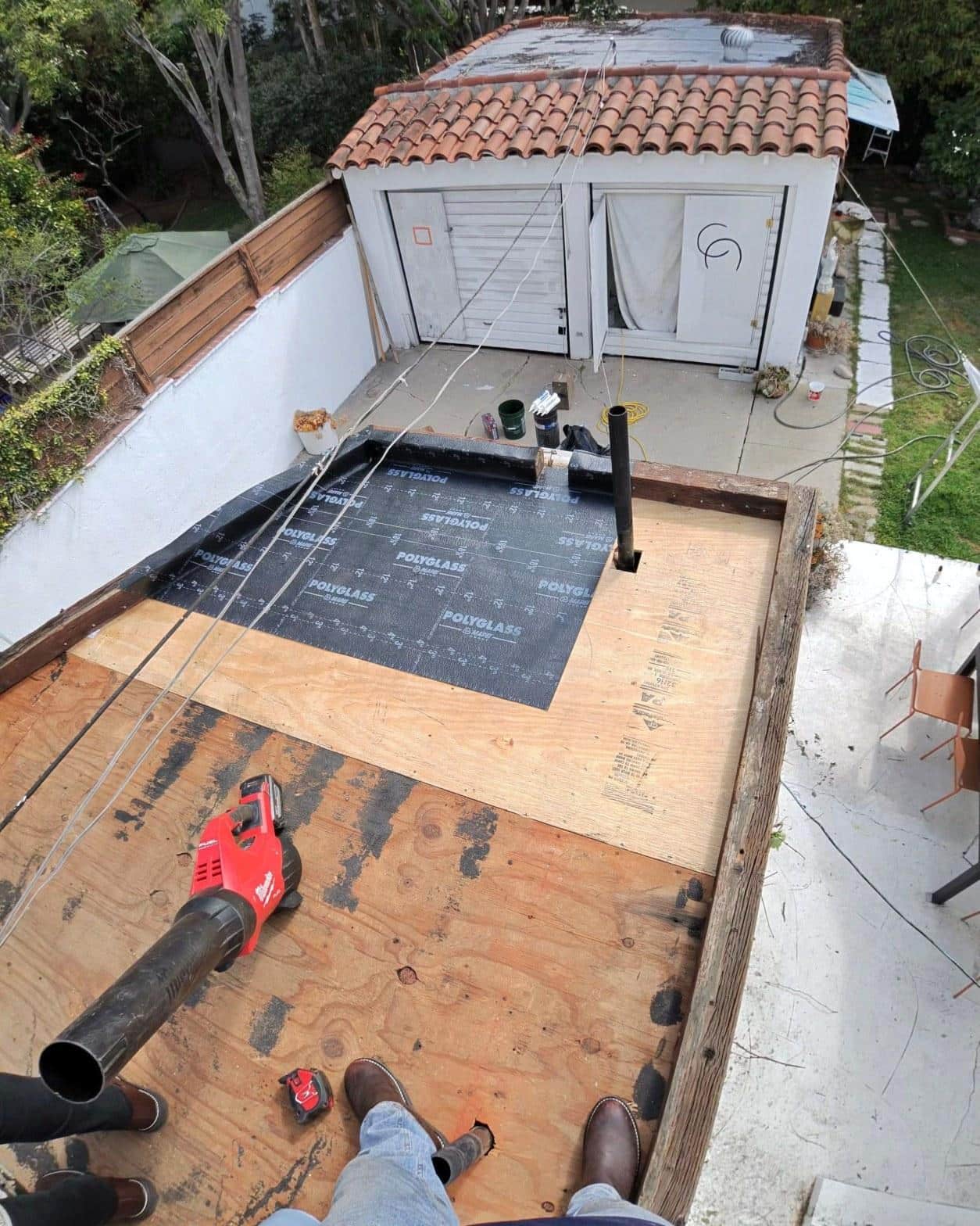
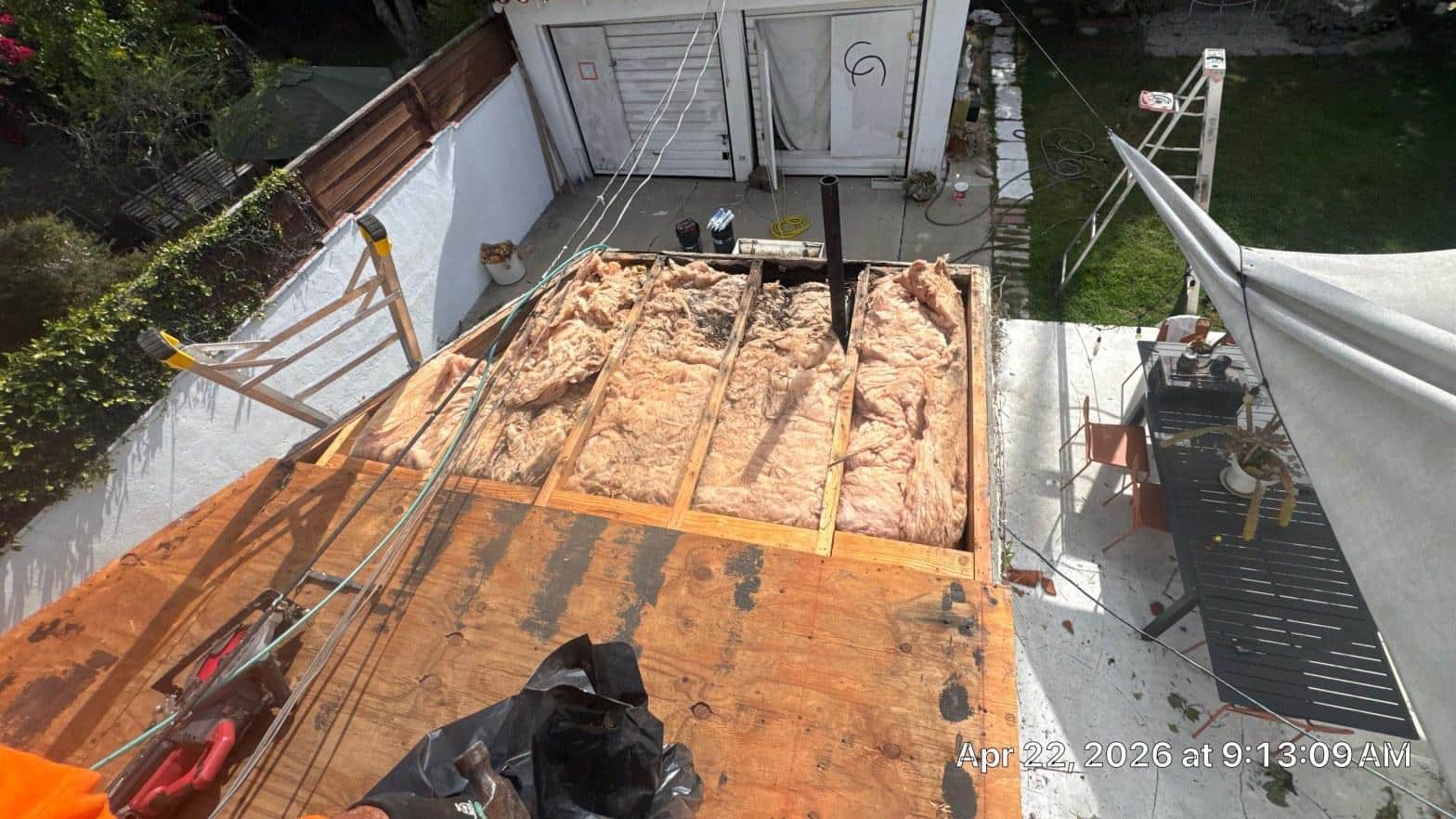
Removing the plywood decking revealed fiberglass batt insulation packed between the rafters — a detail that immediately told us this roof had been built as a conditioned, insulated assembly rather than a vented one. The batts, visible across multiple rafter bays once the panels were lifted, were discolored, compressed, and carrying years of moisture exposure. Fiberglass batt insulation loses roughly 40% of its rated R-value when it becomes wet or compressed — in this configuration, between an unvented flat roof deck and the ceiling below, that degradation compounds over time.
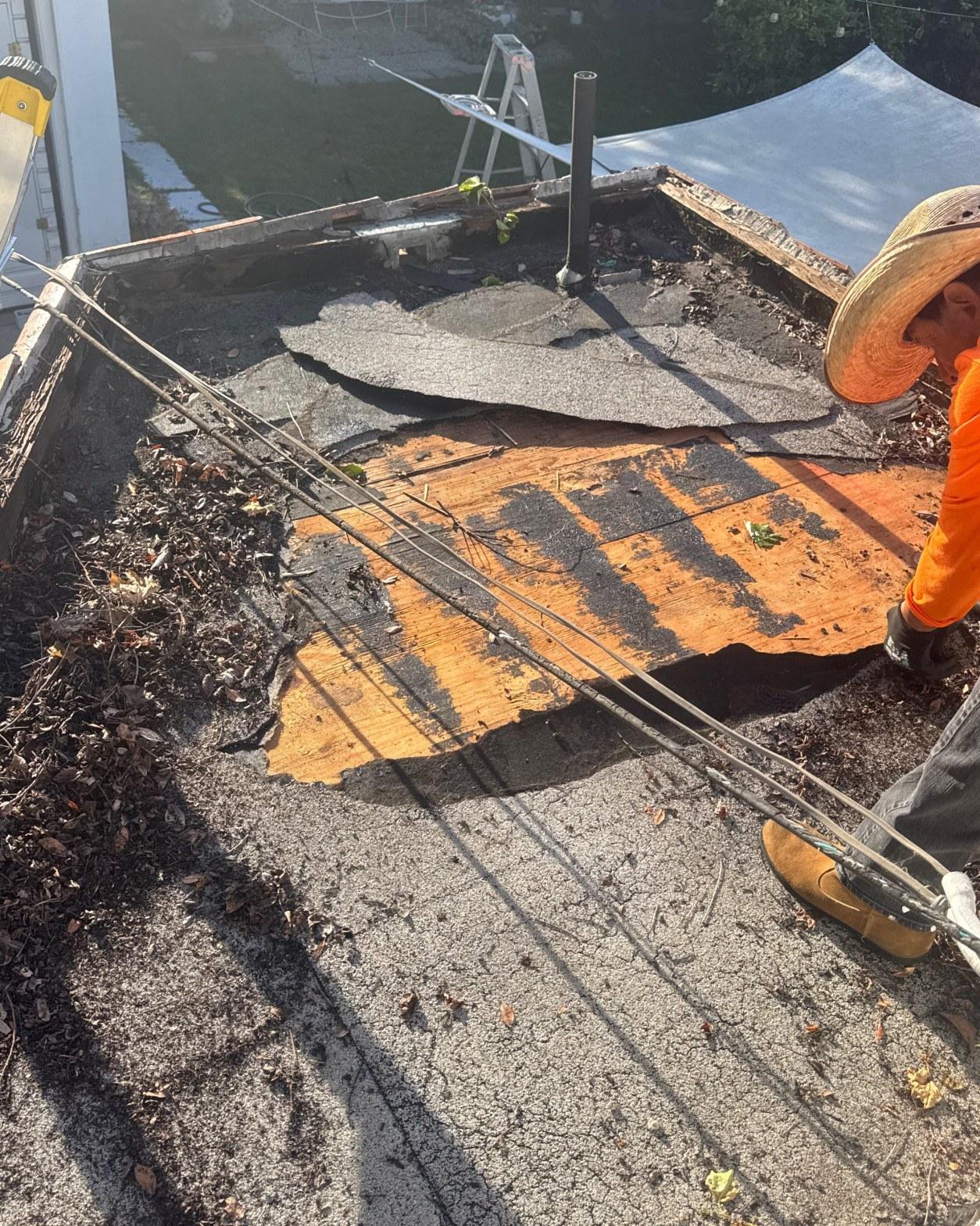
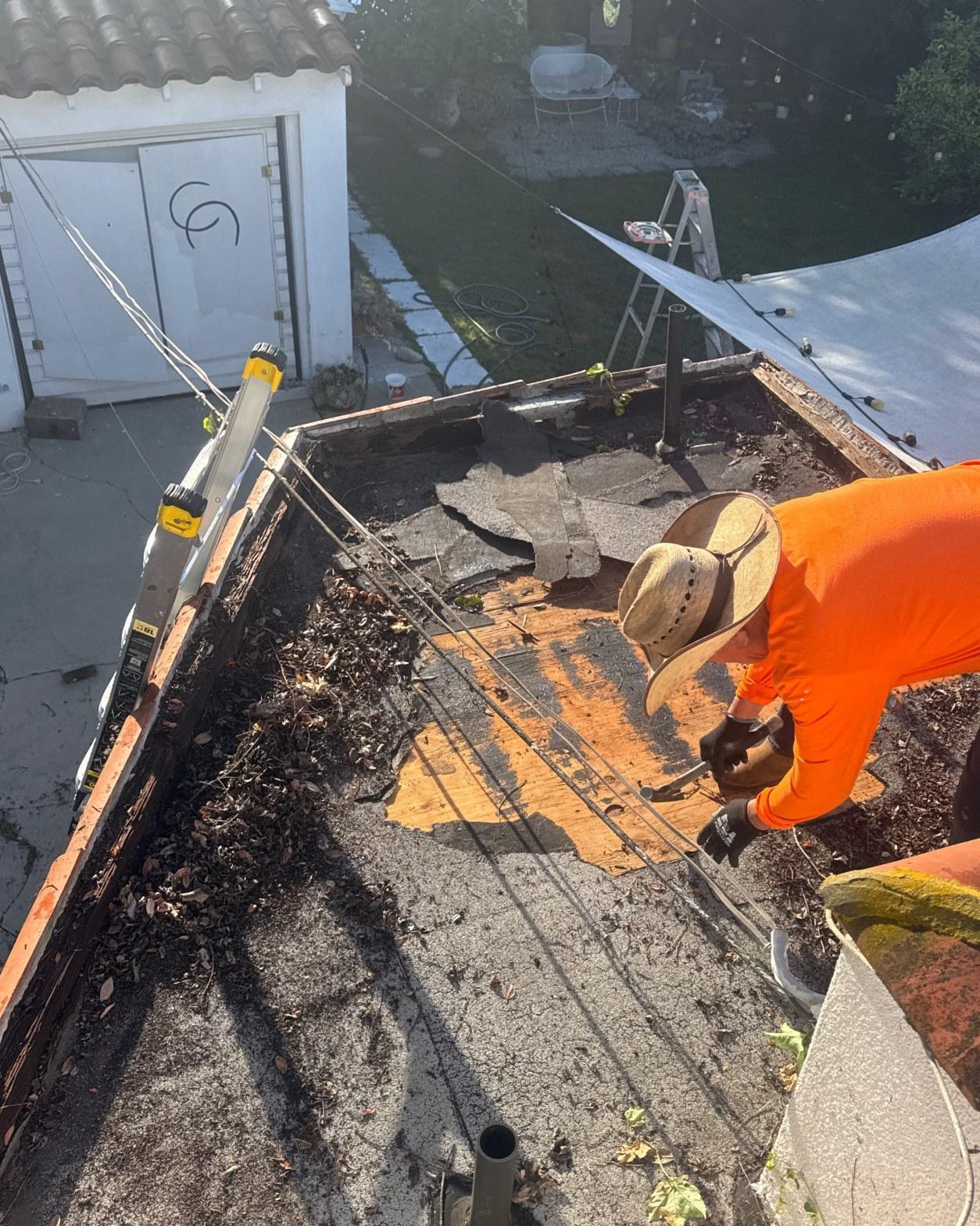
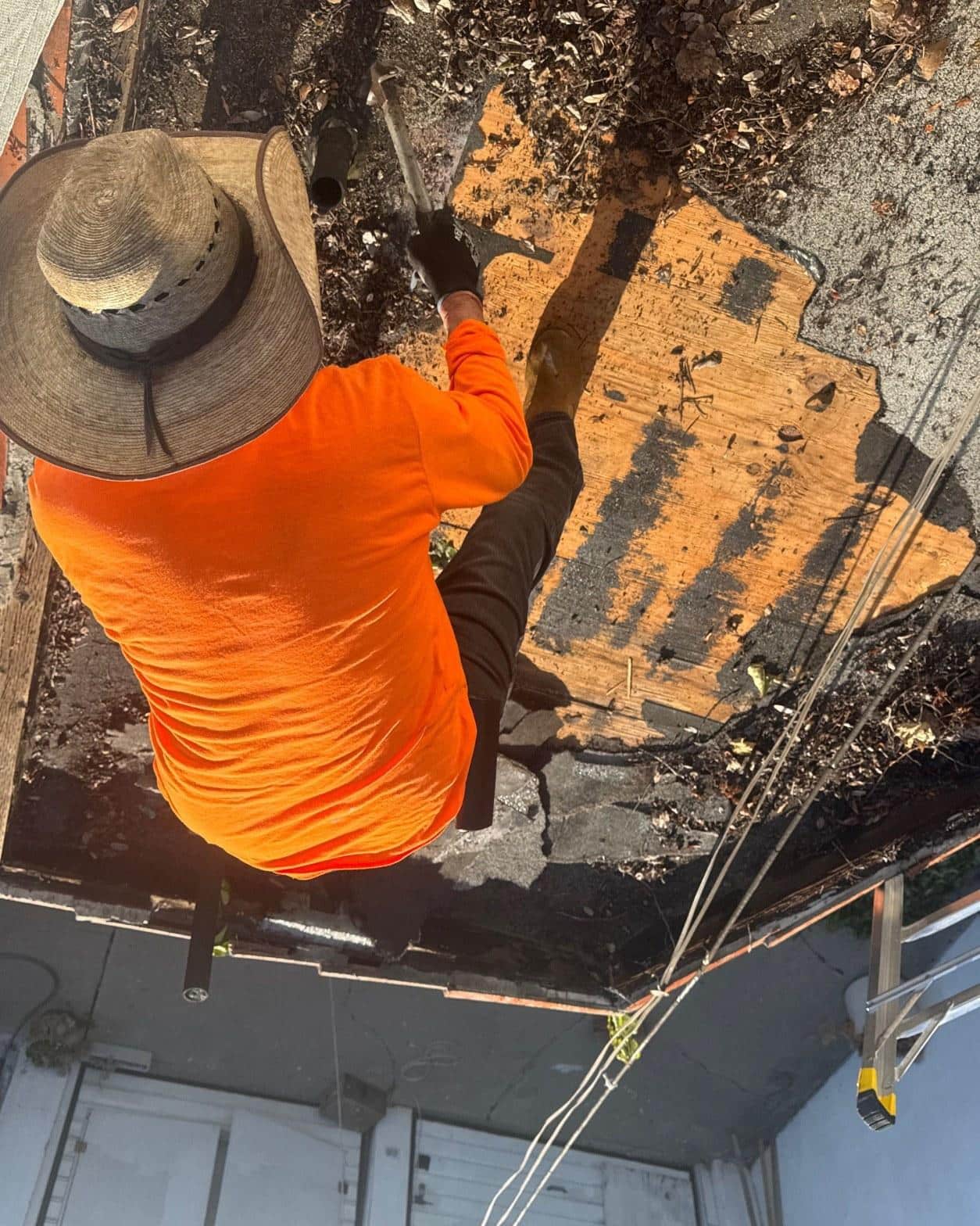
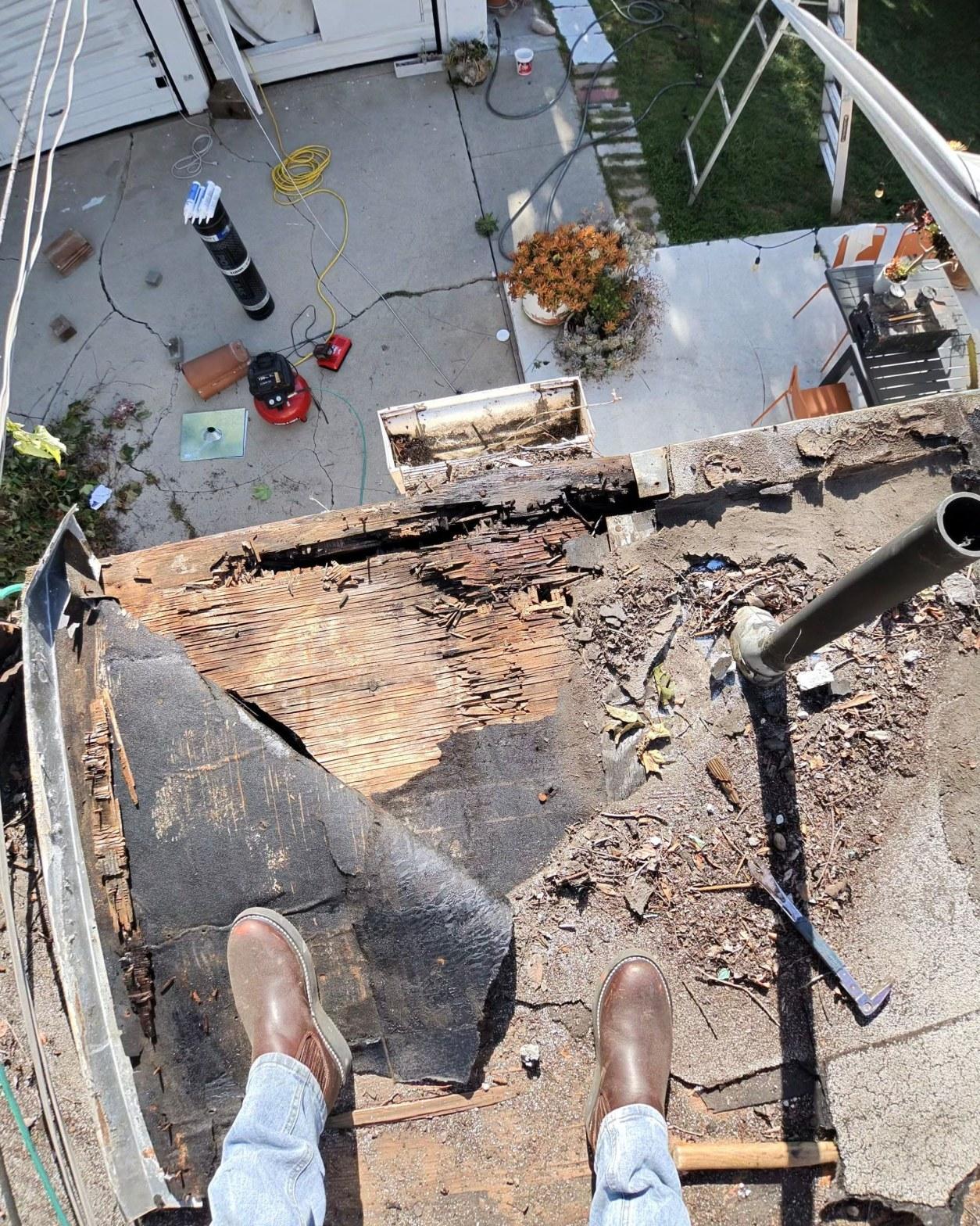
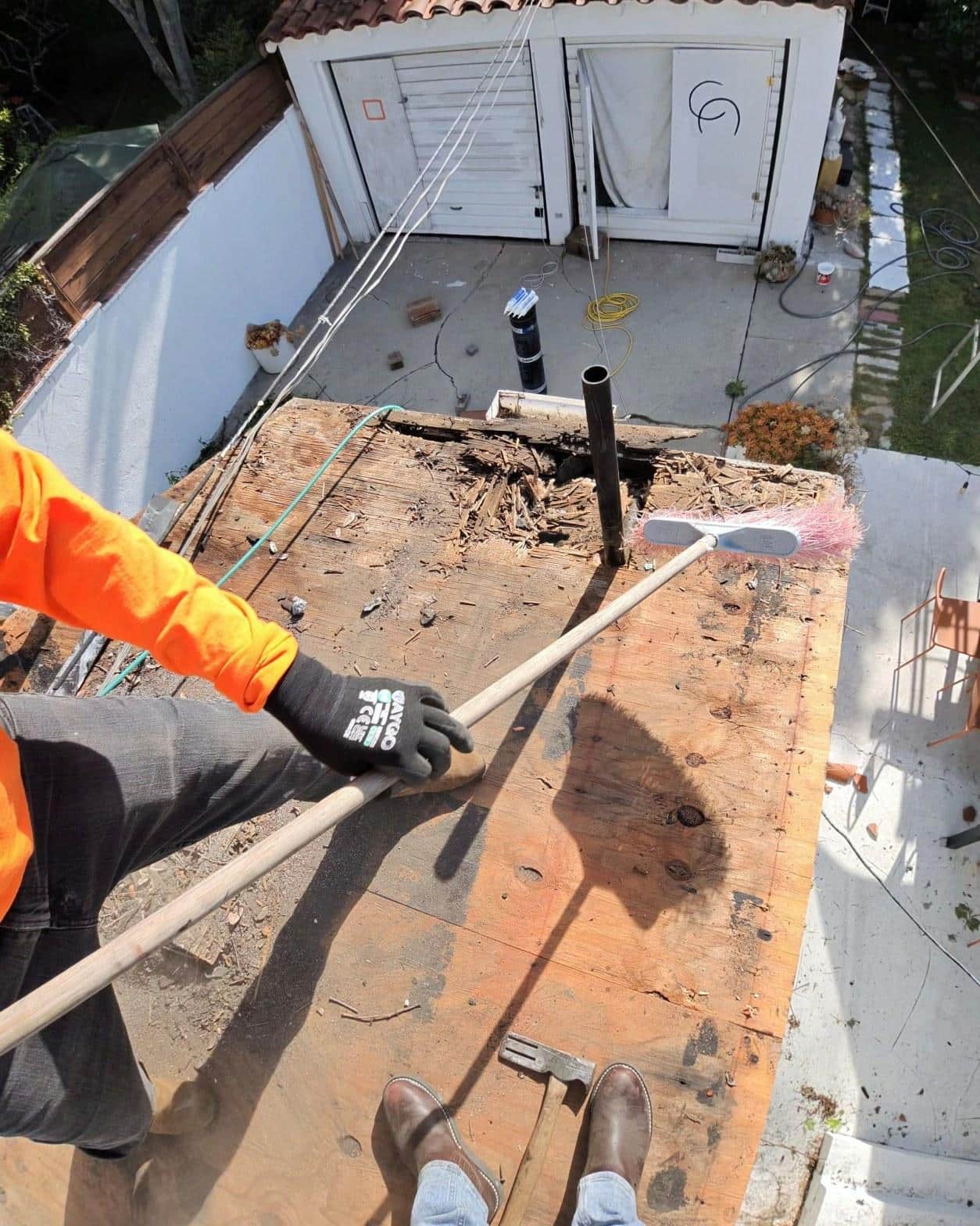
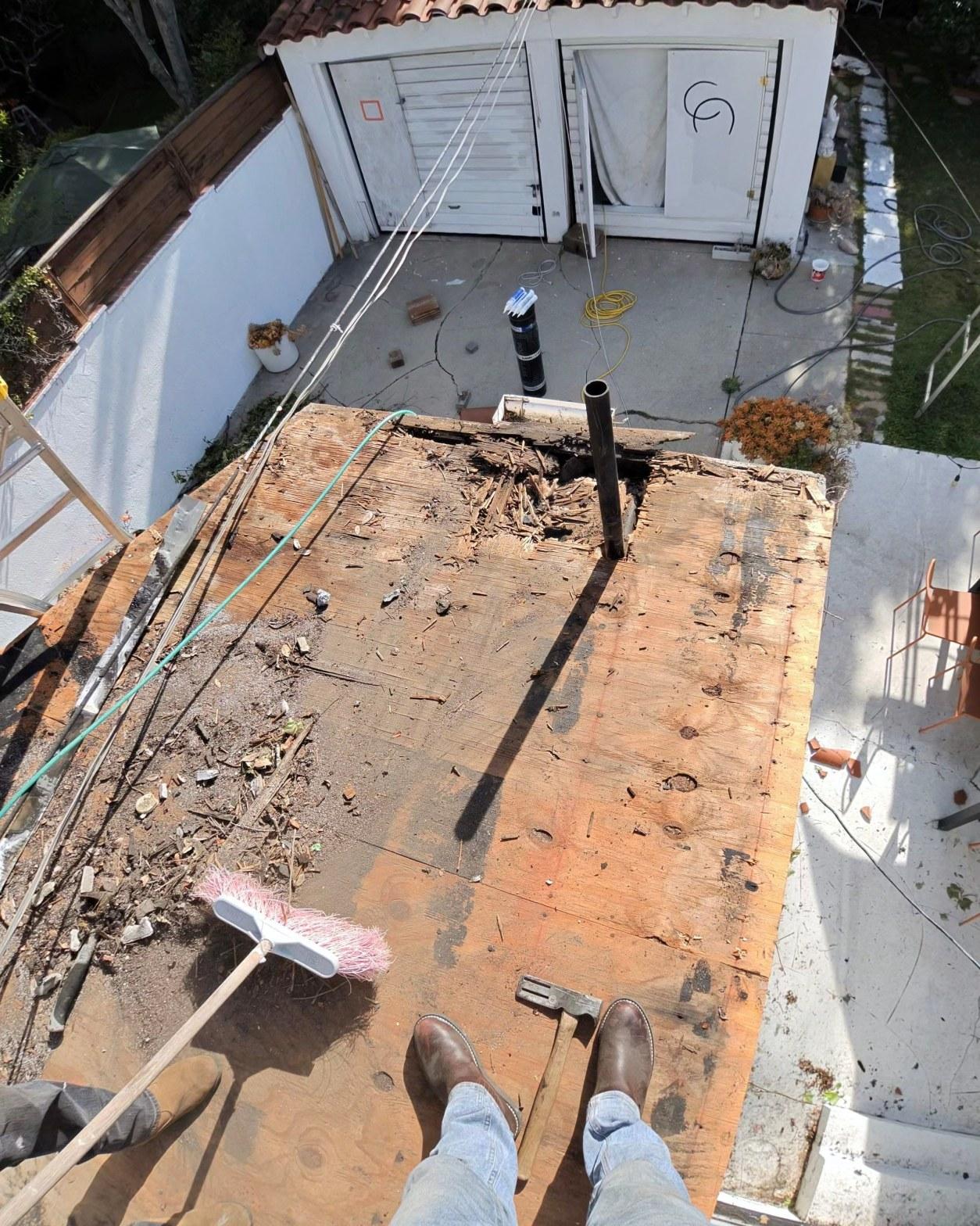
The existing plywood decking itself showed significant blackening and surface deterioration consistent with years of trapped moisture cycling. Some panels had delaminated at the edges. All of it came off before any new material went down.
Our crew has removed decking on more than 60 flat roofs across the Los Angeles basin over the past two years alone — in about 3 out of every 4 of those tearoffs, we find insulation in this same degraded state once the panels are pulled.
How Was the New Roof System Installed?
The new waterproofing system is Polyglass modified bitumen, a torch-applied membrane that is the standard of practice for low-slope residential roofs in Southern California as of 2026. Polyglass is a MAPEI brand product widely specified on California projects for its heat-welded seams, which eliminate the adhesive failures that plague cold-process and peel-and-stick systems in high-UV environments like Los Angeles.
The installation sequence on this project followed the correct layered approach:
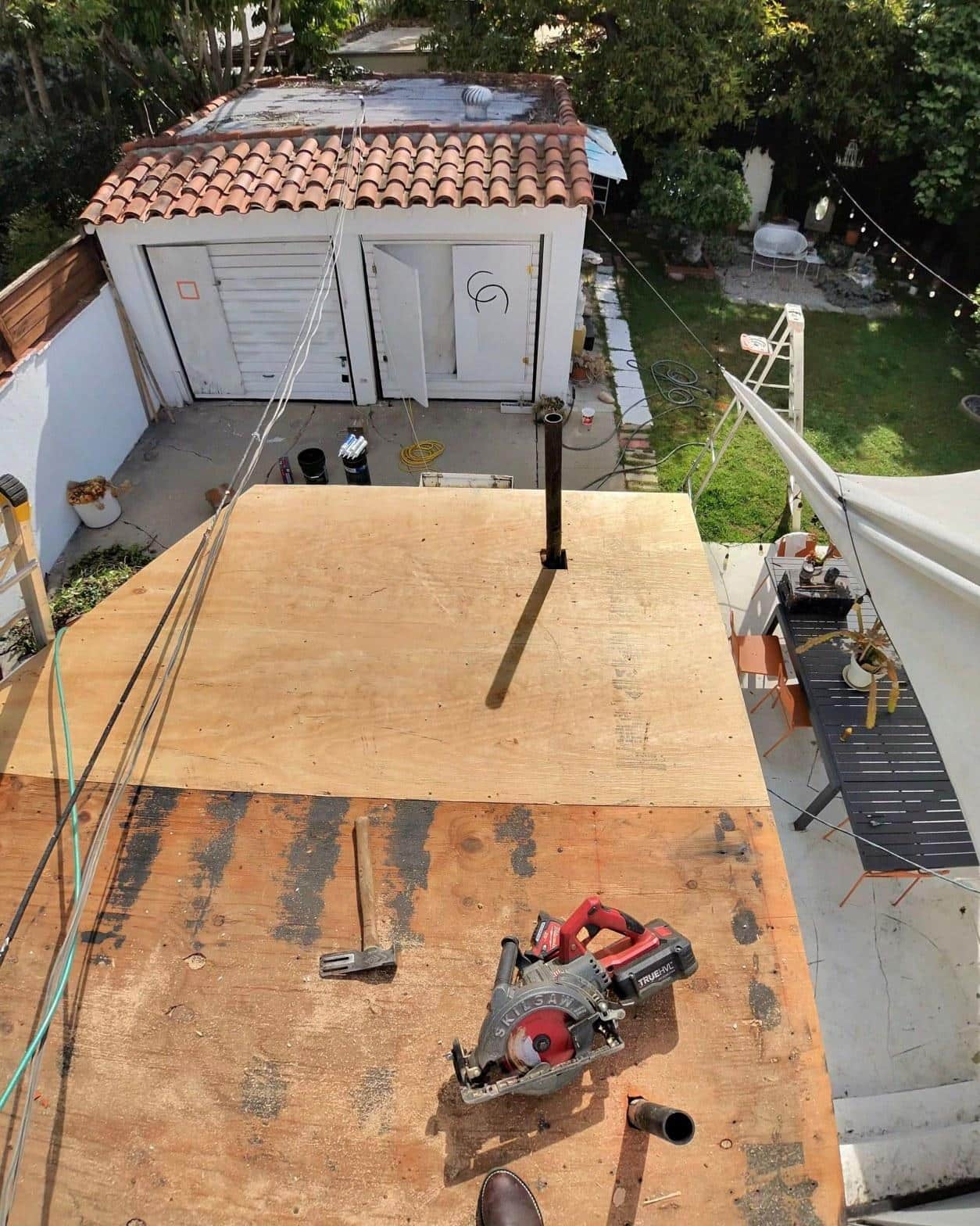
- New plywood decking fastened to the existing rafter structure
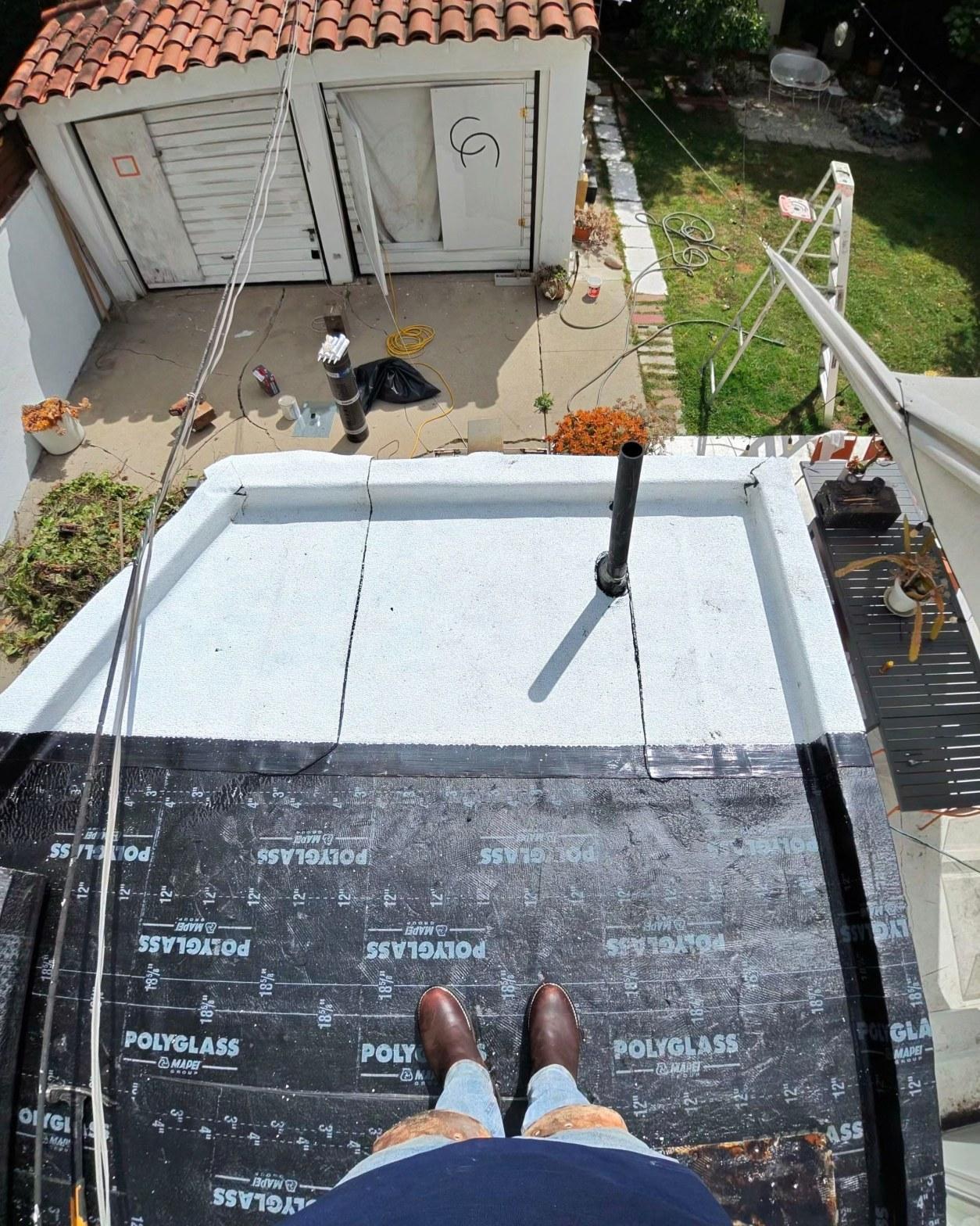
- Base sheet applied across the full field of the roof
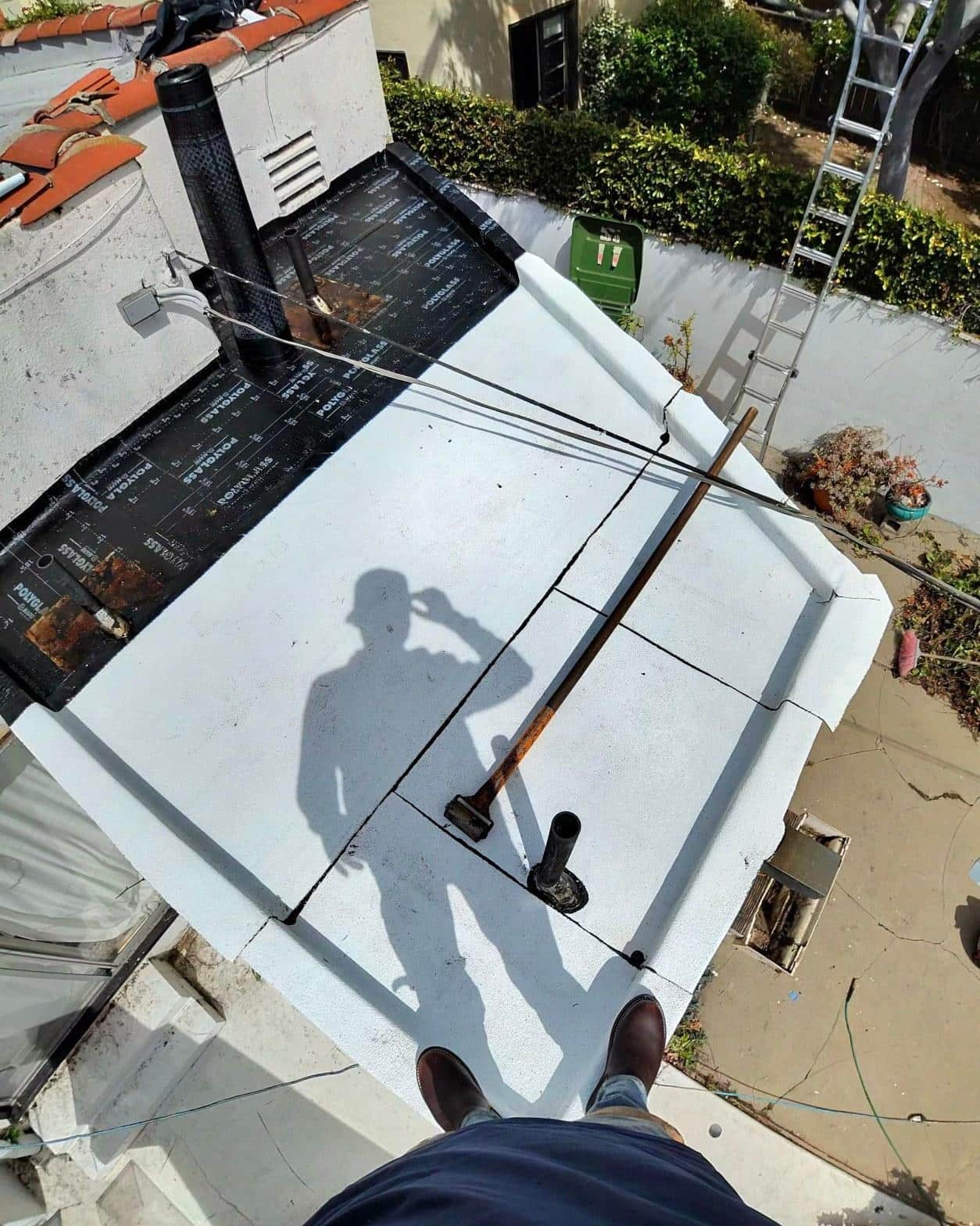
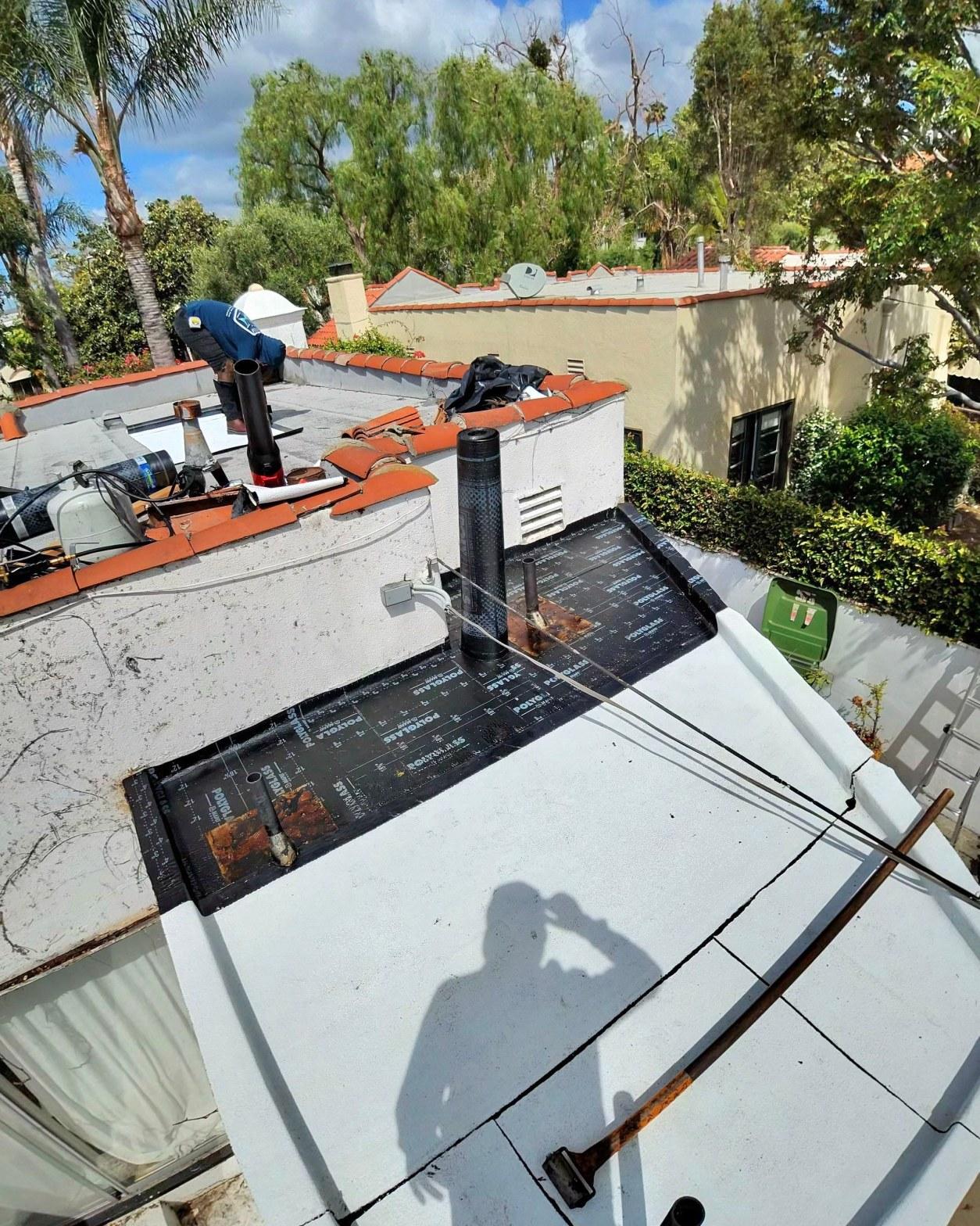
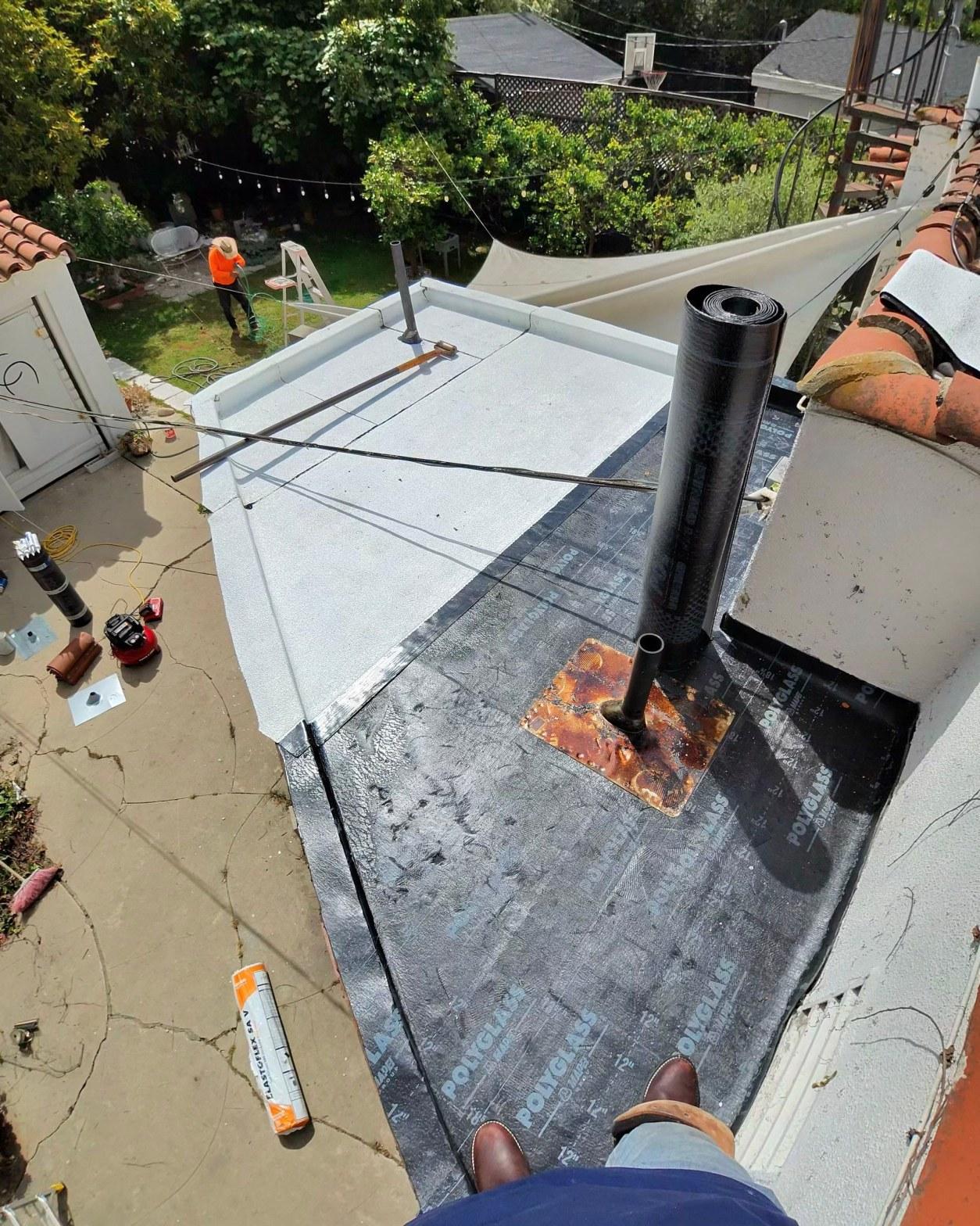
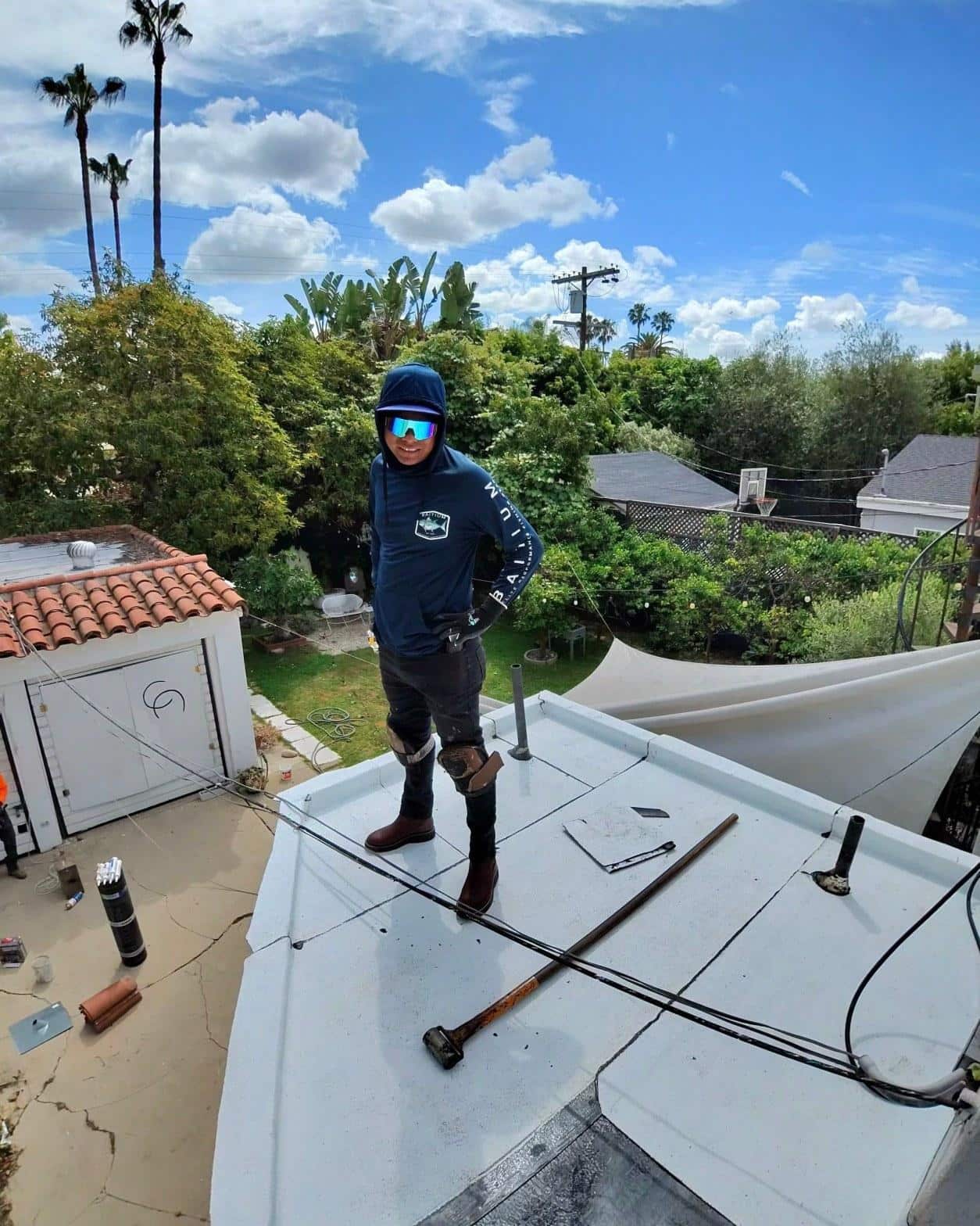
- Polyglass cap sheet torched down in overlapping runs, with seams heat-welded to a continuous bond
- All pipe penetrations flashed individually with metal collars set into the membrane
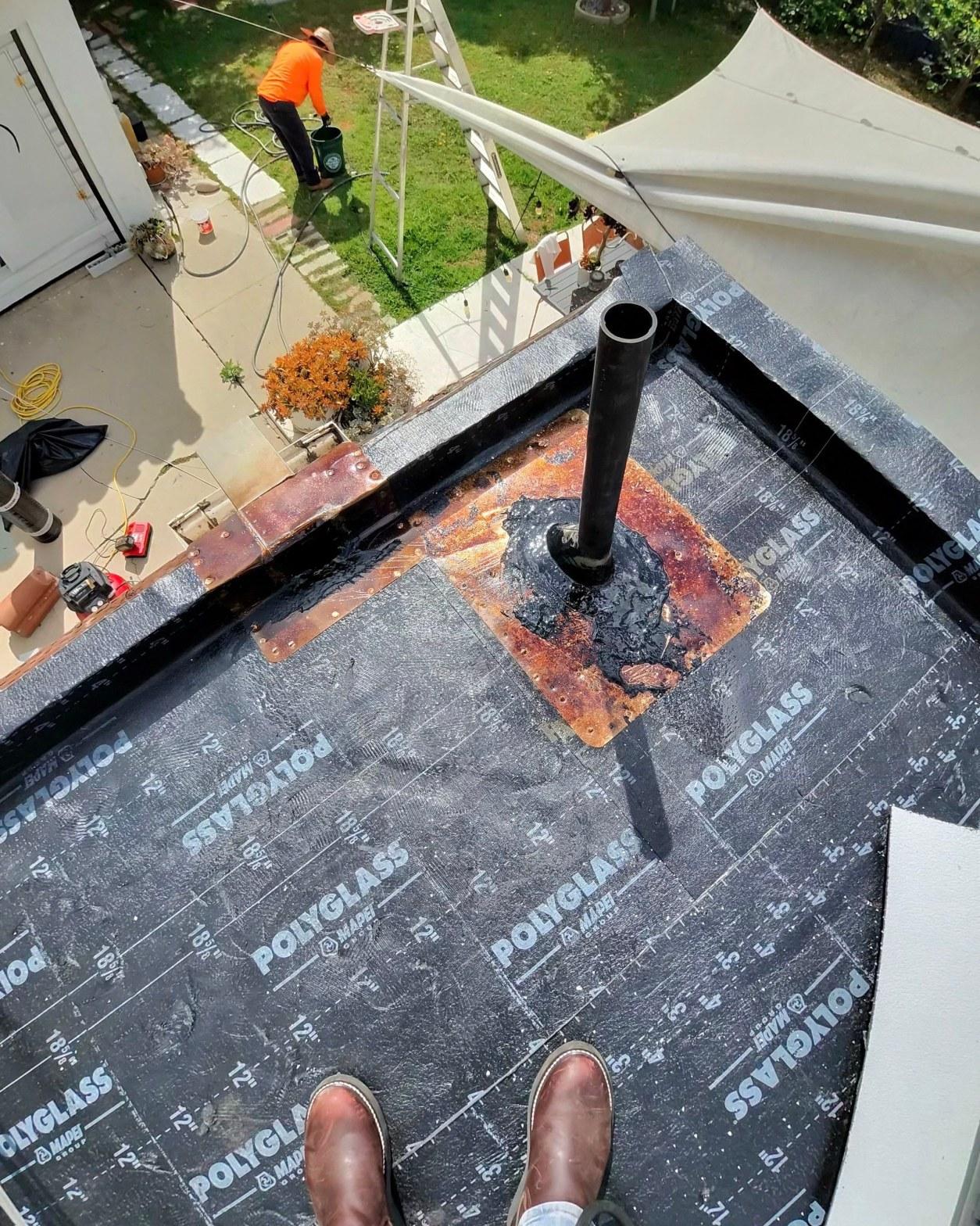
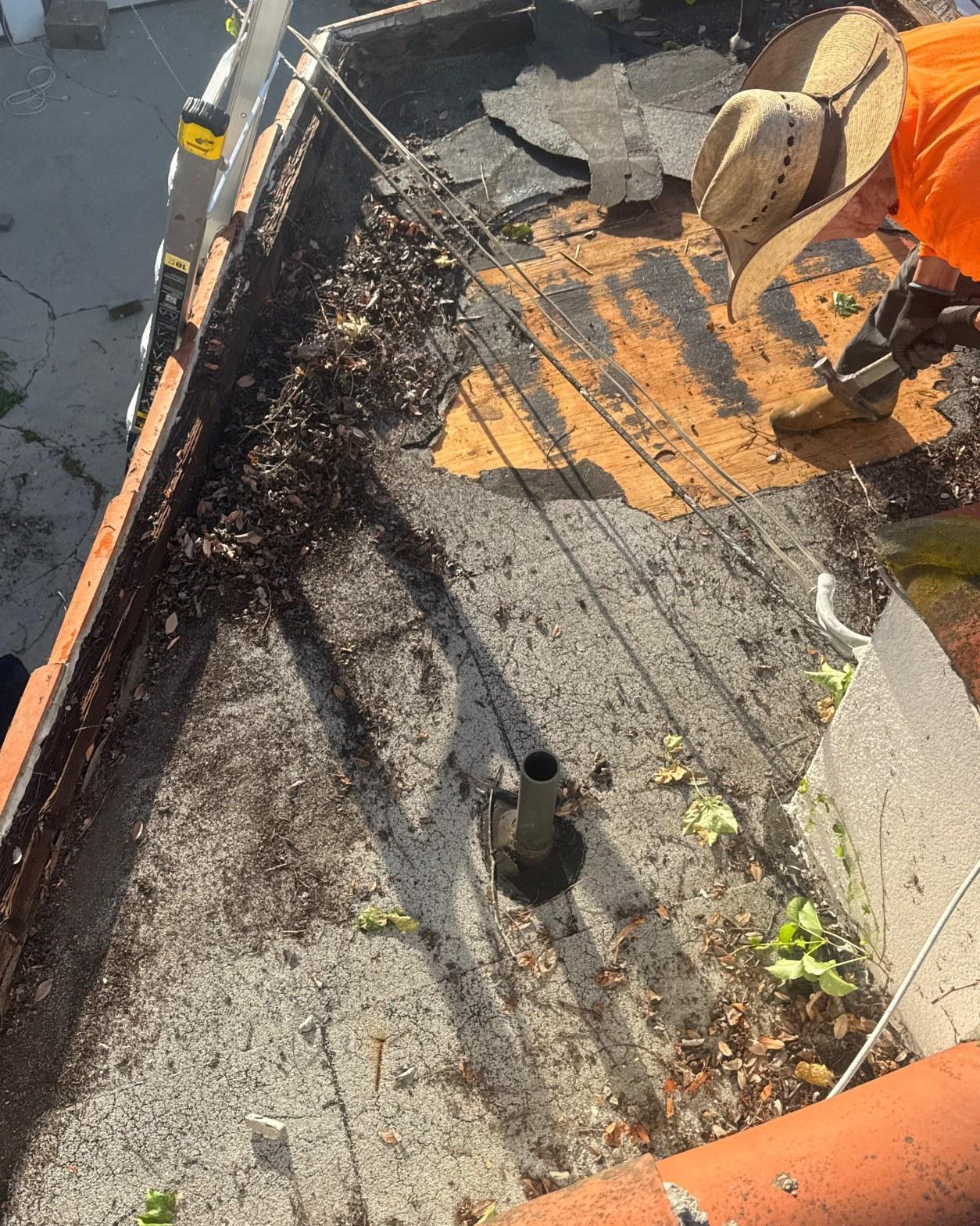
Pipe penetrations are among the most common failure points on any flat roof. The drain stack on this project required a full metal flashing collar integrated into the membrane layers — not simply caulked or collared over the old surface. Properly done, a torch-down pipe penetration like this carries a service life of 15 to 20 years before requiring any maintenance attention, provided the field membrane remains intact.
California’s Title 24 building energy standards require that re-roofed assemblies meet minimum thermal performance criteria, which influenced how the insulation replacement was handled in this conditioned-assembly configuration. You can review the current requirements directly at the California Energy Commission’s building standards page.
What Was the Condition of the Drain and Surrounding Surface?
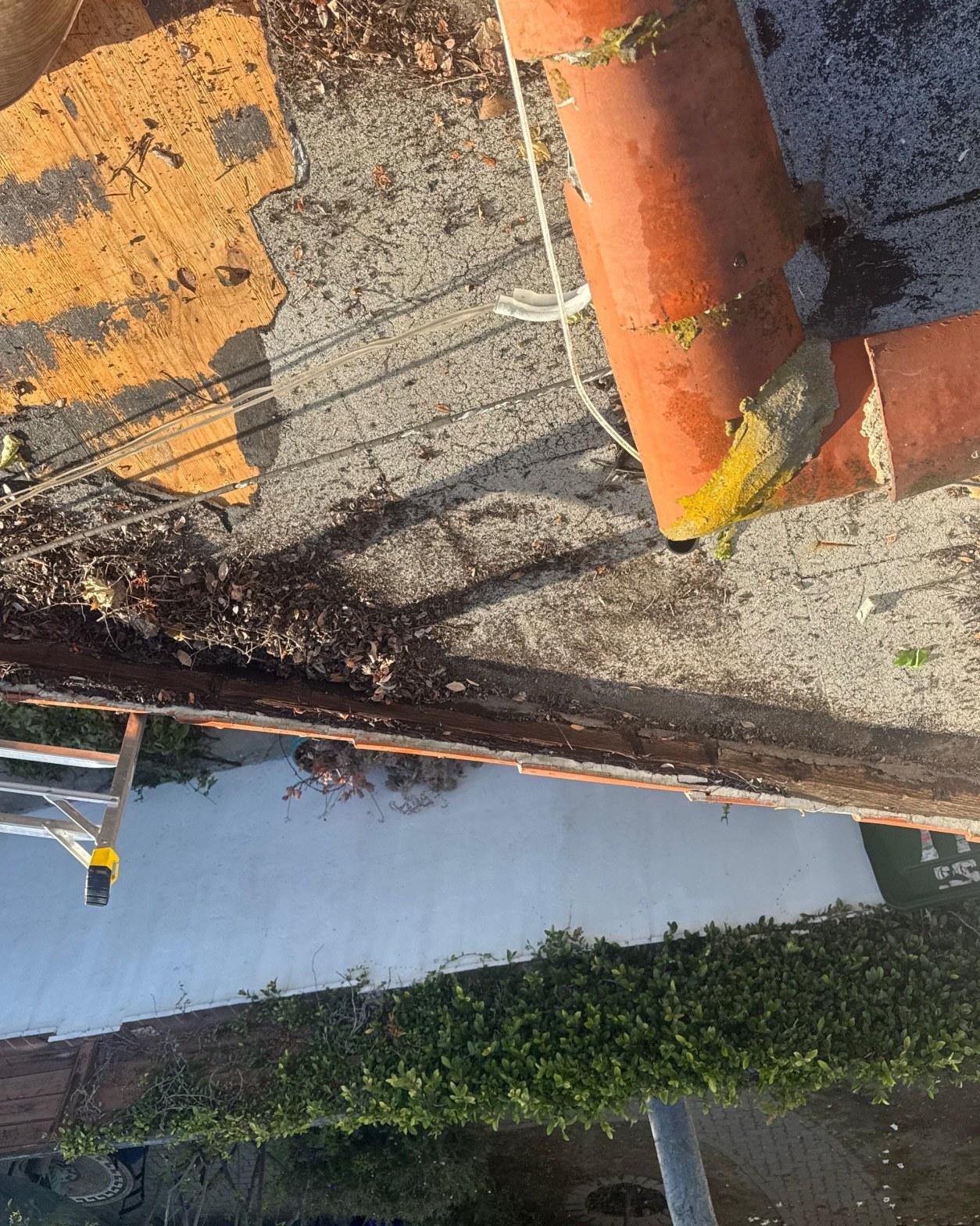
The existing drain stack was surrounded by a failed built-up roofing surface that had cracked, granule-shed, and accumulated years of organic debris — leaves, dirt, and standing moisture had pooled around the base of the pipe. Before the new Polyglass field sheet could be terminated and the penetration flashed, the area required full cleaning and a new metal flashing plate set into the membrane.
Standing water on a flat roof accelerates membrane degradation significantly. The EPA notes that proper drainage design and regular drain maintenance are among the most cost-effective ways to extend flat roof service life — a claim that this drain condition illustrates directly.
According to NOAA climate data, Los Angeles receives the majority of its annual precipitation between November and March, meaning a roof in this condition heading into the next wet season would have faced near-certain interior water damage.
Ready to Replace Your Flat Roof?
If your flat roof is showing cracks, standing water, or you simply don’t know the last time it was replaced, schedule a field inspection before the next rain season arrives. Roof Replacement Inc serves Los Angeles and surrounding communities — call us or submit a project inquiry online to get a written scope and estimate. No overlays, no shortcuts — just a full assessment of what your roof actually needs.