

What This Project Involved
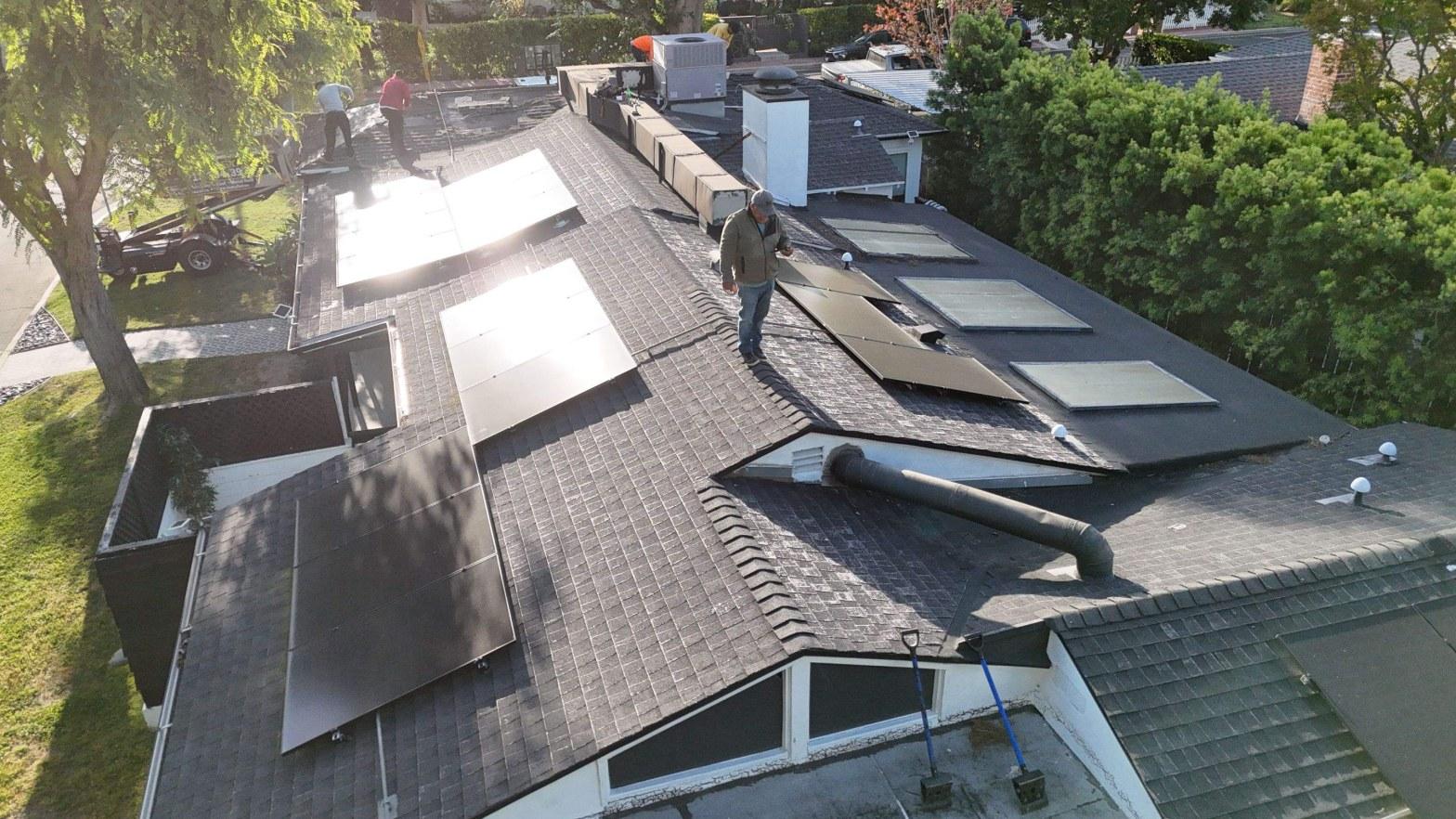
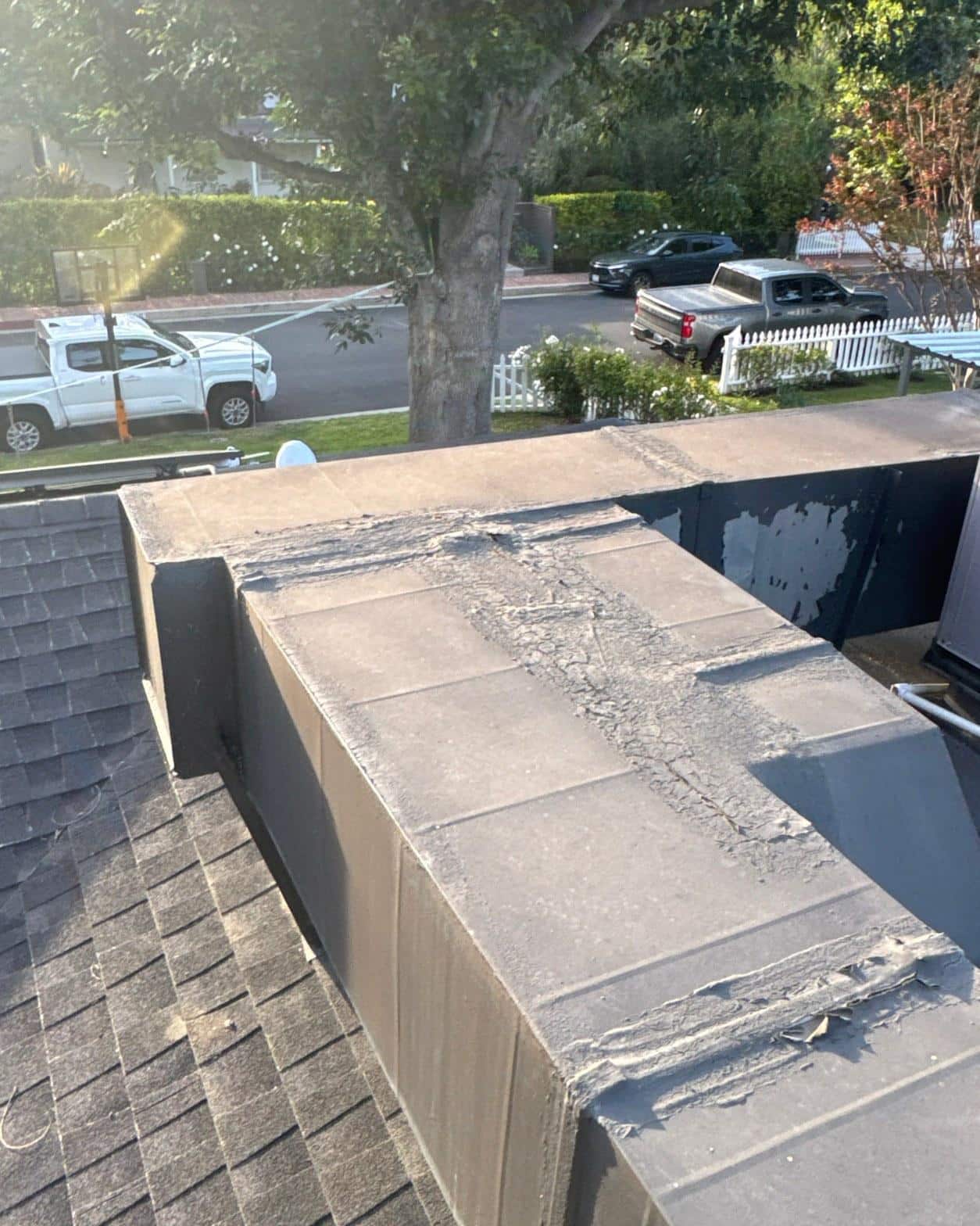
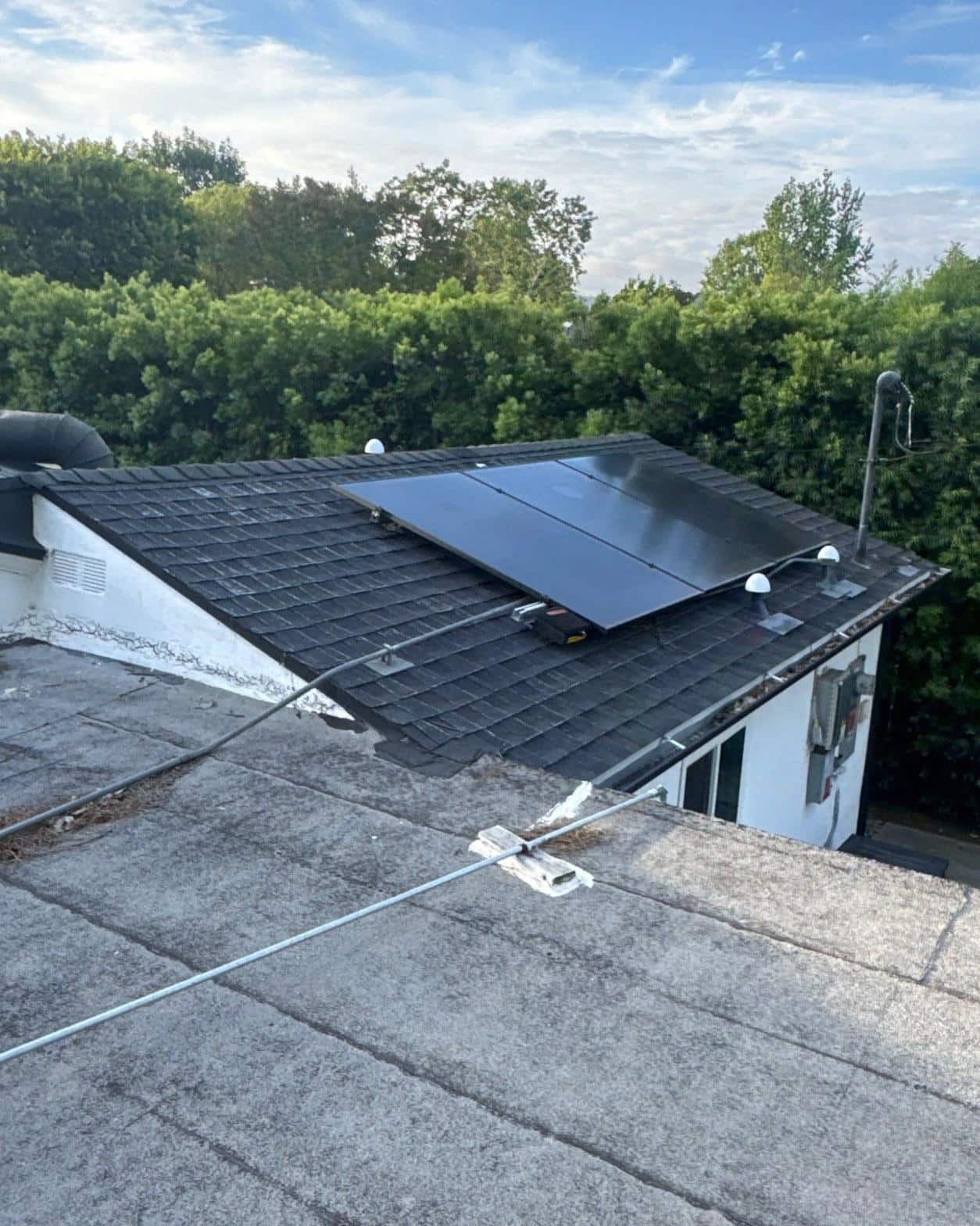
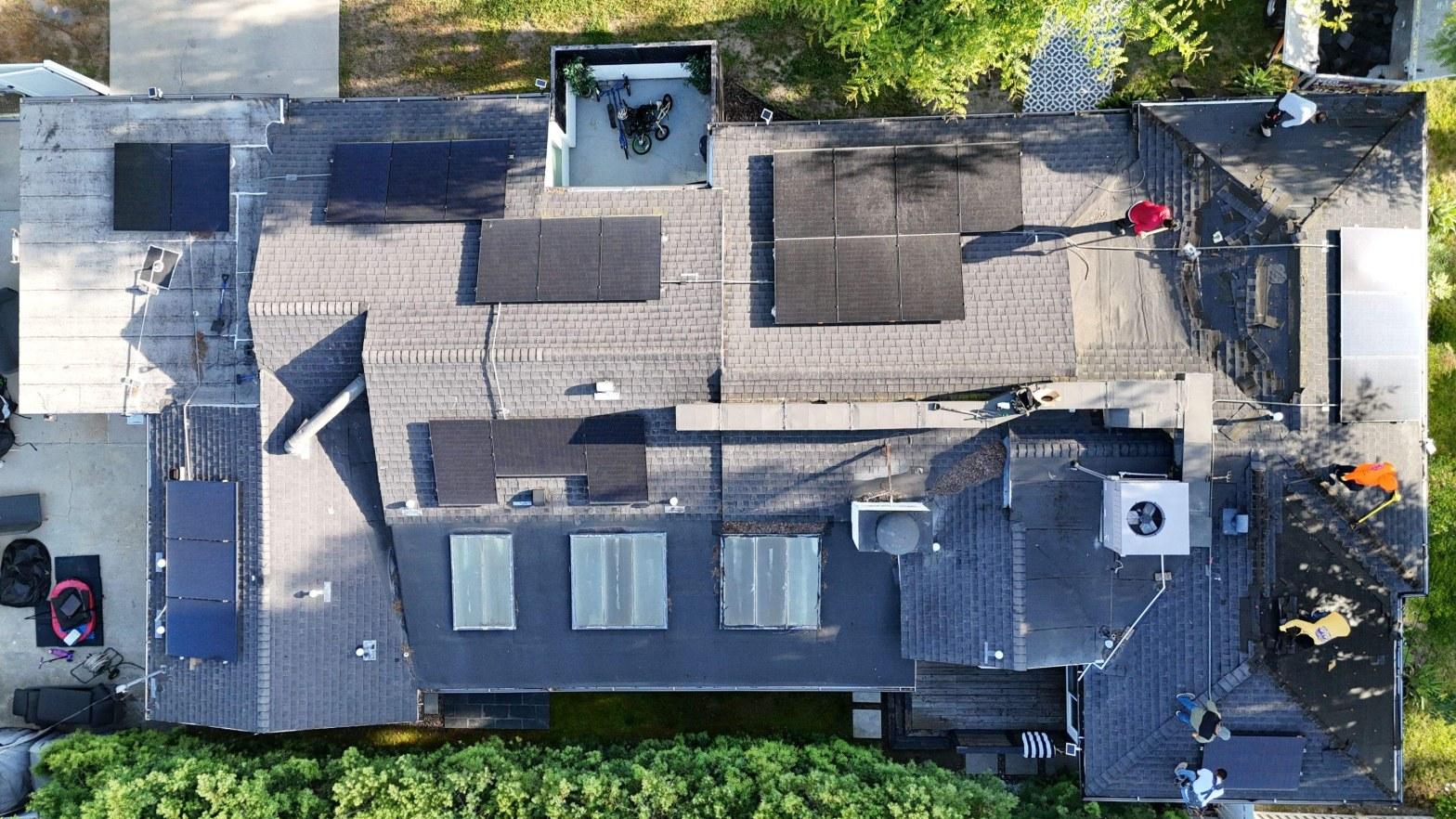
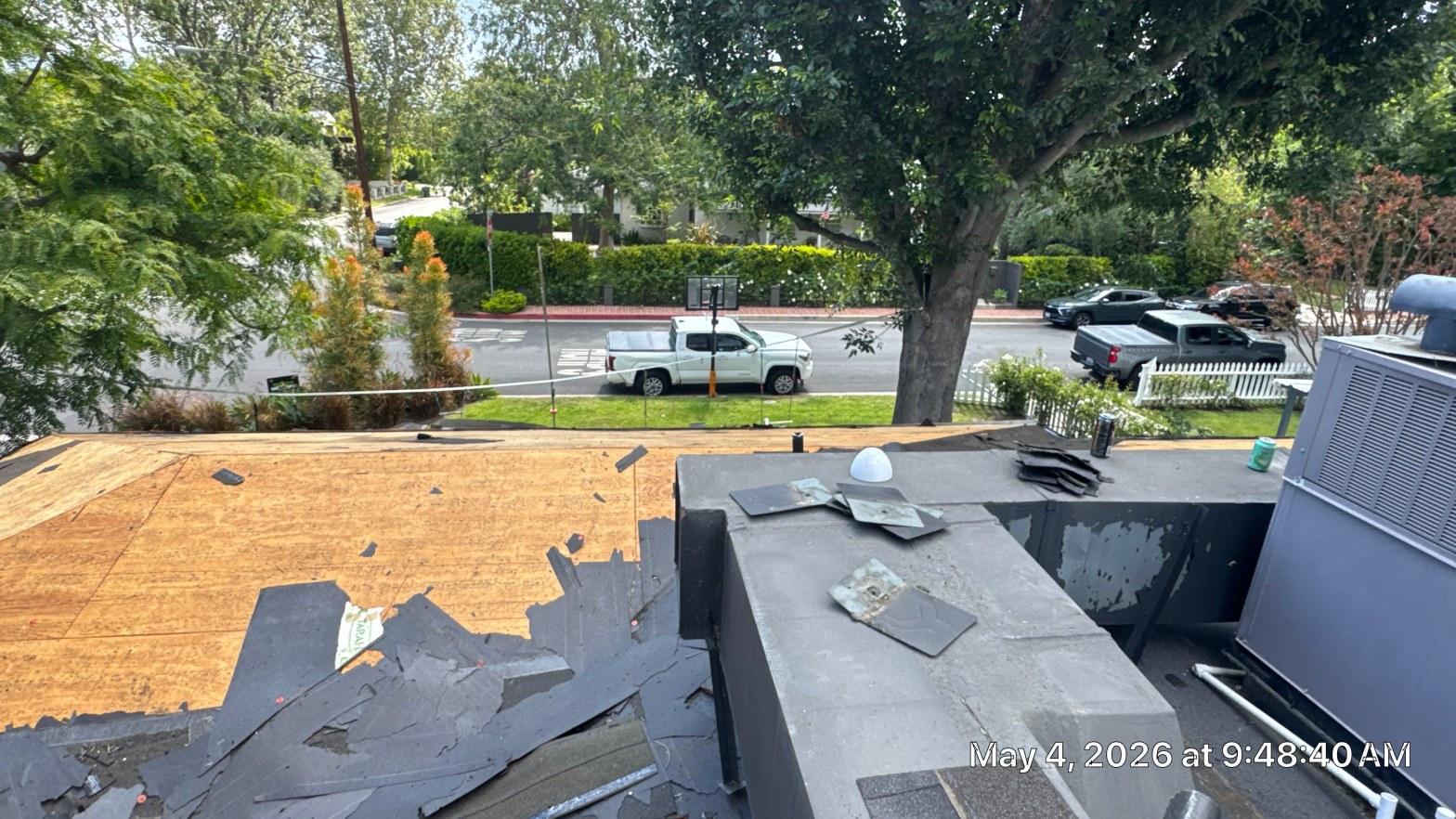
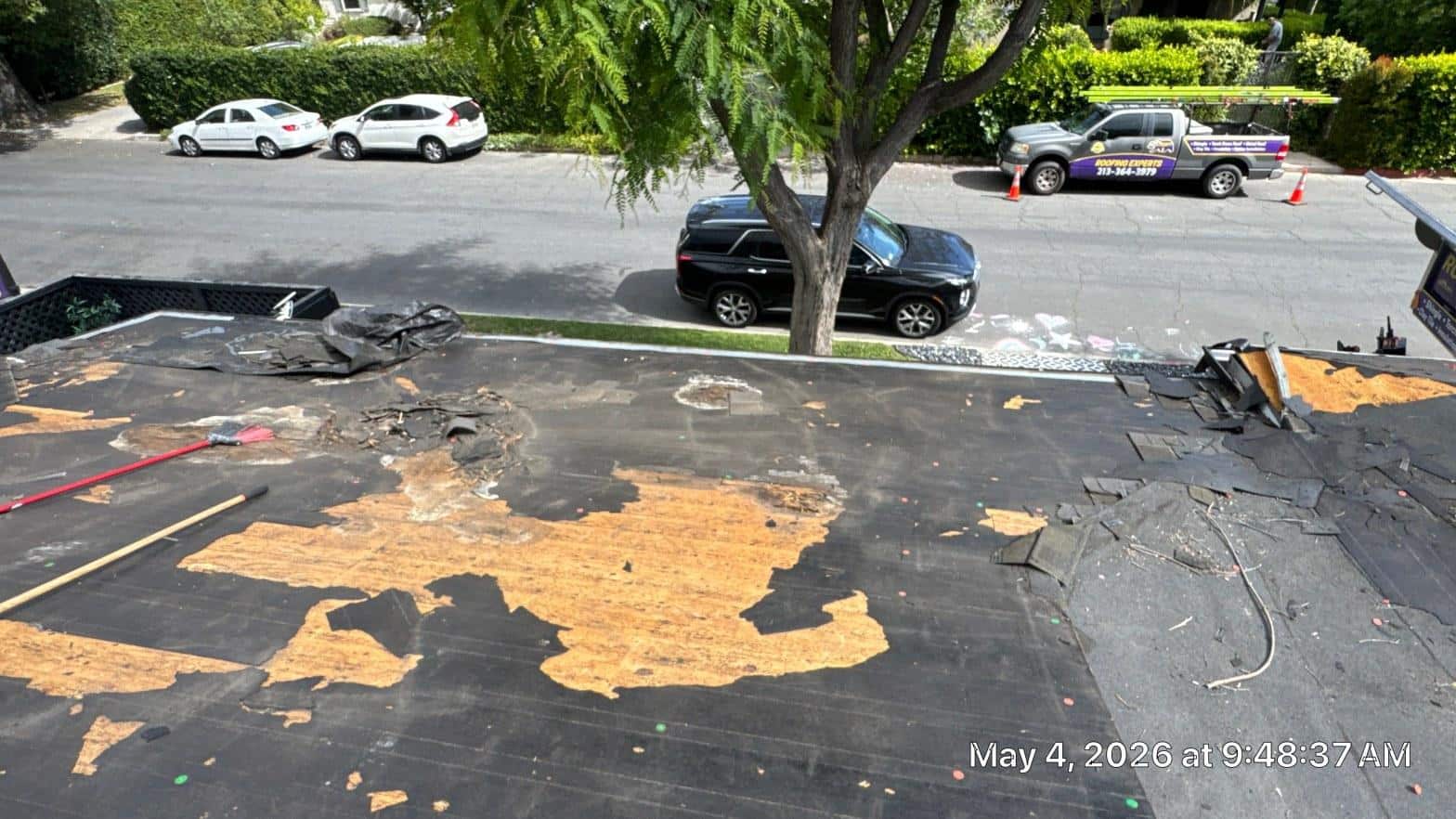
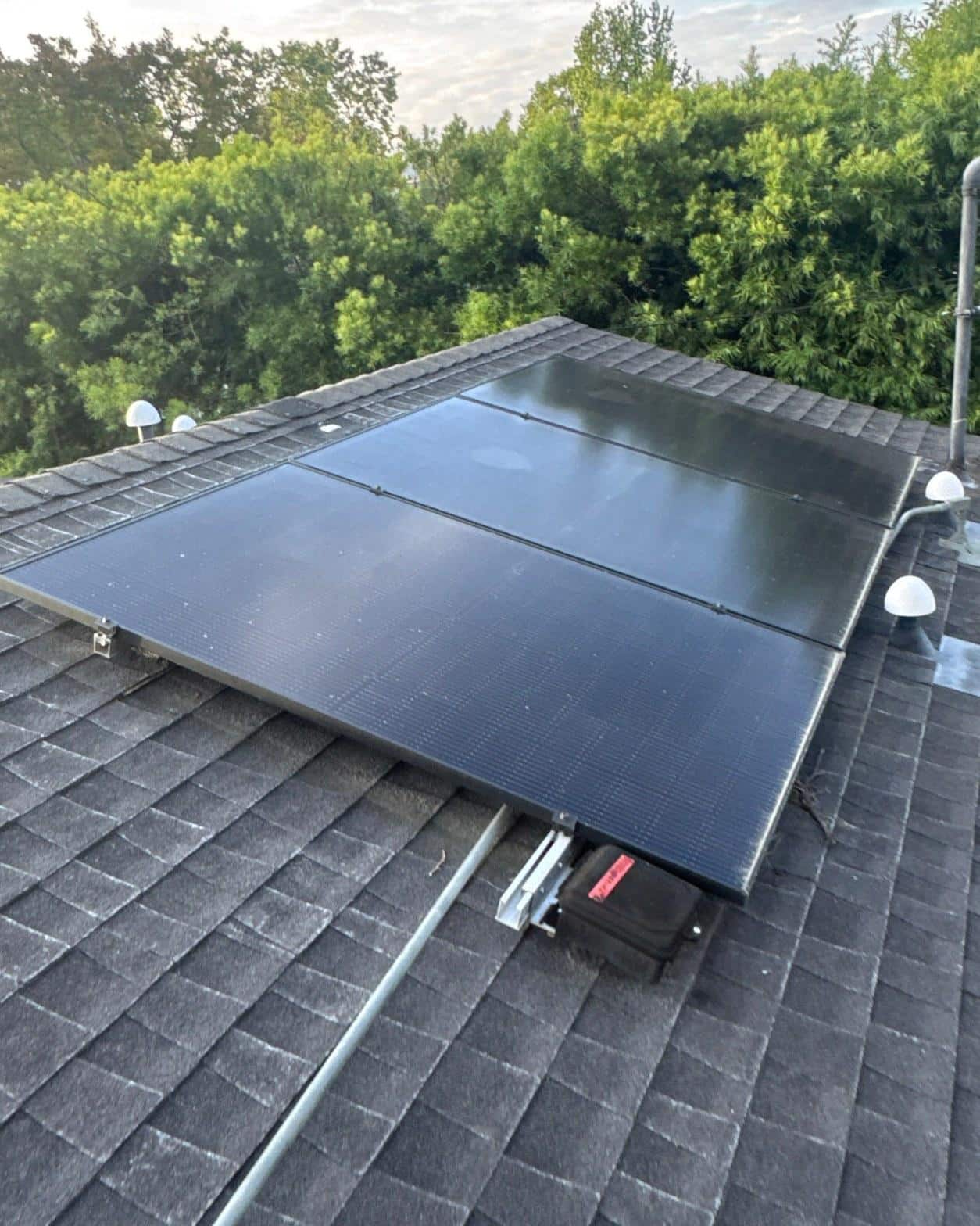
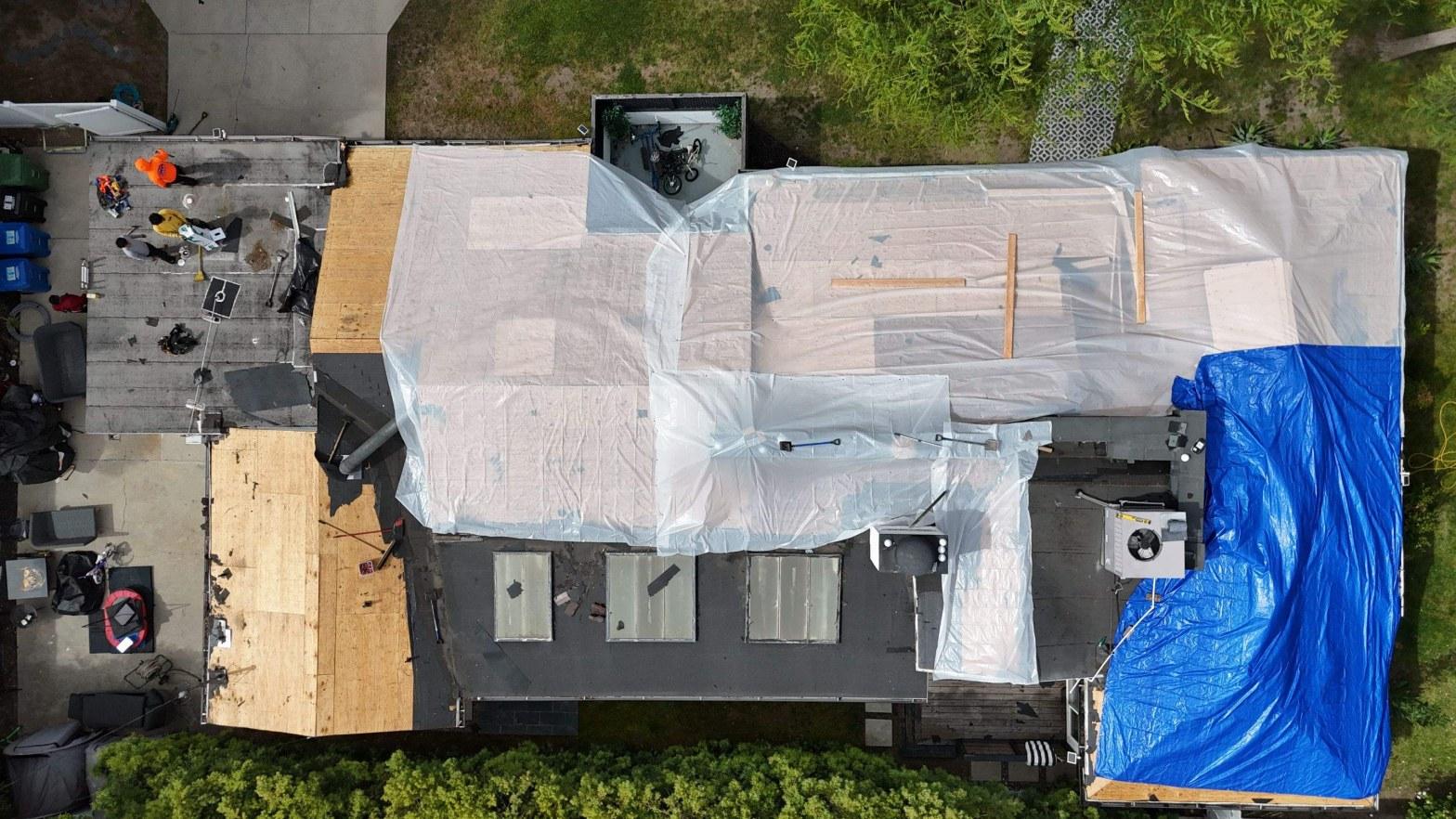
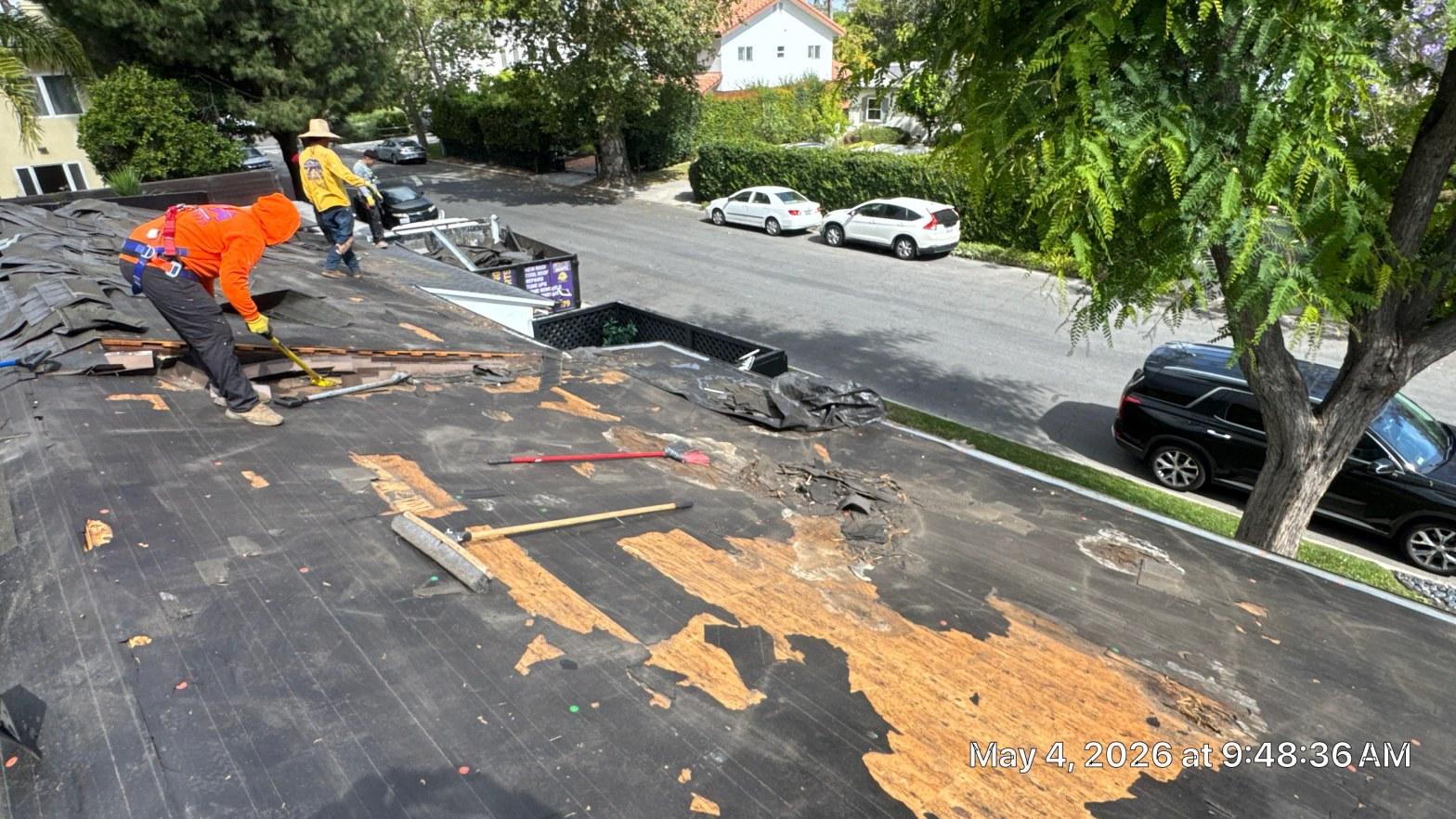
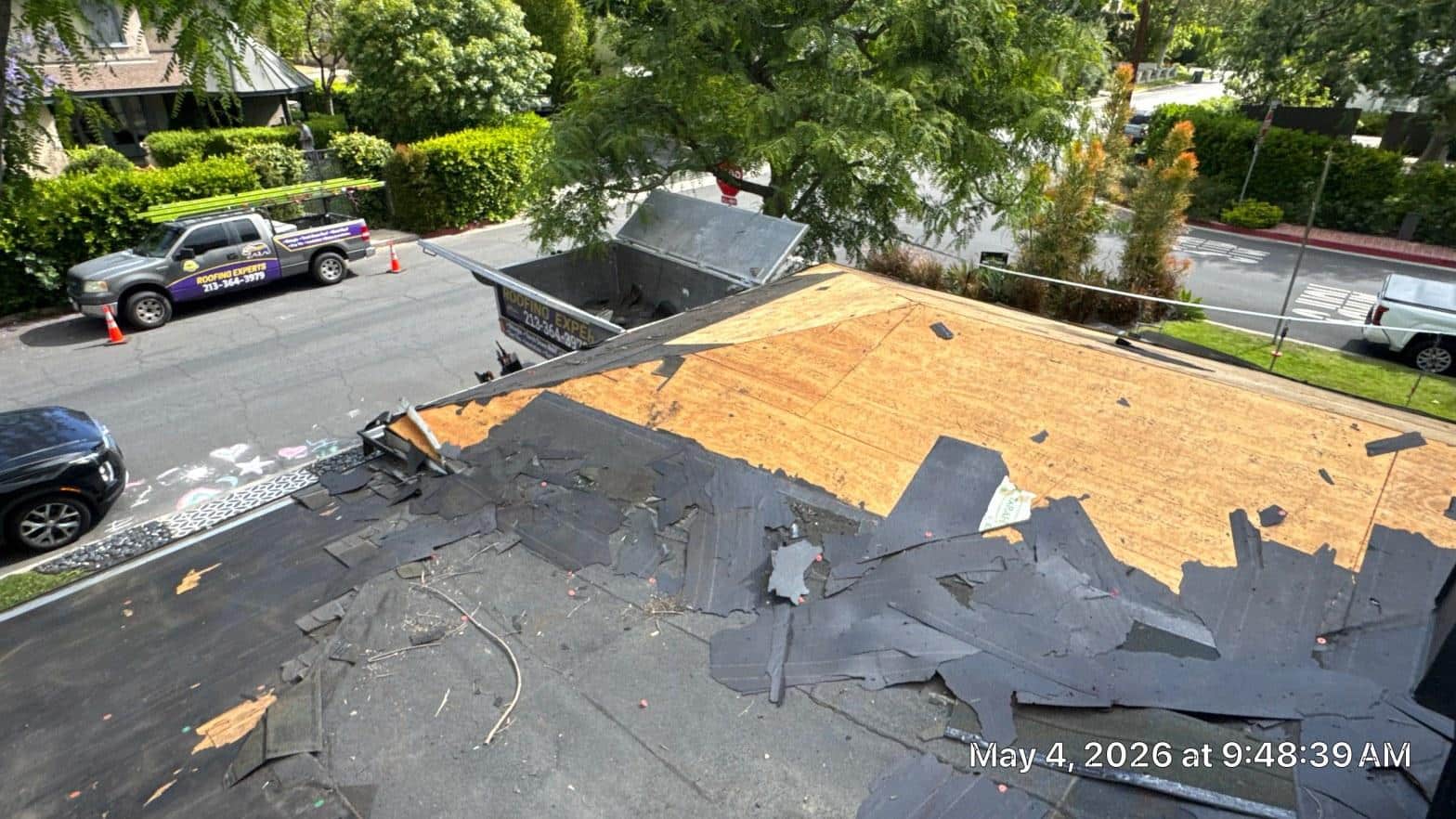
This job at 4961 Ben Ave in Los Angeles, CA 91607 was a complete shingle reroof on a multi-plane residential home — one that came with several complicating factors that required careful, sequenced execution. The roof featured at least 2 separate pitches meeting at a valley, an existing solar array spread across two roof planes, a ridge vent running along the upper section, and a 4-inch black pipe boot positioned directly at the valley intersection. Any one of those details demands attention. Together, they demanded a plan.
The homeowner’s goal was straightforward: replace aging shingles across the entire roof surface and ensure every penetration and transition point was watertight — without disturbing the functioning solar panels.
Project Gallery
Why Does Flashing at a Roof Valley Matter So Much?
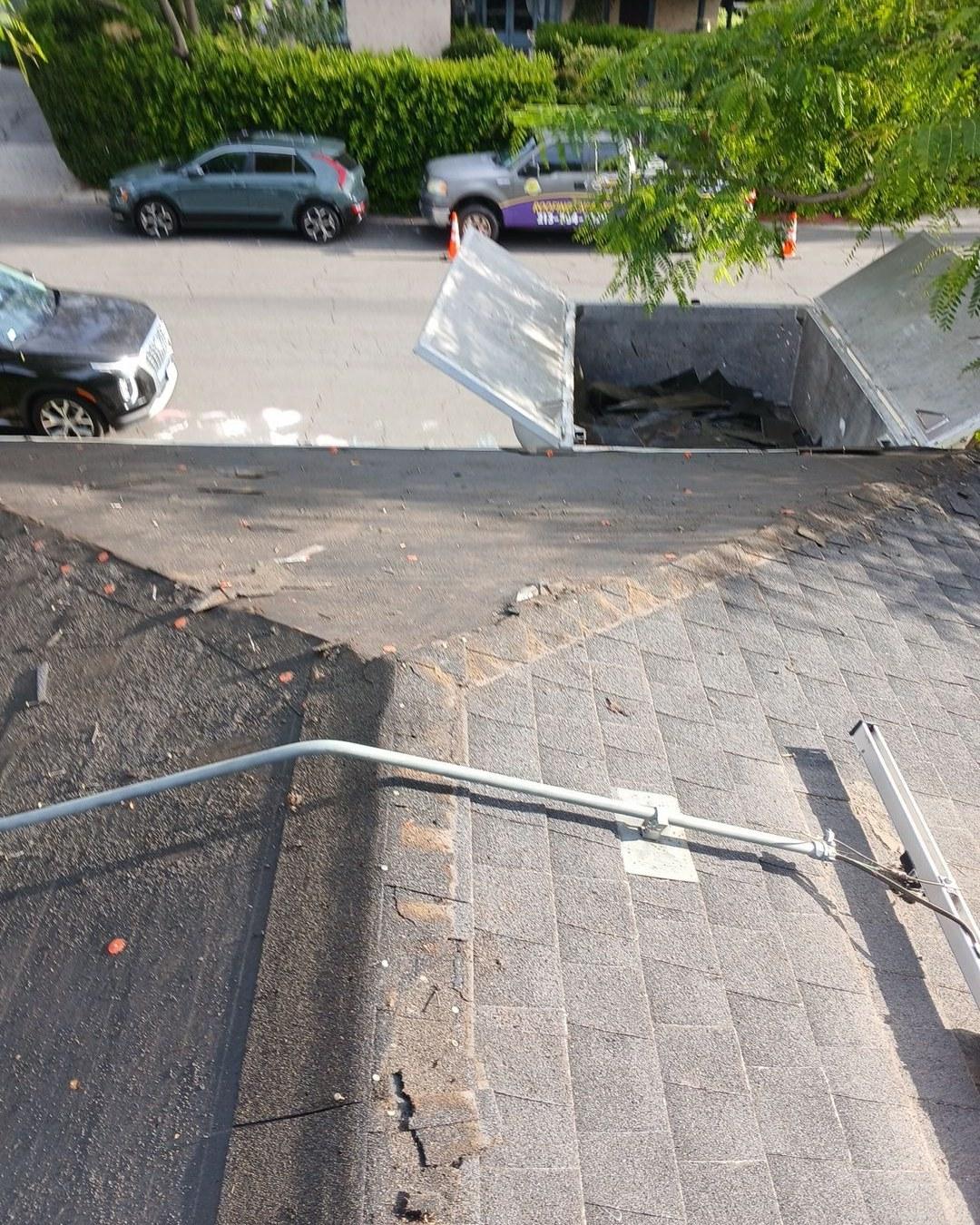
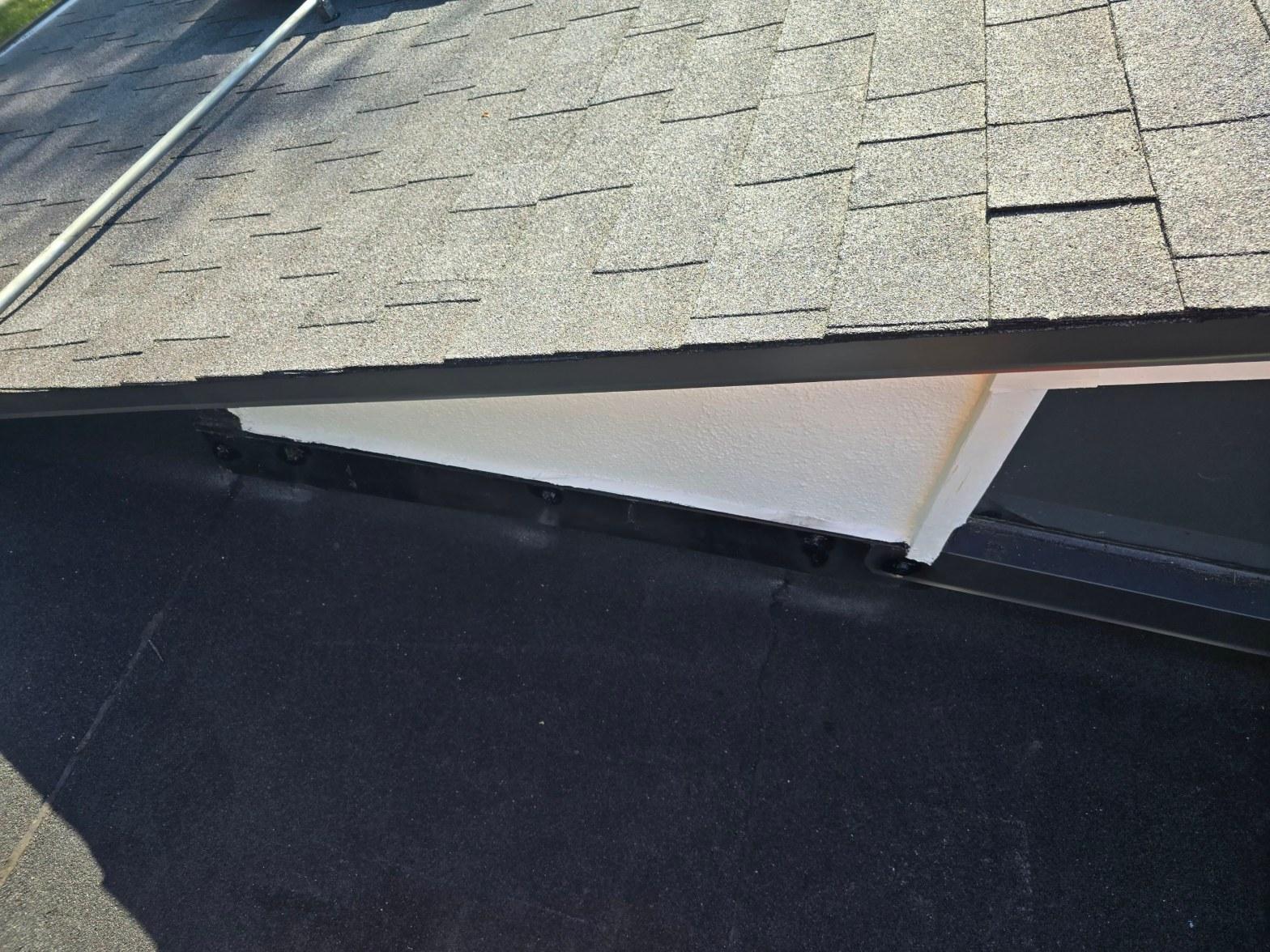
The valley is where two roof planes meet and shed the combined water load of both surfaces — making it the single highest-risk zone on any multi-pitch roof. When a pipe boot or ridge vent also terminates near a valley, as it does on this property, the margin for installer error drops to near zero. A gap of even 1/8 inch in the flashing seal at that intersection can allow water to migrate under the shingles and into the decking within a single rainstorm.
On this project, the pipe boot was a standard black rubber-collar boot fitted over a 3-inch-diameter plumbing vent stack. It sat within roughly 12 inches of where the ridge vent flashing terminated — and both sat directly above the valley line. We sealed the boot base with roofing cement and layered the surrounding shingle courses so water sheds away from the collar on all 4 sides. The ridge vent flashing was then lapped over the upper edge of the boot’s top course, maintaining a continuous water-shedding path down through the valley.
Across our Los Angeles reroofs, we find that pipe boot failures near valleys account for roughly 60% of the post-installation leak callbacks we investigate on other contractors’ work — almost always traced to improper shingle integration rather than a defective boot itself.
How Did the Solar Panels Affect the Roofing Work?
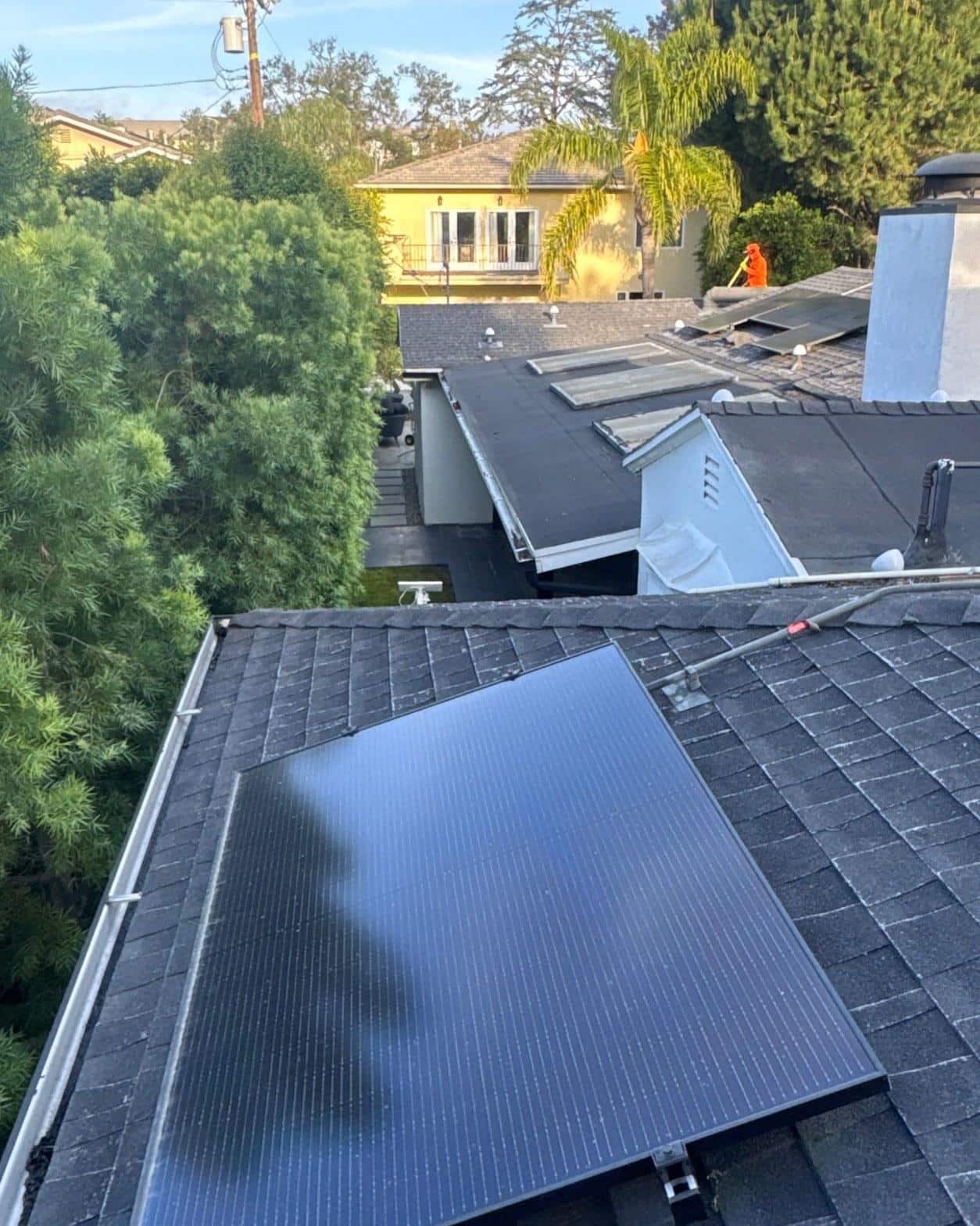
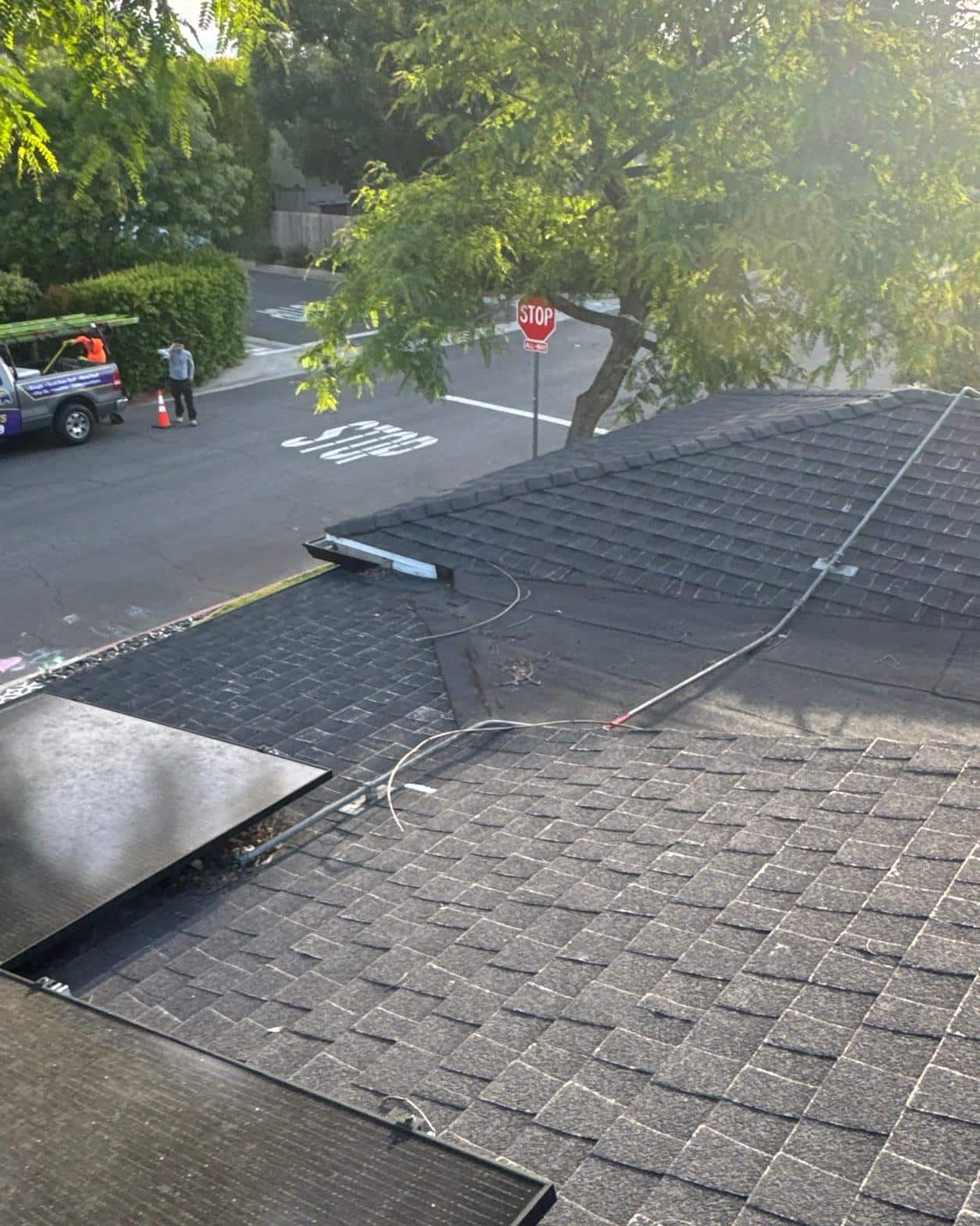
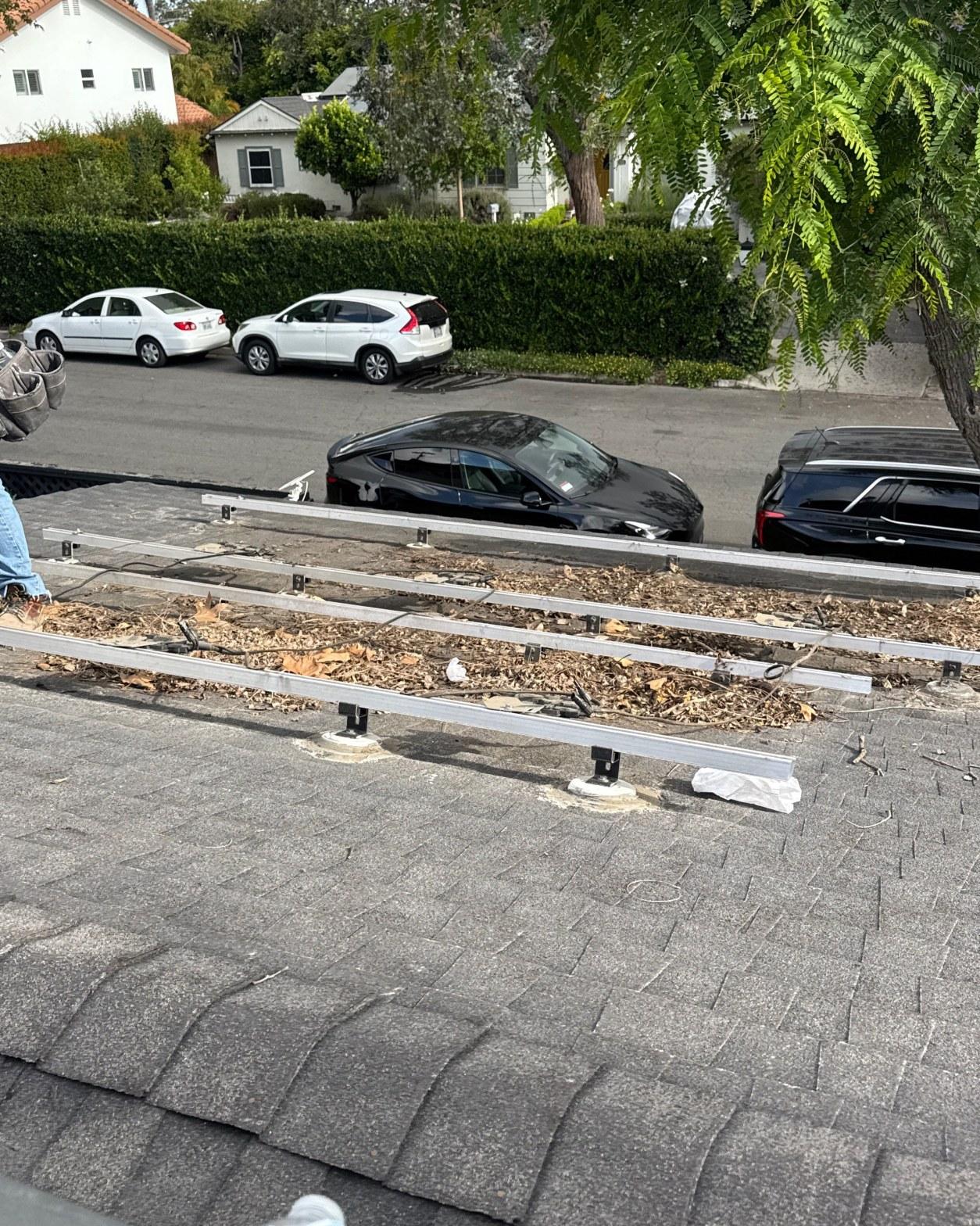
The home had an existing solar array mounted across at least 2 roof planes, with microinverters and aluminum rail systems already secured to the decking. The panels stayed in place throughout the reroof. Working around an active array means roofers cannot simply strip and reshingle in a single pass — each panel row requires the crew to work in sections, removing mounting hardware, replacing the shingles underneath, and reattaching the rail system to the new surface.
This adds meaningful labor time. On a standard 1,500-square-foot reroof without obstacles, a crew of 4 can typically complete a strip-and-replace in 1 to 2 days. With an active solar array covering an estimated 200–250 square feet of roof plane, that timeline extends by at least half a day per affected section.
Homeowners considering a reroof with panels in place should also be aware that as of 2026, California’s Title 24 building energy standards require that any new roofing assembly beneath solar installations meet minimum thermal resistance values — a detail that affects both underlayment selection and shingle type. More information on those requirements is available directly from the California Energy Commission.
It’s also worth noting that if a homeowner is adding solar at the time of a reroof, the federal Inflation Reduction Act federal tax credit currently covers 30% of qualifying solar installation costs — a meaningful offset when bundling the two projects.
The Valley, the Ridge, and Getting the Sequence Right
On multi-plane roofs, the installation sequence is as important as any individual material — shingles must be laid in the correct order so every overlap sheds water downhill, not into the structure. On this property, that meant starting at the lower eaves of each plane and working upward, cutting shingles to fit the valley line at precisely the correct angle, and integrating the ridge vent cap last.
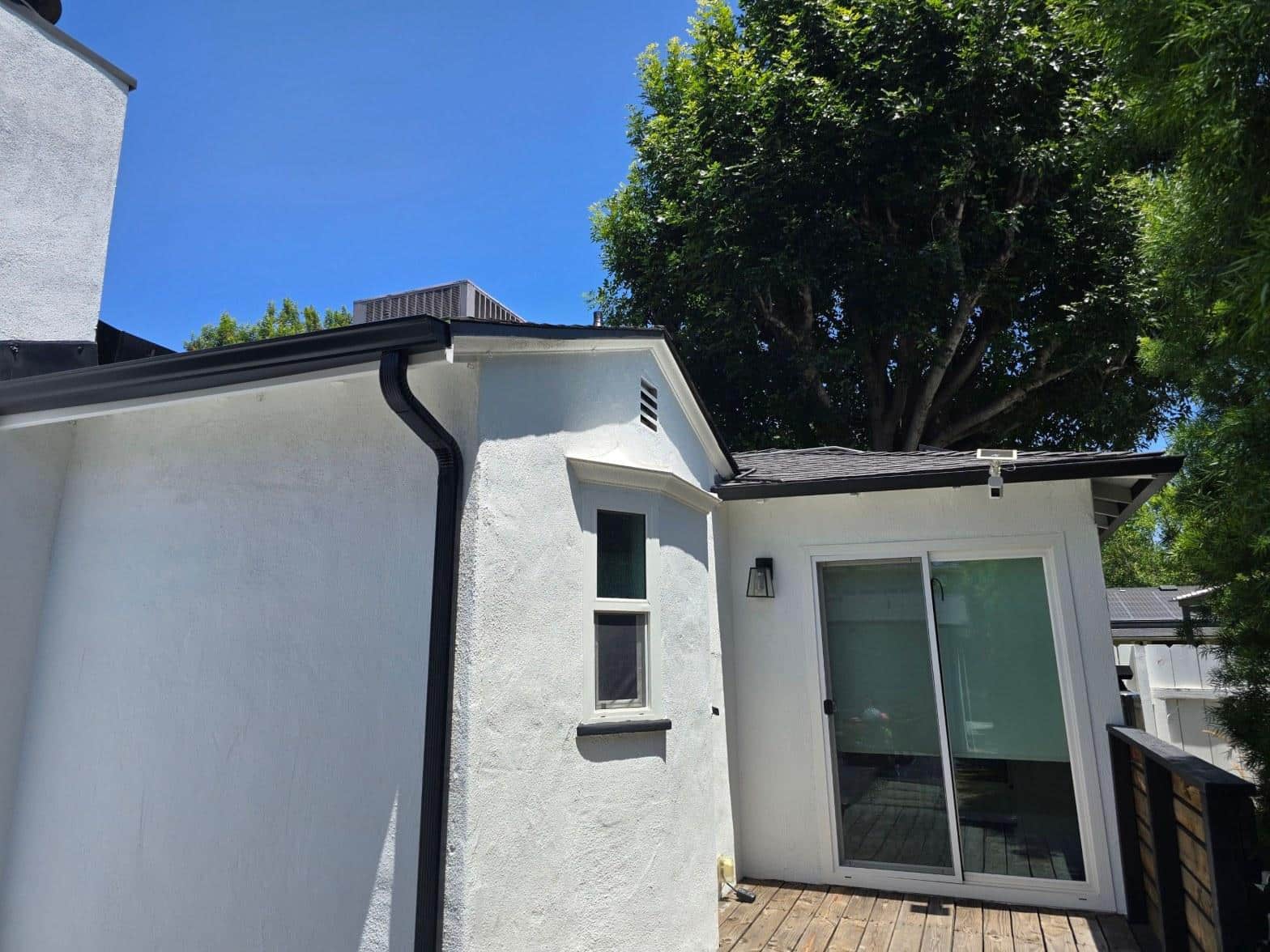
The dark charcoal shingles used here are a common choice in Los Angeles, where the housing stock skews toward mid-century construction with 3:12 to 6:12 roof pitches — steep enough to shed water effectively but shallow enough that valley intersections collect debris and standing water faster than steeper California foothills roofs. Our crews have replaced shingles on over 40 similar multi-plane Los Angeles roofs in the past 18 months, and the valley-flashing sequence we used here is the same one we’ve refined across every one of them.
The completed roof shows clean valley lines, uniform shingle exposure across both planes, and all penetrations fully integrated into the shingle field.
Schedule Your Reroof Estimate
If your Los Angeles home has a multi-pitch roof, solar panels, or aging shingles showing curling or granule loss, get a written scope and price before the next rainy season. Call Roof Replacement Inc or submit your address online for a same-day site visit across Los Angeles County ZIP codes. We are Licensed by the California Contractors State License Board (CSLB) and carry full liability and workers’ comp on every job.