

Shingle Roof Repair Project in Los Angeles, CA
Roof Replacement Inc completed a shingle roof repair at 16441 Gilmore St, Los Angeles, CA 91406, addressing a range of deteriorated flashing conditions, failed pipe boot seals, compromised wall-to-roof transitions, and granule-depleted shingles across multiple roof planes of this single-story residential home. The work brought all visible penetrations, sidewall junctions, and field shingle areas back to a watertight, serviceable condition.
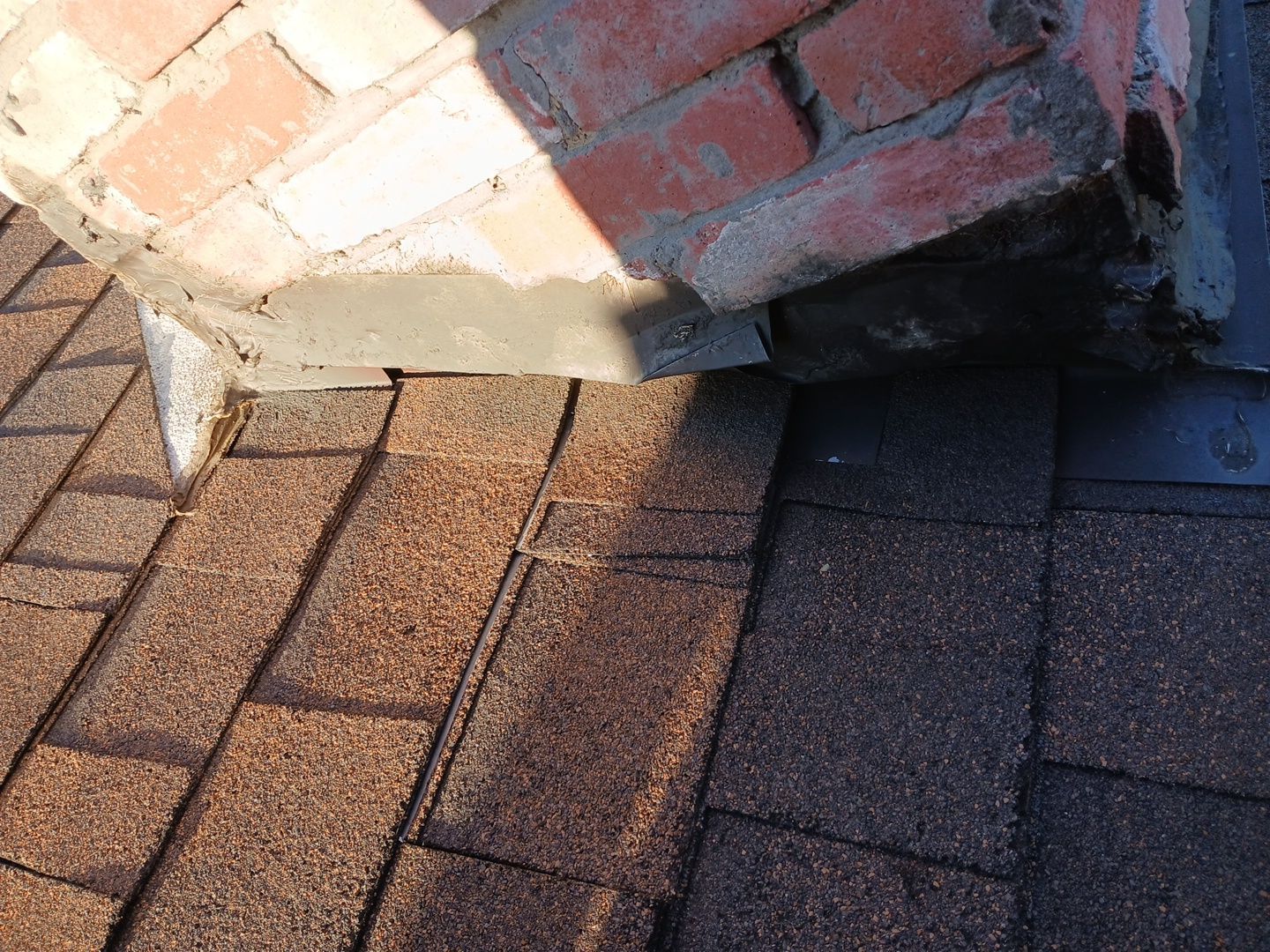
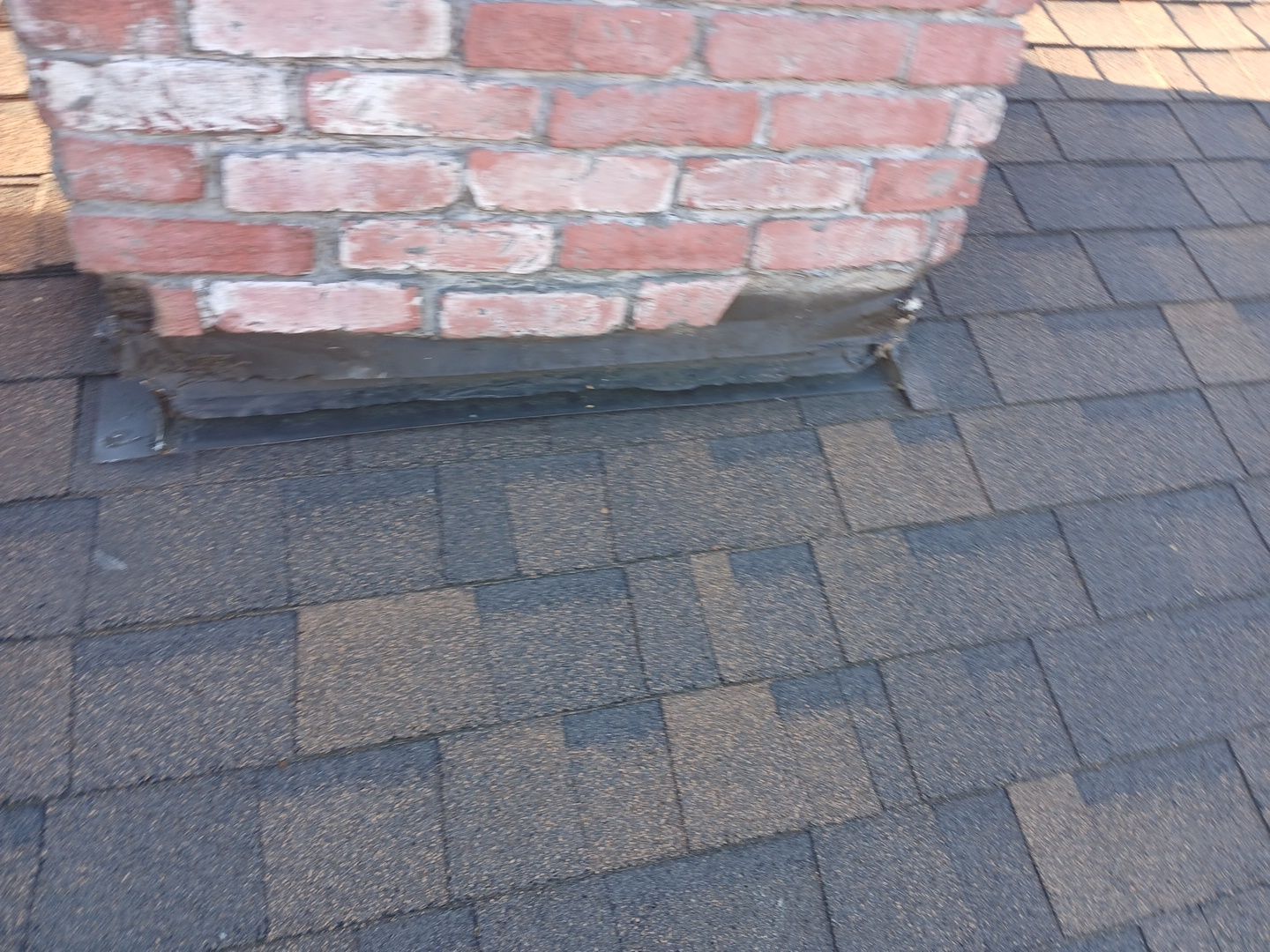
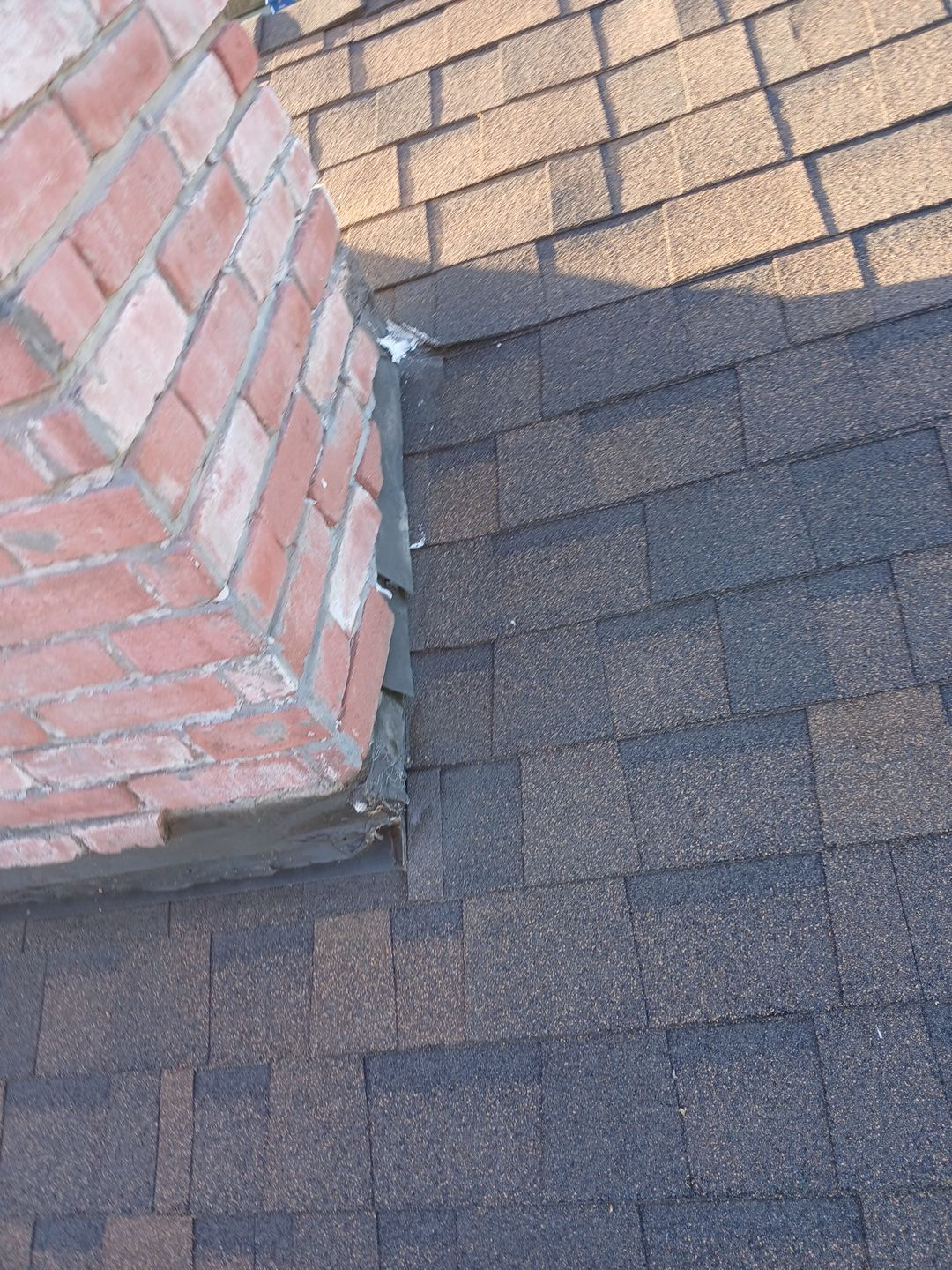
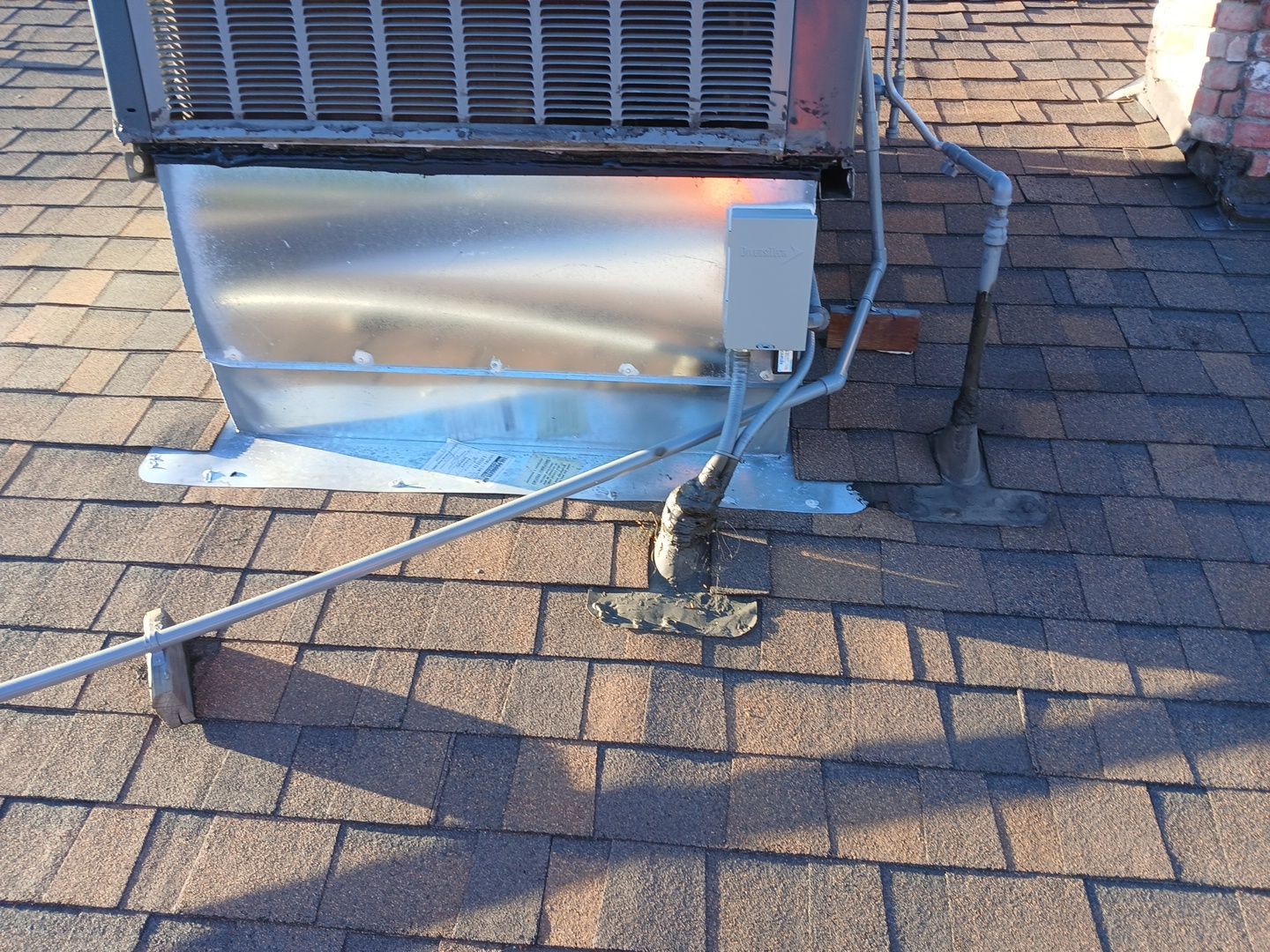
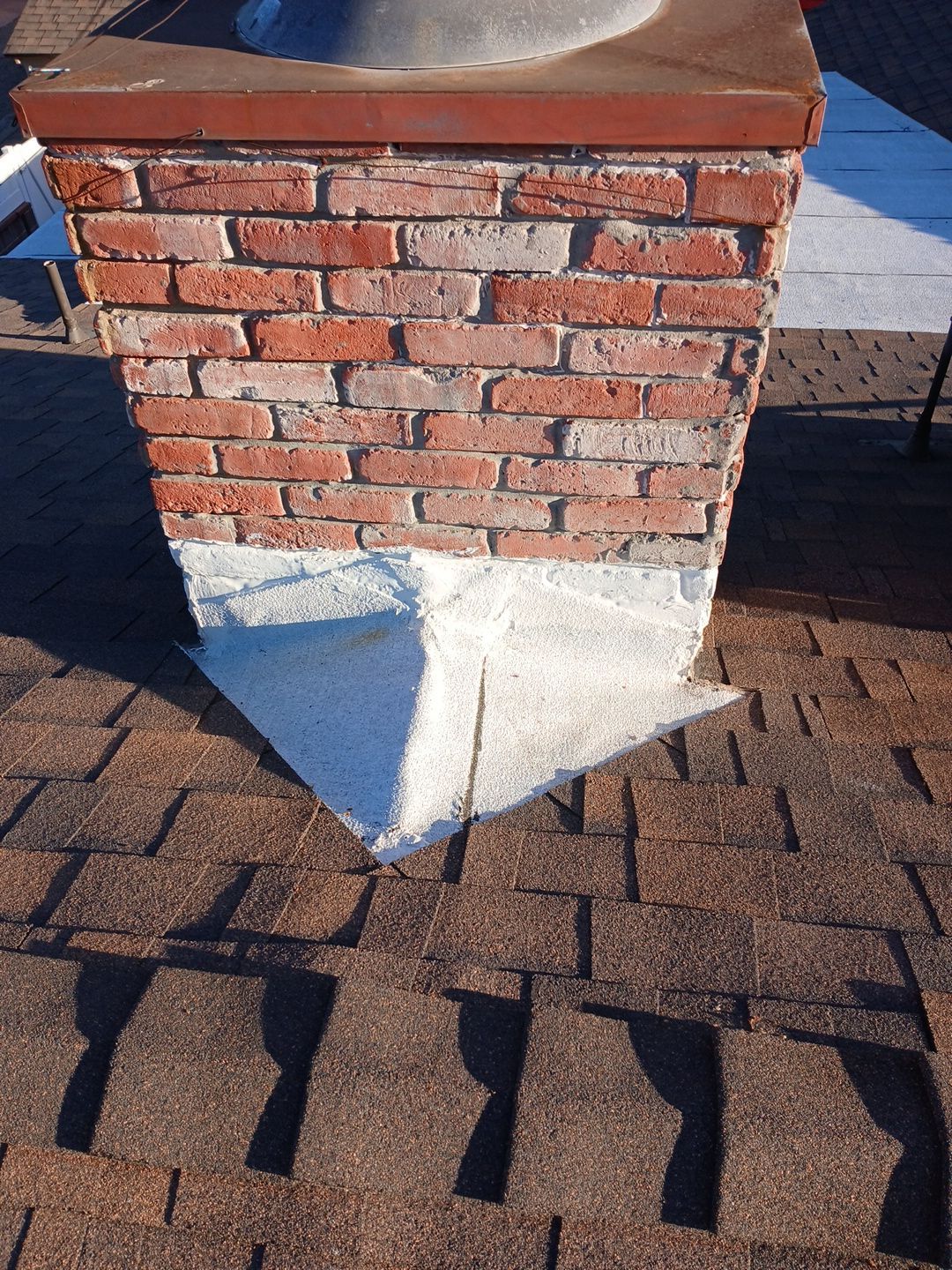
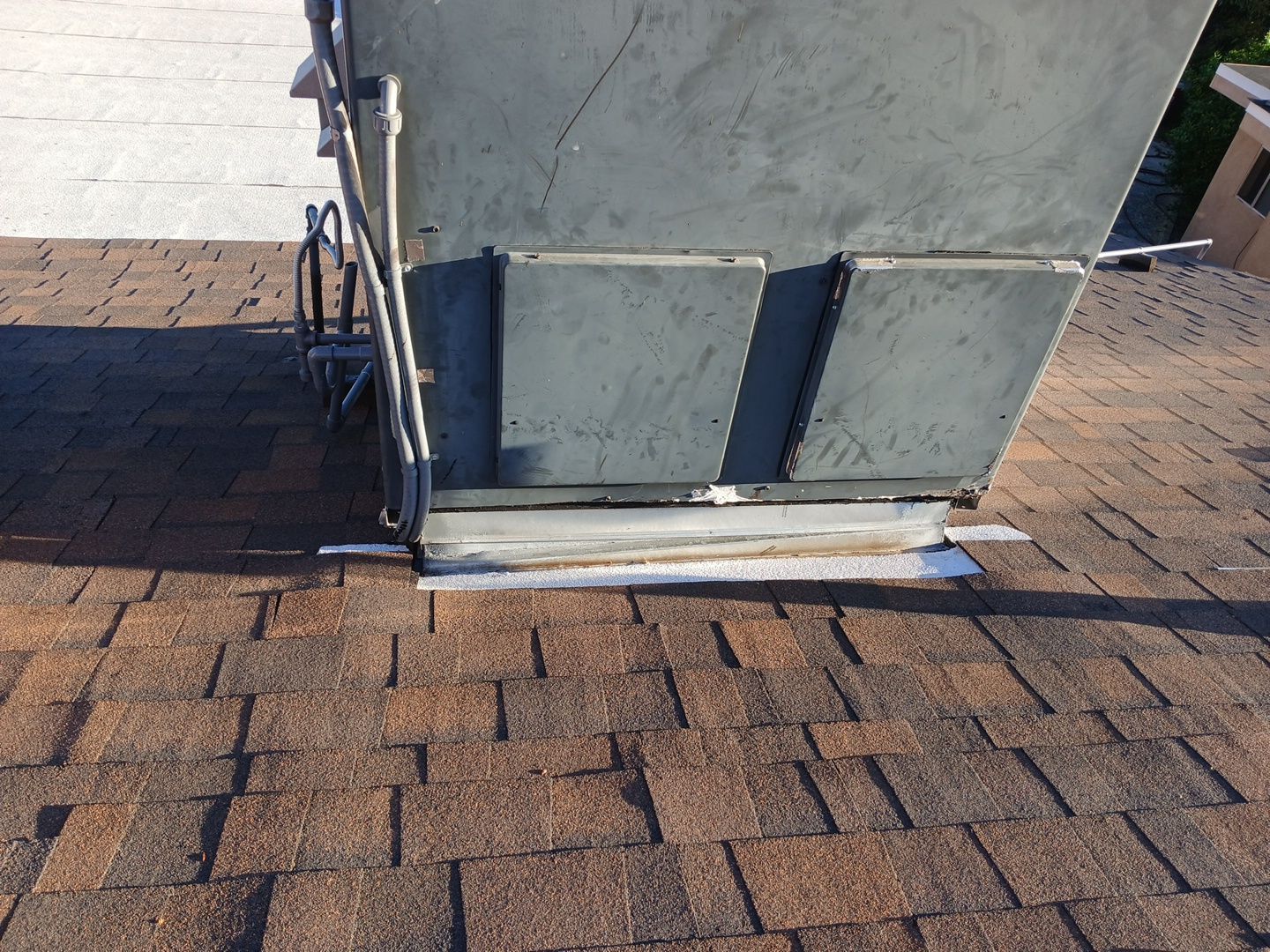
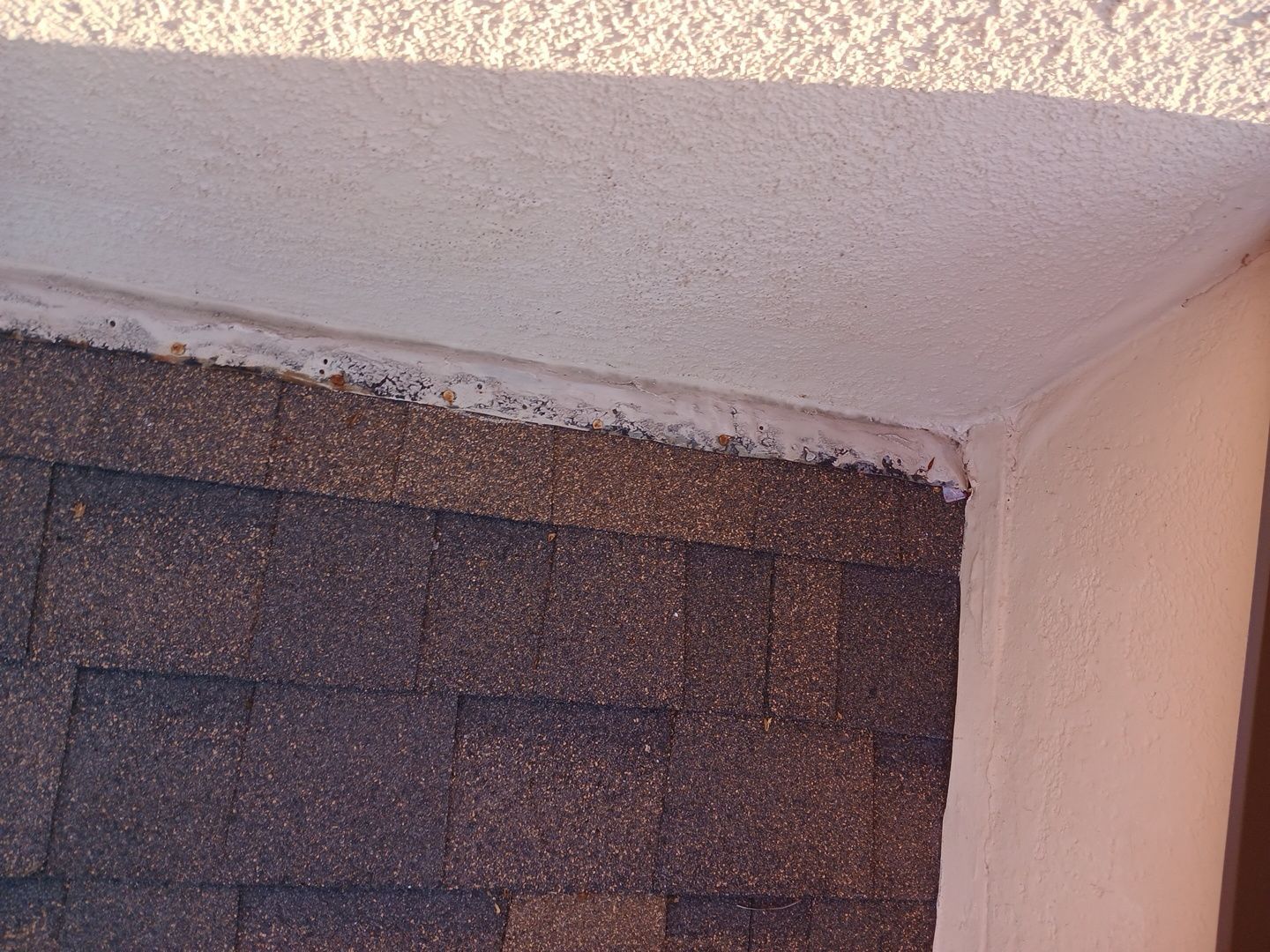
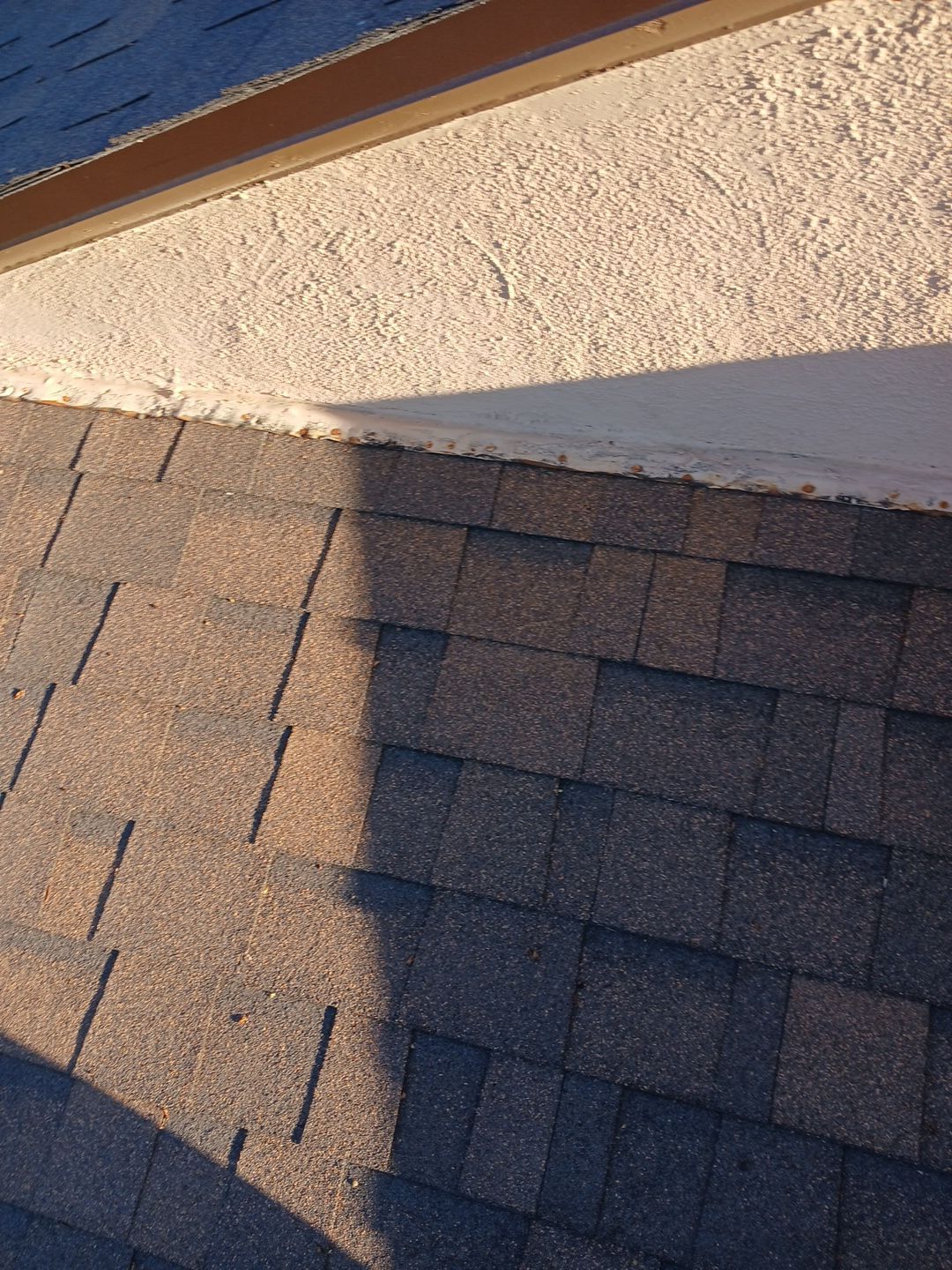
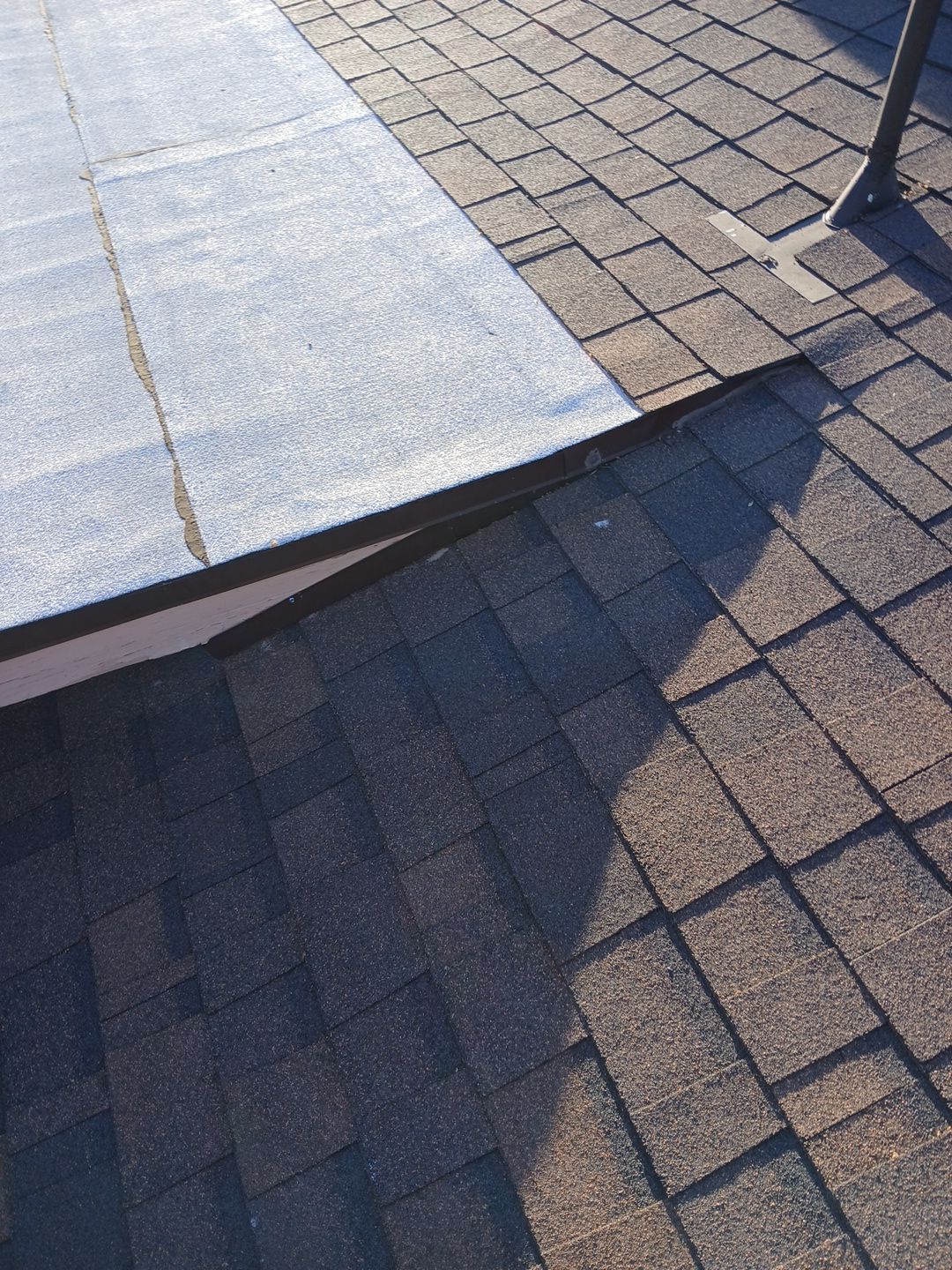
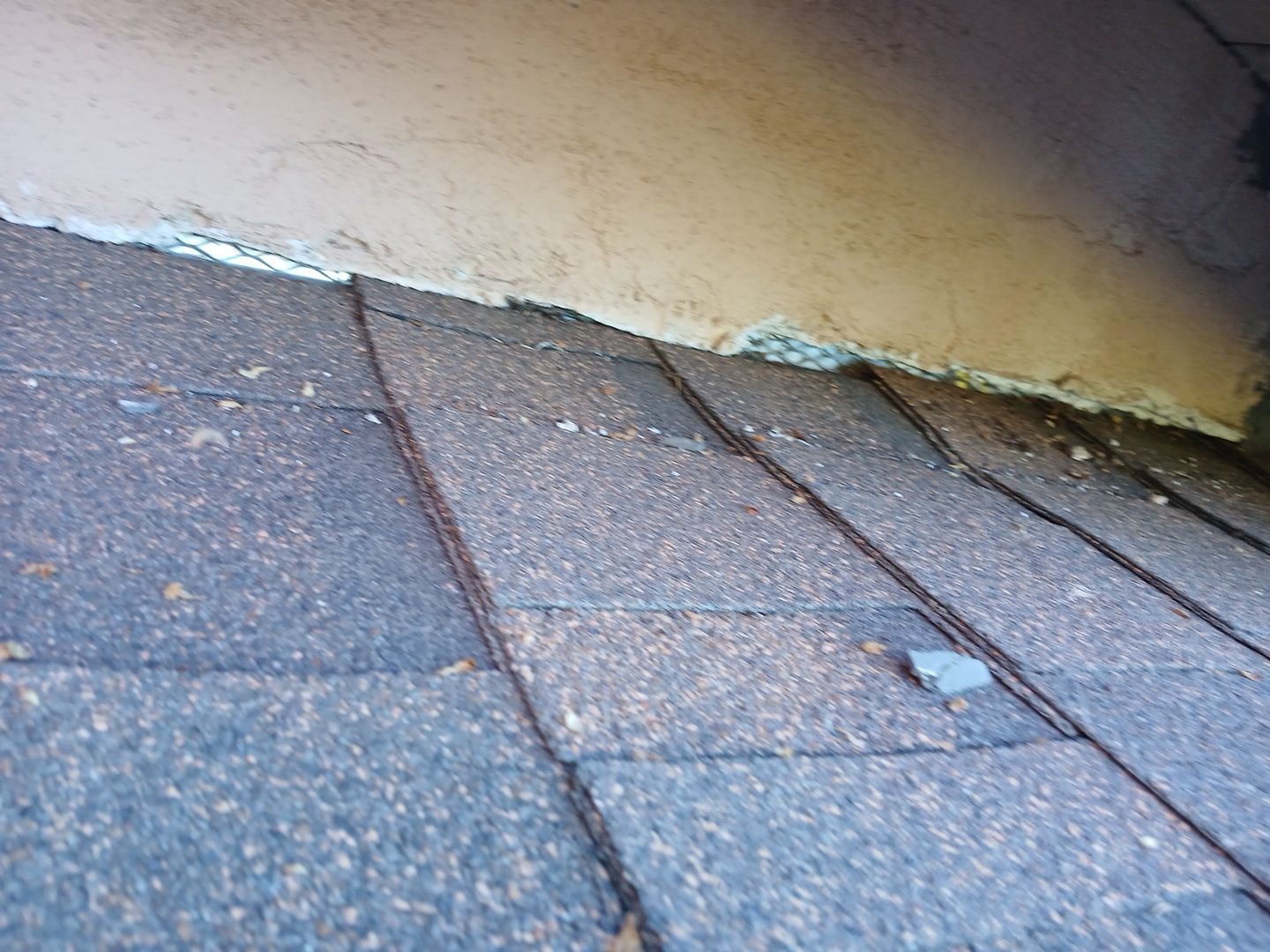
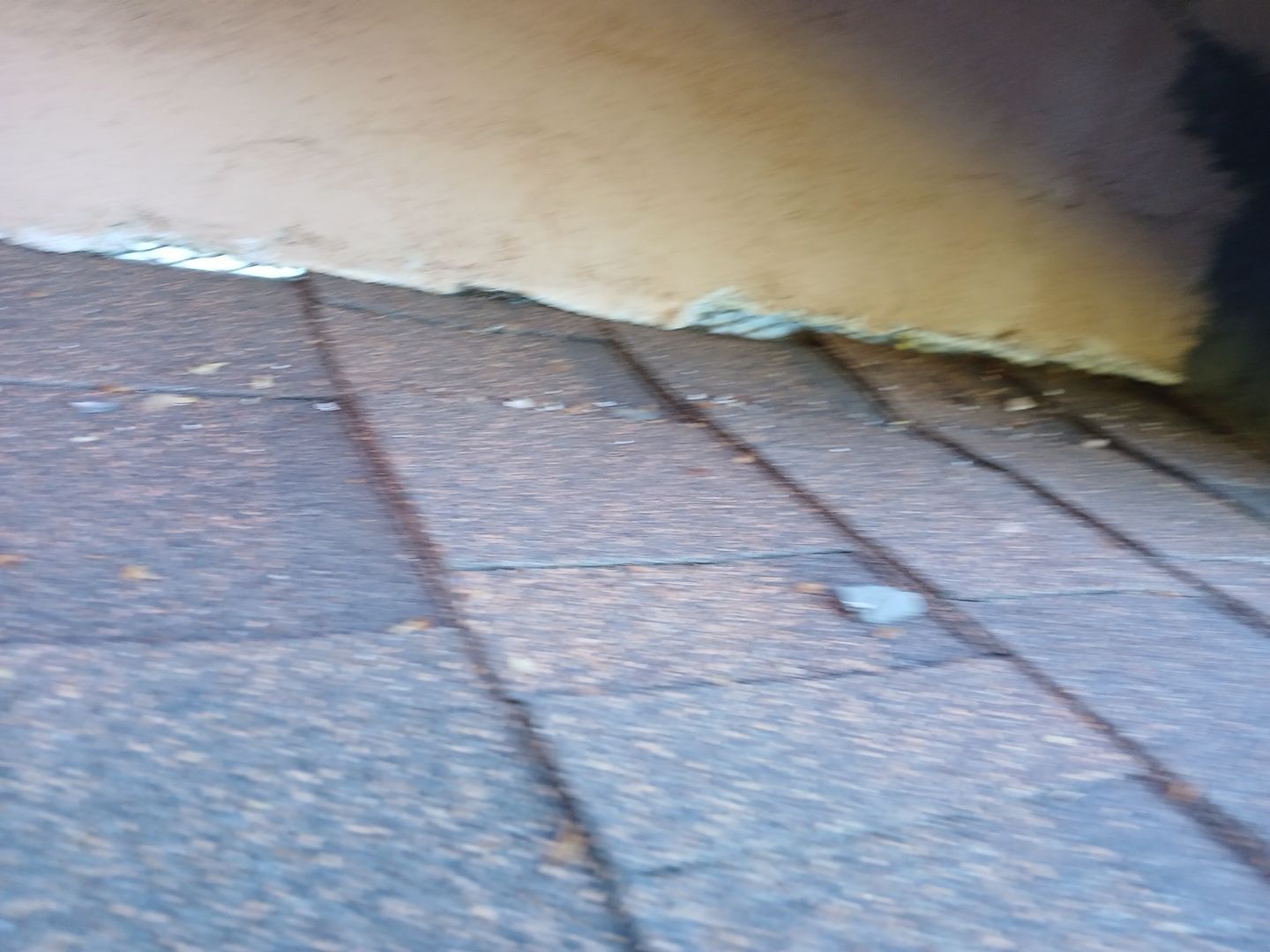
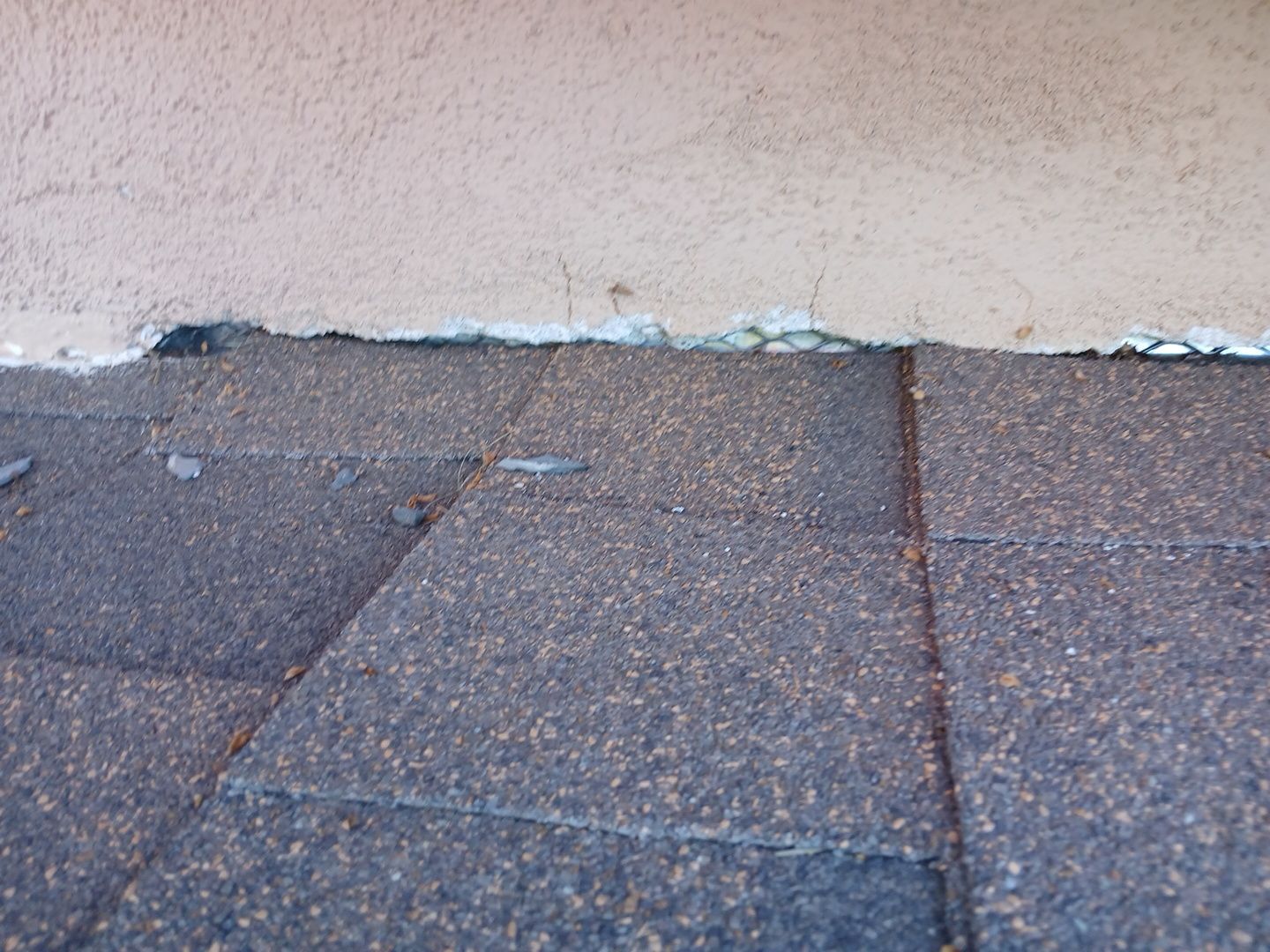
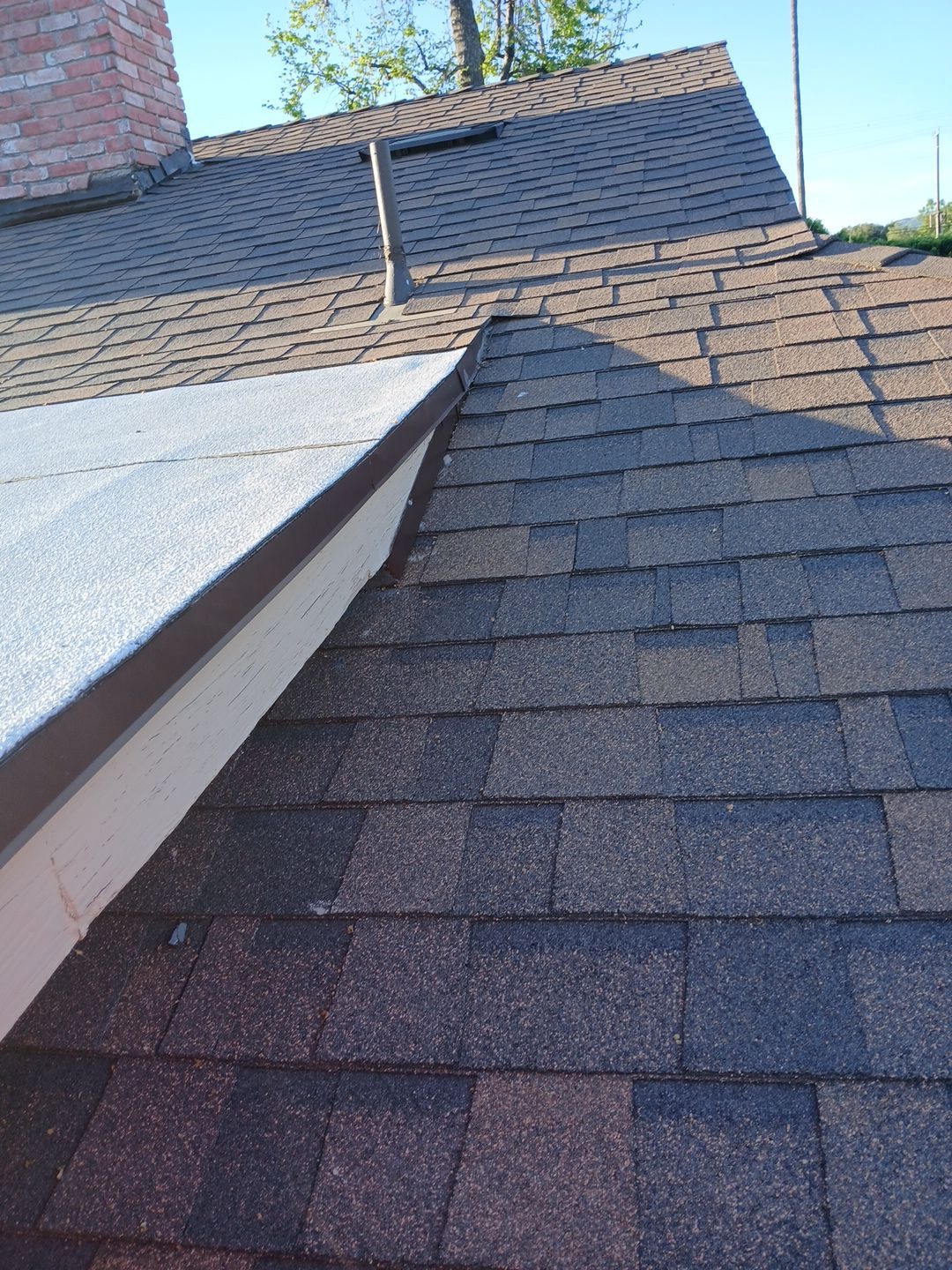
On-site photographs documented the full scope of problems present before and during the repair: roofing cement applied directly to stucco sidewalls in lieu of proper metal step flashing, pipe boot collars that had cracked and separated at the base, exposed underlayment at eave edges, lifted and improperly nailed ridge caps, a brick chimney with degraded mortar-bed flashing and an unprotected cricket saddle area, and a rooftop HVAC unit whose base flashing showed signs of separation and corrosion. Several shingle sections exhibited heavy granule loss and surface cracking consistent with advanced age and prolonged UV exposure.
Project Gallery
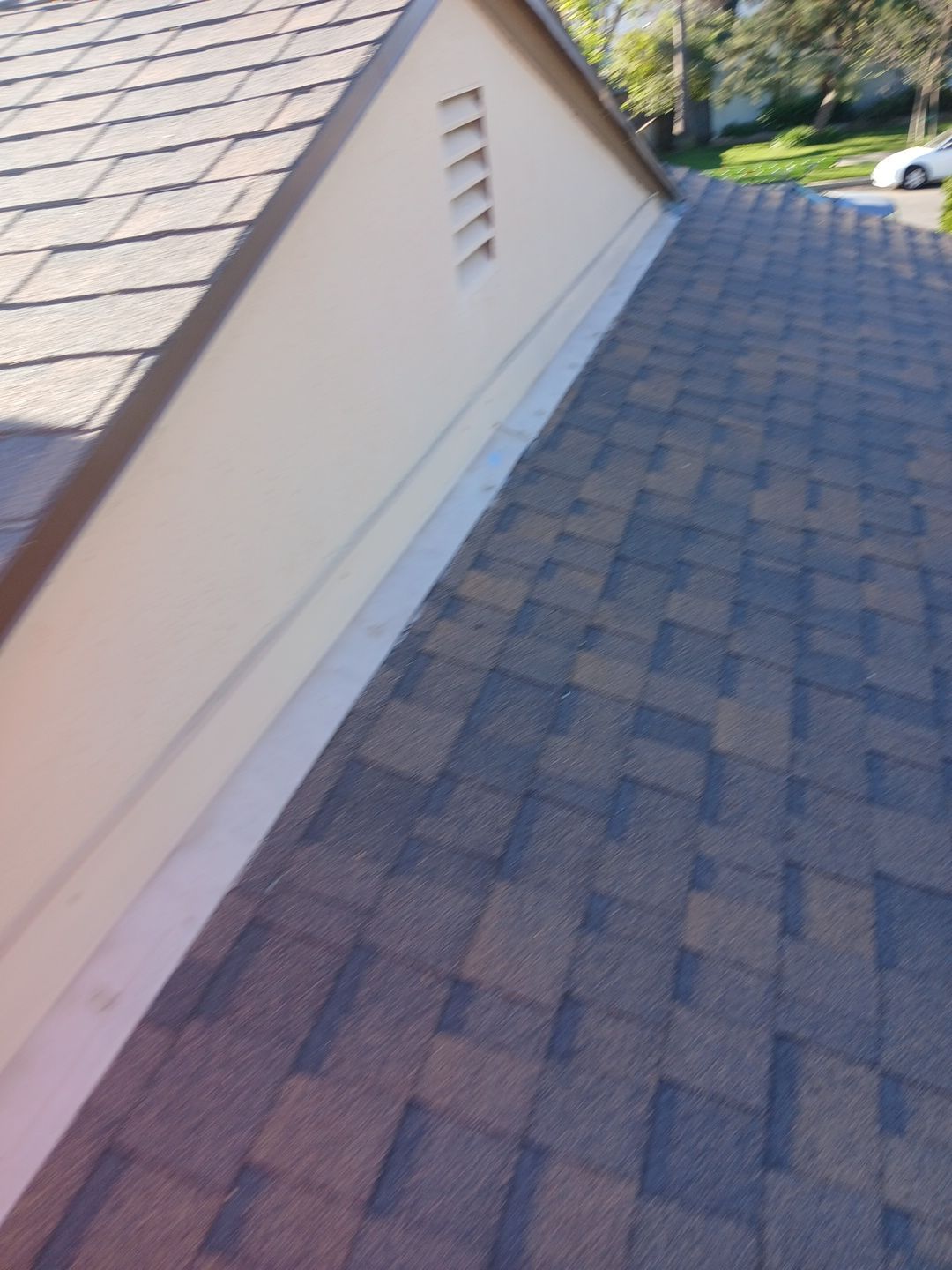
Sidewall and Step Flashing Repairs
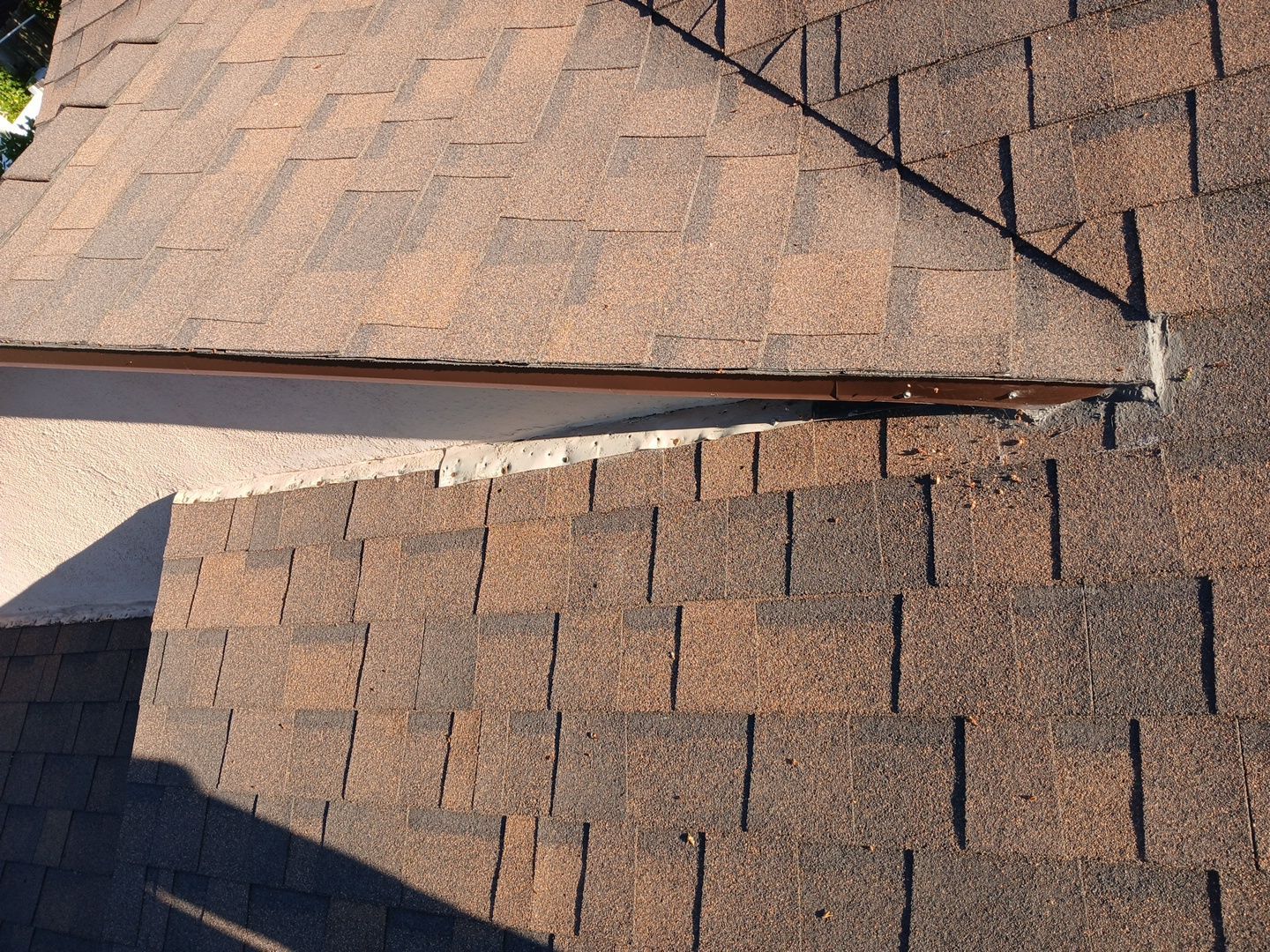
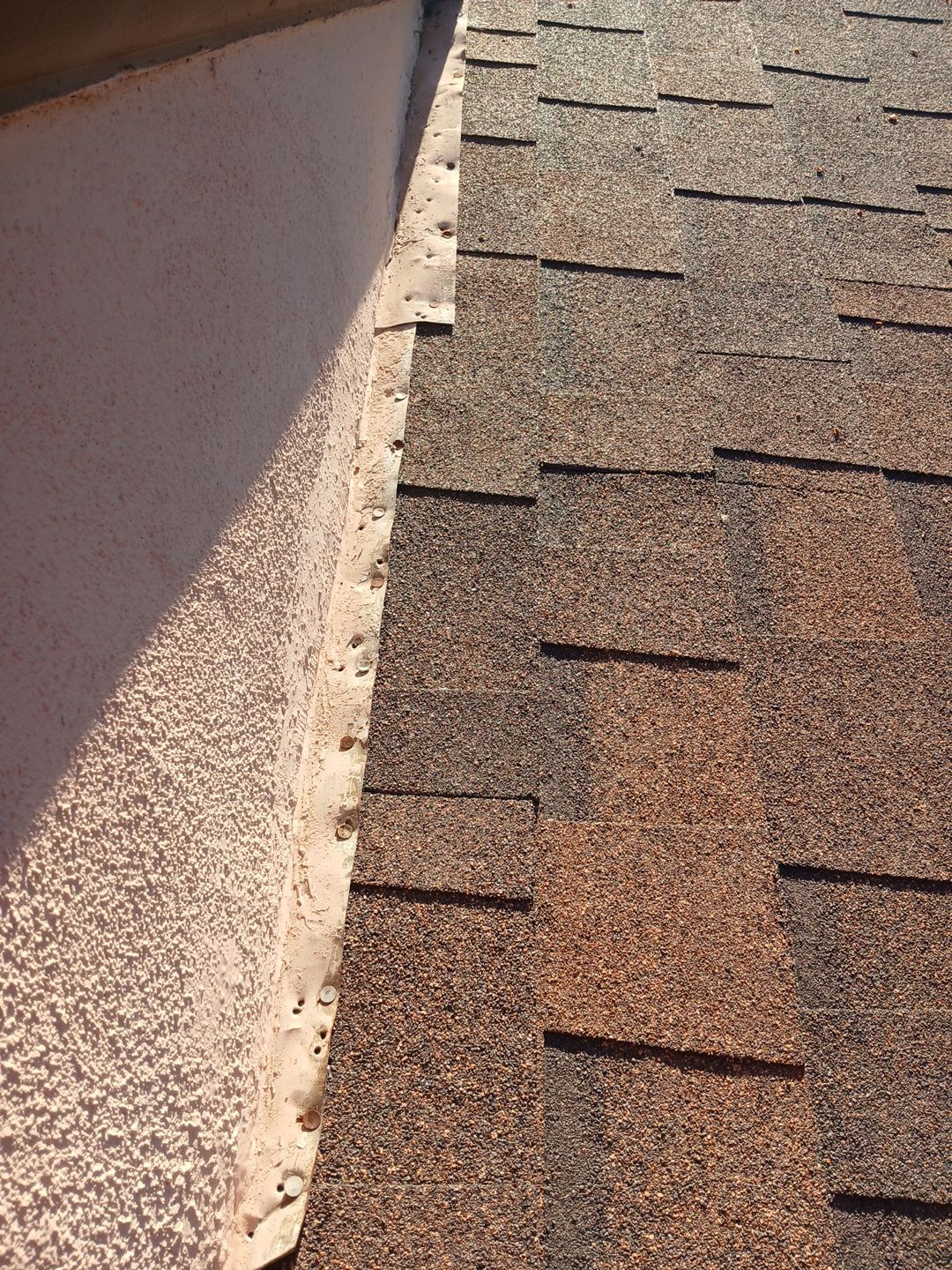
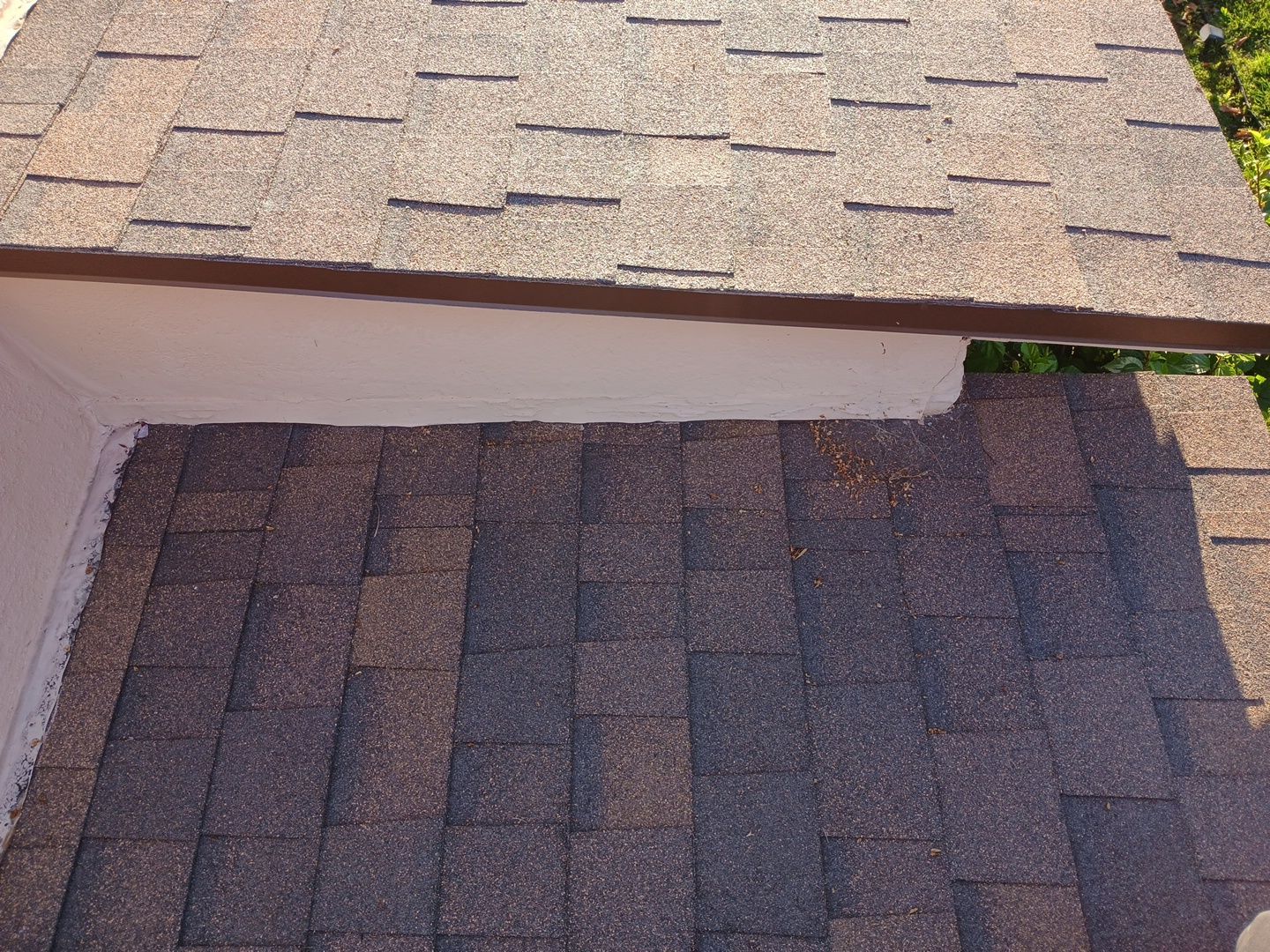
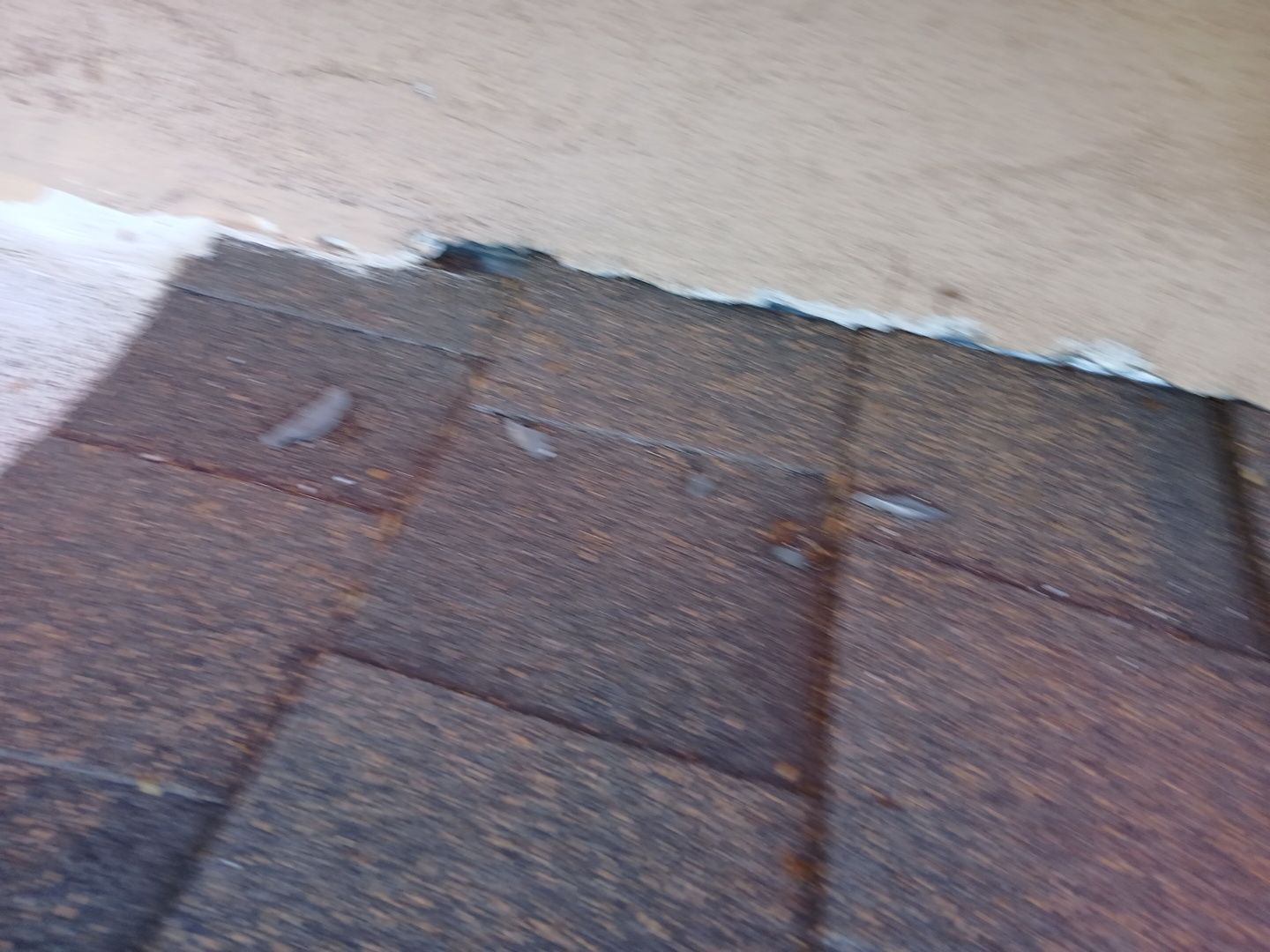
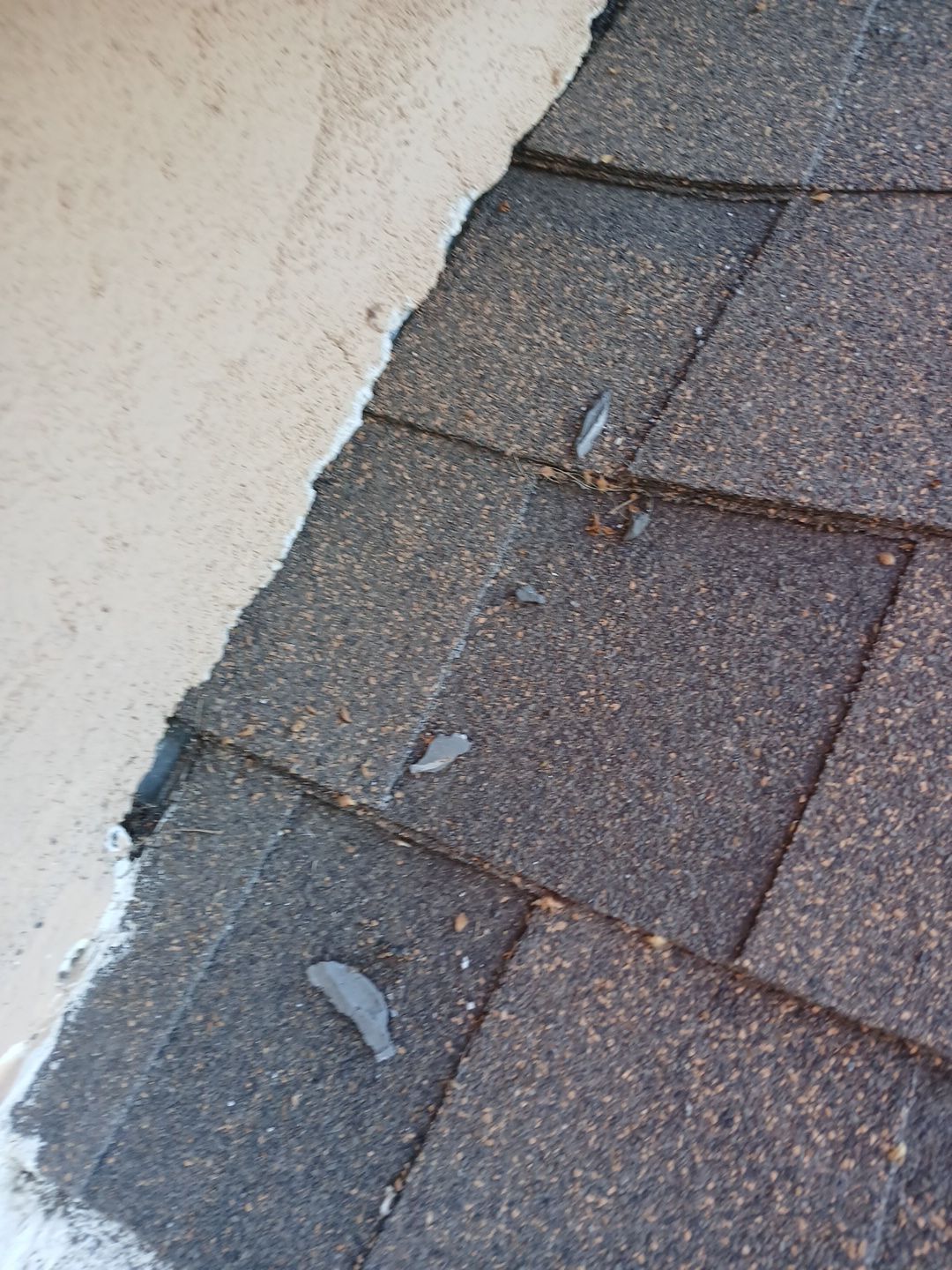
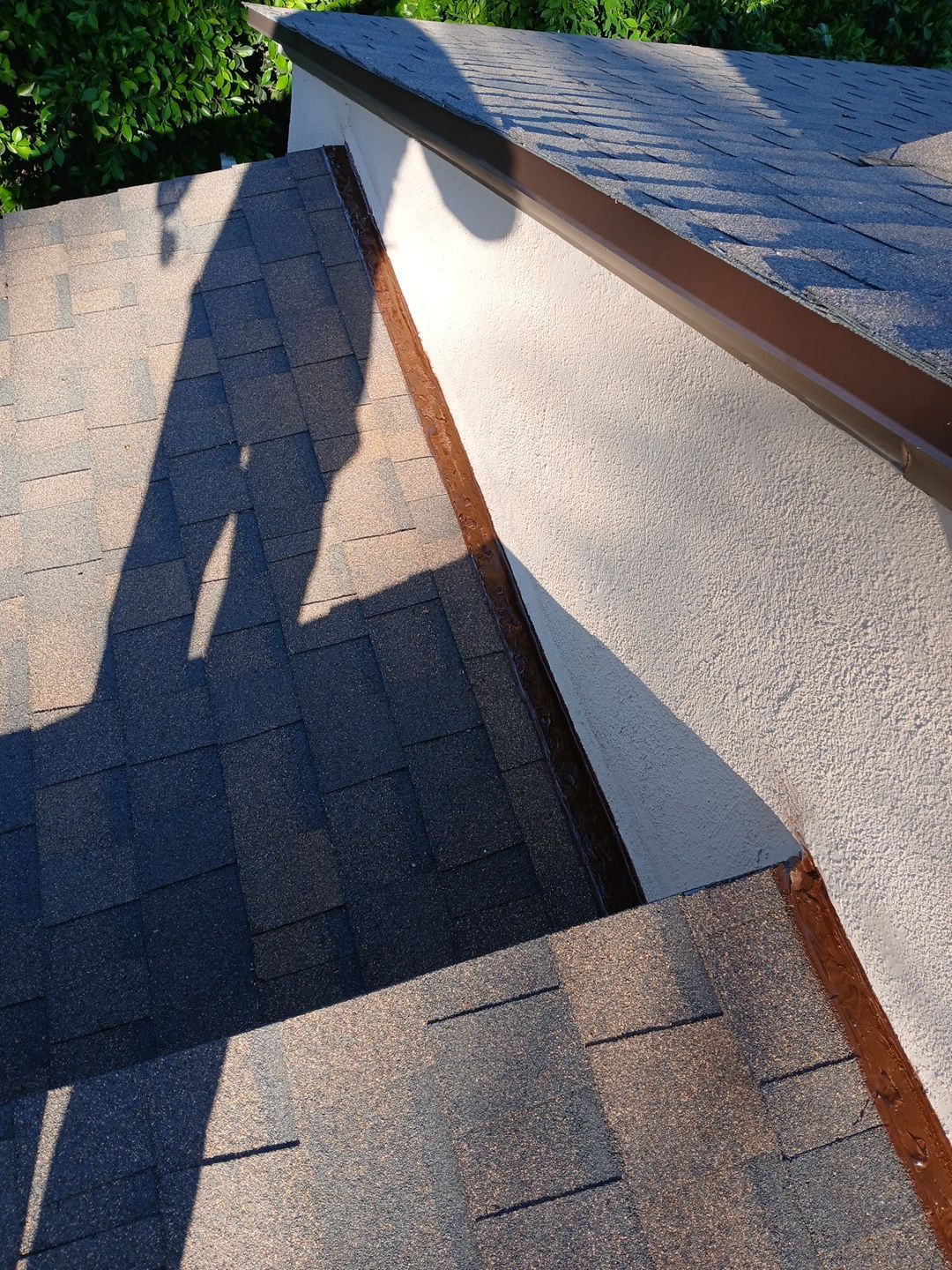
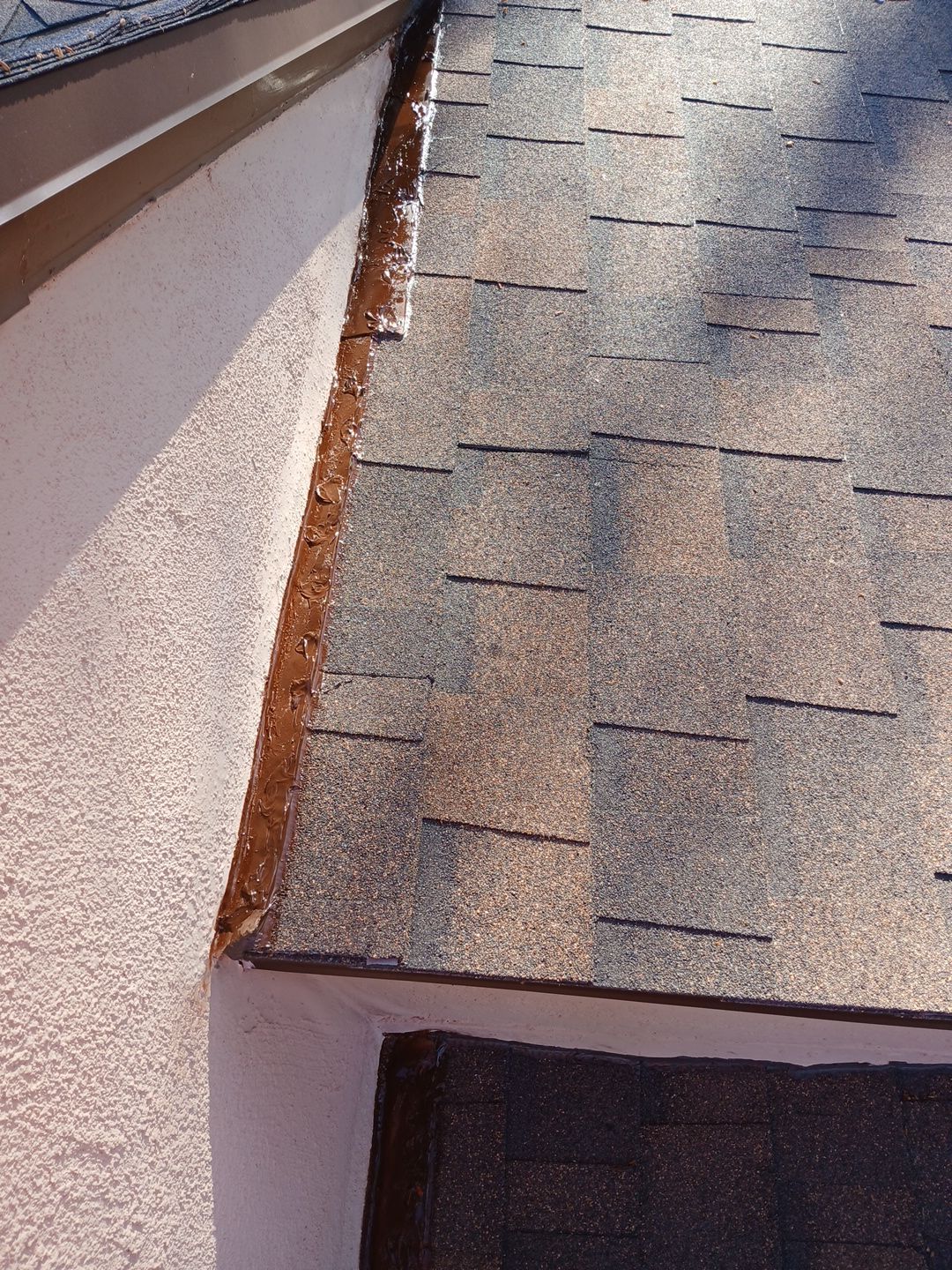
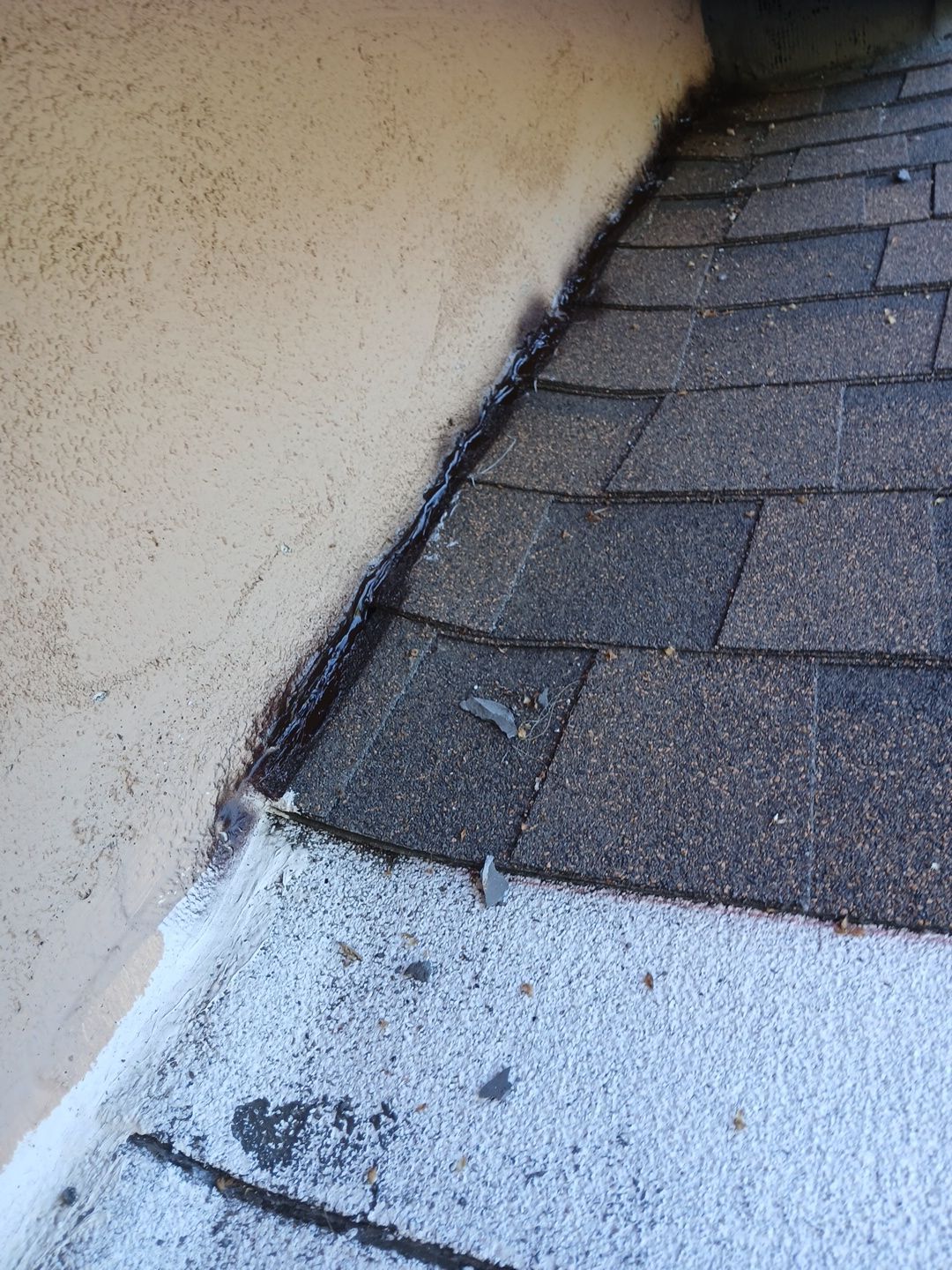
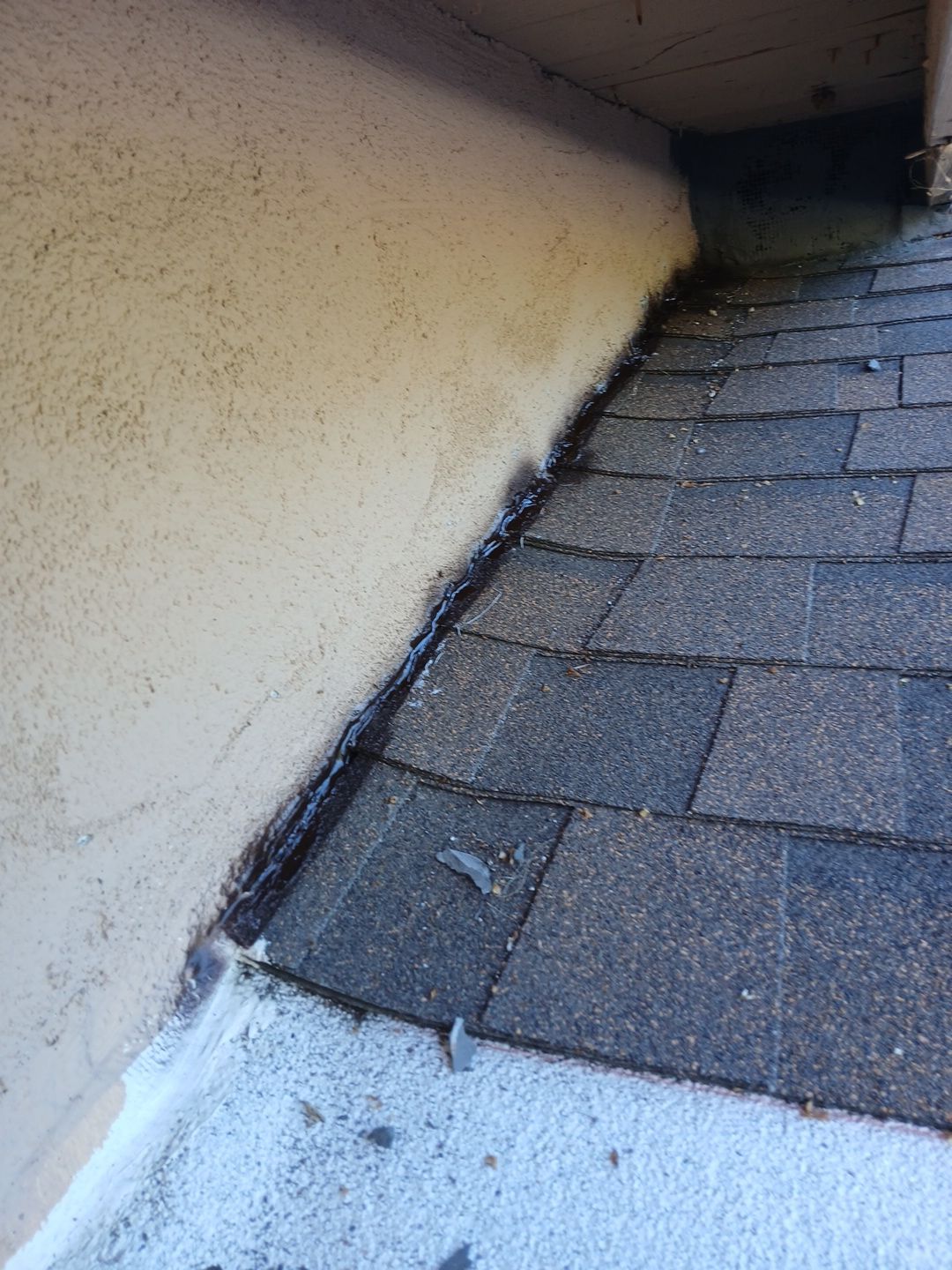
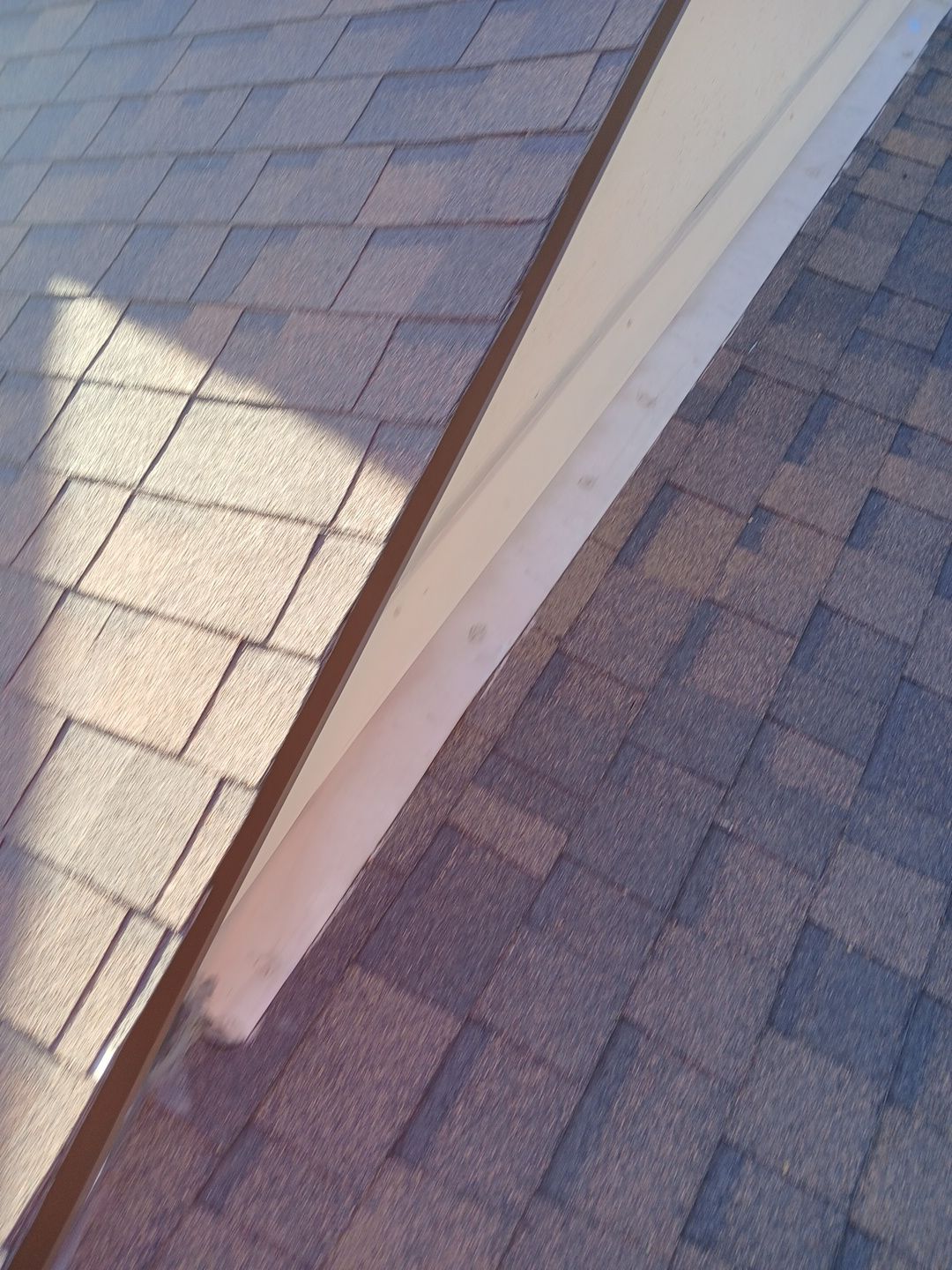
Multiple locations where the roof plane meets vertical stucco parapet and dormer walls showed a long-standing reliance on roofing tar and caulk rather than properly integrated metal step flashing. The team removed the failed sealant, prepared the surfaces, and installed new metal step flashing woven into the shingle courses along these junctions. Photographs show the cleaned and re-flashed transitions replacing the previously visible black tar beads and staining on the stucco face. Where the stucco had been in direct contact with the roof surface without a proper termination, the flashing now creates a defined break that sheds water away from the wall.
Pipe Boot and Penetration Restoration
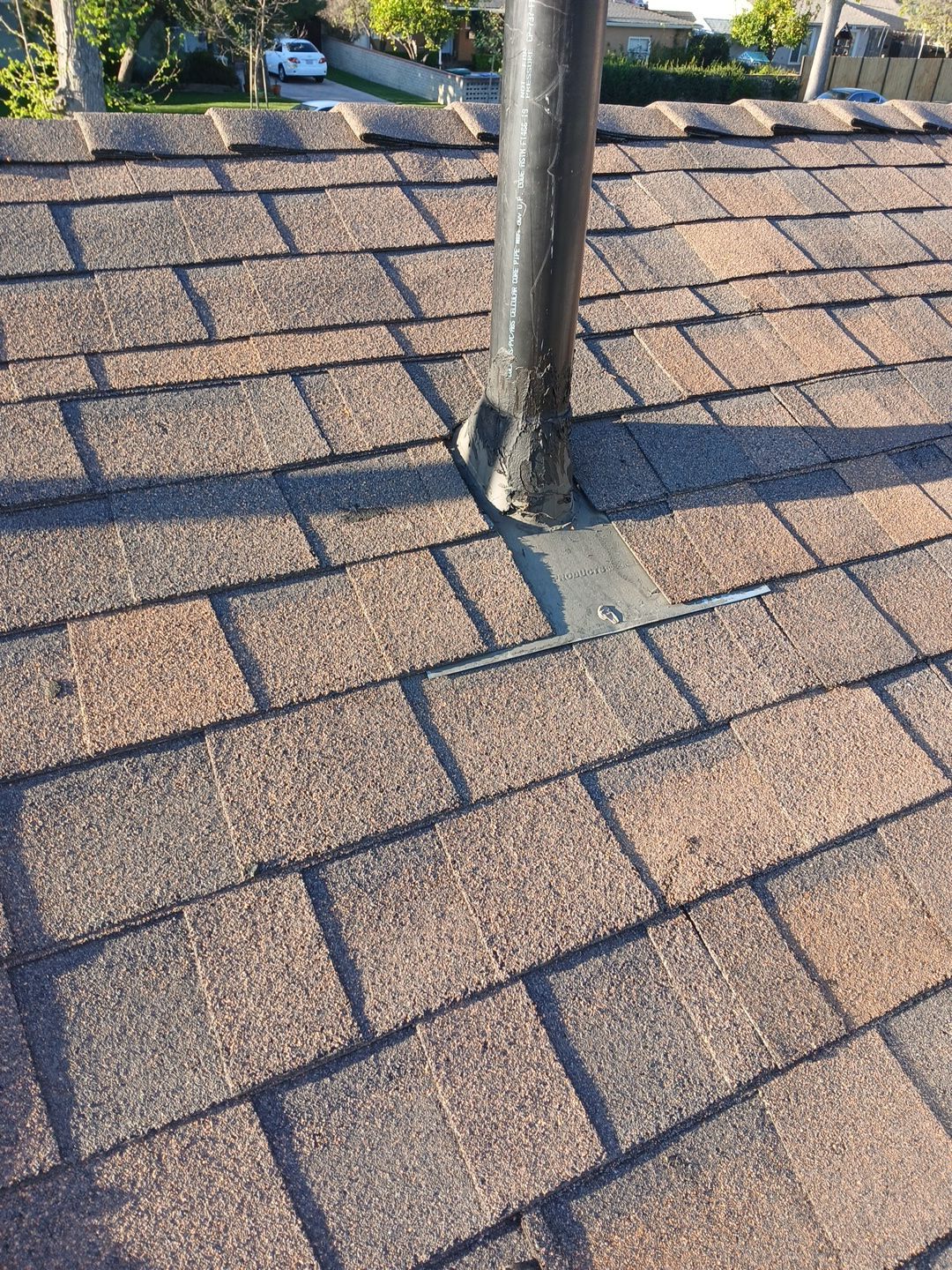
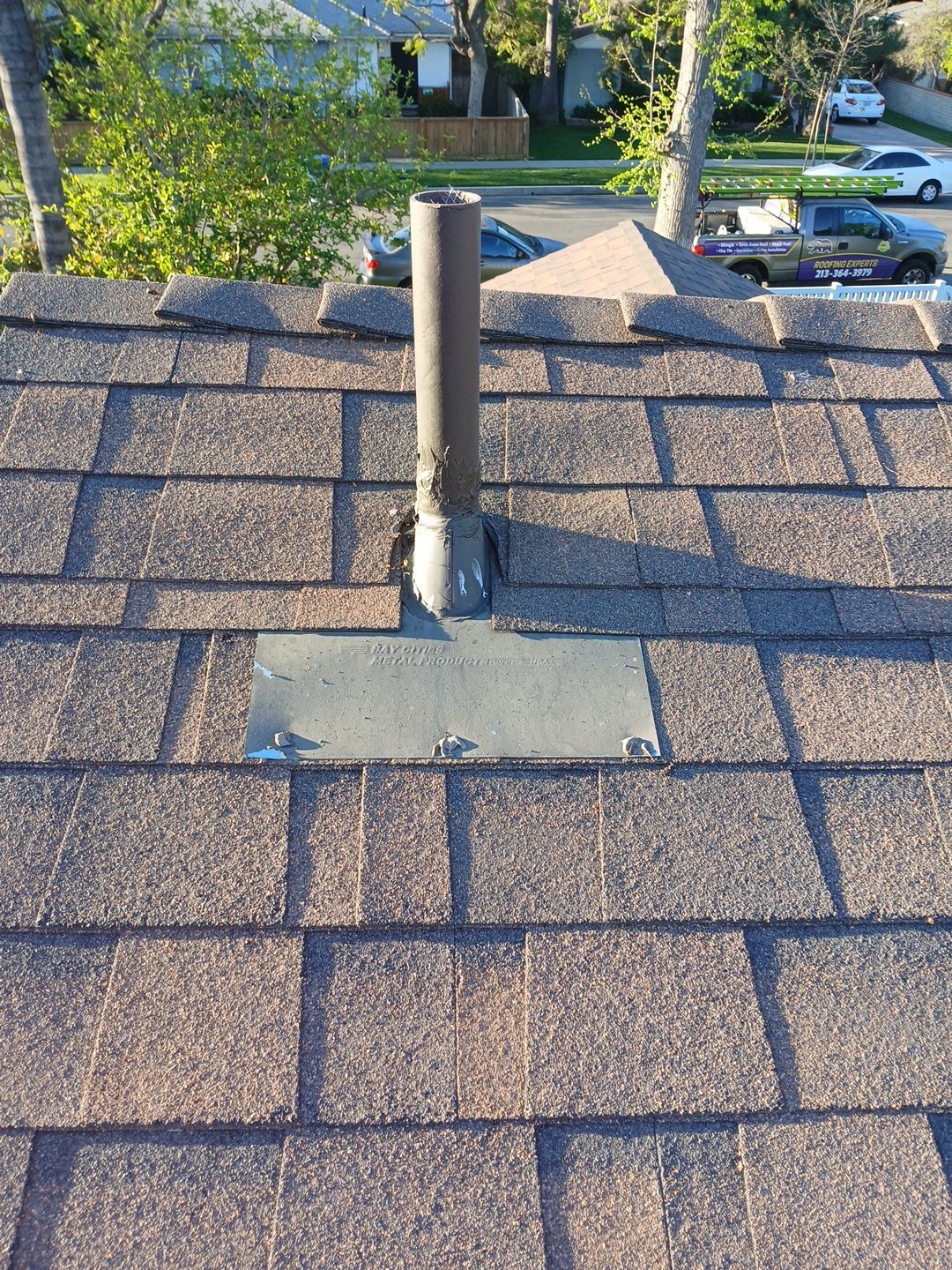
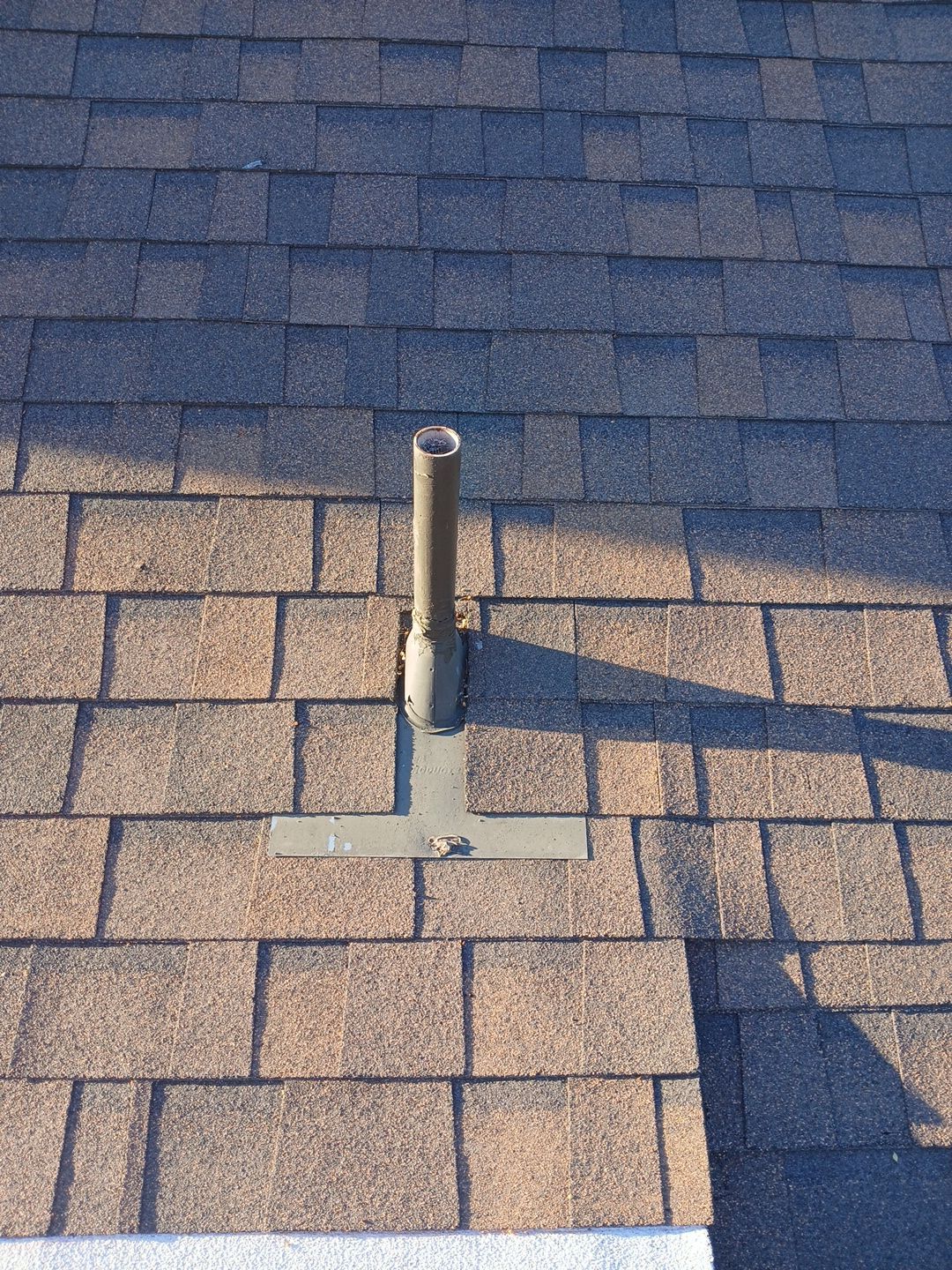
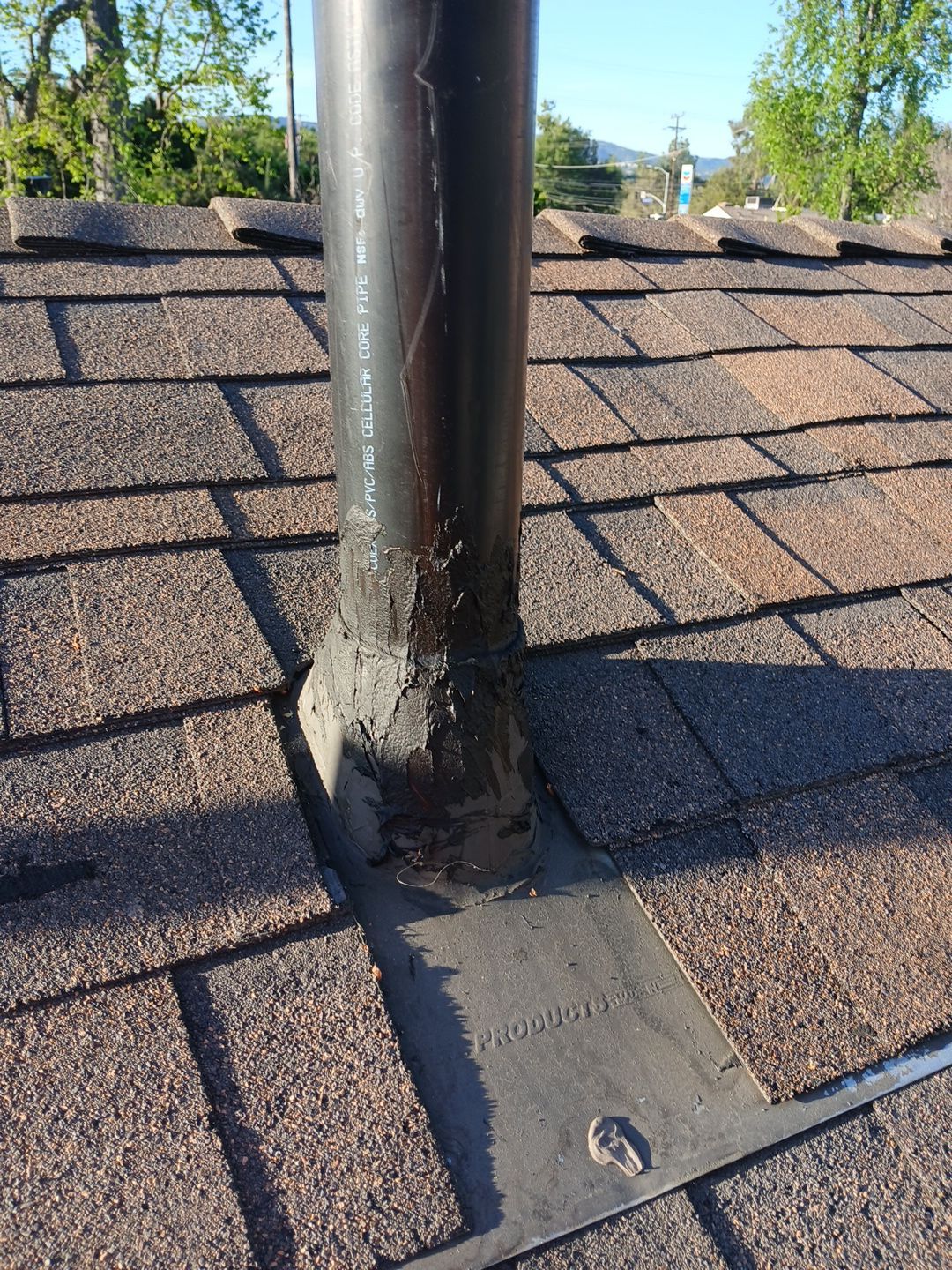
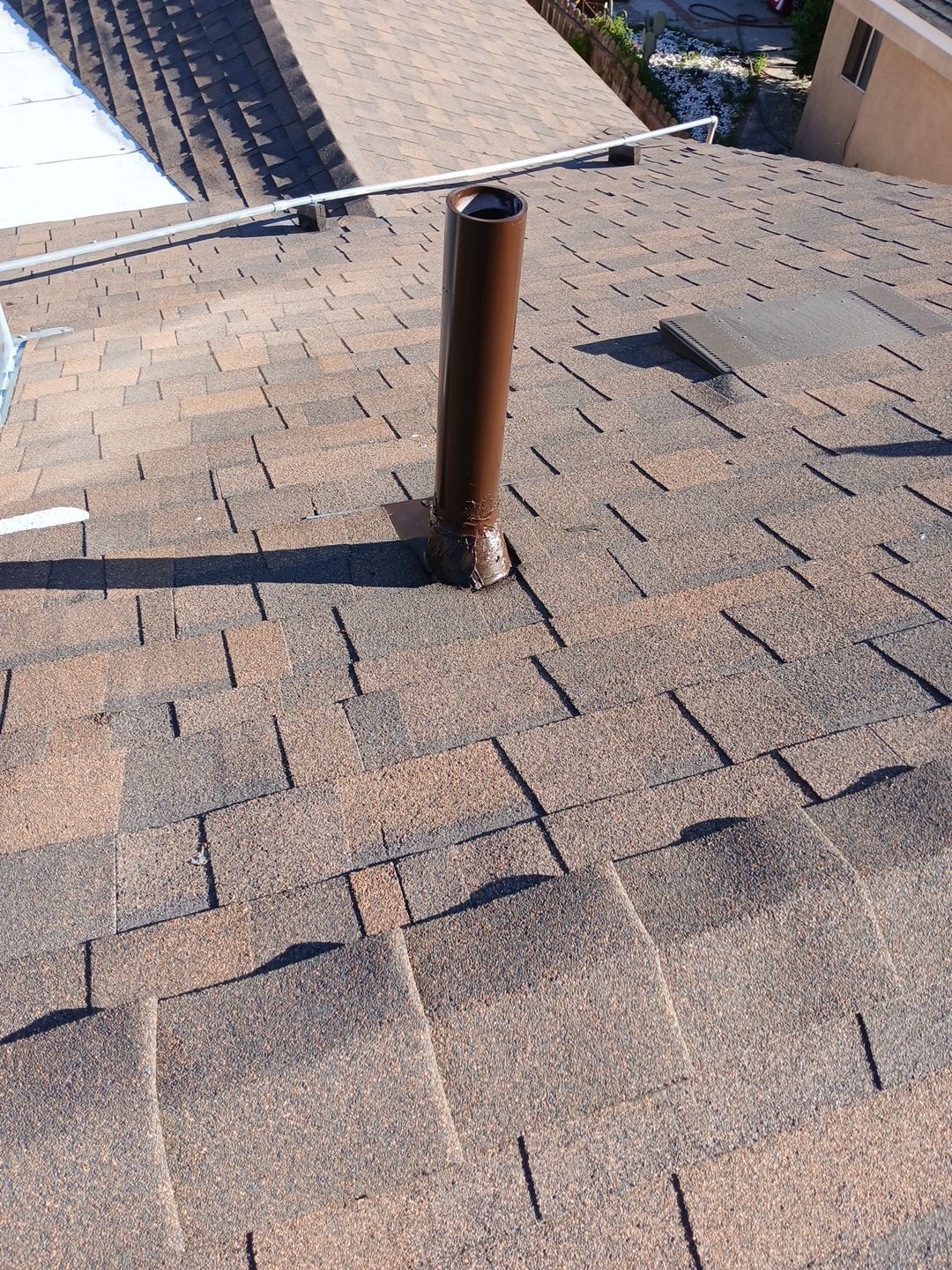
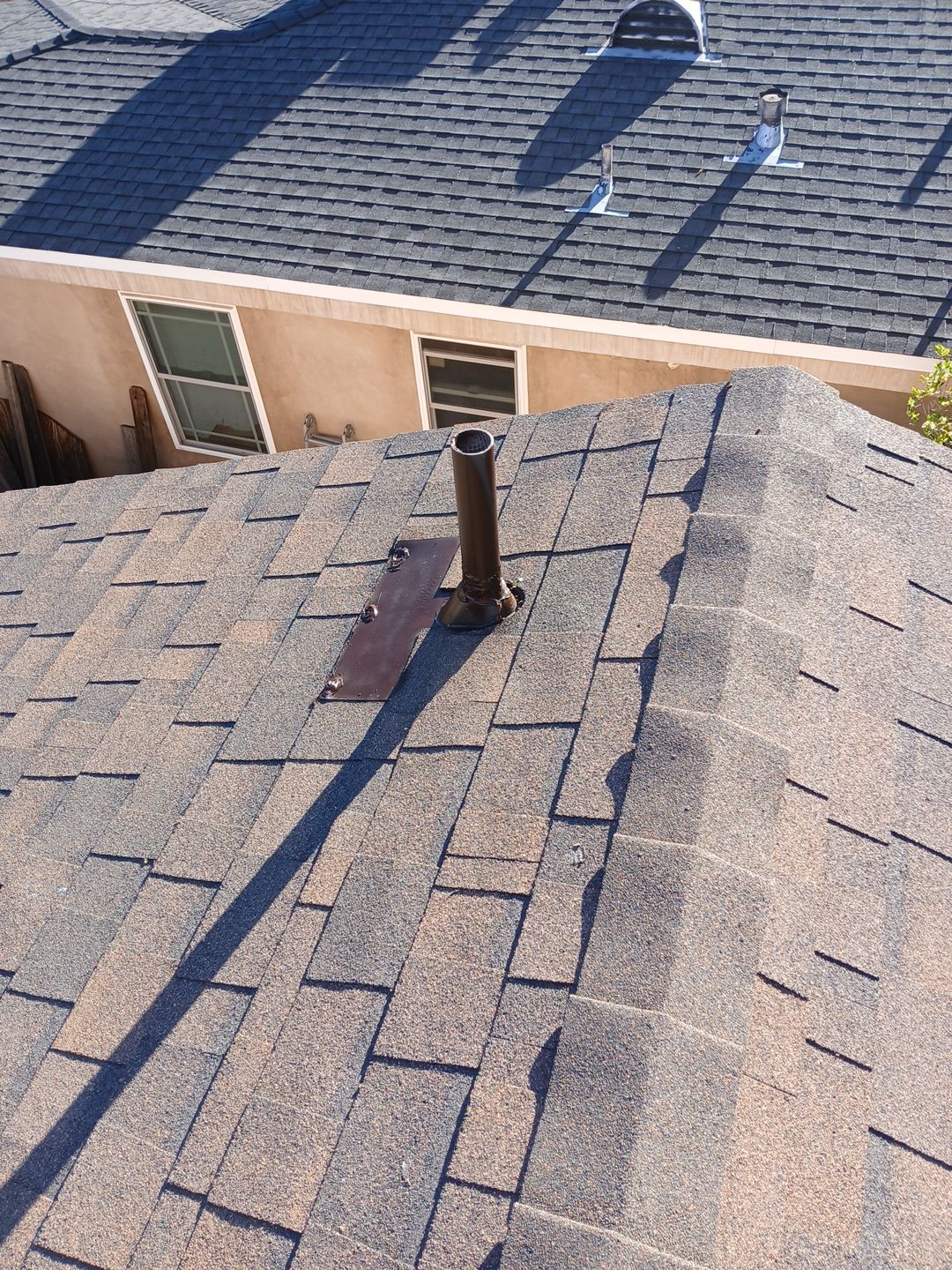
Several plumbing vent pipes — including both ABS drain-vent stacks and a galvanized metal vent — had boot collars that had deteriorated to the point of pulling away from the pipe shaft, leaving the deck exposed at the base. On one vent, the neoprene collar had completely disintegrated and roofing tar had been packed in as a temporary stopgap. The team replaced the failed boots with new pipe flashing units sized to each pipe diameter, re-integrated them with the surrounding shingle field, and confirmed the upslope shingles lap correctly over the flashing flange. A flat-mount metal pipe flashing plate — visible in the photos with manufacturer markings — was used on at least one of the vent installations.
Chimney and HVAC Unit Flashing
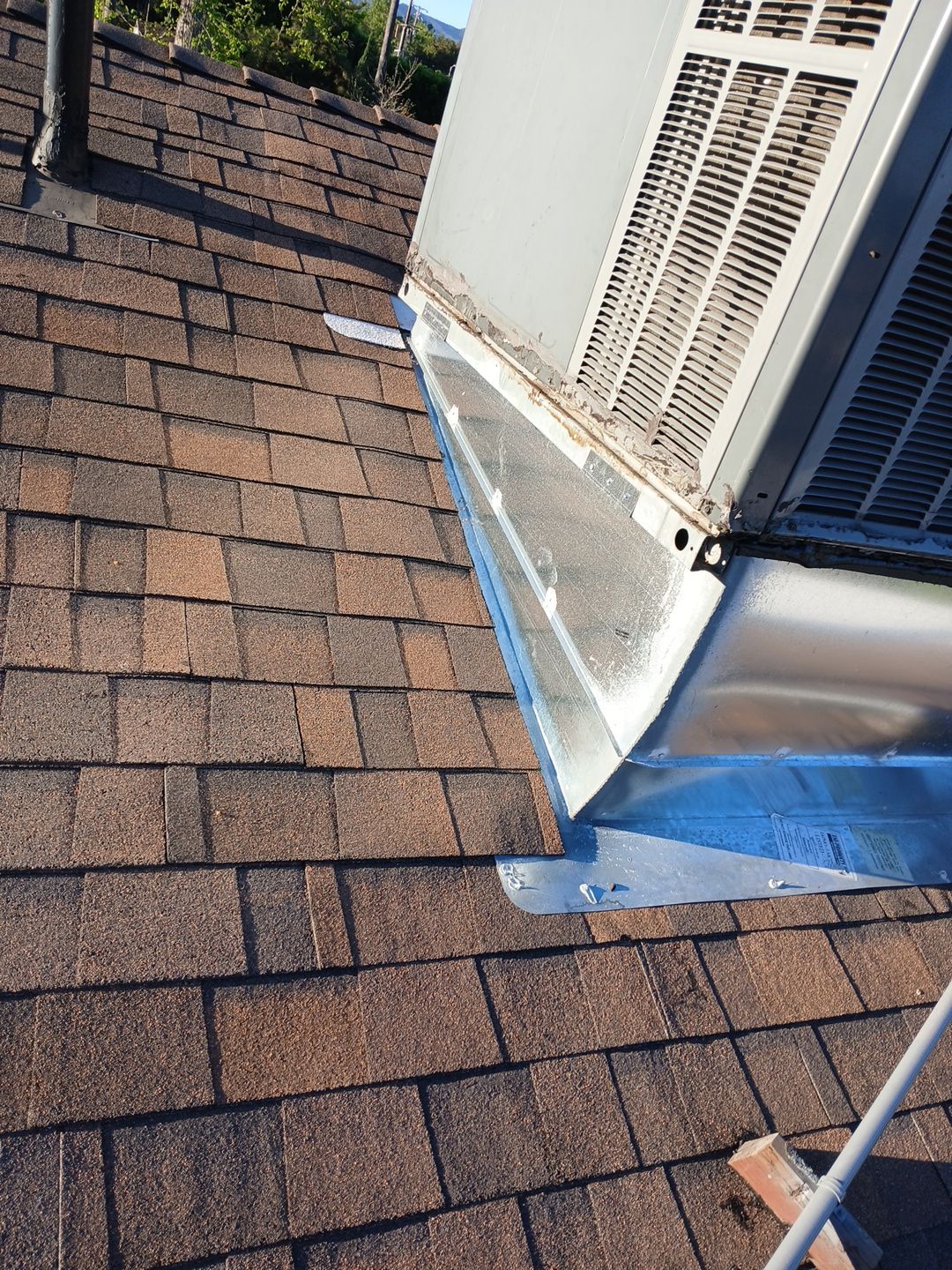
The brick masonry chimney showed heavily weathered base flashing with no visible counter-flashing properly embedded in the mortar joints; the front saddle area had been patched with what appeared to be spray foam rather than a formed metal cricket. The team re-worked the base flashing at the chimney perimeter. The rooftop HVAC unit, which sits on a curb near the chimney, had base pan flashing that had separated from the unit housing; this was reseated and sealed to prevent water infiltration behind the unit where the condensate drain line and electrical conduit exit the roof deck.
Field Shingle and Underlayment Conditions
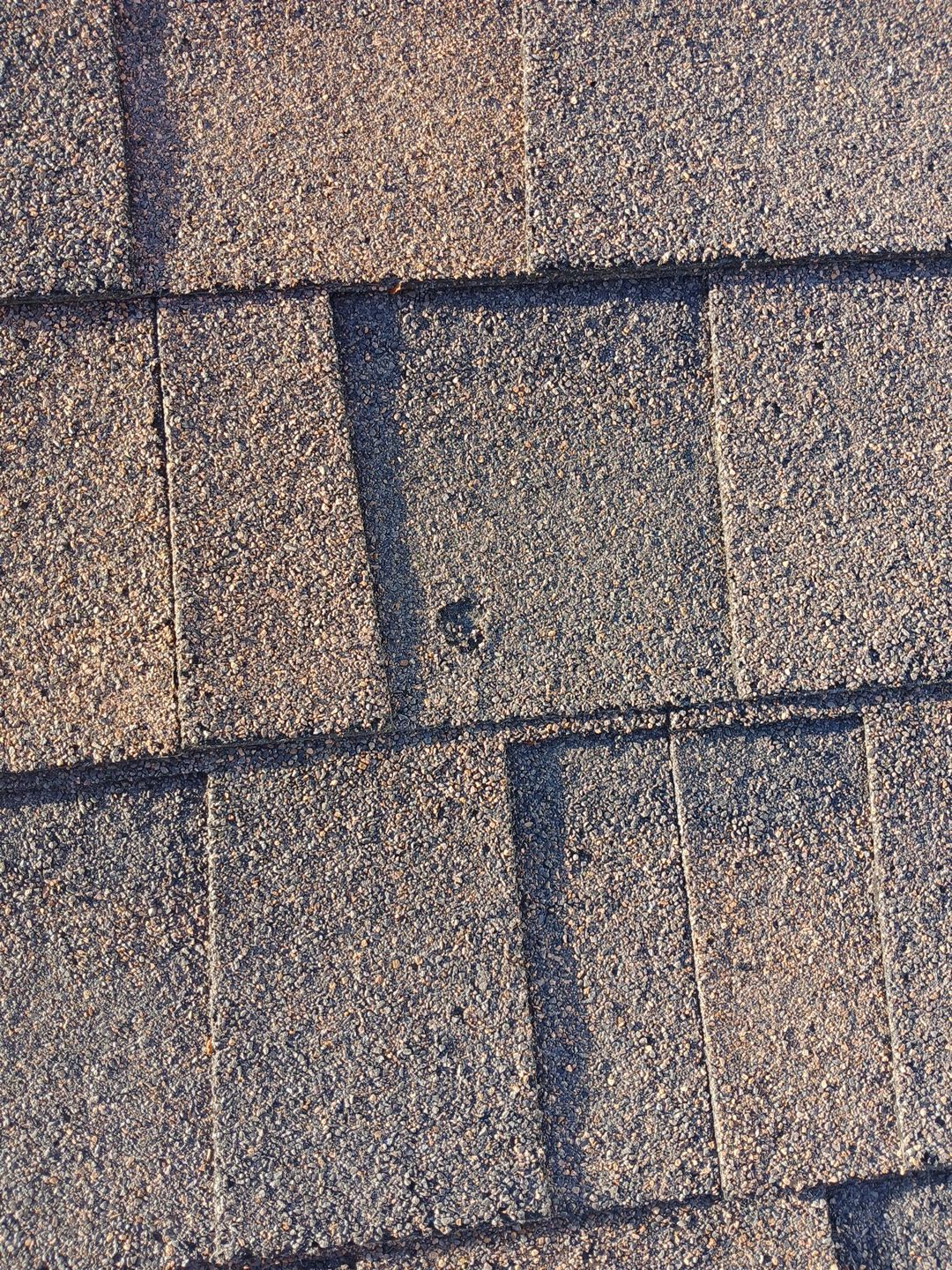
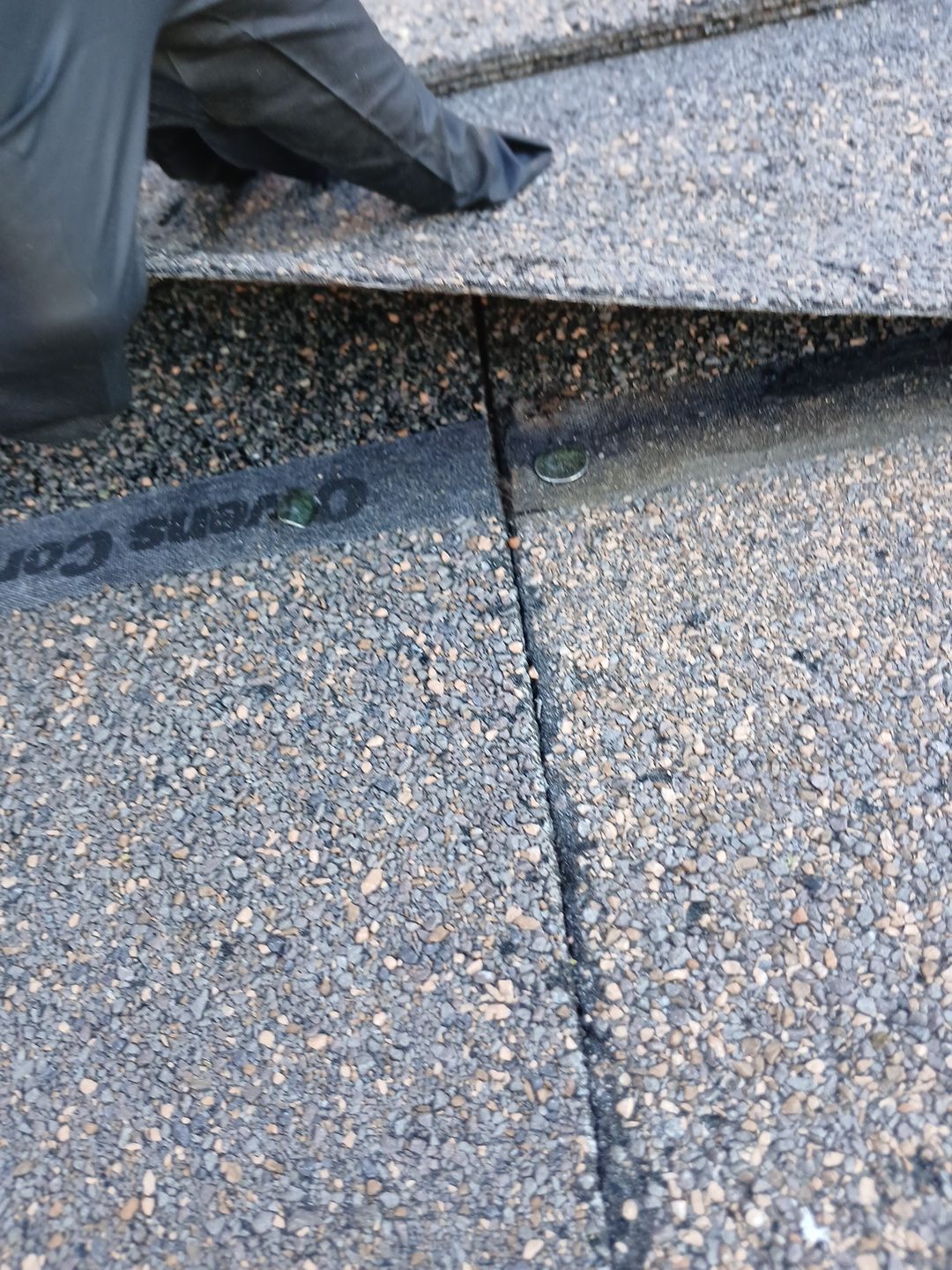
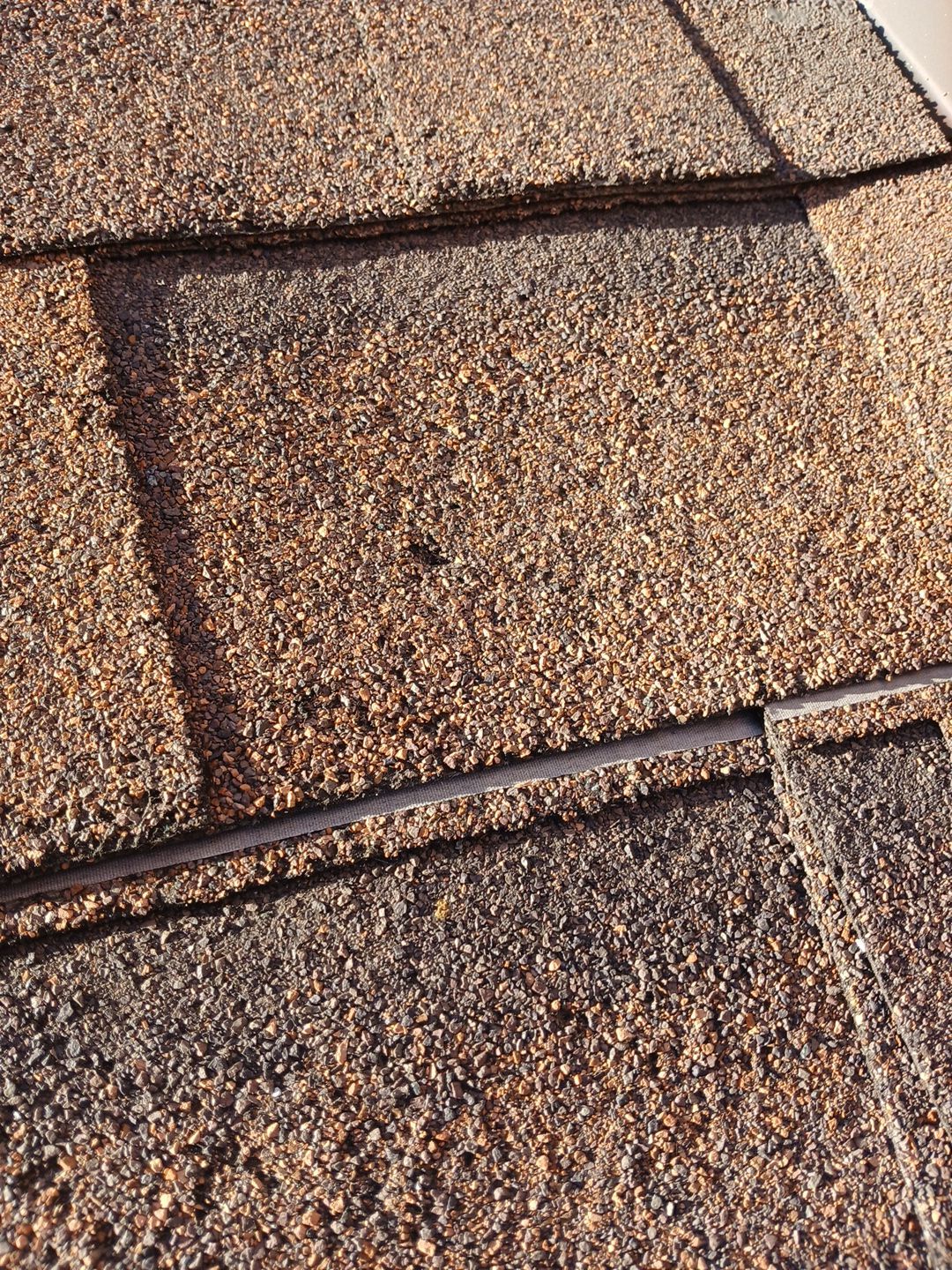
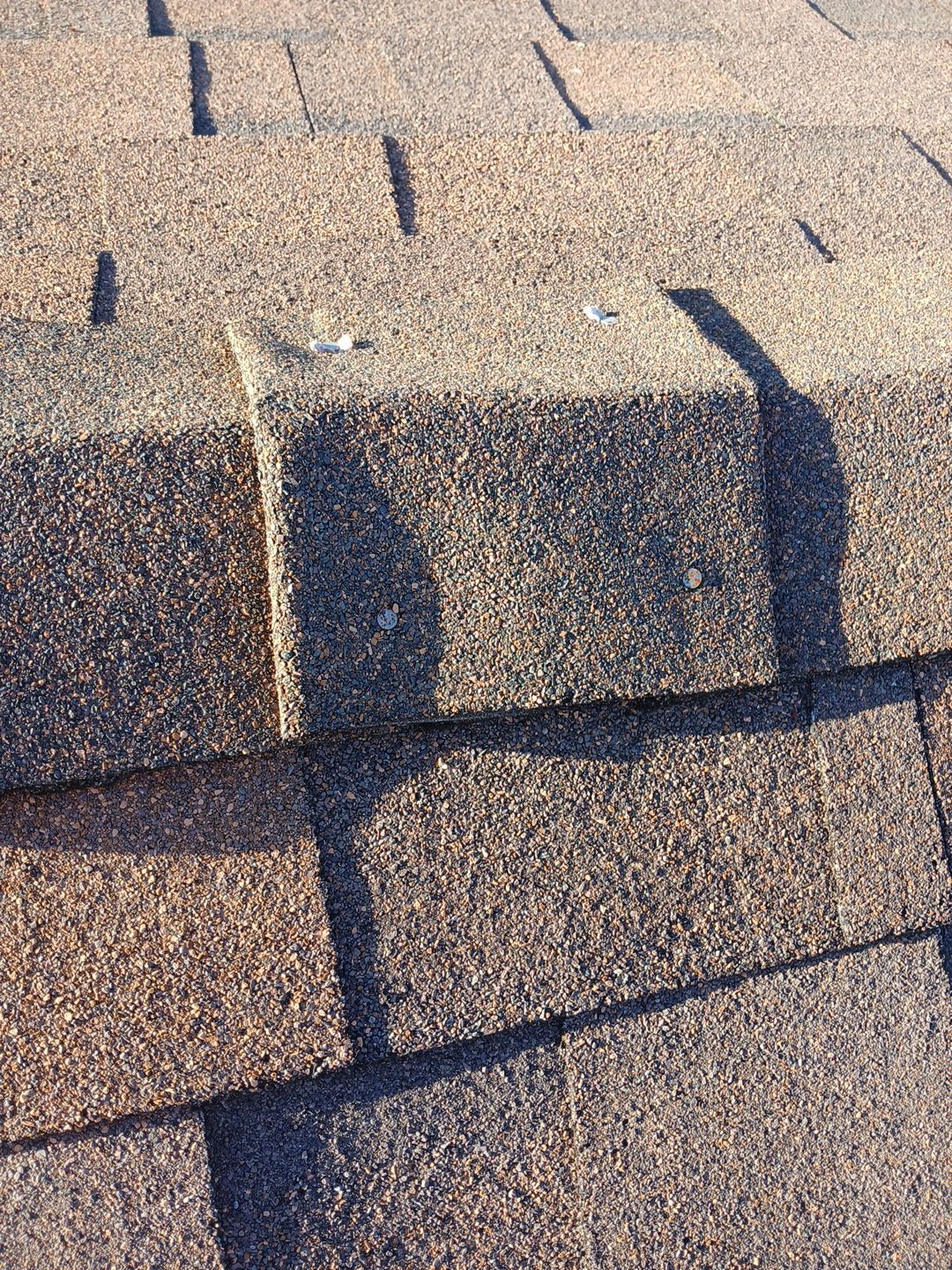
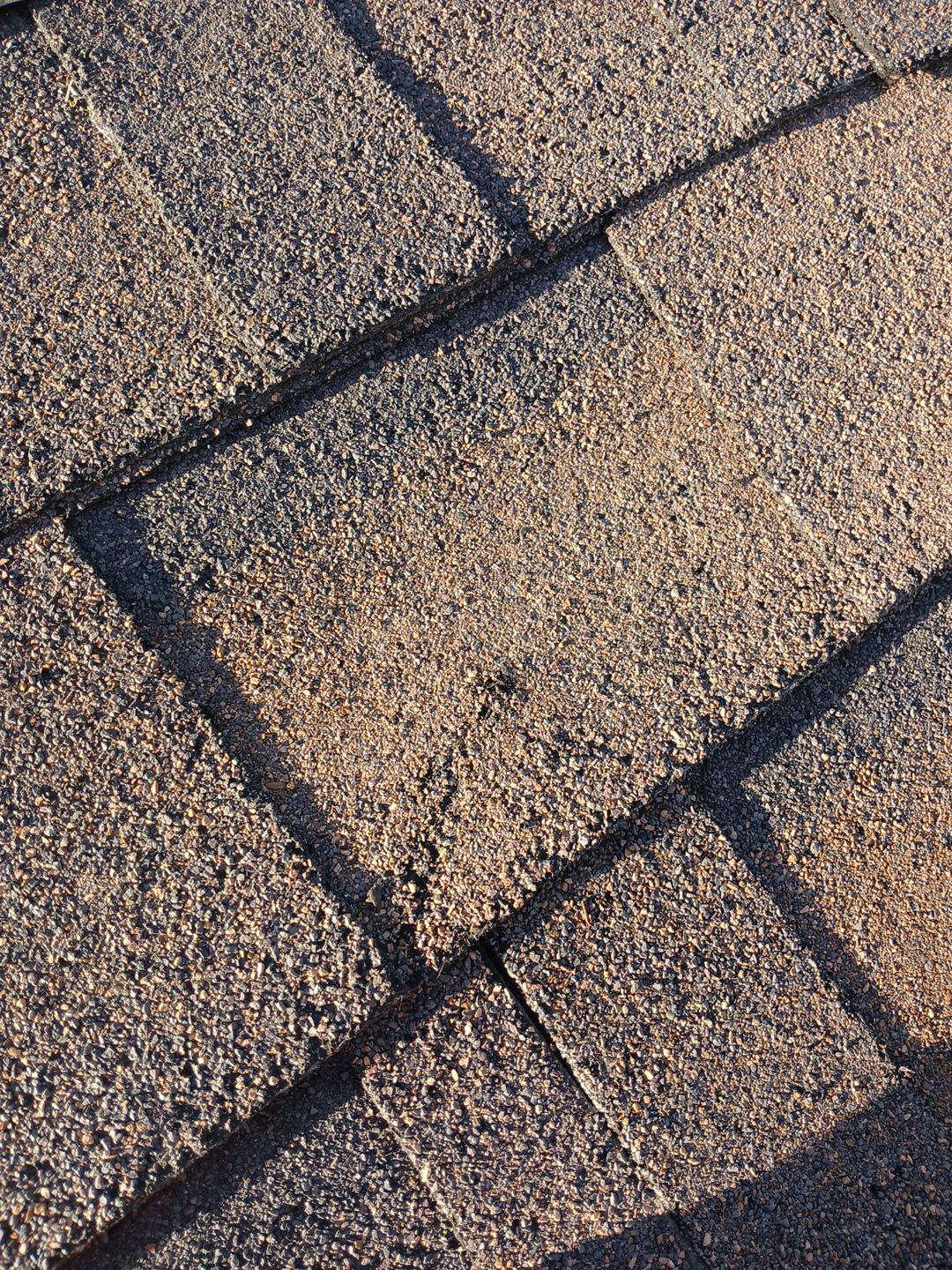
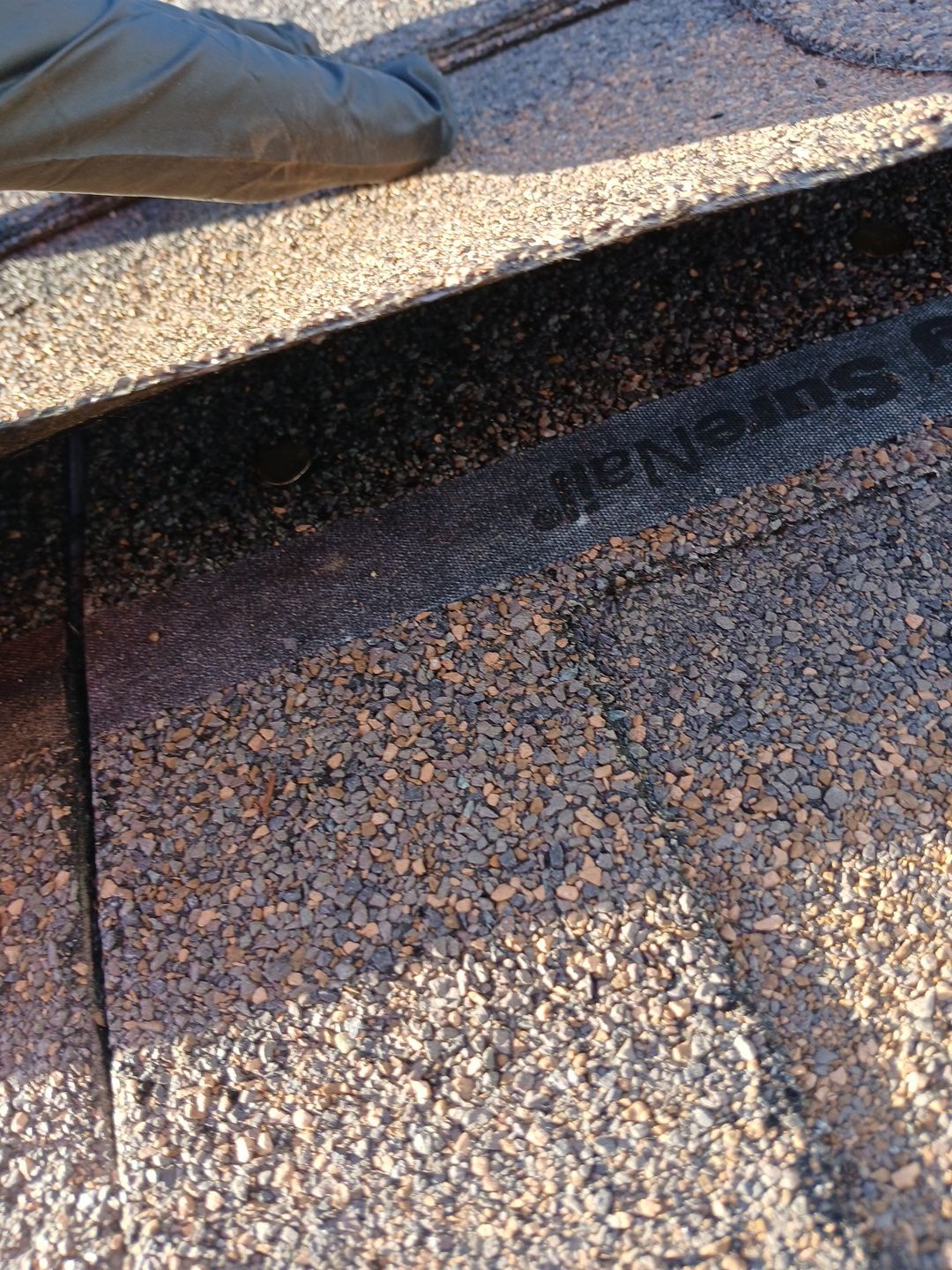
Close-up photographs of the shingle field show significant granule loss across multiple sections, with the underlying fiberglass mat becoming visible in spots — a reliable indicator that the shingles’ weathering layer is exhausted. One photo clearly shows an Owens Corning-branded synthetic underlayment exposed where a shingle edge had lifted, confirming the existing underlayment layer. Ridge cap shingles in several locations had fasteners backing out and tabs lifting; these were re-nailed and sealed. Sections of shingles running along the stucco parapet wall showed cupping and cracking and were replaced as part of the repair scope.
Project Details
Roofing in Los Angeles, CA
Los Angeles sits in a Mediterranean climate zone where roofs face intense UV radiation for the majority of the year, causing asphalt shingle granules to shed prematurely and sealant compounds to dry out and crack faster than in cooler climates. Seasonal Santa Ana wind events can lift poorly secured shingles and drive debris into flashing gaps, while the periodic heavy winter rain — when it arrives — exploits any unsealed penetration or open flashing joint quickly. Stucco construction is the dominant exterior finish in the San Fernando Valley, making proper wall-to-roof flashing integration especially critical, as failed transitions at these junctions are among the most common sources of interior water damage on homes of this type.
Our Service Area: Los Angeles, CA
Frequently Asked Questions
Get a Roof Inspection in Los Angeles
If your Los Angeles home is showing any of the warning signs documented on this project — stucco staining at roof transitions, aging pipe boots, or shingles losing their granules — Roof Replacement Inc is available to perform a thorough on-roof inspection. We serve the greater Los Angeles area and surrounding communities. Reach out to schedule a time to have your roof evaluated before the next rain season.









