What Did This Project Involve?
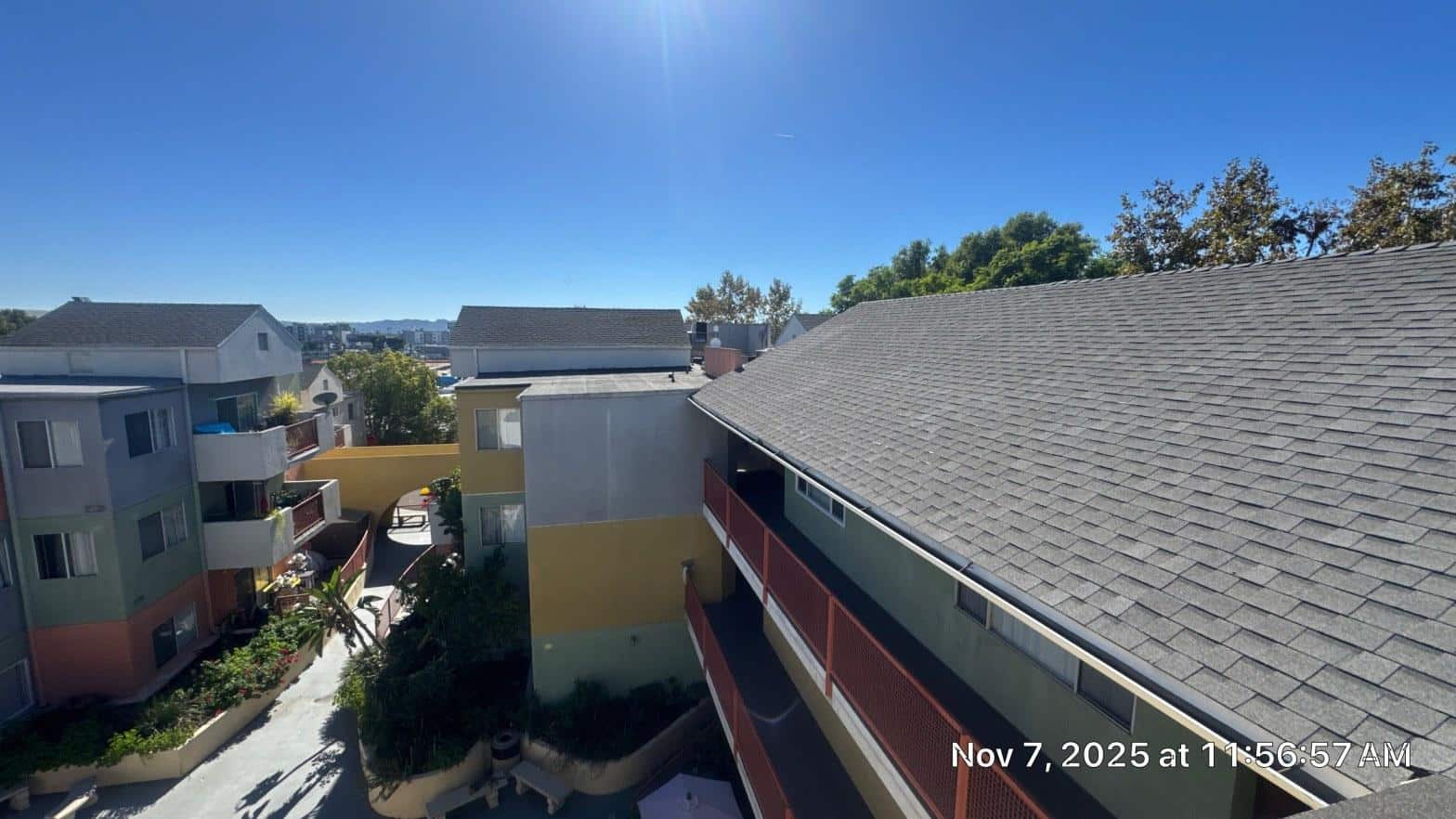
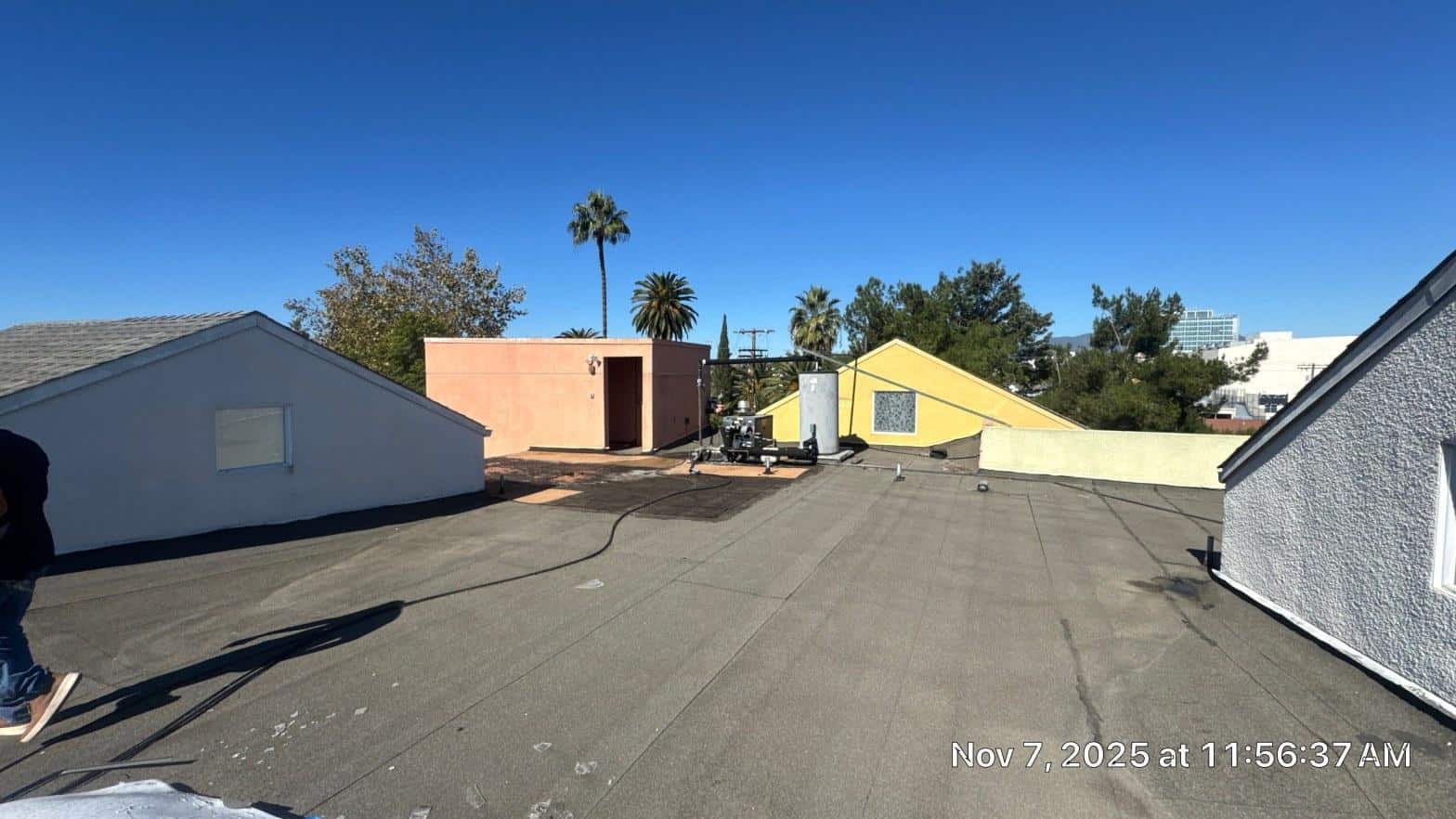
This job was a complete torch-down flat roof replacement on a multi-family apartment complex in the San Fernando Valley, completed in November 2025. The property had 3 distinct low-slope roof sections plus a rooftop mechanical equipment area, all requiring full tear-off and new torch-applied modified bitumen.
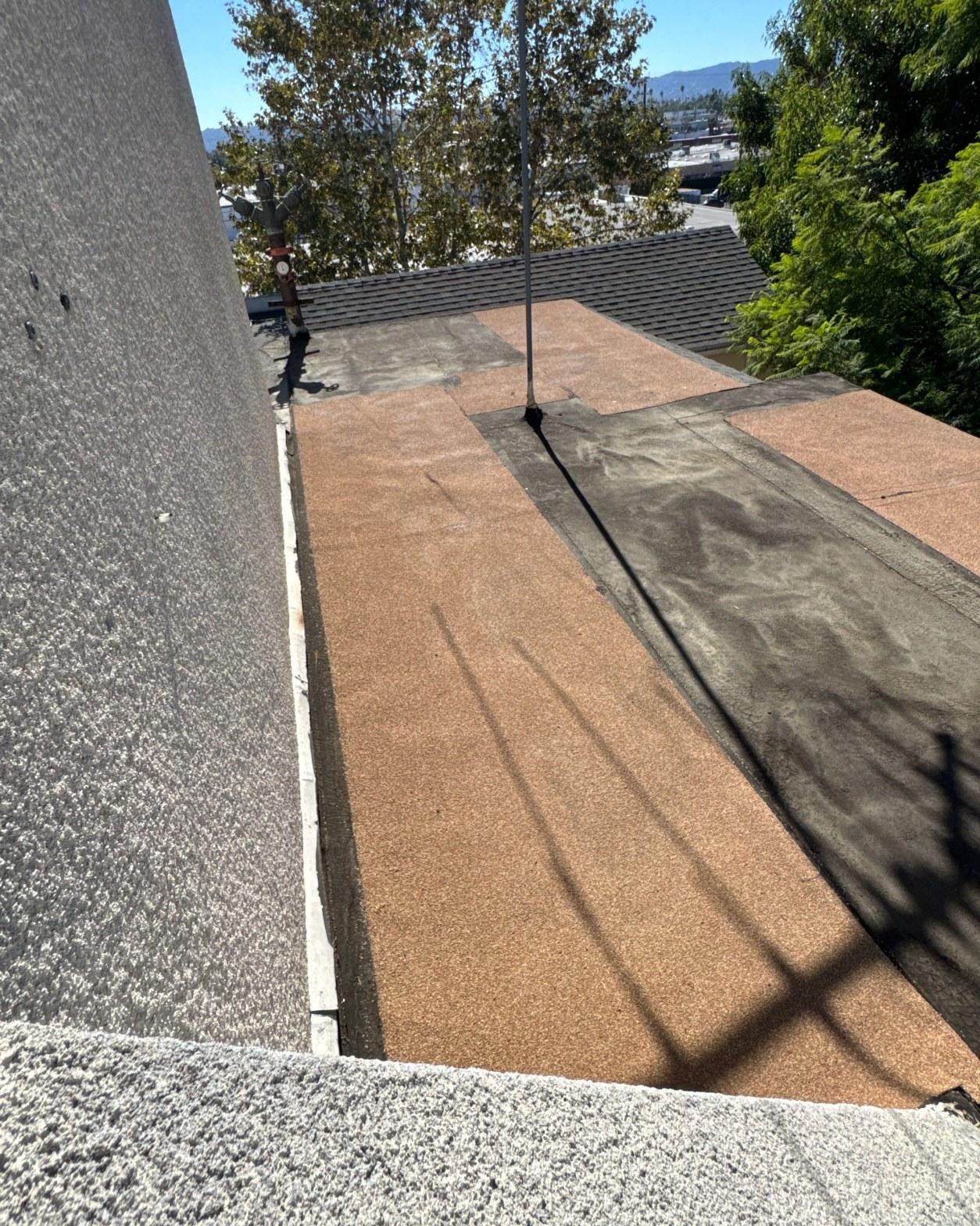
The property owner’s goal was straightforward: stop active leaks that had been tracking down into upper-story units and get ahead of the winter rain season. The existing roofing was worn granulated cap sheet showing visible bubbling, lap separations, and bare spots where the mineral surface had worn through, classic signs of a membrane that had passed the end of its serviceable life.
Project Gallery
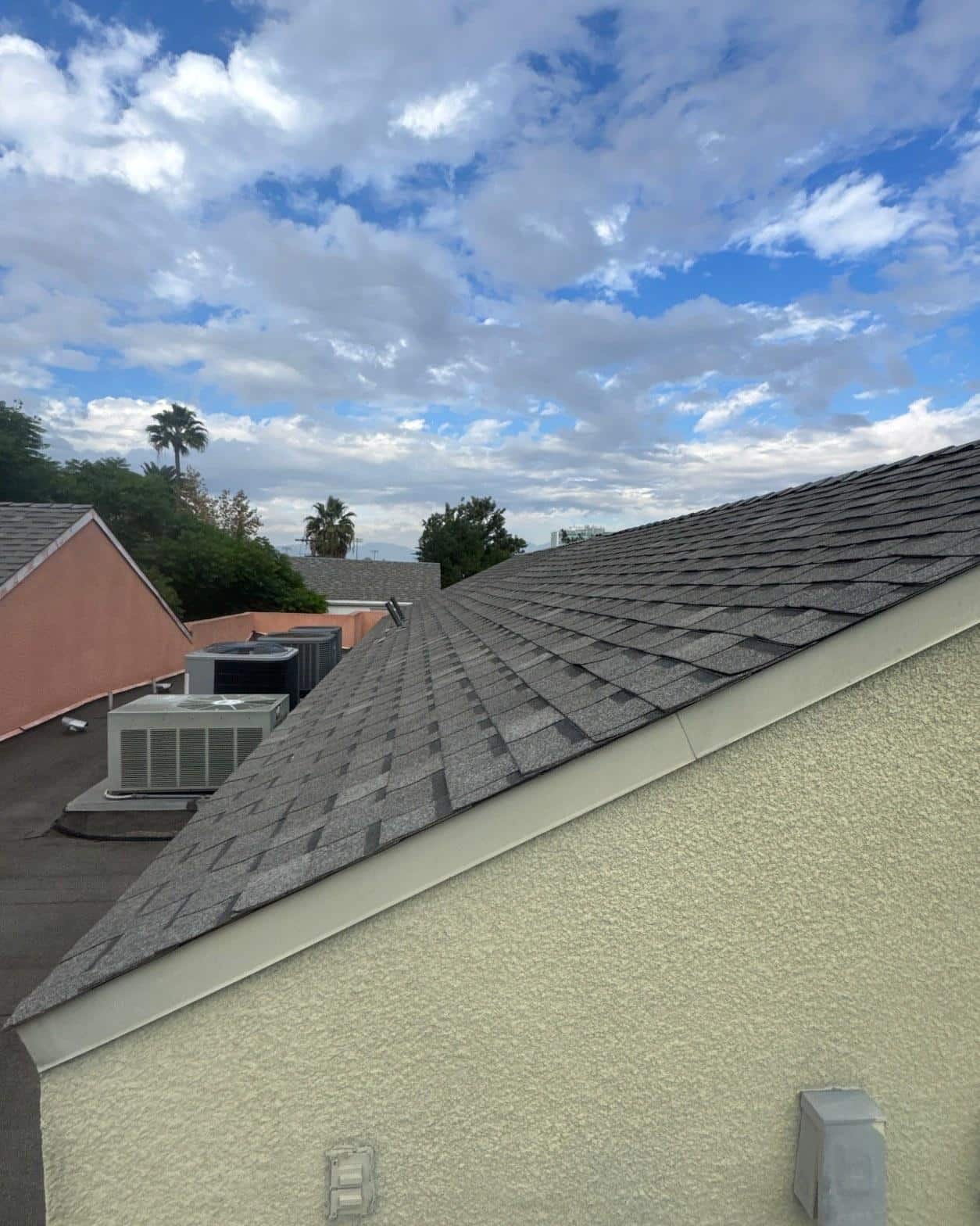
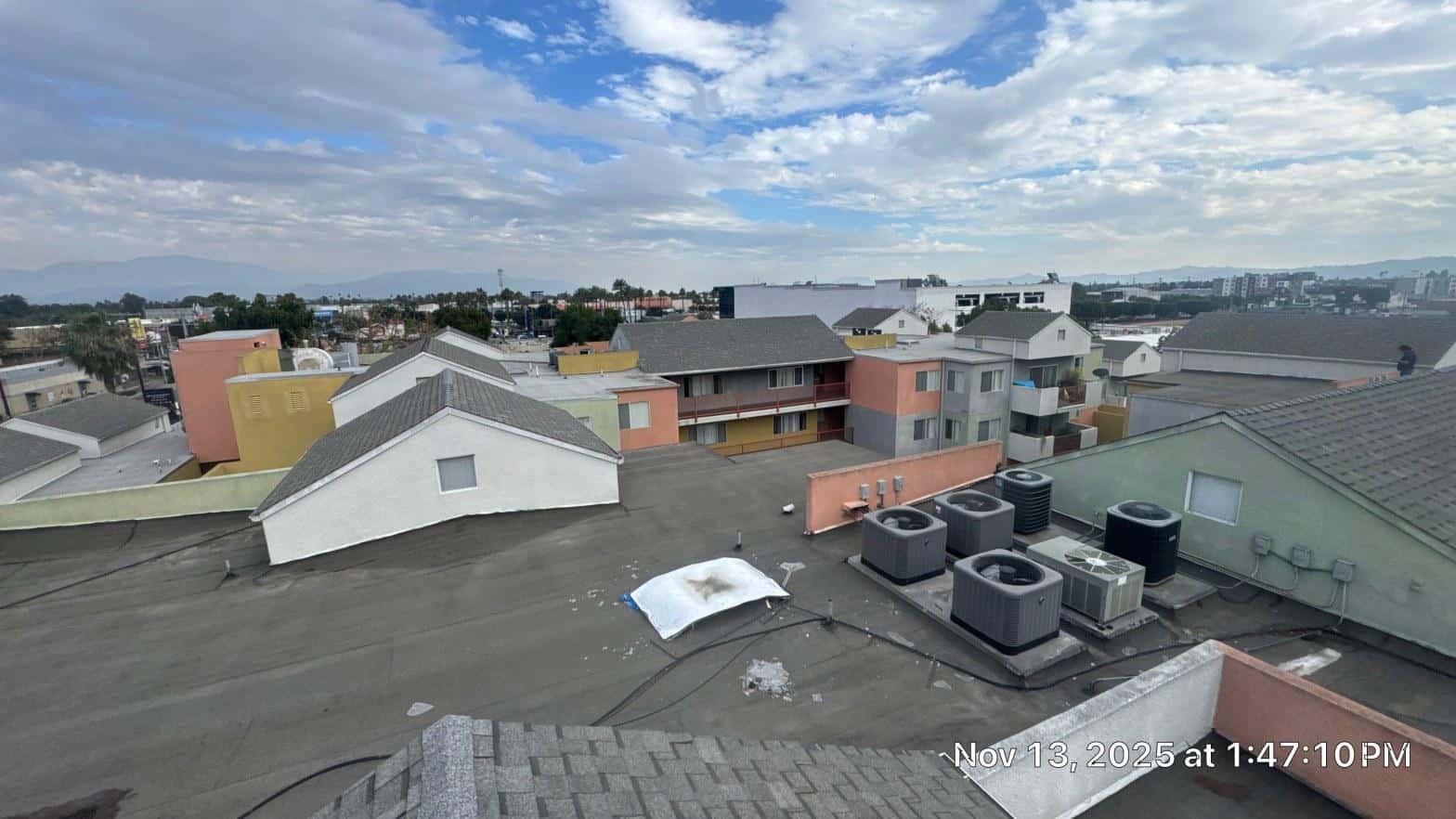
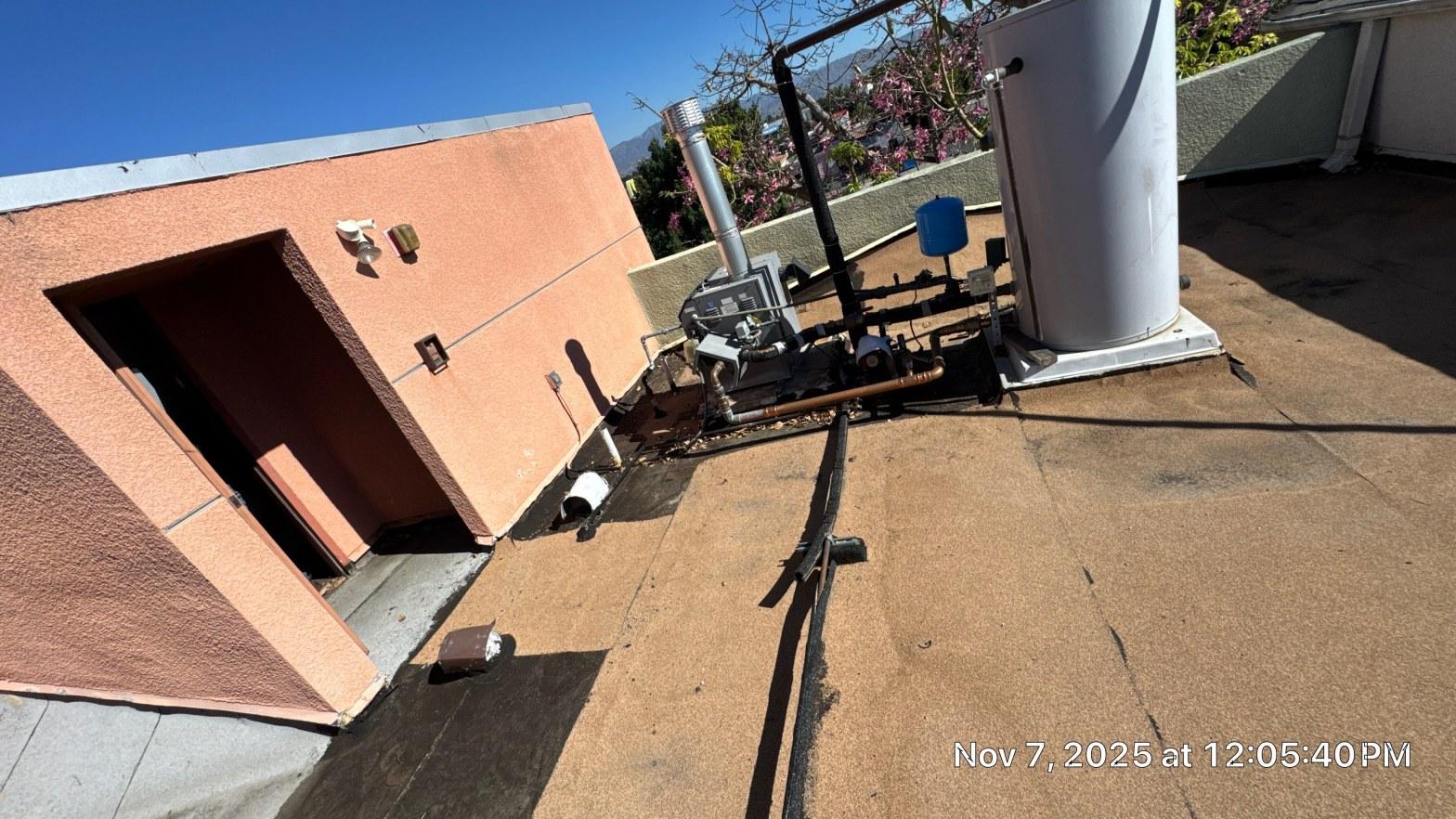
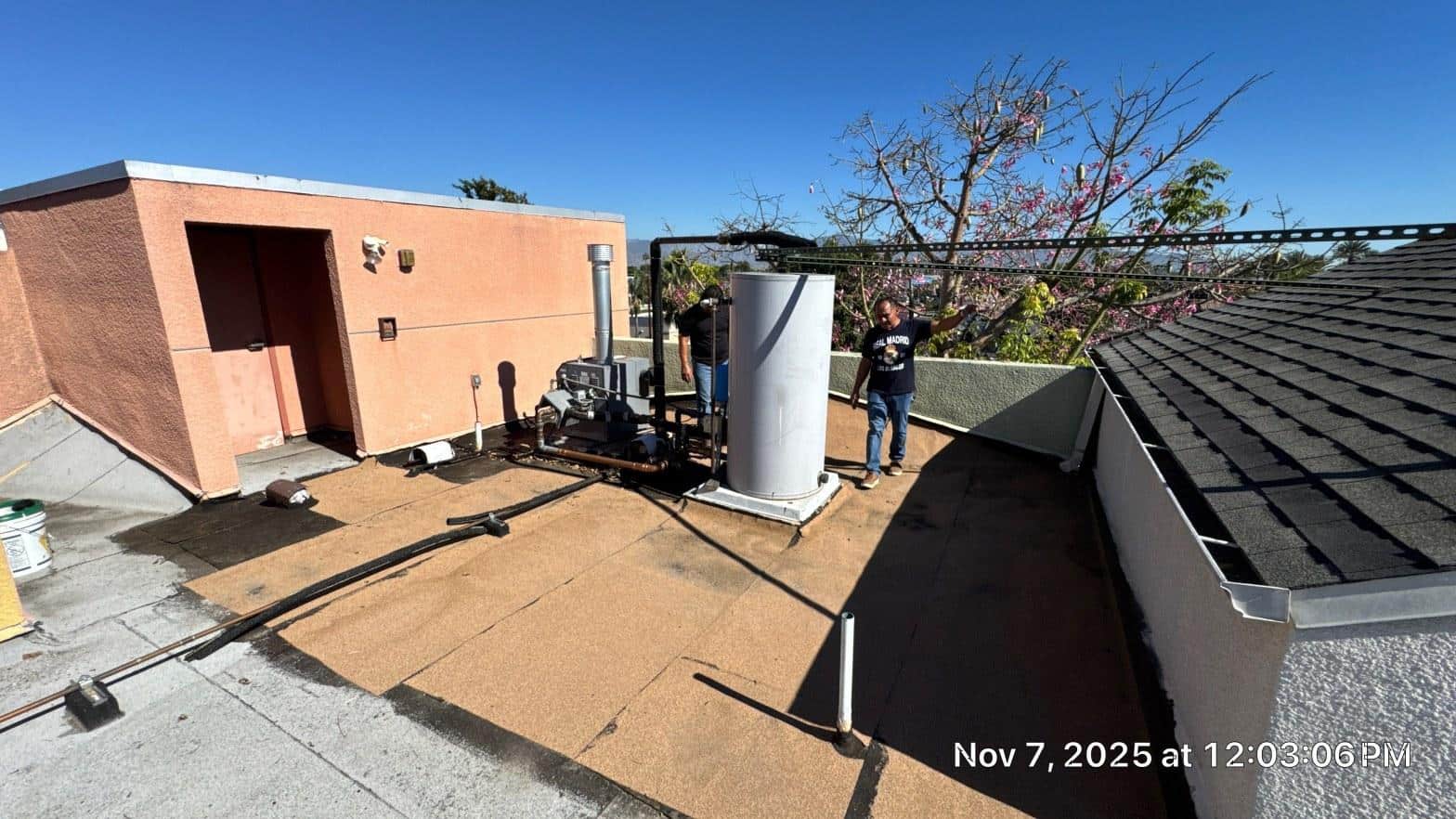
The rooftop mechanical area told its own story. Multiple copper pipes, a boiler-style water heater, and the associated conduit runs all penetrated the field of the roof, and every one of those penetrations had become a potential entry point as the old flashing material deteriorated around them. Getting watertight flashing at each pipe boot and equipment curb was as important as replacing the field membrane itself.
What Did We Find When We Got Up There?
The existing roof surface was a deteriorated torch-down cap sheet with visible uplift at seams and mineral granule loss across roughly half the field area. Under the worn sections, the base sheet had also softened and lost adhesion in places.
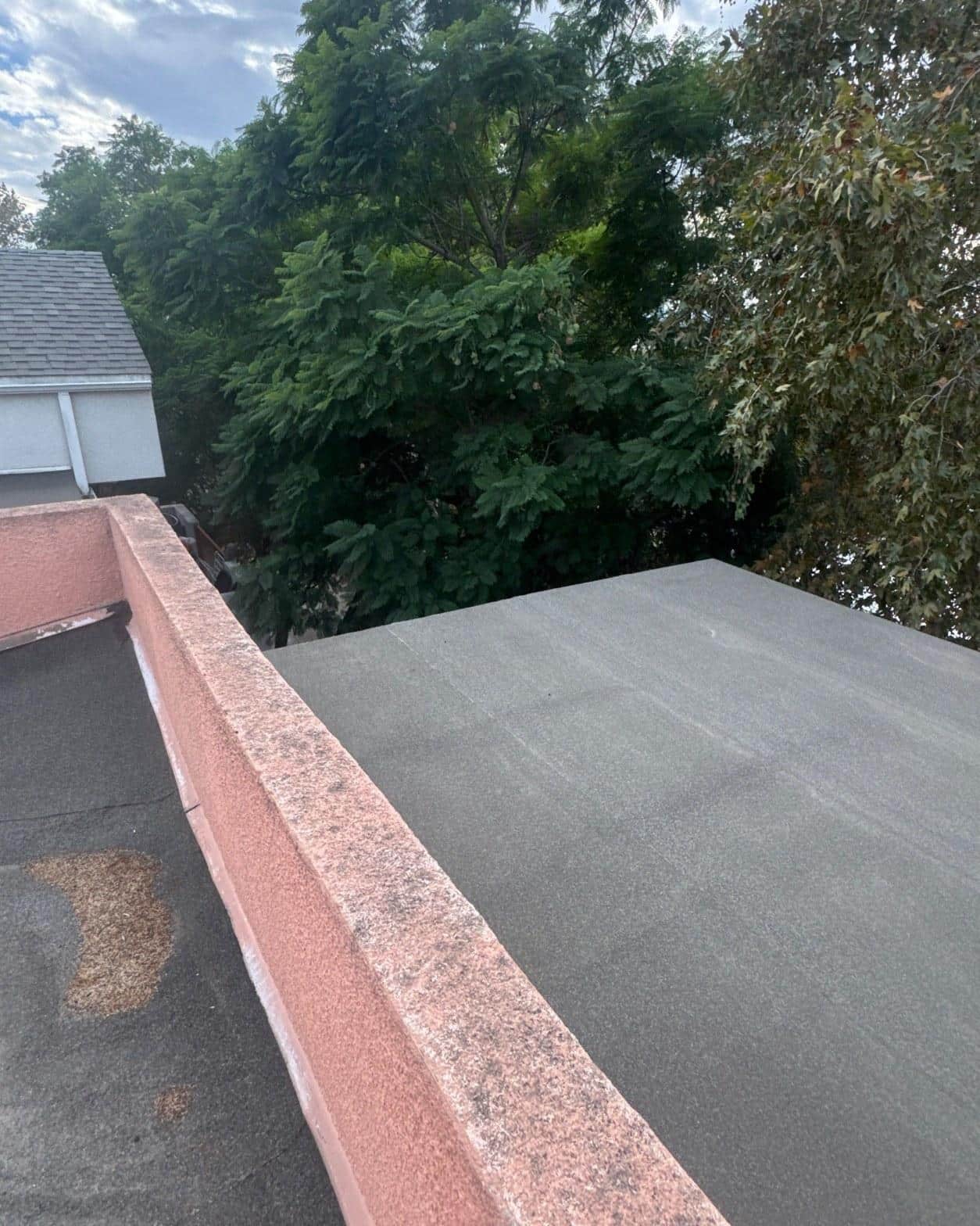
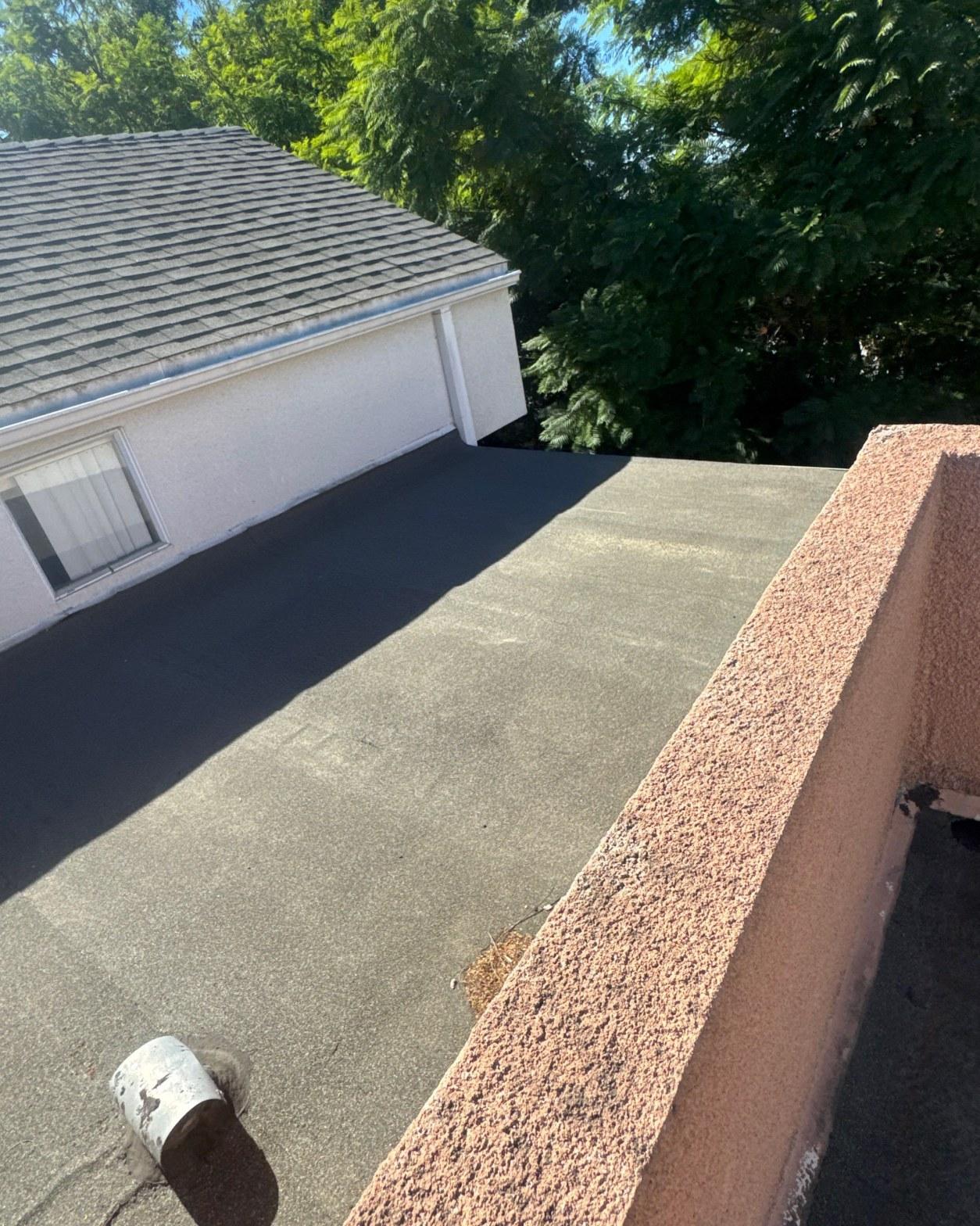
Beyond the field membrane, the parapet walls needed attention. Cap flashing that wraps the top of a parapet wall is one of the most common failure points on a flat commercial or multi-family roof, because it faces both vertical weather exposure and direct foot traffic from maintenance workers. On this property, the parapet cap had pulled away from the wall in multiple spots, leaving open gaps where water could migrate down behind the membrane.
On multi-family buildings in the San Fernando Valley, the Van Nuys basin’s bi-modal rainfall pattern means roofs sit dry and UV-stressed for 6 or more months, then face concentrated storm runoff. That cycle accelerates lap-seam failures on any membrane older than 15 years.
The crew’s walk-through on November 7, 2025 confirmed the scope: full tear-off of the existing cap sheet and base ply, debris removal, inspection of the deck for soft spots, then a fresh 2-ply torch-applied system across all sections. The parapet caps would be reflashed as part of the same scope.
How Is Torch-Down Modified Bitumen Actually Installed?
Torch-applied modified bitumen (mod-bit) is a 2-ply system: a base sheet bonded to the deck, followed by a granulated cap sheet heat-fused to the base. The torch equipment visible in these photos is the propane-fired kettle and wand used to melt the underside of each roll as it’s unrolled across the roof.
The process is labor-intensive but produces a monolithic membrane with no mechanical fasteners exposed to weather. Each lap is heat-welded rather than glued, which is why properly installed mod-bit can perform well for 15 to 20 years on a low-slope application. The granulated surface on the cap sheet reflects solar radiation and resists foot traffic from routine maintenance visits.
California’s Title 24 building energy standards require that re-roofed low-slope surfaces meet minimum solar reflectance thresholds in most climate zones. Mineral-surfaced cap sheet in light gray or white granule colorways is one of the most common compliant choices for torch-down systems on existing multi-family buildings.
Our crew applied the new base sheet first, torching it down across the full field of each section before beginning the cap sheet layer. Pipe boots and equipment curbs were flashed in sequence, each one integrated into the field membrane rather than lapped over the top afterward.
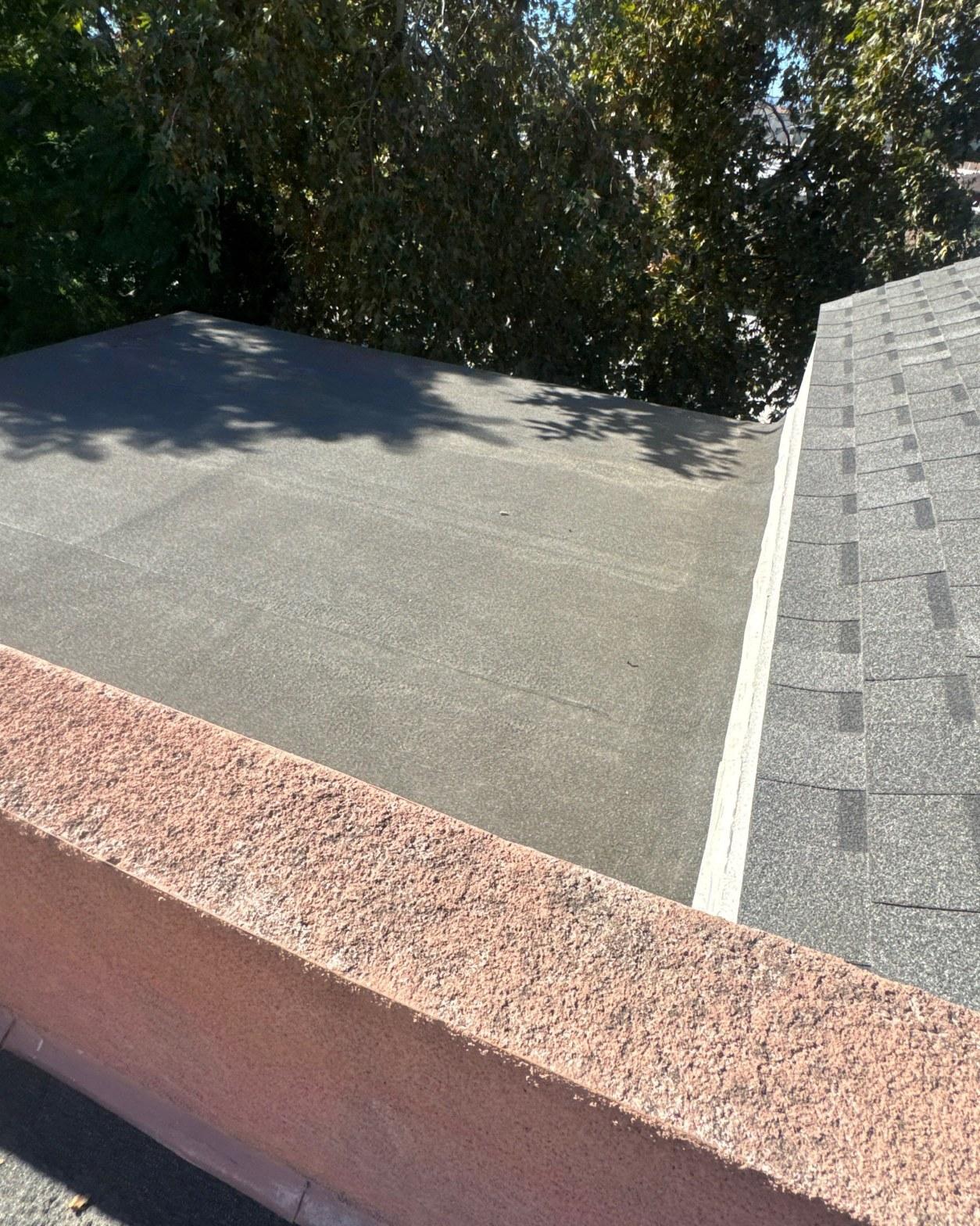
The finished shingle roof sections visible from the rooftop provided a useful reference point: the multi-family building combined steep-slope shingle sections over the living units with low-slope torch-down sections over the ground-floor common areas and mechanical room. Both systems terminate at a common parapet, and maintaining a clean, sealed junction between them was a detail the crew worked carefully.
The Finished Result
By mid-November 2025, all low-slope sections carried fresh granulated cap sheet, the parapet caps were fully reflashed, and every pipe penetration in the mechanical area had a new formed boot sealed into the field membrane.
The aerial view from the completion day shows the contrast clearly: the newly surfaced flat sections have an even, consistent texture across the full field, without the blotchy discoloration and raised seams that marked the old membrane. The rooftop boiler and associated piping remain in place on new equipment curb flashing integrated into the cap sheet.
For apartment owners and property managers in the San Fernando Valley, a torch-down reroof is one of the more involved flat-roof investments because the area’s dense multi-family housing stock often means working around occupied units, rooftop mechanical systems, and multiple drainage points simultaneously. Coordinating all of that without interrupting tenant access to utilities is a real logistical consideration, not an afterthought.
If your apartment complex or commercial building has a low-slope roof showing seam lifts, granule loss, or interior leaks after rain, a licensed inspection is the first step to understanding whether a repair or a full replacement makes sense. Call Roof Replacement Inc to schedule a roof assessment for your property.


