

After a storm, your roof needs a close inspection before damage spreads. This checklist walks you through every zone to check — from the attic to the gutters — and tells you when to call a licensed roofer.
What Does a Storm Damage Roof Inspection Actually Cover?
A storm damage roof inspection checks every component that weather can compromise: shingles, flashing, gutters, soffits, fascia, vents, and the attic interior. The goal is to find damage within 24 to 72 hours after a storm, before water has time to penetrate the decking or insulation.
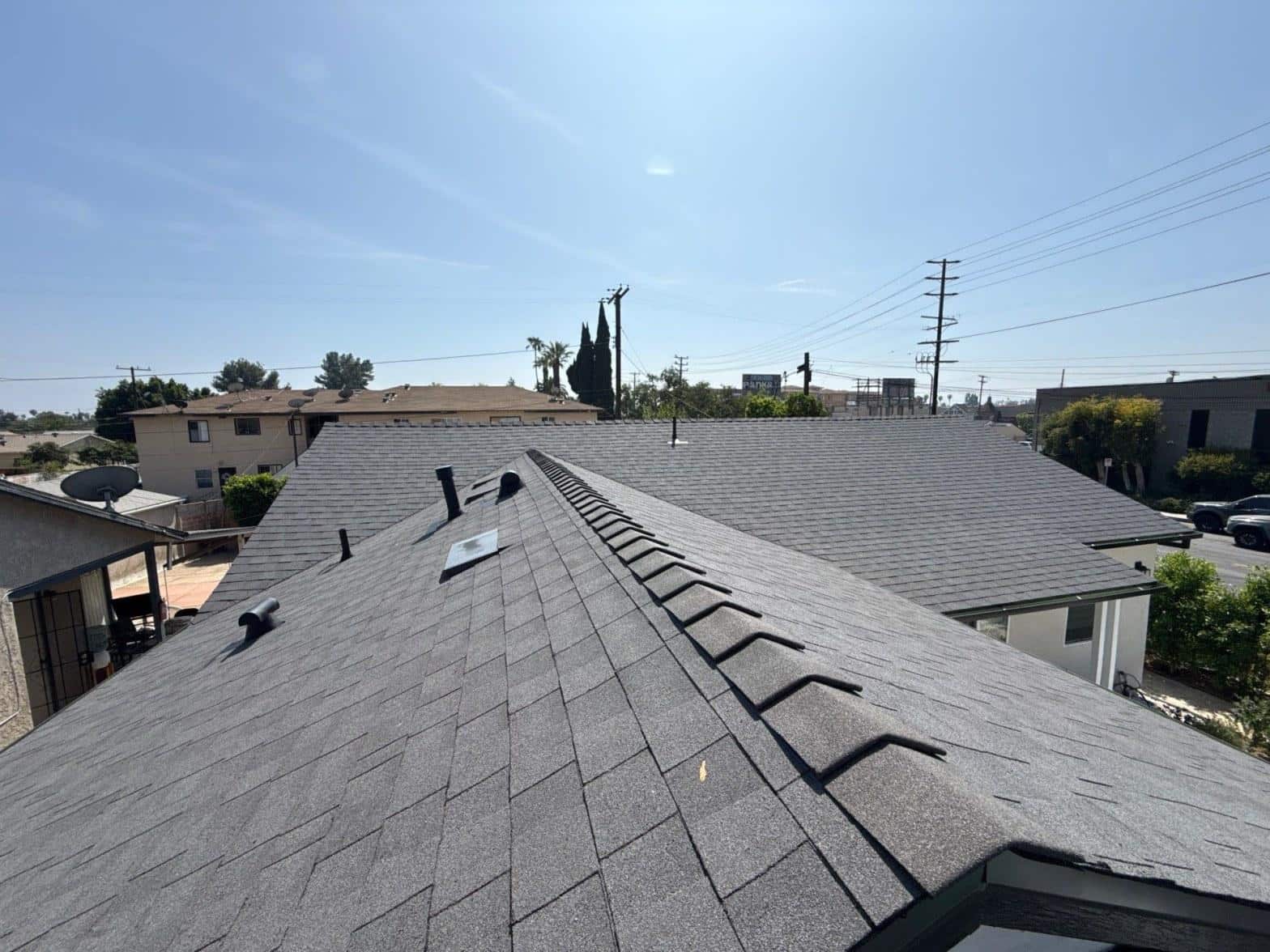
Storms in California range from heavy Pacific rain events and high-wind Santa Ana conditions to hail in inland and mountain communities. Each type of storm leaves a different damage signature, so a thorough inspection looks for more than just missing shingles.
A complete inspection covers six main zones:
- Shingle field: The broad surface area of the roof where most impact and wind damage appears first.
- Flashing: Metal strips at chimneys, skylights, valleys, and wall intersections that seal the joints between roofing materials.
- Gutters and downspouts: Channels that carry water off the roof — storm debris and granule loss concentrate here.
- Soffits and fascia: The underside overhang and trim boards that can rot or crack when water backs up.
- Roof vents and penetrations: Any pipe boot, ridge vent, or exhaust cap that can crack or lift under wind pressure.
- Attic interior: The first place active leaks and moisture staining become visible from inside the home.
Skipping any zone leaves hidden damage in place. A small breach in flashing, for example, can allow water to travel several feet before it drips through a ceiling — making it look like the leak is nowhere near the actual entry point.
How Do You Inspect Your Roof Safely After a Storm?
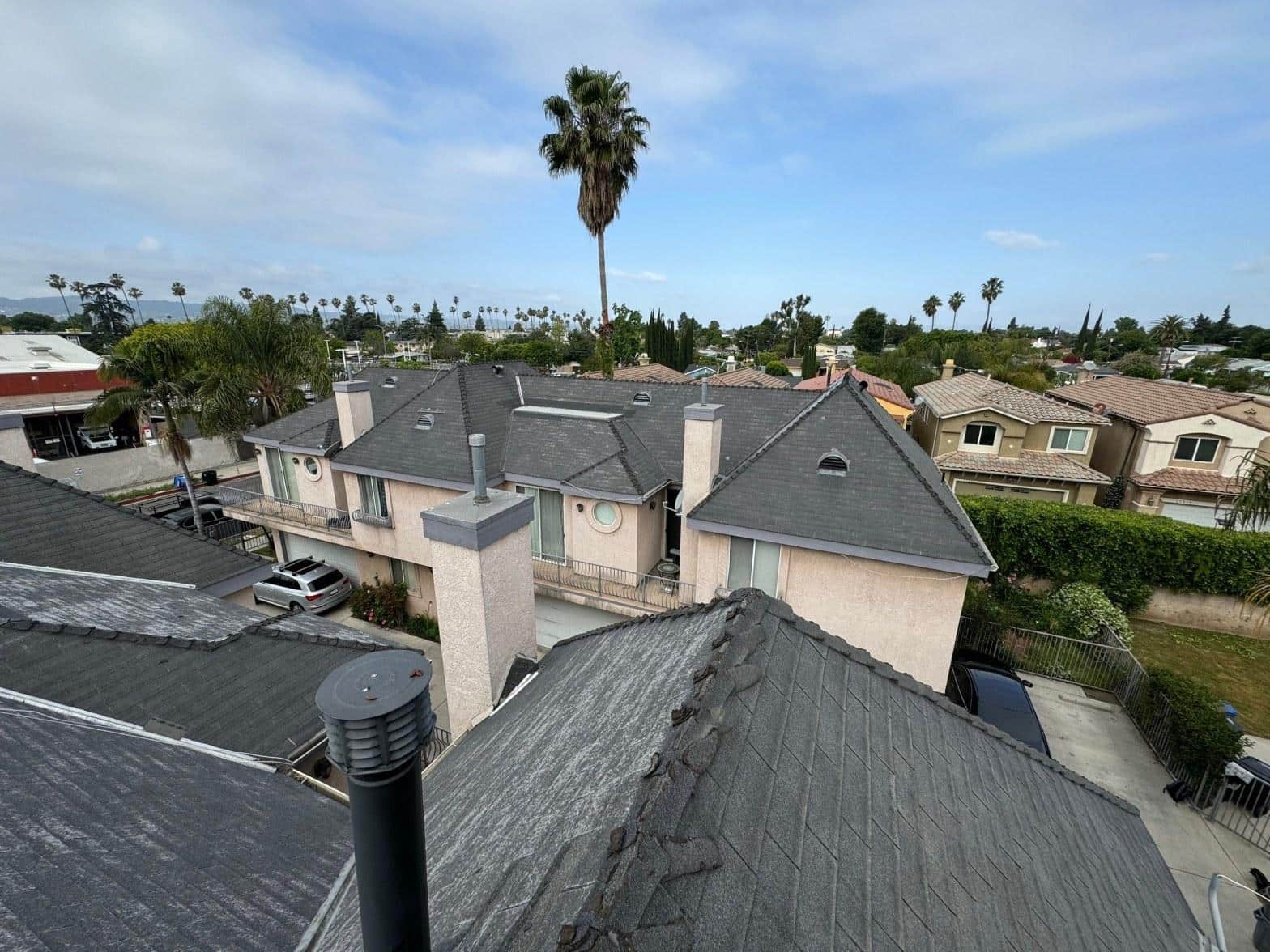
Start your inspection from the ground using binoculars, then move to the attic interior before ever stepping onto the roof surface. Walking on a wet or structurally weakened roof after a storm is one of the most common causes of serious injury.
Follow this step-by-step process in order:
- Wait for safe conditions. Do not go outside during or immediately after high winds. Wait until the storm has fully passed and standing water has begun to drain.
- Walk the perimeter from the ground. Use binoculars to scan the full roof surface. Look for lifted, curled, or missing shingles. Note any areas where the roofline sags or looks uneven.
- Check the gutters. Look for granule buildup, dents from hail, and sections that have pulled away from the fascia. Excessive granule loss means shingles have lost protective coating.
- Inspect the attic. Bring a flashlight. Look for daylight coming through the decking, dark water stains on rafters, wet insulation, or active dripping. Mark any wet spots with tape so you can track whether they grow.
- Document everything with photos. Take dated photos from multiple angles. This documentation is essential for any insurance claim filed afterward.
- Check interior ceilings. Water stains, bubbling paint, or soft drywall on upper-floor ceilings often trace back to roof penetrations above.
- Call a licensed roofing contractor for a professional assessment. If you spot any of the warning signs in the next section, professional evaluation should happen within 48 to 72 hours.
Our team inspects storm-damaged roofs across Southern California and finds that roughly 40% of the damage we document is not visible from street level — it shows up only in the attic or at flashing joints. A ground-level check is a starting point, not a substitute for a professional inspection.
What Are the Most Common Signs of Storm Damage on a Roof?
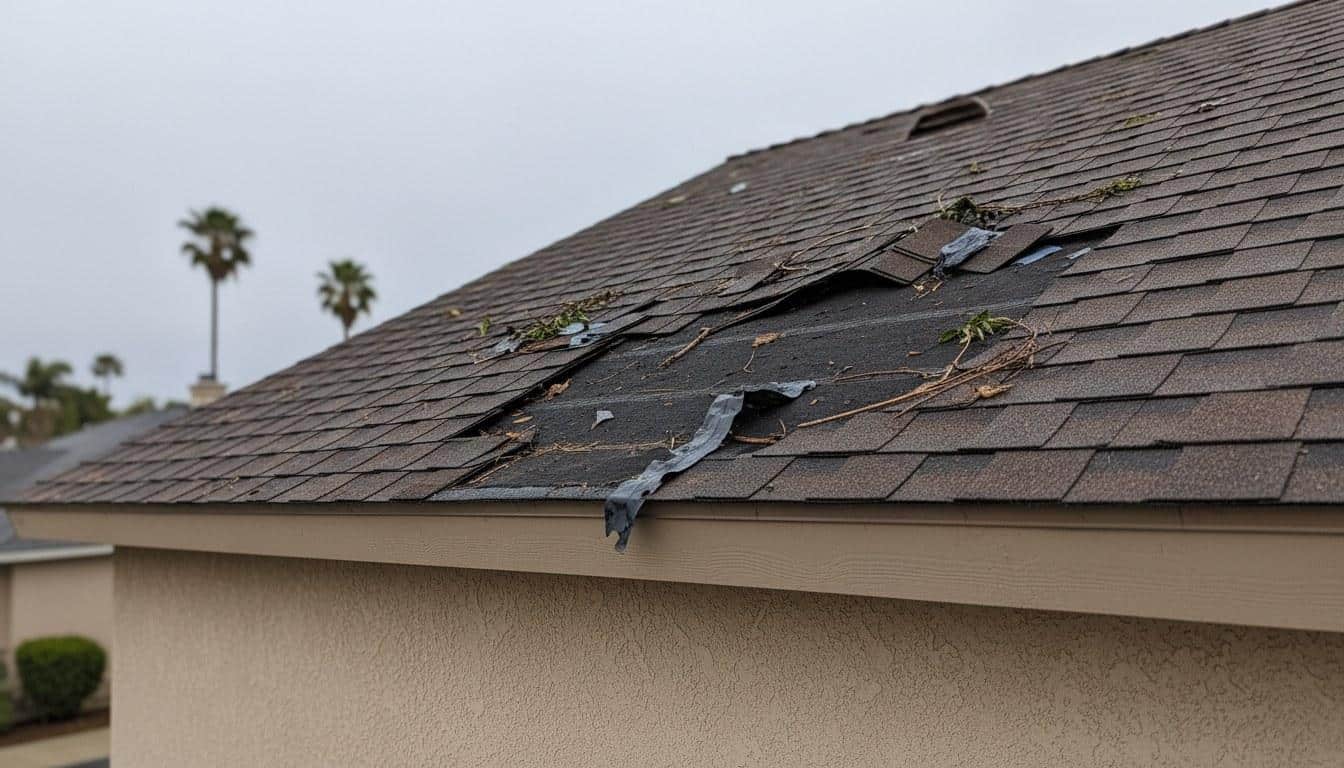
The most common storm damage signs are missing or cracked shingles, dented metal components, granule loss in gutters, lifted flashing, and water stains in the attic. Hail leaves circular bruising or punctures; high wind causes lifting, tearing, and debris impact marks.
Here is a quick-reference guide to what each damage type looks like and what it means:
| Damage Sign | Likely Cause | Urgency Level |
|---|---|---|
| Missing shingles (bare decking visible) | High wind or uplift | High — repair within 24-48 hours |
| Cracked or split shingles | Impact (hail, branches) or thermal stress | High — water entry likely |
| Granules in gutters (heavy accumulation) | Hail impact stripping shingle coating | Medium — shingles near end of life |
| Dented or bent gutters and flashing | Hail or falling debris | Medium — check for seal failure |
| Lifted or separated flashing | Wind uplift or failed sealant | High — primary leak entry point |
| Water stains on attic rafters | Active or recent leak | High — find source immediately |
| Soft or spongy decking when walked on | Long-term moisture saturation | Very high — decking replacement likely needed |
| Sagging roofline sections | Structural damage or saturated decking | Emergency — do not delay |
NOAA’s National Weather Service tracks storm event data by county, which can help you document the date and severity of a weather event for an insurance claim. Keeping a record of the storm’s classification — whether it was a wind advisory, severe thunderstorm warning, or hail event — strengthens your documentation.
Asphalt shingles typically have a rated service life of 20 to 30 years under ENERGY STAR standards, but storm damage can cut that lifespan significantly when it goes unrepaired. Shingles that lose more than 30% of their granule coating are generally considered compromised even if they have not cracked yet.
How Much Does Storm Damage Roof Repair Cost in California?
Storm damage roof repairs in California’s regional market typically range from $300 to $1,500 for minor patching and flashing work, and from $3,000 to $15,000 or more for partial or full roof replacement, depending on the scope of damage, roof size, and material type.
Several factors move the final number significantly:
- Extent of damage: A few missing shingles costs far less than widespread decking saturation that requires structural replacement.
- Roof pitch and accessibility: Steeper roofs require additional safety equipment and labor time, raising costs by 20% to 40% in many cases.
- Material type: Standard three-tab asphalt shingles are the most affordable option. Tile, metal, and architectural shingles carry higher material costs but offer greater durability in future storms.
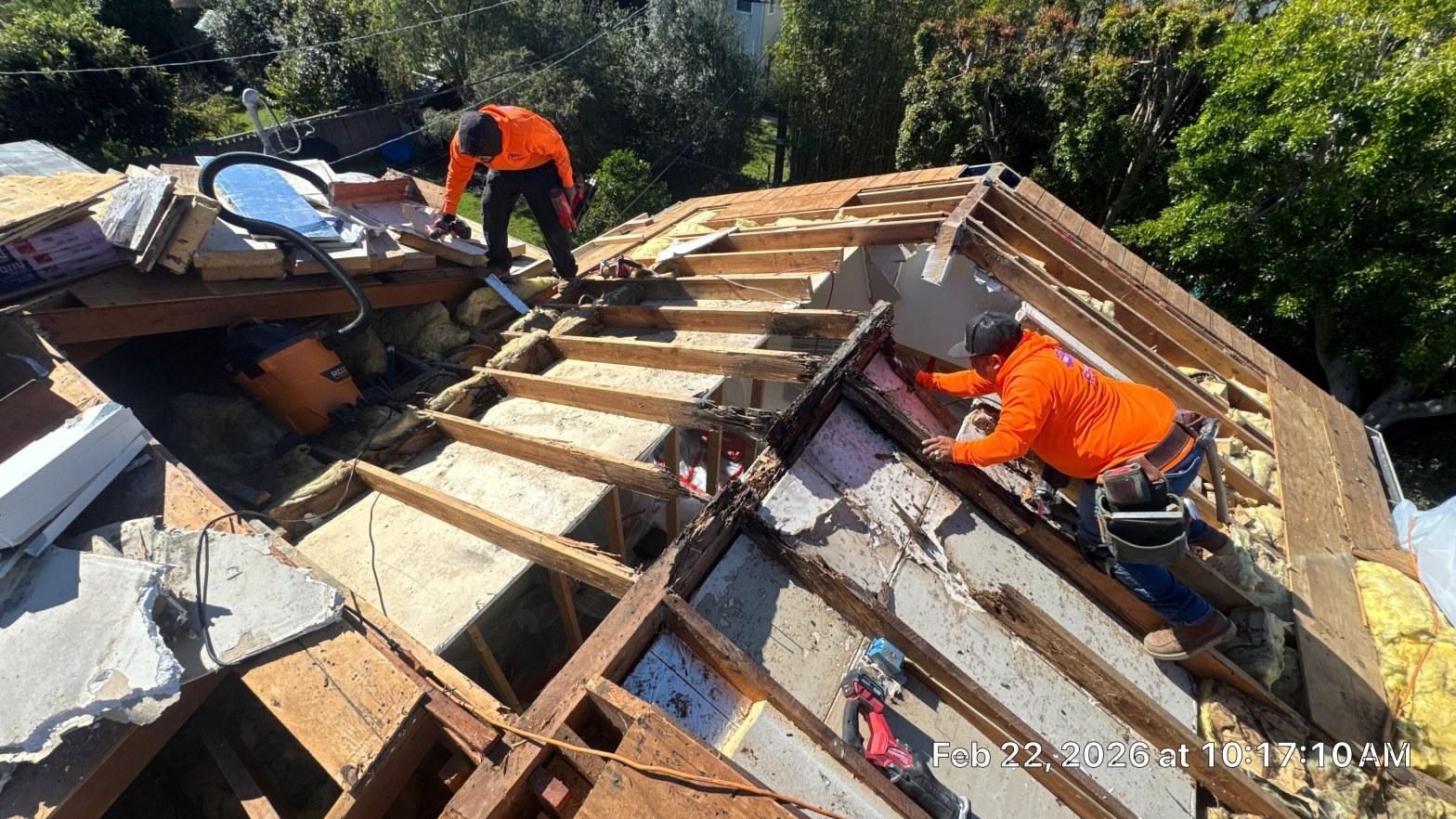
- Decking condition: If the plywood or OSB decking beneath the shingles has been saturated, it must be replaced before new roofing is installed, adding $2 to $5 per square foot to the project.
- Emergency tarping: Temporary tarping to prevent further water intrusion typically costs $200 to $600 and is often reimbursable through homeowner’s insurance.
California’s Title 24 building energy standards may also apply when replacing more than 50% of a roof surface, requiring cool-roof rated materials in certain climate zones. This can affect material selection and cost. Always request a written, itemized quote before any work begins.
Should You File an Insurance Claim for Storm Roof Damage?
You should file a homeowner’s insurance claim for storm roof damage when the repair cost exceeds your deductible and the damage was caused by a covered weather event such as wind, hail, or falling trees. Most standard homeowner’s policies in California cover sudden storm damage but exclude wear-and-tear deterioration.
Here is what to do to protect your claim:
- Document the storm date using a weather service record or local news report.
- Take dated photos of all visible damage before any temporary repairs are made.
- Save receipts for any emergency tarping or protective measures taken immediately after the storm.
- Get a written damage assessment from a licensed roofing contractor before the insurance adjuster visits — this gives you an independent baseline.
- Do not sign any repair authorization with a contractor who approaches you unsolicited after a storm. Contractor fraud spikes after major weather events in California.
Insurance adjusters may underestimate damage that is not immediately visible, such as compromised flashing or granule loss that has not yet caused a leak. Having a detailed inspection report from a licensed contractor on hand during the adjuster’s visit helps ensure all damage is accounted for. Contractors licensed by the California Contractors State License Board (CSLB) can provide documentation that carries weight with insurance companies.
Most insurers require claims to be filed within one year of the storm event, though some policies set shorter windows. Check your policy’s specific language and file promptly even if you are still gathering repair estimates.
When Should You Call a Roofing Contractor Instead of DIY?
Call a licensed roofing contractor immediately if you see any active leaks, sagging sections, exposed decking, lifted flashing at multiple points, or signs of structural compromise. These conditions go beyond what a homeowner can safely or effectively repair without professional tools and training.
DIY roof repairs make sense only in narrow situations:
- Replacing one or two isolated shingles on a low-slope roof with easy access
- Applying roof sealant around a single vent pipe or small flashing gap as a temporary measure
- Clearing debris from gutters and downspouts after the storm
In all other cases, the risk of making the damage worse — or creating a new leak path — outweighs the cost savings. Residential roofing systems are interconnected: improper shingle installation can void manufacturer warranties, and incorrect flashing repairs often fail within one to two rain seasons.
When evaluating roofing contractors after a storm, look for these qualifications:
- Active CSLB license (verify at cslb.ca.gov before signing anything)
- General liability insurance and workers’ compensation coverage
- Written, itemized estimate with a project timeline
- Local references from jobs completed in your county within the past 12 months
- No demand for full payment upfront — reputable roofing companies typically collect a deposit of 10% to 30% at most before work begins
We see roughly 3 out of every 5 storm-damage calls involve secondary damage — water intrusion that started at a small flashing gap and spread to the decking over one or two additional rain events before the homeowner called. Getting a professional on-site within 72 hours of a storm consistently limits the scope of repairs needed.
We see roughly 3 out of every 5 storm-damage calls involve secondary damage that spread over one or two additional rain events before the homeowner called.
Get a Professional Storm Damage Inspection
Storm damage does not always wait to announce itself. A small breach today can become a saturated deck, damaged insulation, and mold growth within a few weeks. The fastest way to protect your home and your insurance claim is to get a professional assessment on record quickly.
Roof Replacement Inc serves homeowners across Southern California with thorough storm damage inspections, written damage reports, and complete repair and replacement services. Whether you need a quick patch or a full residential roofing replacement, our team provides honest assessments and clear pricing before any work begins.
Schedule your storm damage inspection today. Call (213) 364-3979 to speak with a member of our team or to book an on-site visit. Get a written quote before any work starts — no pressure, no surprises.
Explore our full range of roofing services across Southern California.
Frequently Asked Questions
How do I know if my roof was actually damaged by a storm?
Look for missing or cracked shingles, heavy granule buildup in your gutters, dented metal flashing, and water stains on your attic rafters or interior ceilings. Some storm damage — especially from hail — is not visible from the ground and requires a close-up inspection. If a significant storm passed through your area, a professional inspection is worth scheduling even if nothing looks obviously wrong.
How do I repair a leaky roof from inside my house after a storm?
From inside, you can place buckets to catch drips and apply roofing tape or a temporary patch over a visible crack in the decking as an emergency measure — but this is only a short-term fix. The actual source of the leak must be repaired from the exterior, which typically requires replacing damaged shingles or resealing flashing. Call a licensed roofing contractor within 24 to 48 hours to address the root cause before the next rain event.
How long do I have to file an insurance claim for storm roof damage in California?
Most homeowner's insurance policies in California require storm damage claims to be filed within one year of the event, though some carriers set a shorter window of six months. Check your policy's exact language and file as soon as you have documented the damage with photos and a contractor's written assessment. Waiting too long is one of the most common reasons claims are denied.
How much does it usually cost to repair a storm-damaged roof in California?
Minor repairs like replacing a few shingles or resealing flashing typically range from $300 to $1,500 in the California regional market. More extensive damage involving decking replacement or a partial re-roof generally runs from $3,000 to $15,000 or more depending on the roof size, pitch, and materials involved. Request a written itemized quote from a licensed roofing contractor before authorizing any work.
Is it safe to walk on my roof to check for storm damage myself?
Walking on a wet or storm-weakened roof is dangerous and can cause additional damage to already-compromised shingles or decking. Start with a ground-level visual check using binoculars, then inspect the attic interior for leaks and staining. Leave any on-roof inspection to a licensed roofing professional who has the proper safety equipment and training.
Related Articles




What Our Clients Say








Roof Replacement Inc. offers professional, high-quality work, guaranteed (call for details); ensuring all clients projects meet all code and design requirements. We are dedicated to exceptional customer service and will strive to ensure you with the highest quality roofing services. Roof Replacement Inc. offers lifetime warranty (call for details) on all of our workmanship to ensure the quality of our work. With over 40 years of combined experience within the roofing and construction industry, Roof Replacement Inc. has grown and developed in all areas of roofing construction, including roof inspections. As a leading residential and commercial roofing company in LA, we have hundreds of references from previous clients, so rest assured, that your roofing job will be done right the first time. Replacing an old roof can help add curb appeal and will increase the perceived value of your home. First impressions are vital when selling your home, especially when your roof takes up more than half of the exterior of your residence or business. Not only is the return of investment on a new roof attractive for potential buyers, but can be as beneficial as remodeling the kitchen or bathrooms within your residence.

