

What Did This Redondo Beach Reroof Project Involve?
This job at 716 N Paulina Ave in Redondo Beach covered two scopes in sequence: a complete asphalt shingle reroof followed immediately by a full solar panel system installation. The homeowner’s goal was to replace an aging roof before committing to solar — a smart order of operations that prevents drilling mounting hardware through deteriorated shingles and voiding any new-roof warranty.
Redondo Beach sits within the South Bay coastal zone, where average annual temperatures hover between 55°F and 75°F — mild enough that roof systems last well, but marine-layer humidity accelerates granule loss on older shingles. By the time we mobilized, the original roof had reached the end of its serviceable life and the homeowner was ready to act on both goals at once.
Project Gallery
What Did the New Shingle Installation Look Like?
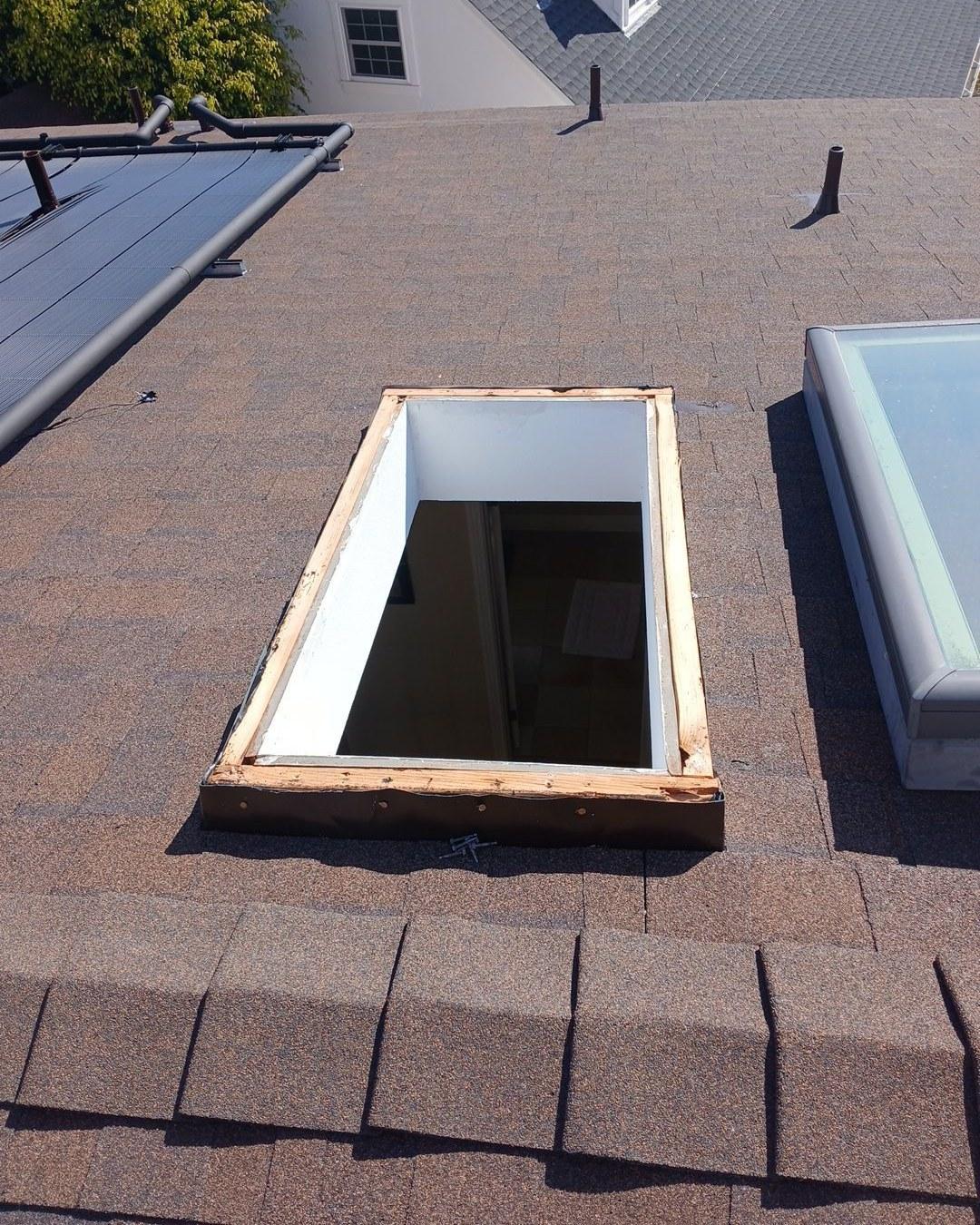
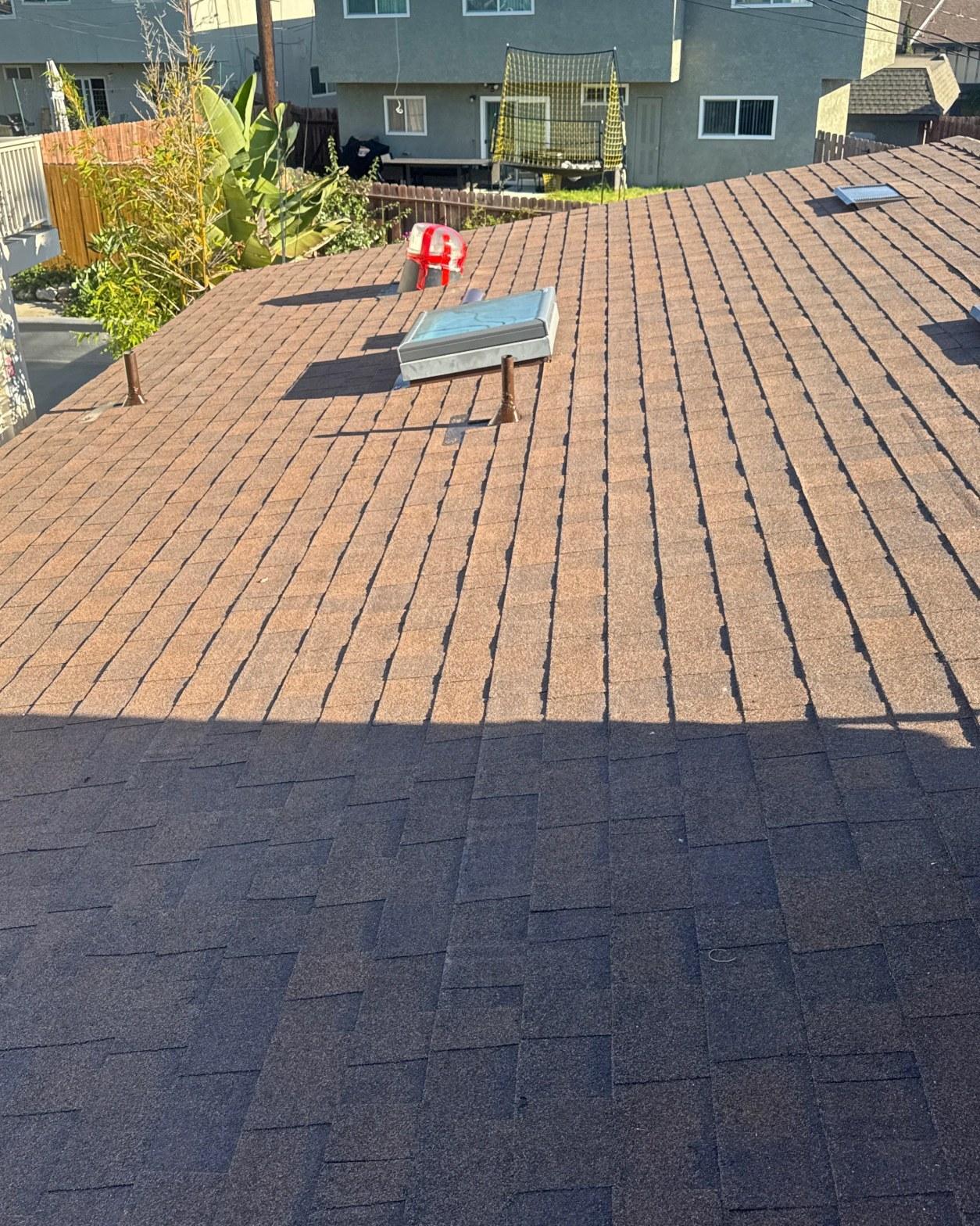
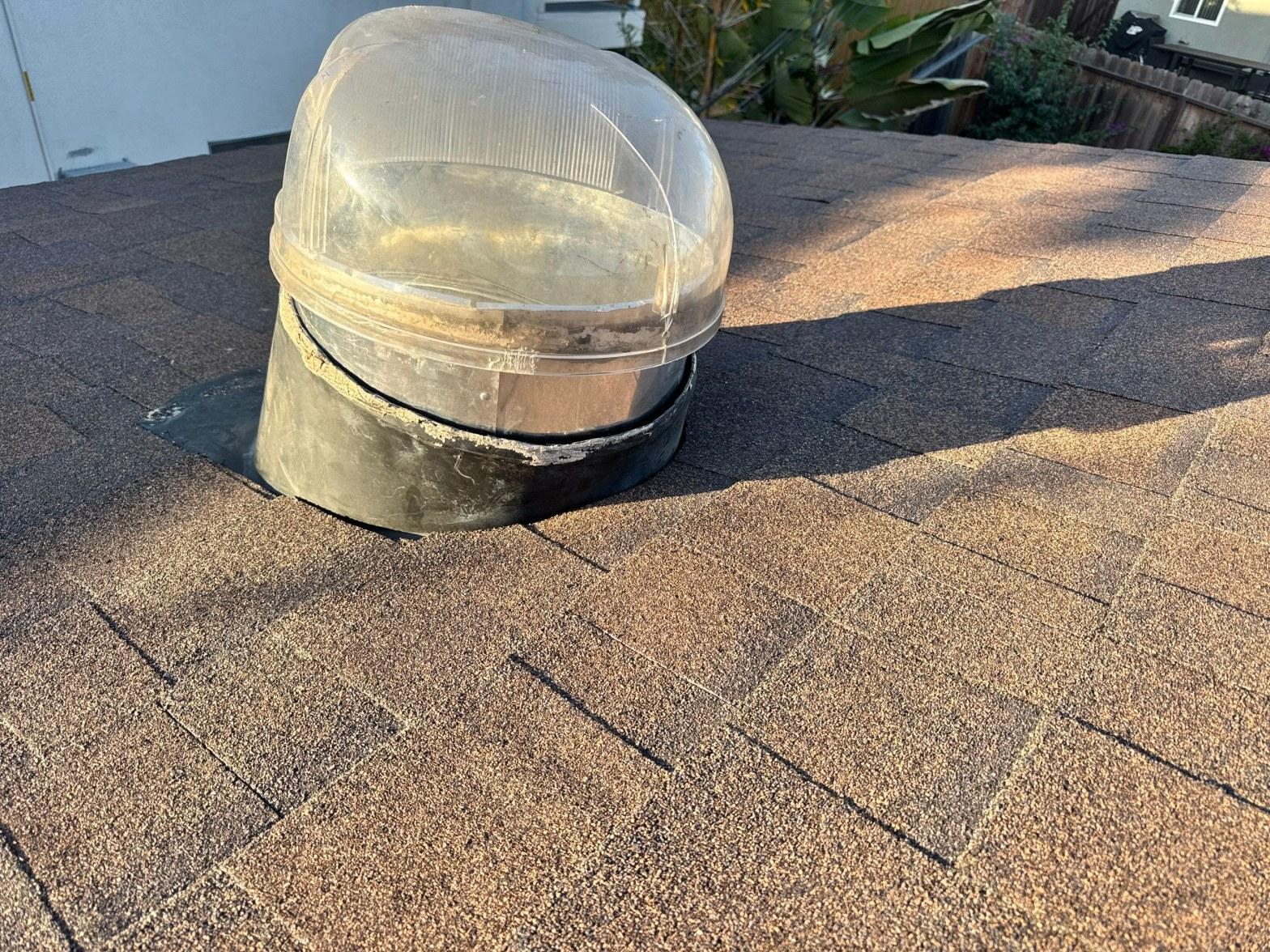
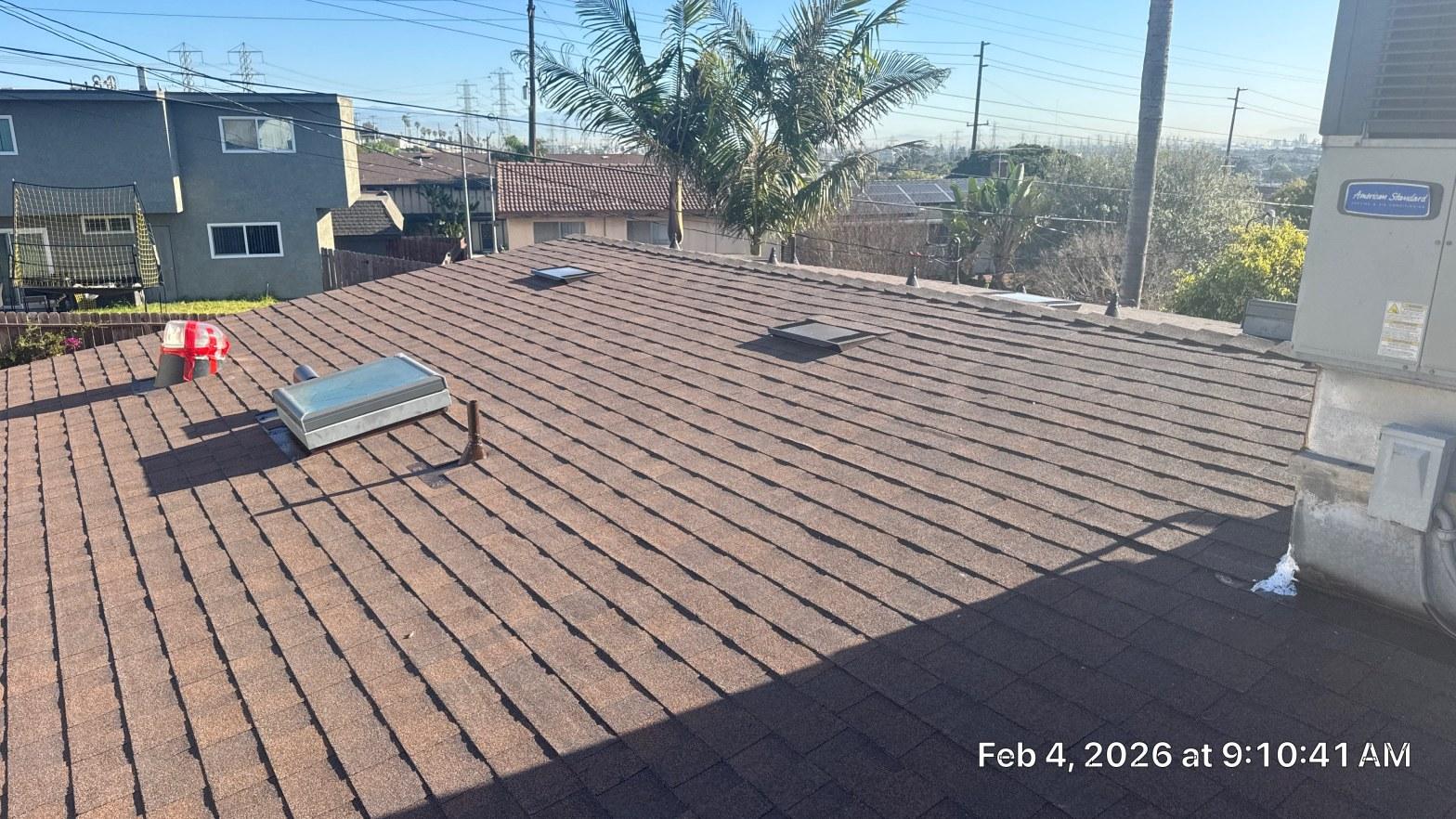
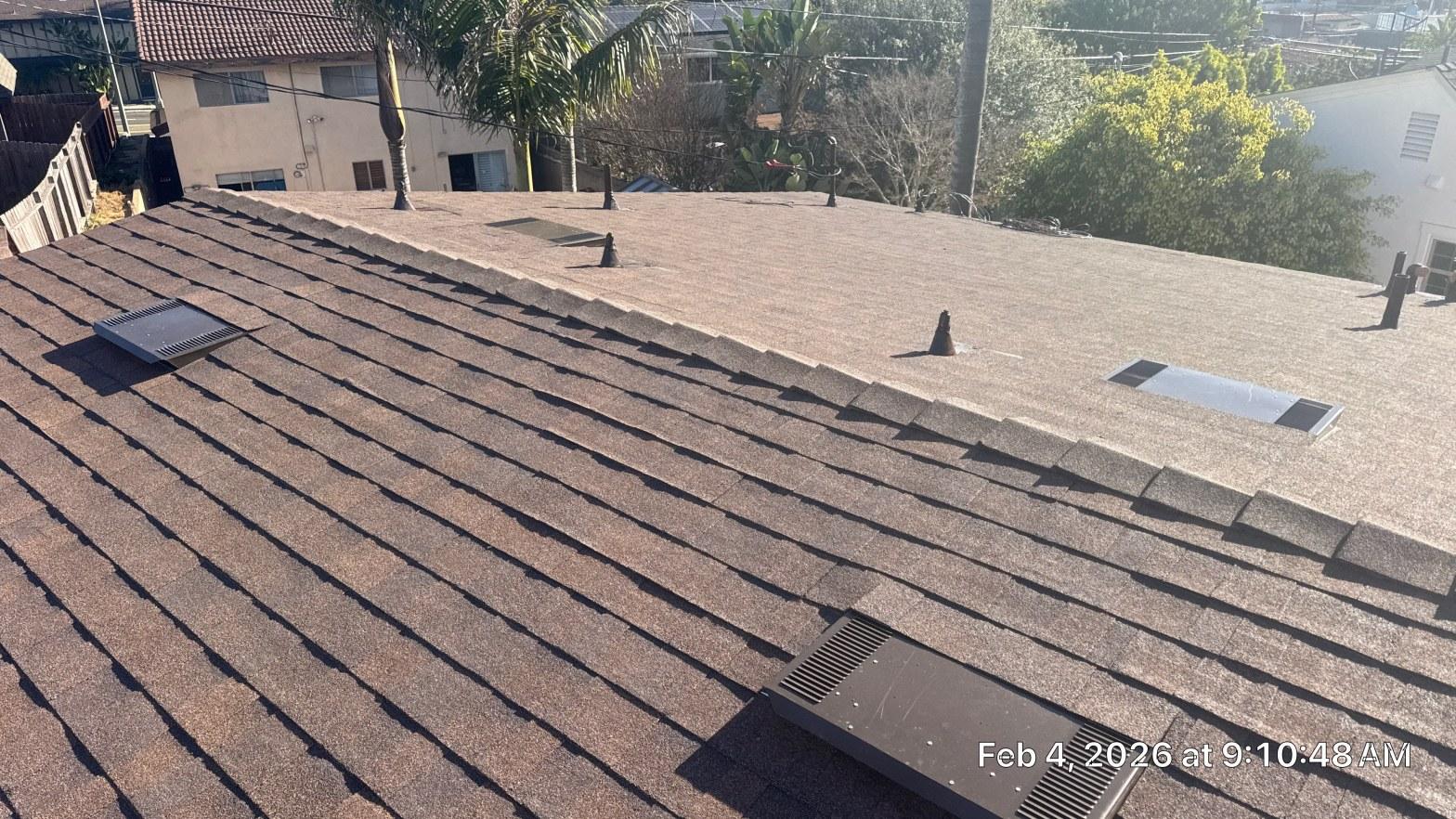
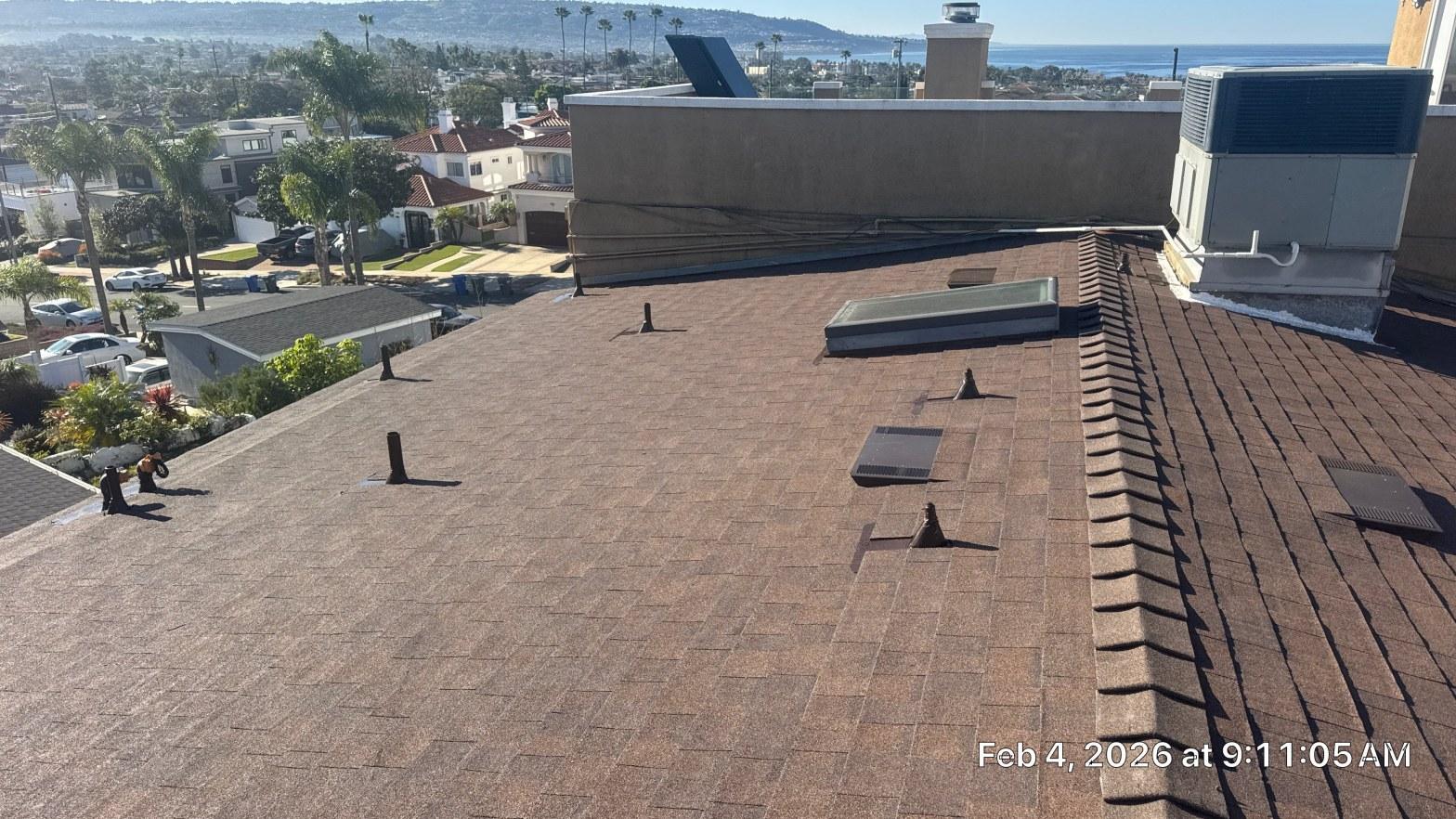
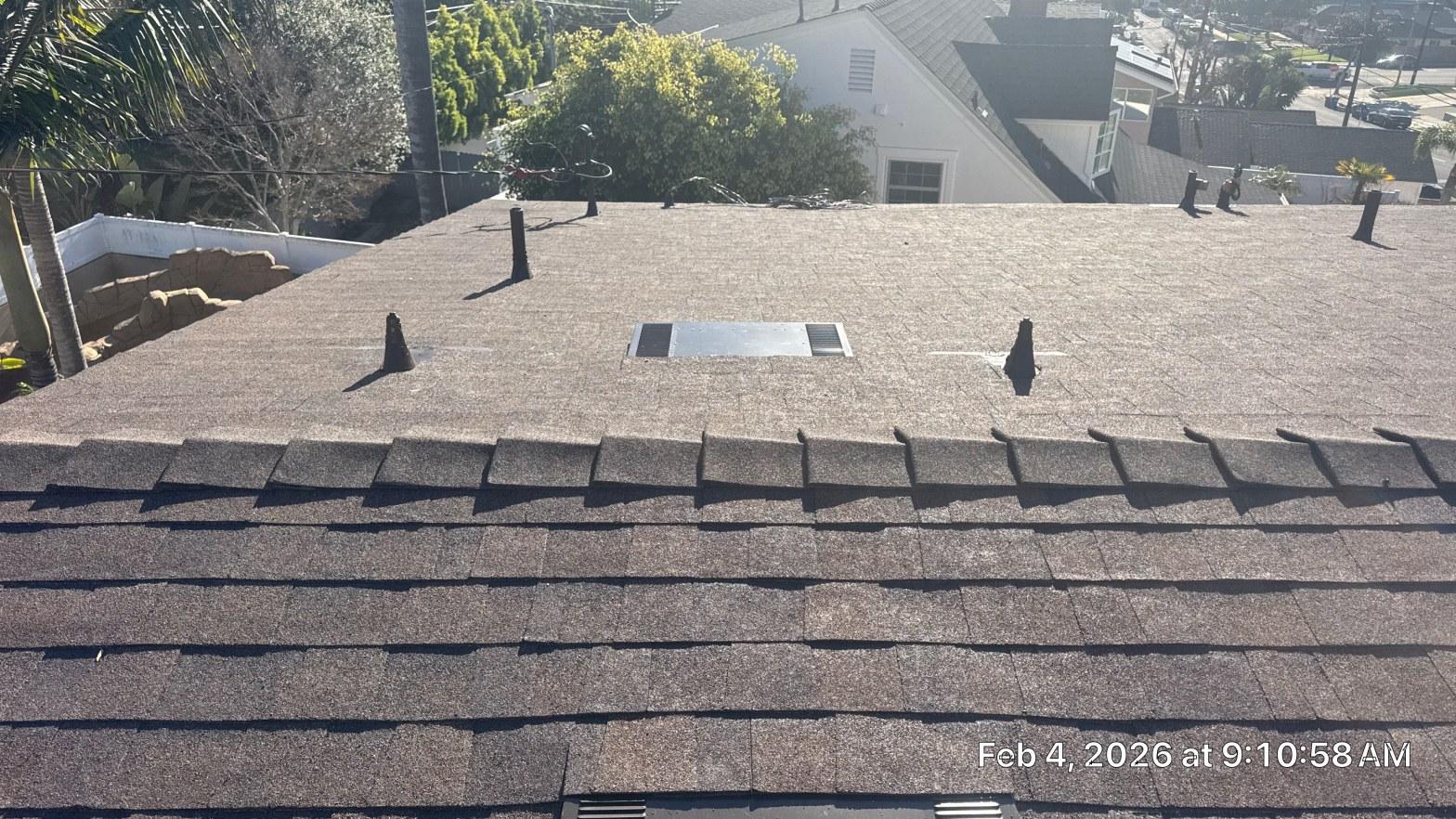
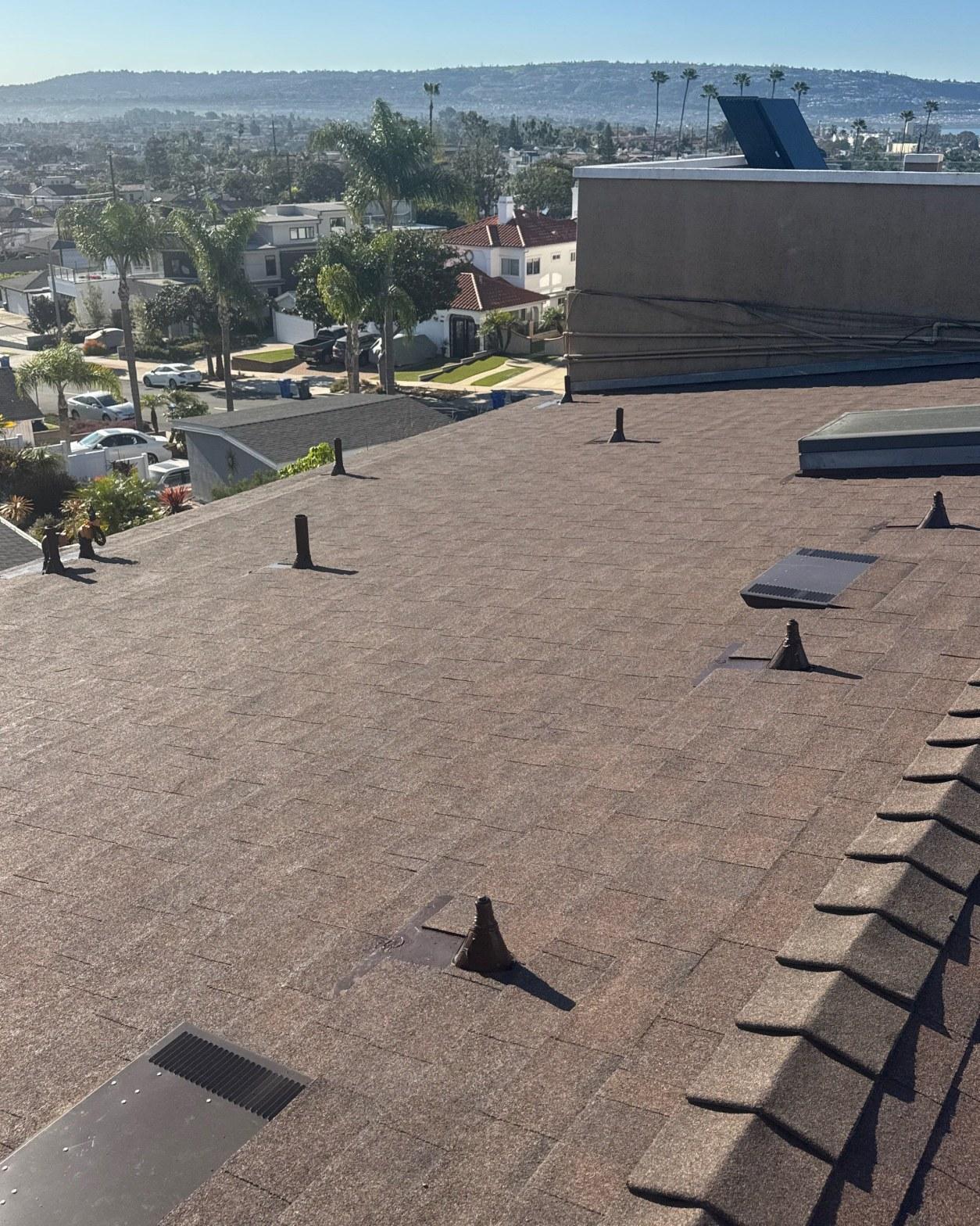
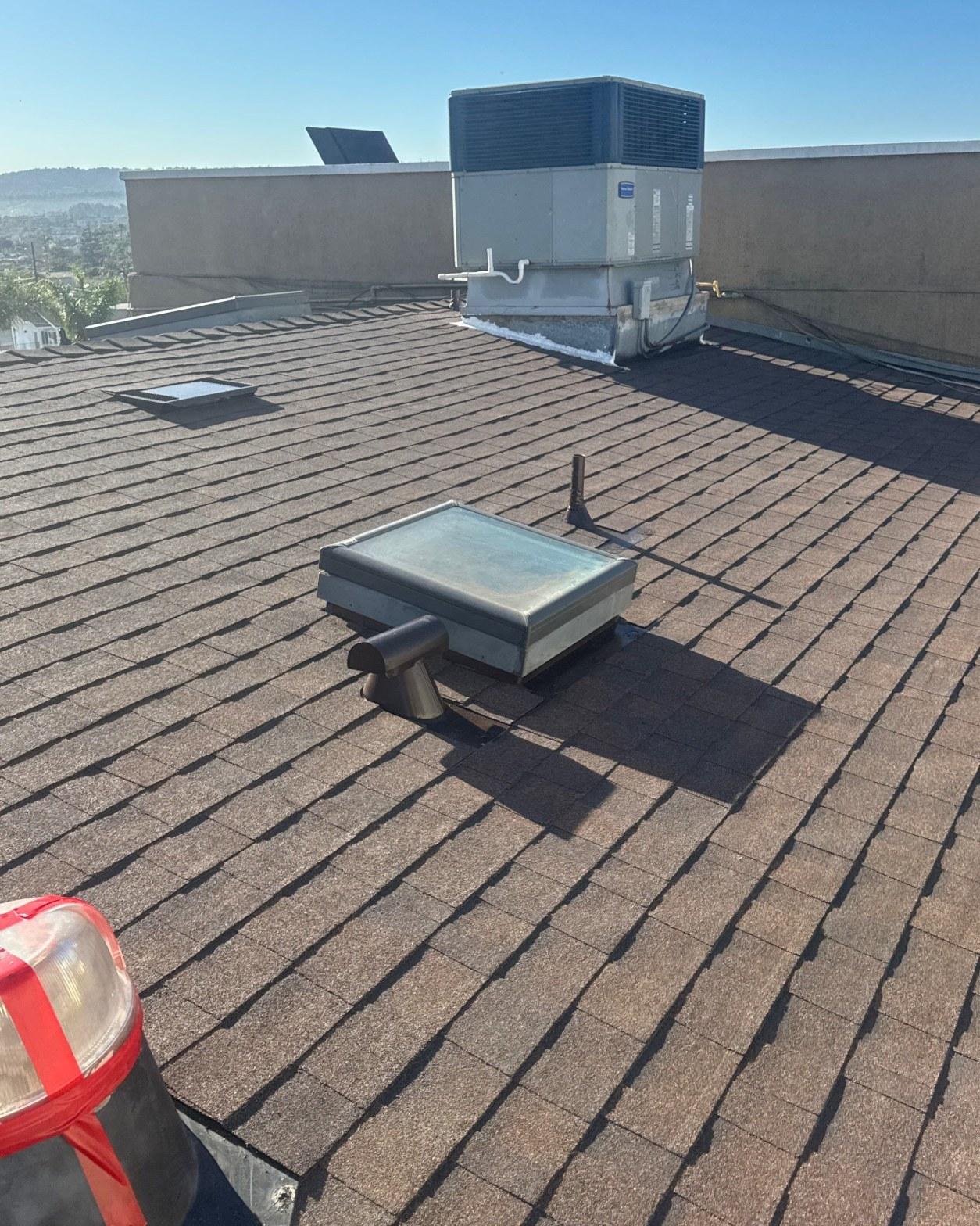
The replacement field uses brown architectural asphalt shingles laid in clean, consistent courses across the full roof deck. The photo taken February 4, 2026 shows the completed shingle field with 3 low-profile roof vents, 2 louvered static vents, and multiple pipe boots all properly integrated — no exposed flashing, no lifted tabs.
Asphalt shingles remain the most common residential roofing material in California for good reason: they meet California’s Title 24 building energy standards when specified correctly, they carry Class A fire ratings, and on a South Bay home they typically deliver 25–30 years of service life under normal conditions. The brown colorway on this project was chosen to complement the home’s exterior and blend with the neighborhood streetscape visible in the background.
Our crews have observed that on Redondo Beach homes within 4 blocks of the coast, granule loss on 15-year-old shingles tends to run 30–40% heavier on the south-facing slope than on north-facing planes — a pattern we track when recommending replacement timelines.
How Were the Solar Mounting Rails Installed on the New Roof?
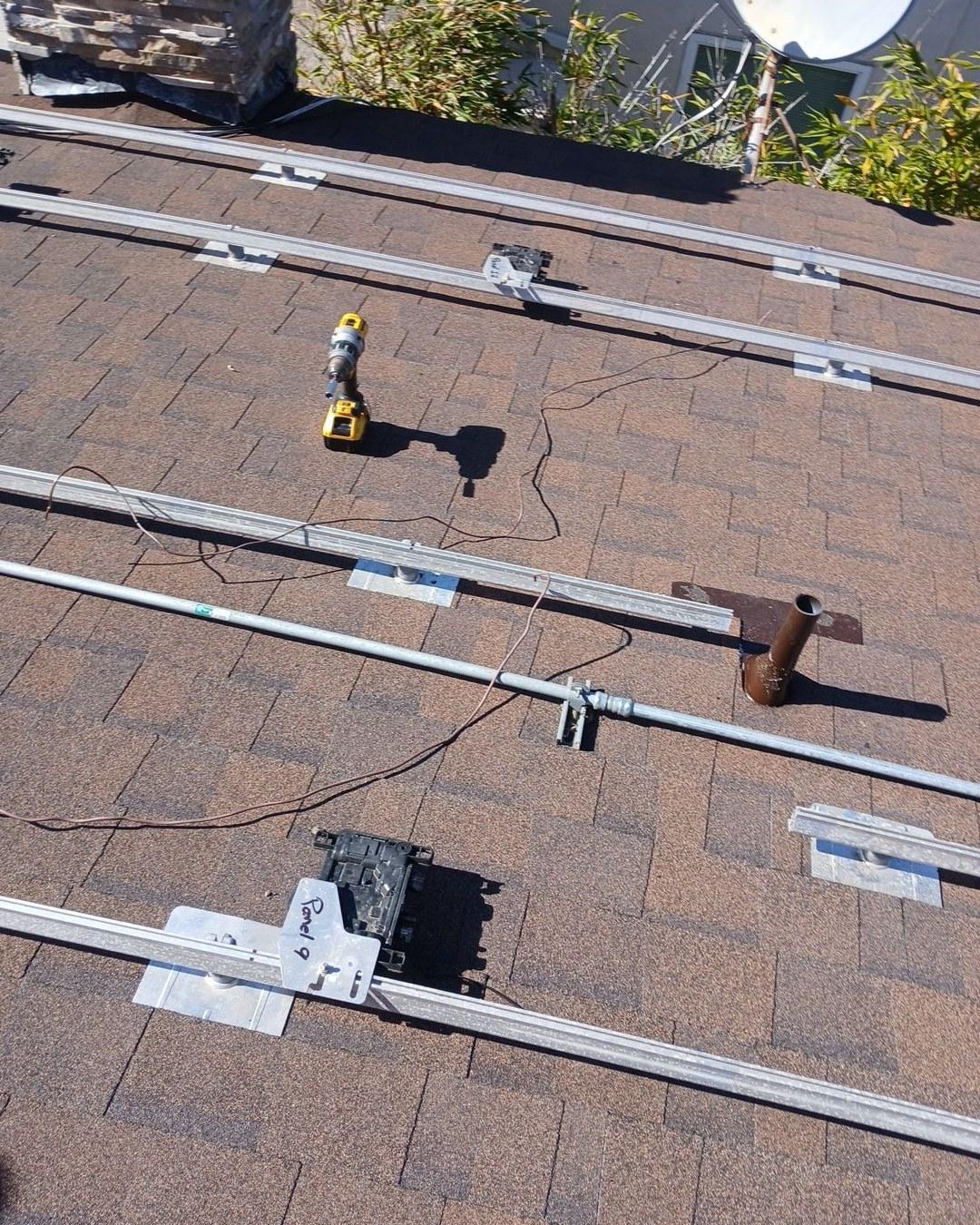
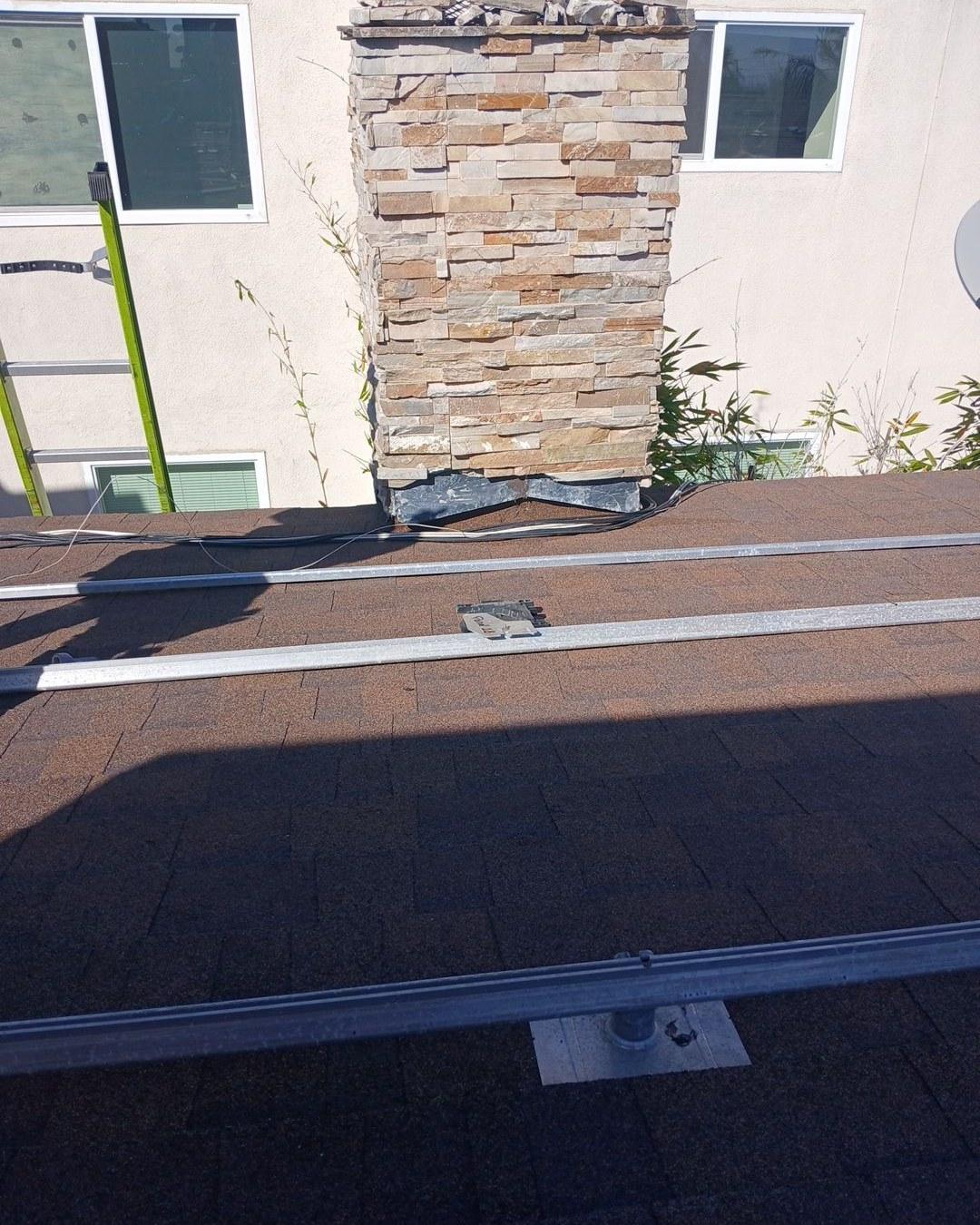
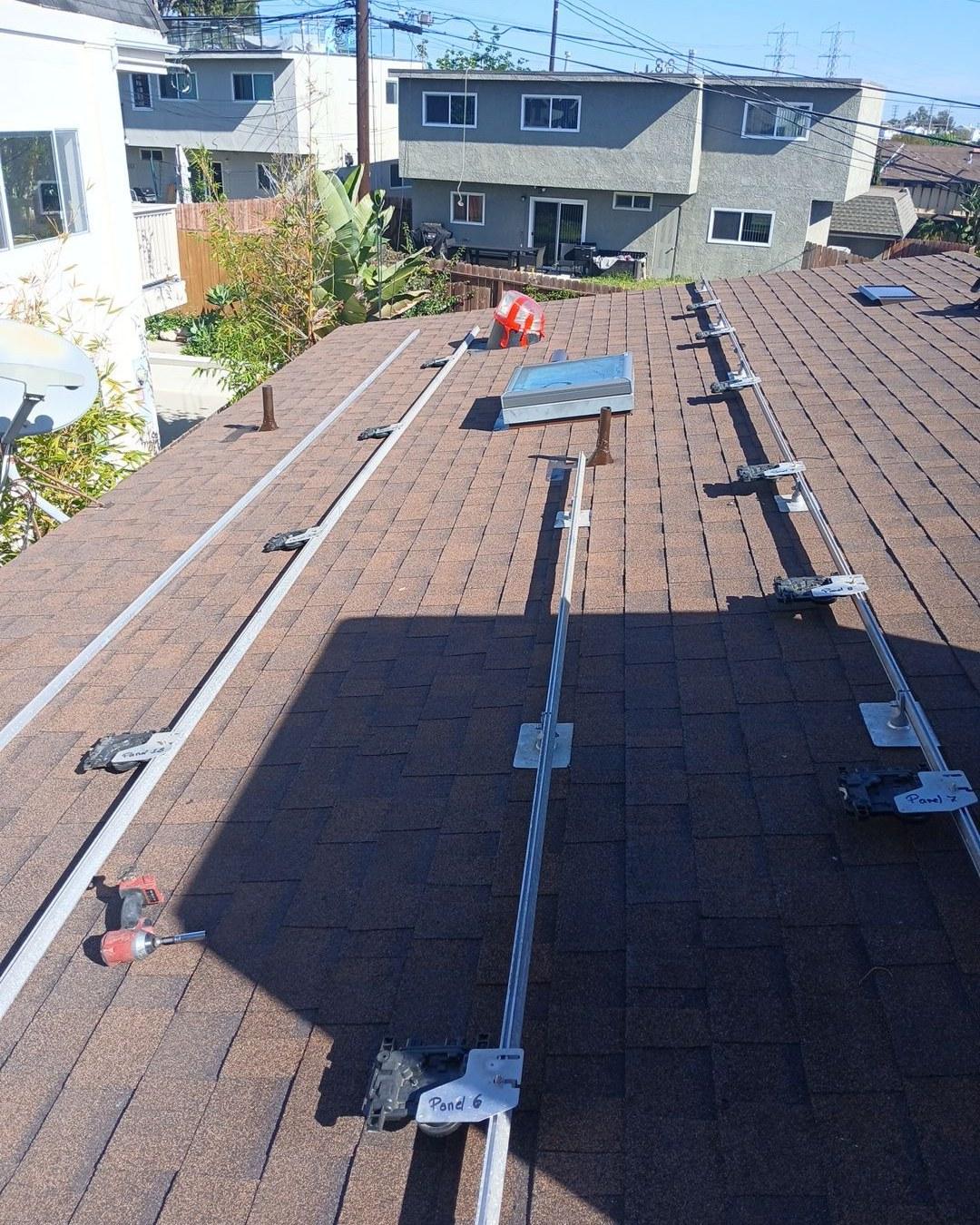
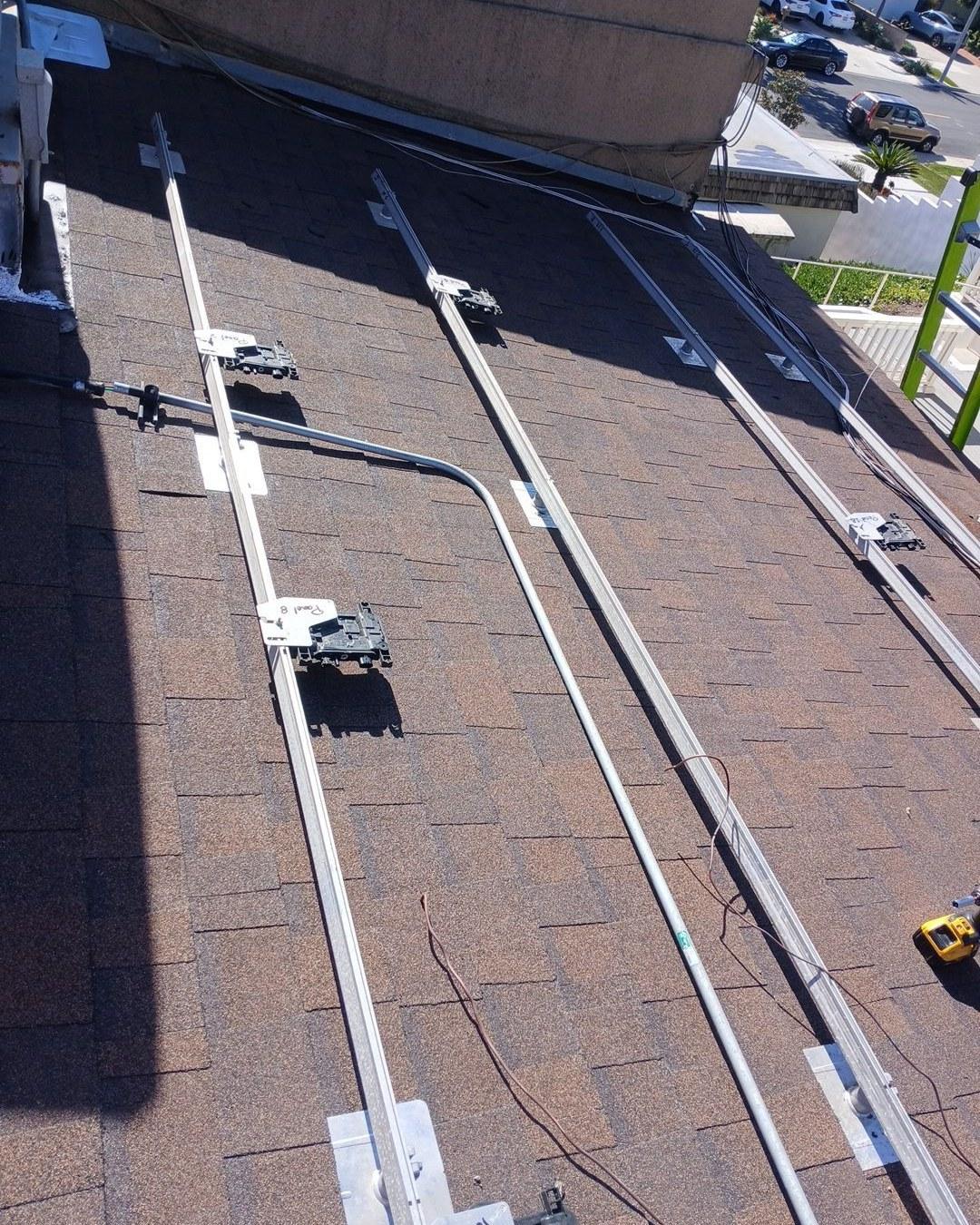
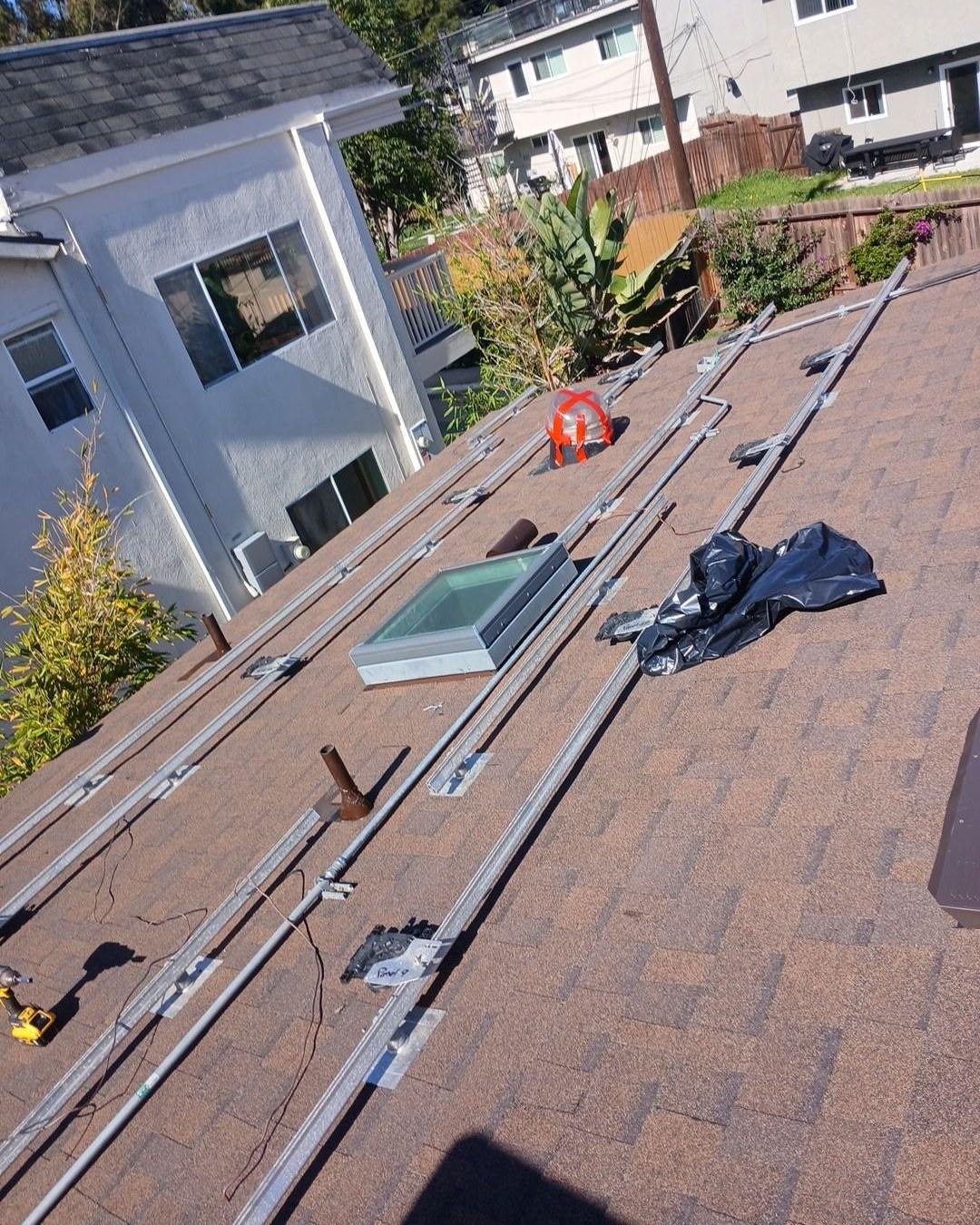
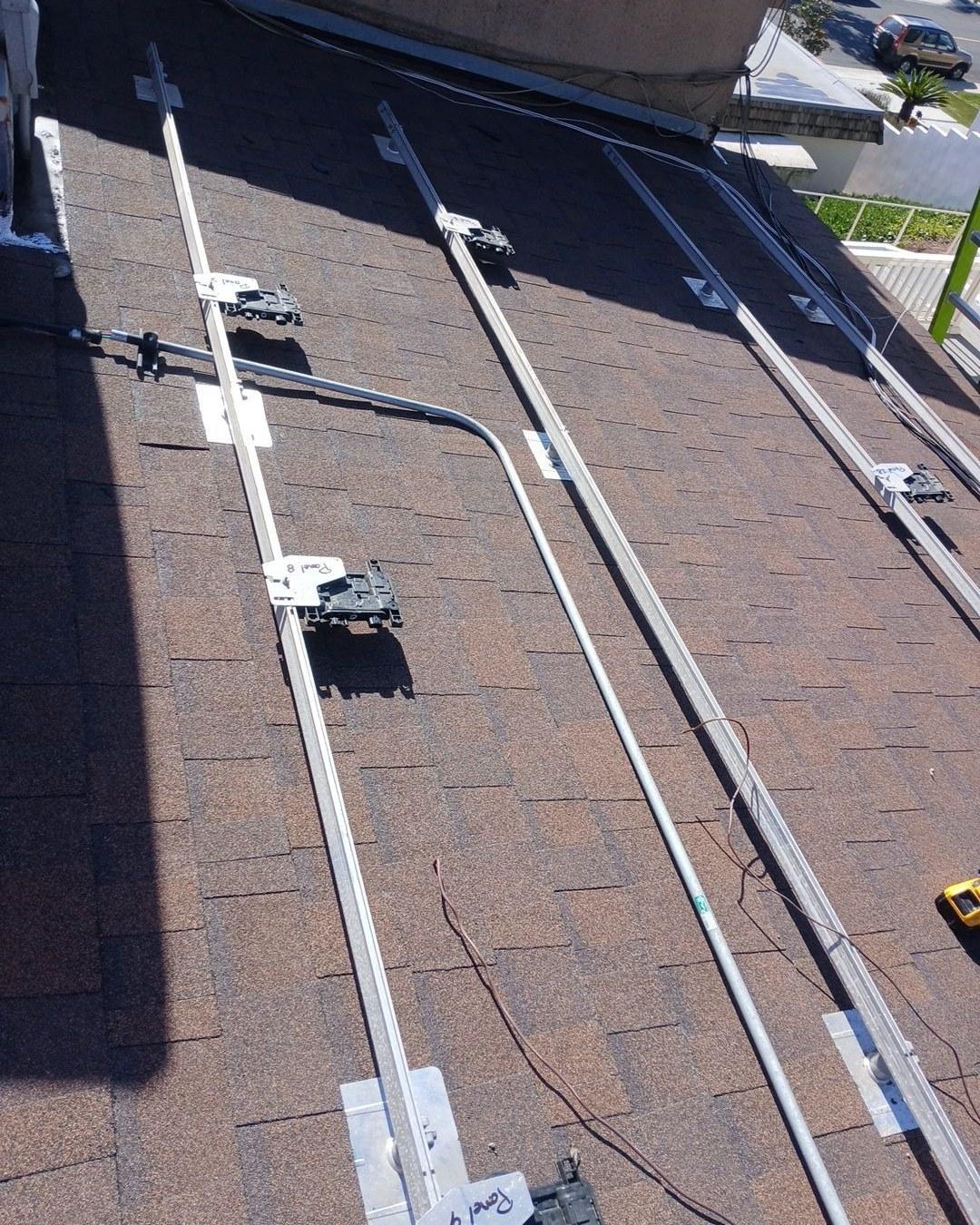
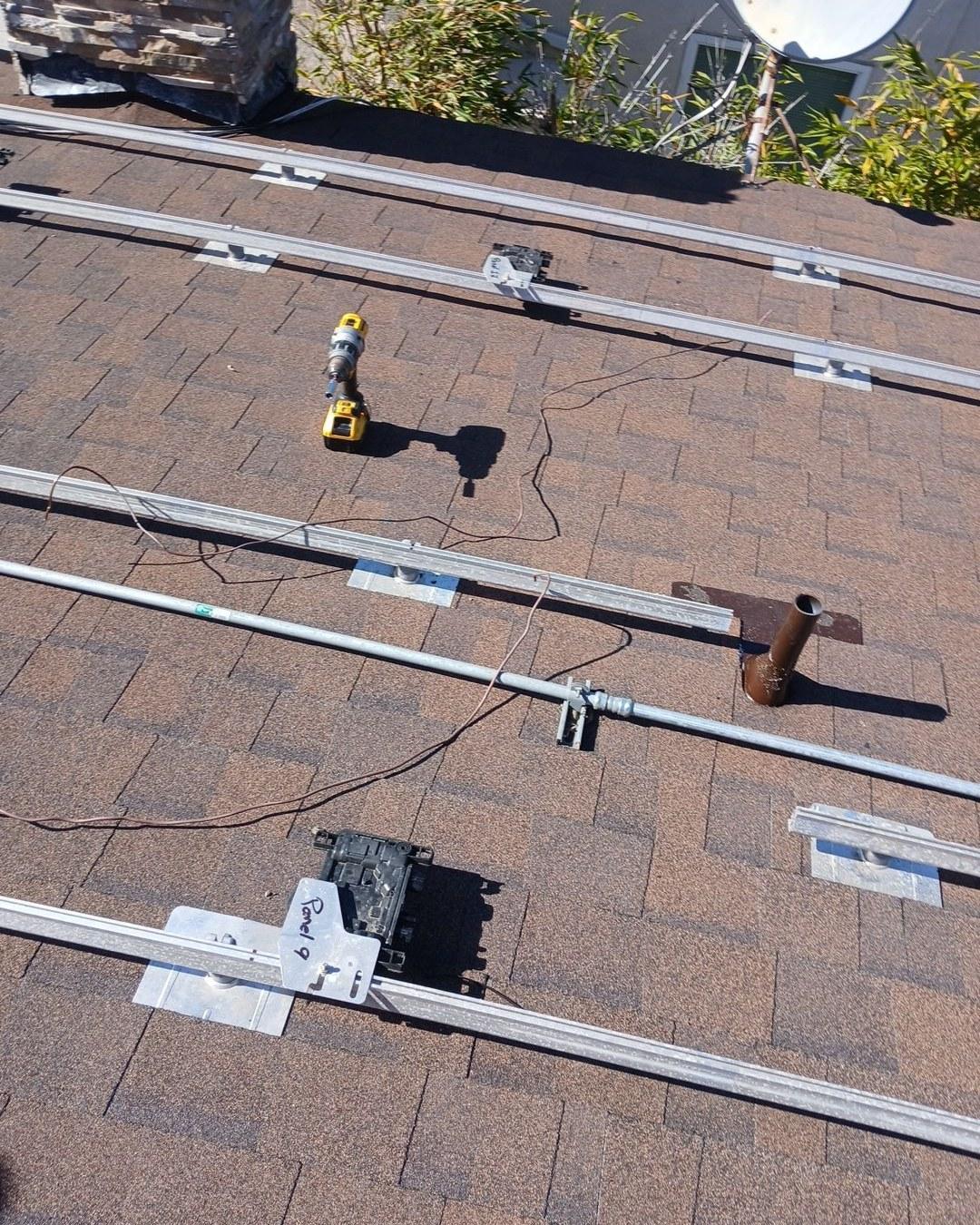
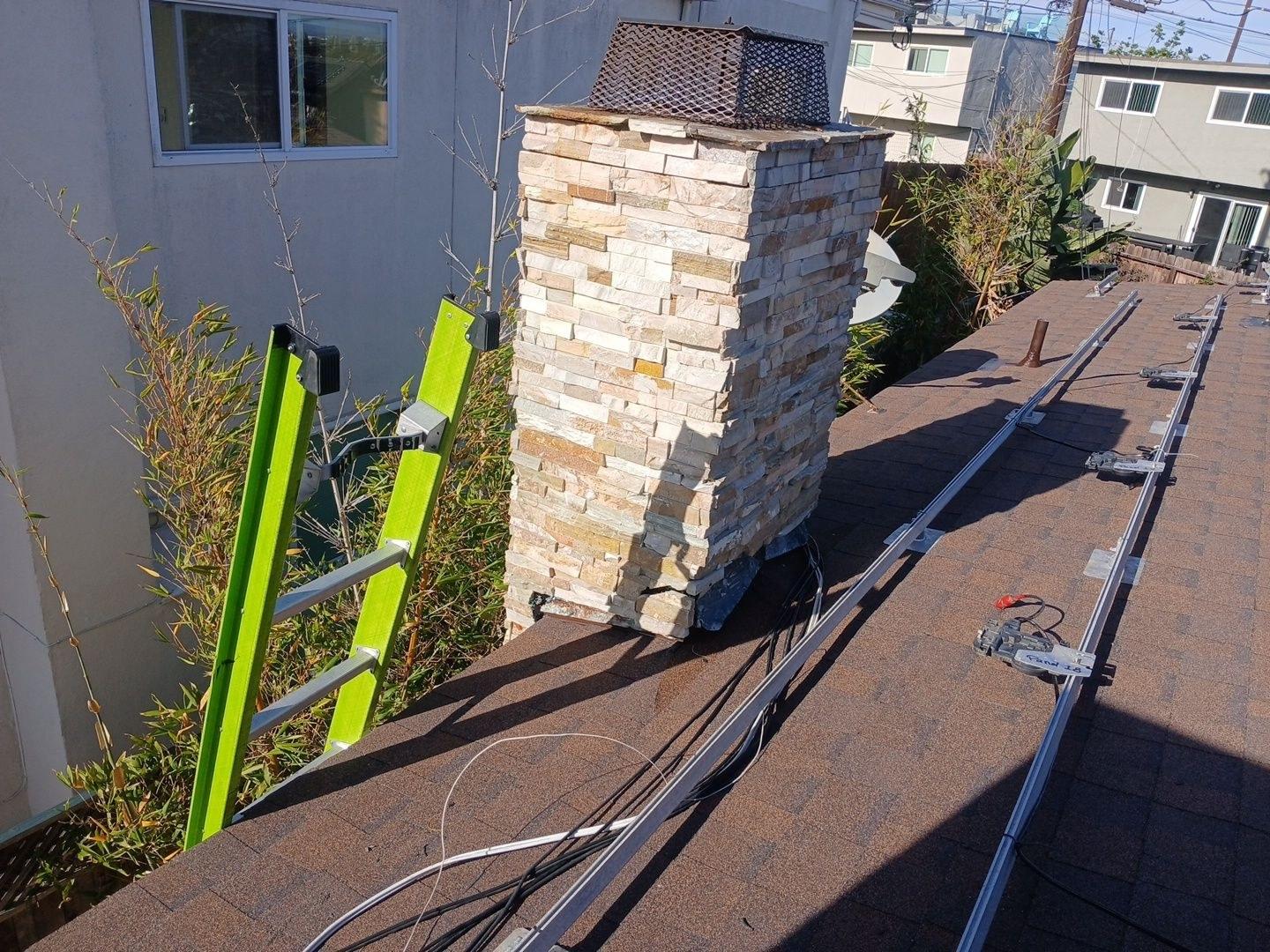
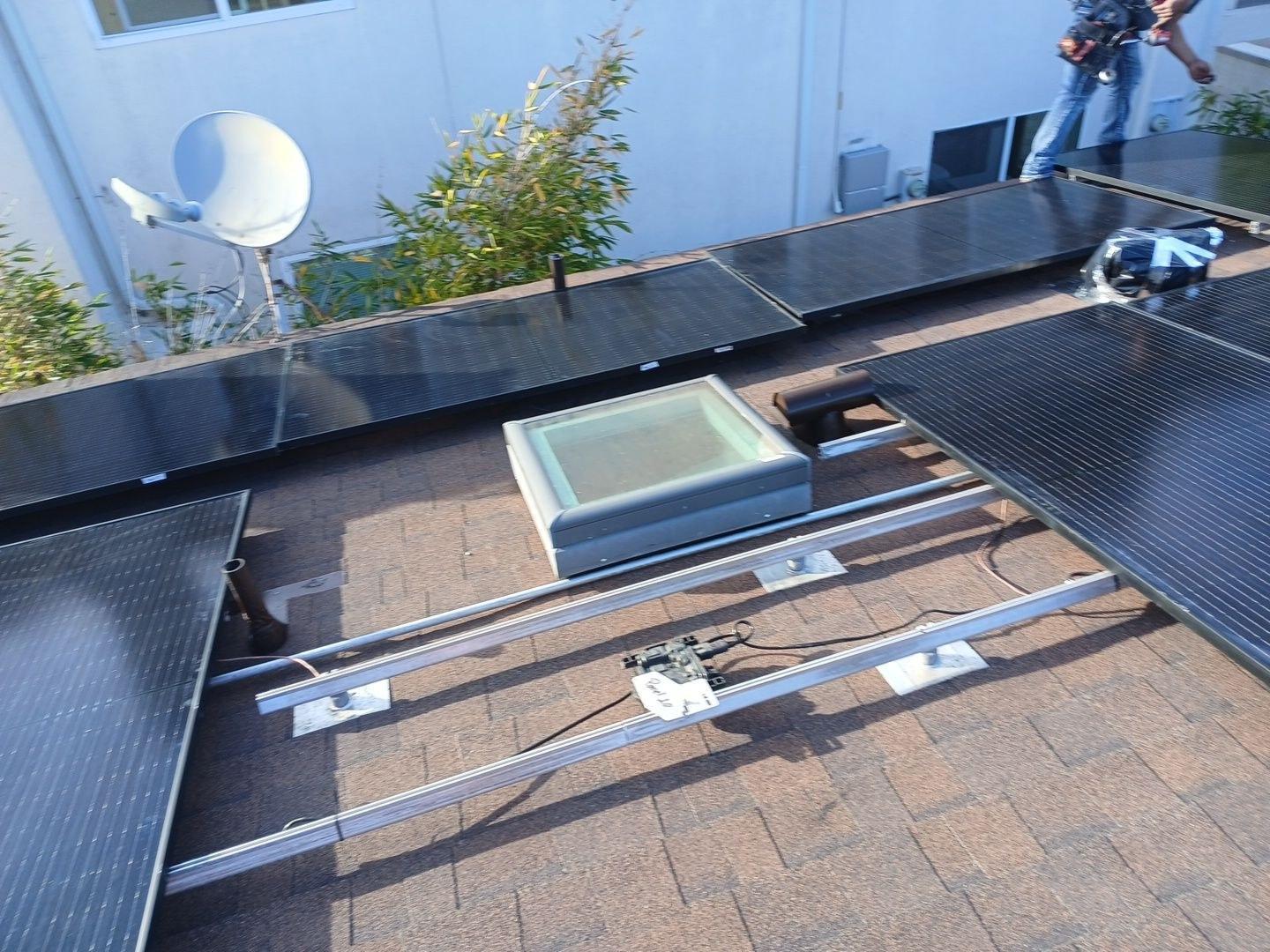
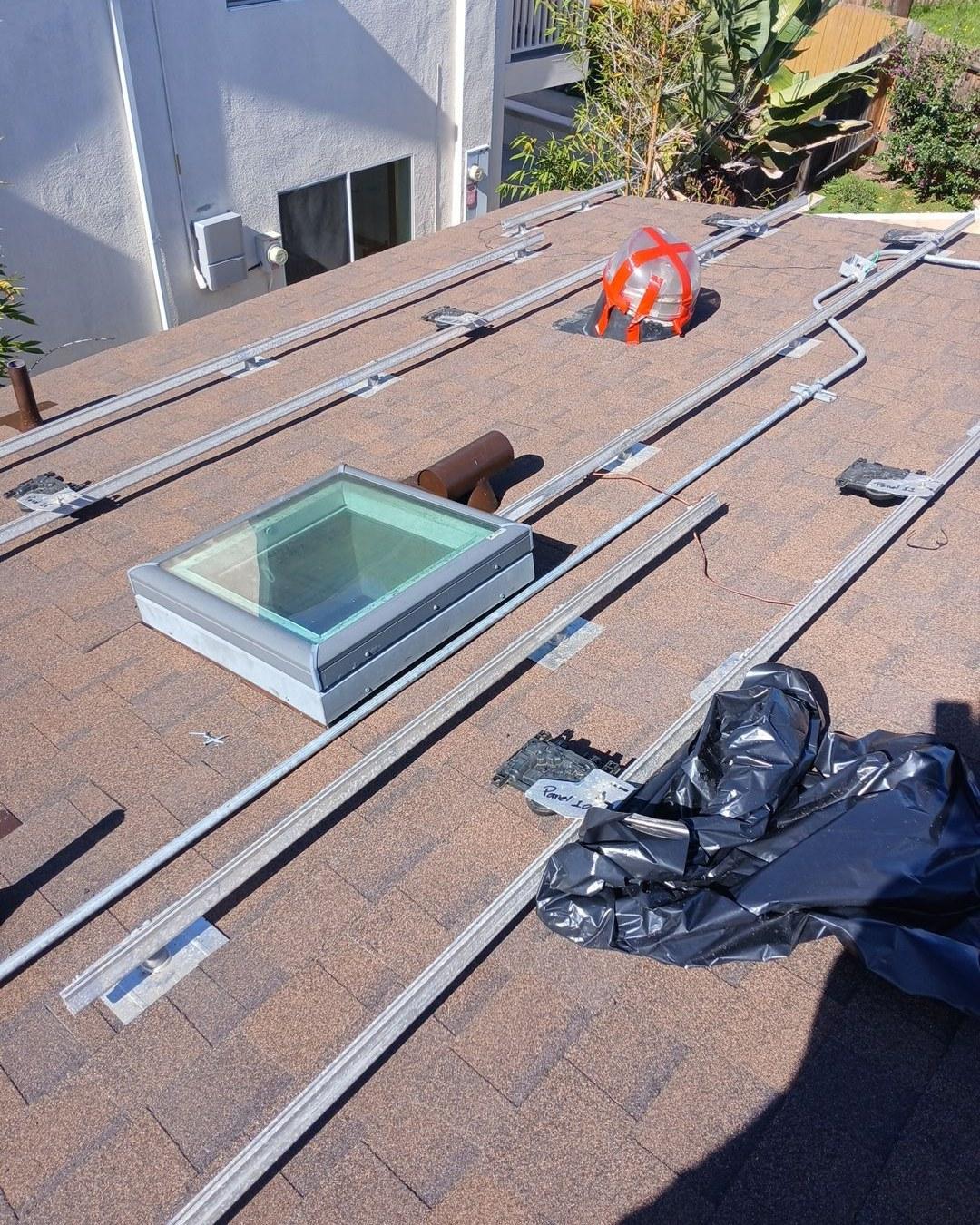
The solar racking system went in immediately after the shingle work was signed off — aluminum rails anchored to roof rafters through the new shingle field using flashed lag bolts, with labeled panel position clips staged across 4 parallel rail runs. The label markings visible in the photo ("Panel 6", "Panel 9") confirm the layout was pre-engineered, not improvised on the fly.
Each lag penetration was flashed and sealed before the rail was torqued down, preserving the weather integrity of the new roof. This sequencing matters: mounting solar hardware through a roof that still needs replacing creates 2 problems — it delays the reroofing work and can leave penetrations exposed during the gap. Doing both in the same mobilization eliminates that risk entirely.
Installation like this qualifies homeowners to claim the Inflation Reduction Act federal tax credit, which as of 2026 covers 30% of the total solar system cost including installation labor. That credit is a meaningful offset on a project of this scale.
What Did the Finished Solar Installation Look Like?
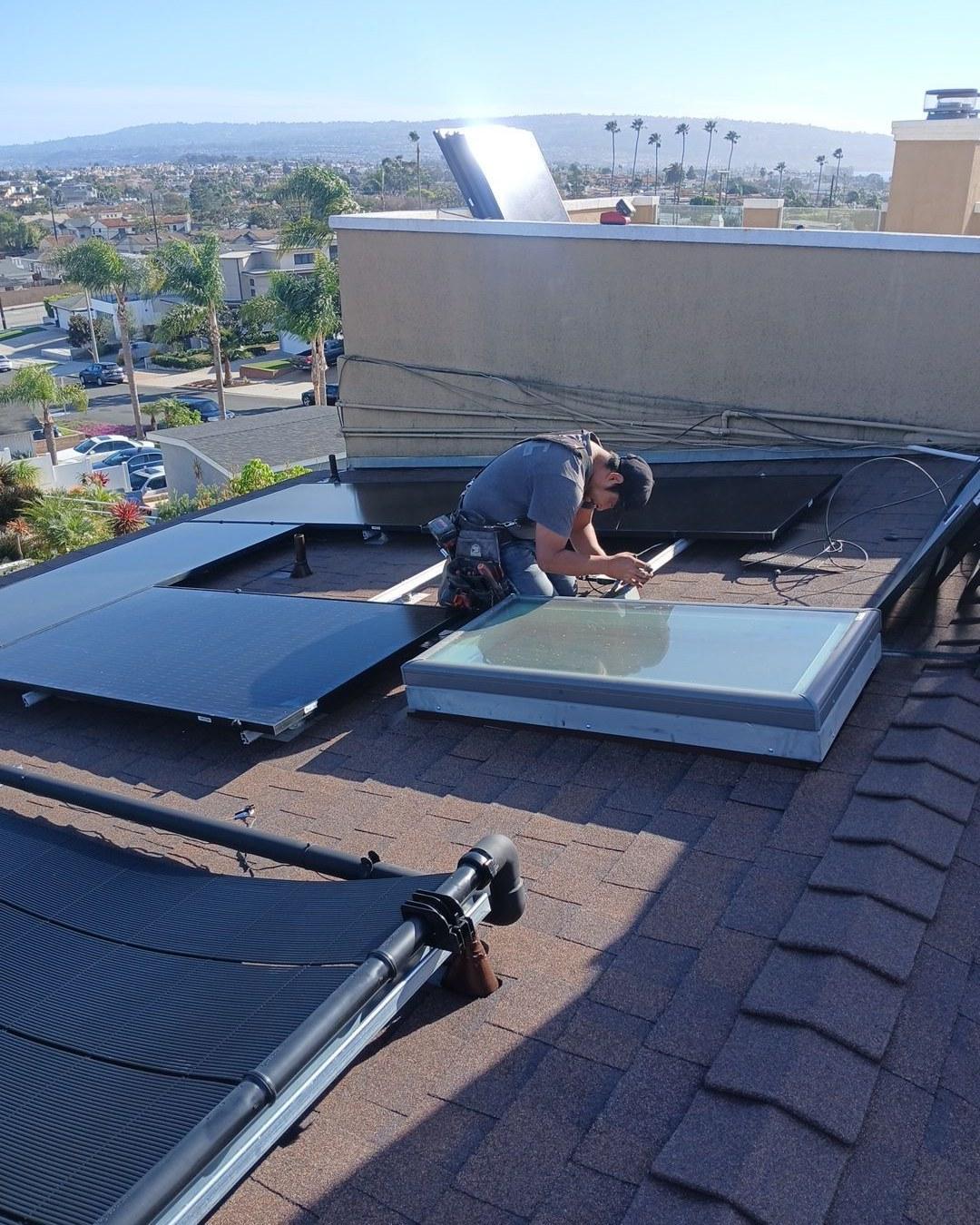
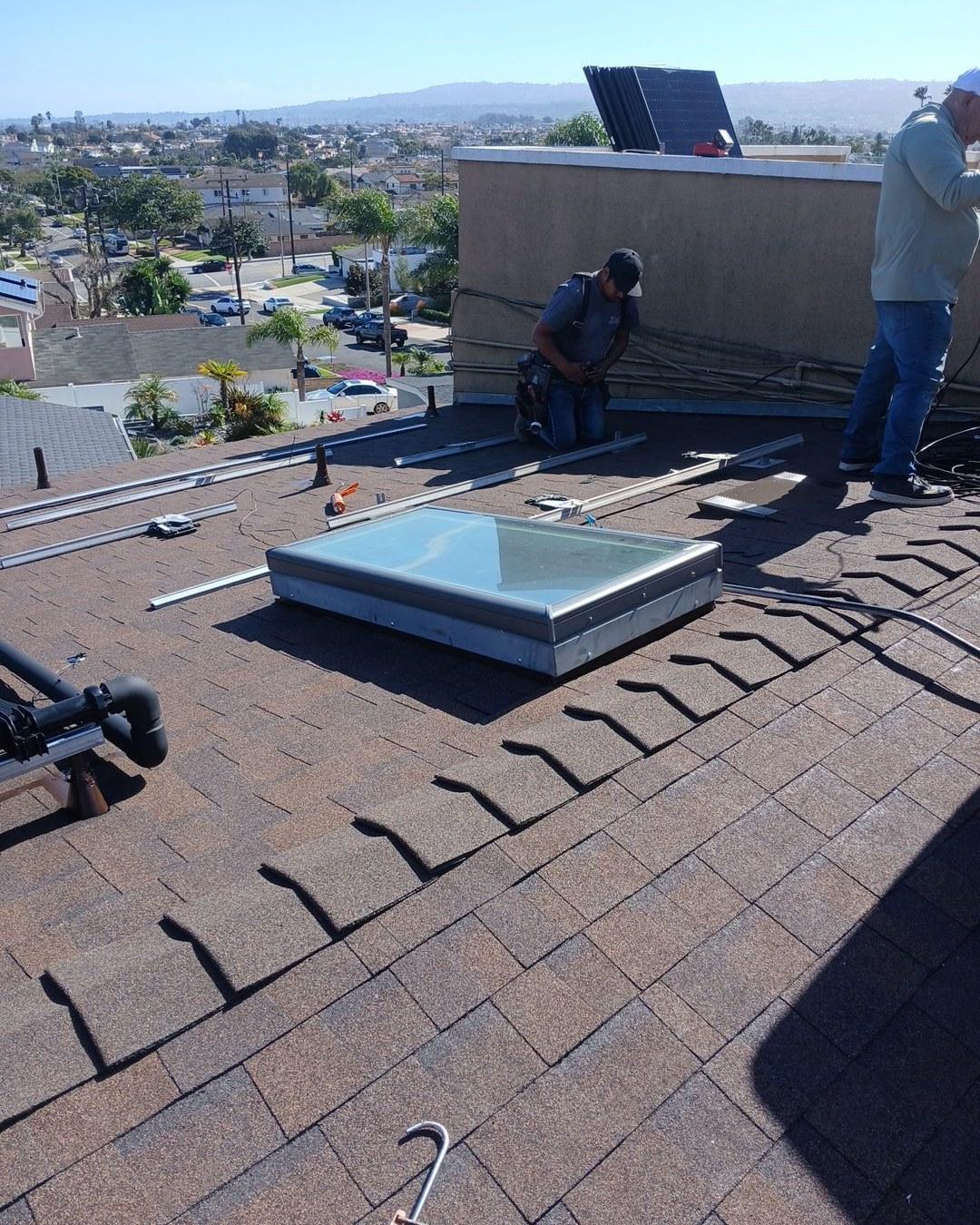
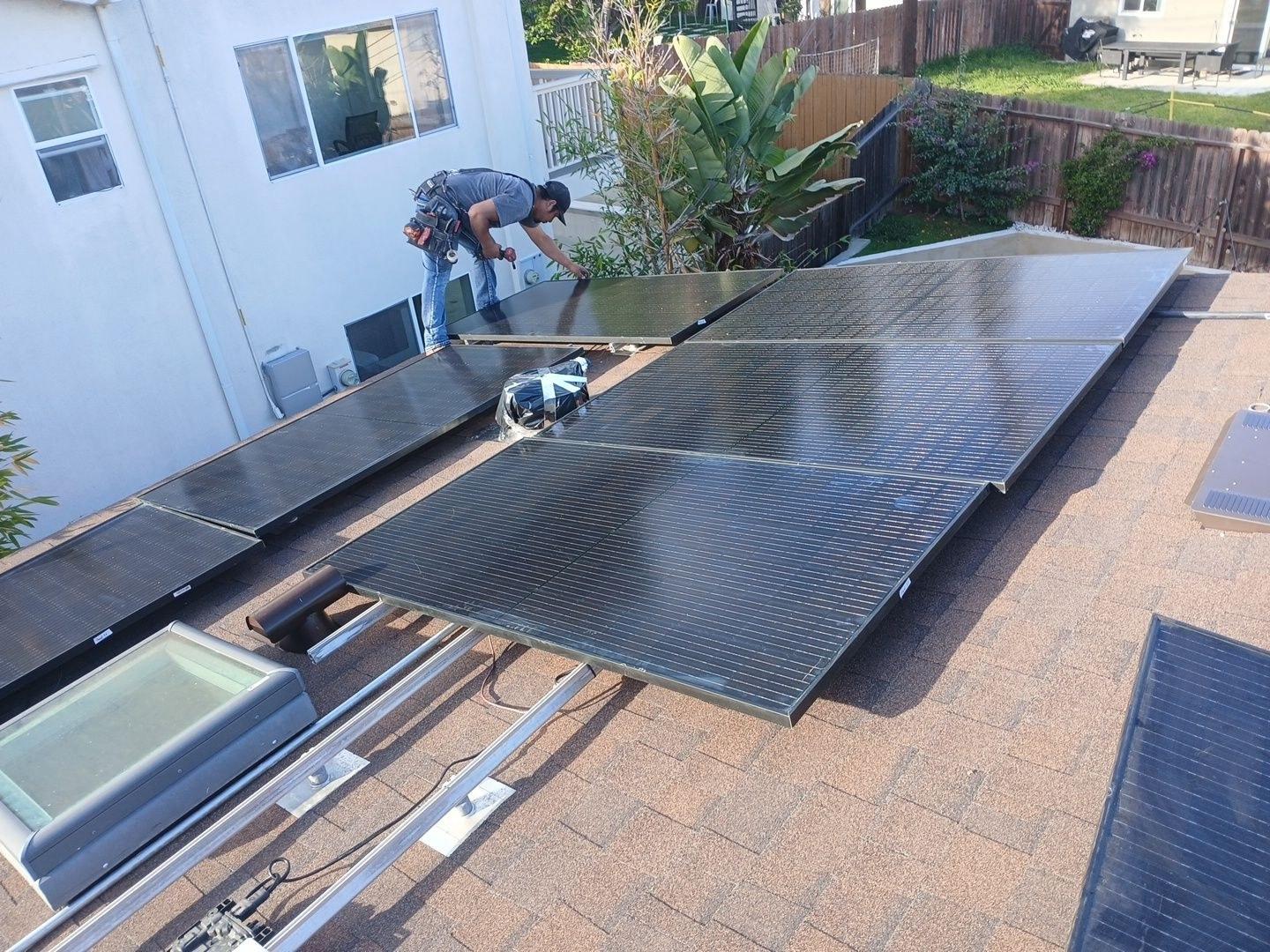
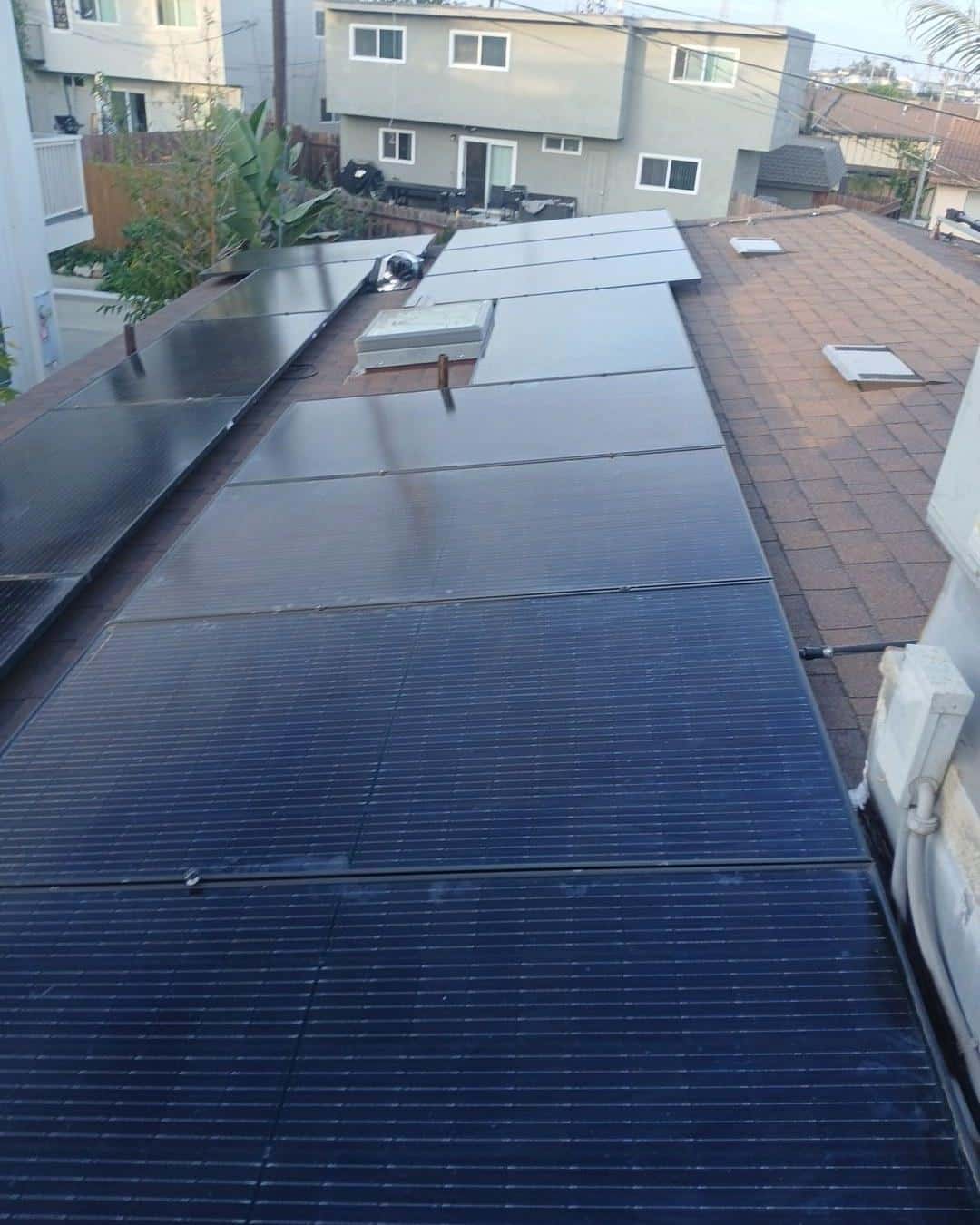
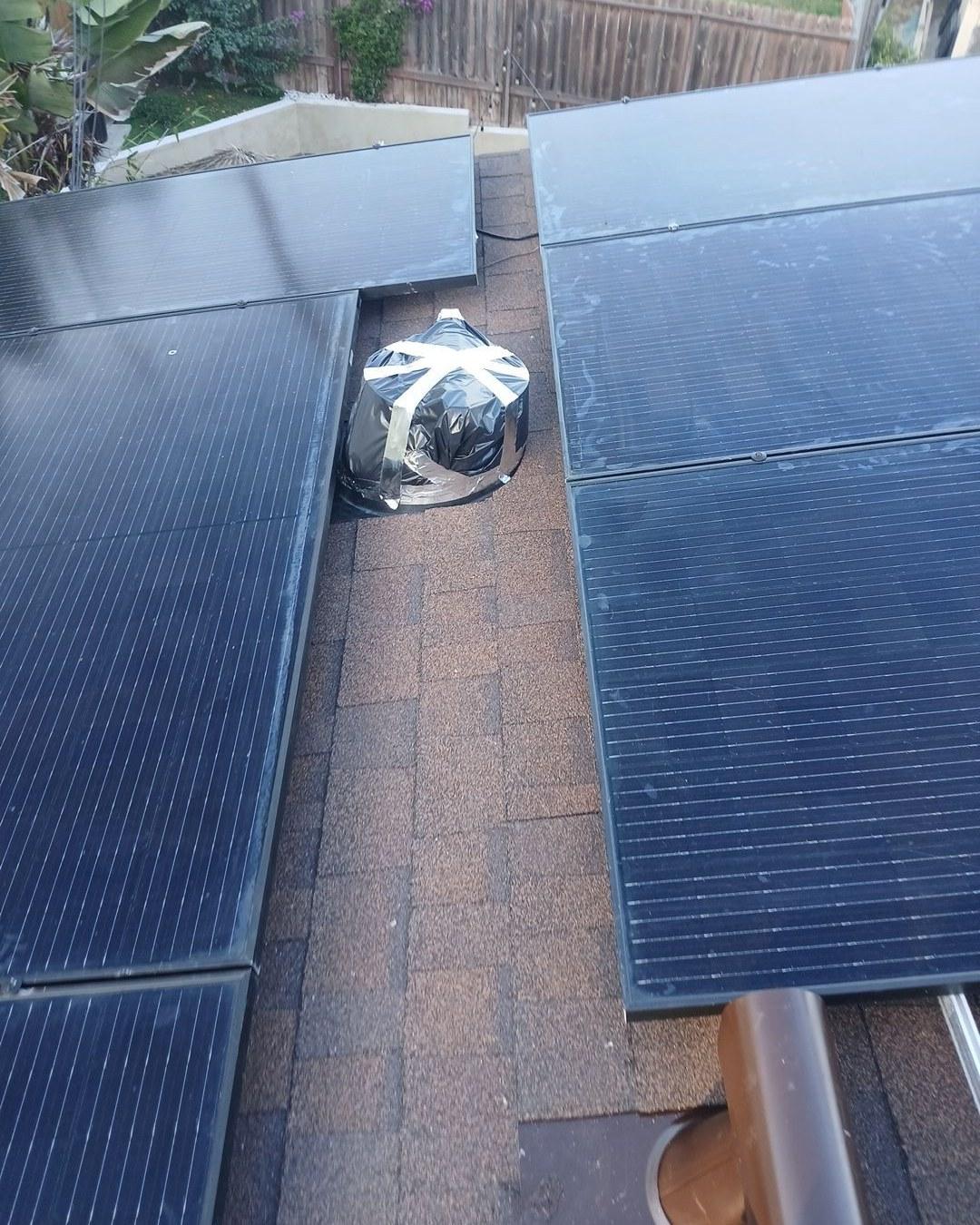
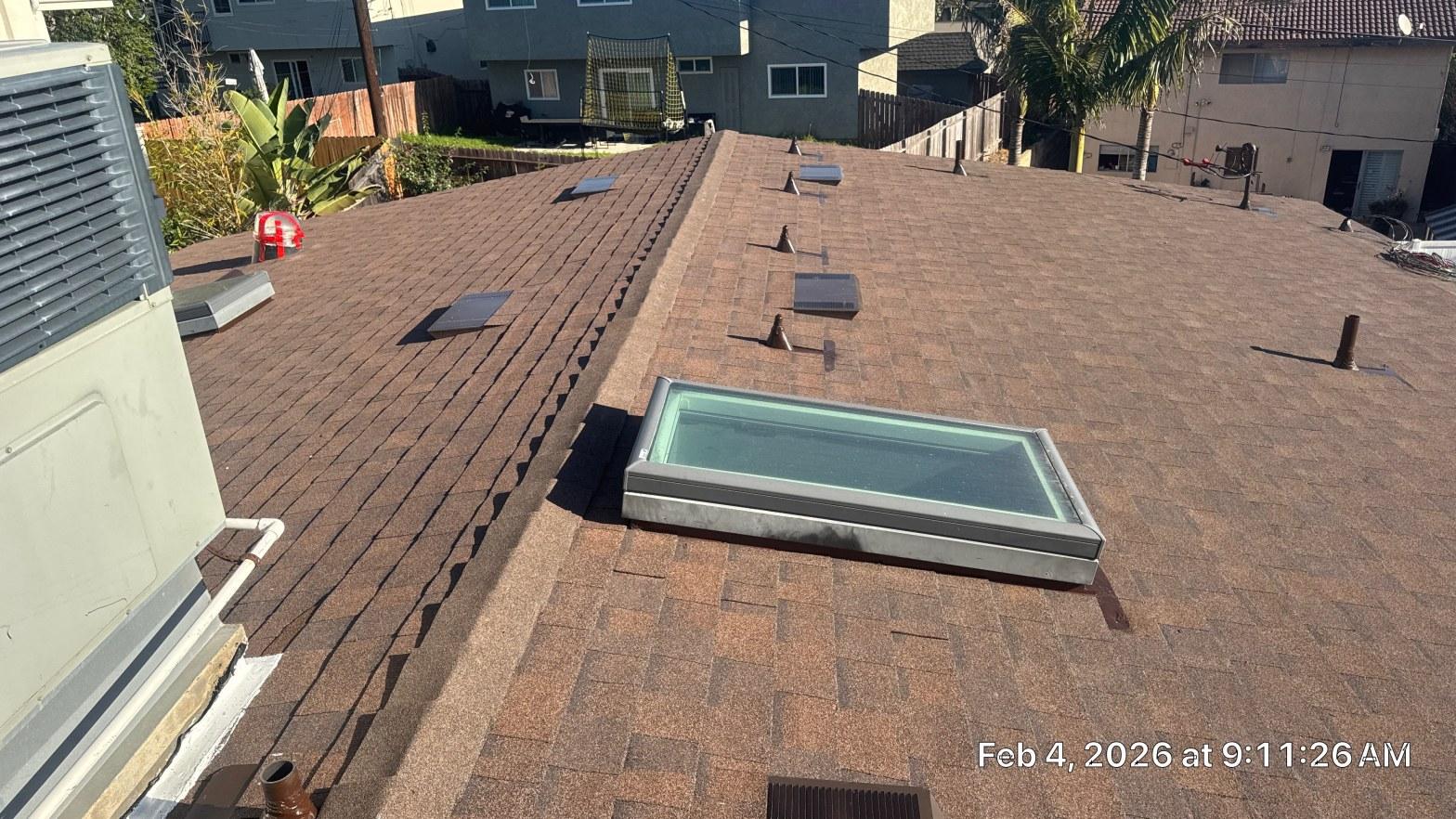
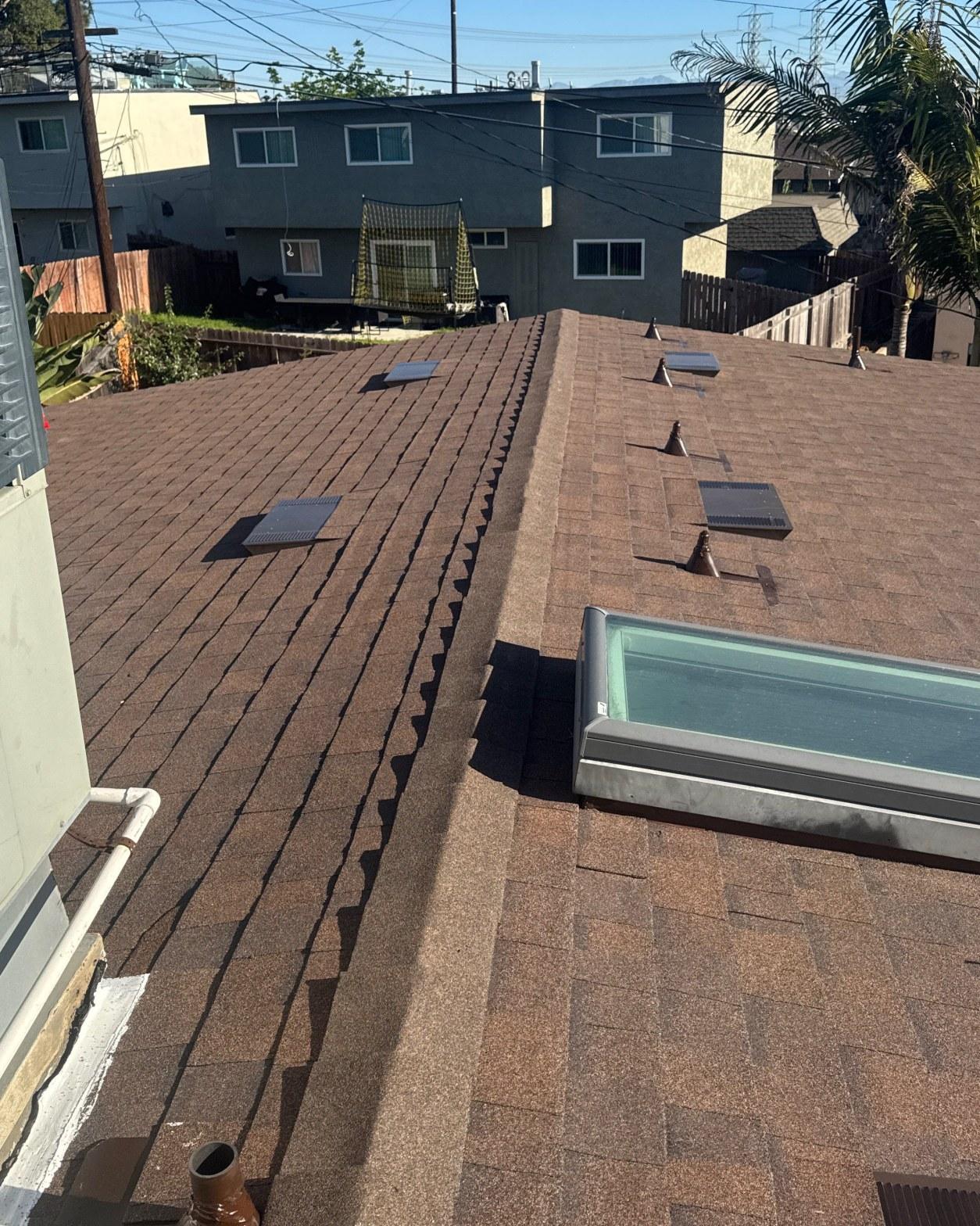
With rails set and wiring run, the panel installation proceeded around 2 existing skylights and multiple pipe penetrations — the kind of obstacle layout that requires deliberate panel placement rather than a standard grid. The photo shows a technician terminating wiring connections with 3 panels already seated on the upper section of the roof, the large glass skylight clear and unobstructed beside them.
The coastal view visible in this photo — palm trees, the South Bay hillside, and a neighboring multi-story building — confirms the roof’s favorable solar exposure. A roof with this orientation and minimal shading is well-suited for a rooftop array, and the new shingle field gives the mounting hardware a solid, warranted substrate to work with for decades.
Across our solar-ready reroof projects, we find that homeowners who coordinate both scopes together reduce total project time by 3–5 days compared to scheduling them separately with two different contractors.
Ready to Combine a Reroof With Solar in the South Bay?
If your roof is approaching 20 years old and you’re considering solar, scheduling both projects together is the most cost-efficient path. Call Roof Replacement Inc to get a written quote for your reroof and solar-ready installation — we serve Redondo Beach and the surrounding South Bay communities. Request your estimate online or call us directly to discuss your project timeline.









