

What Condition Was the Old Roof In?
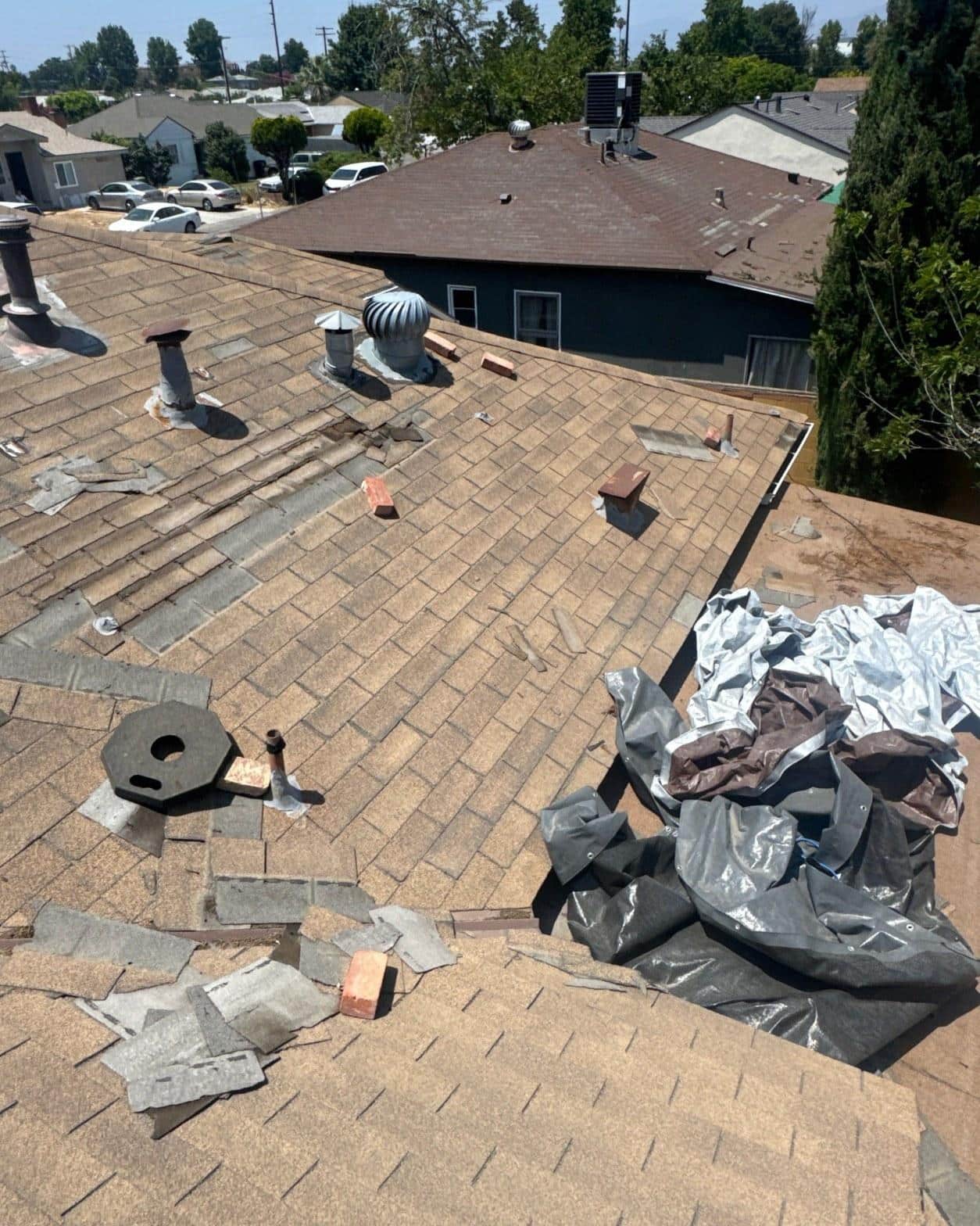
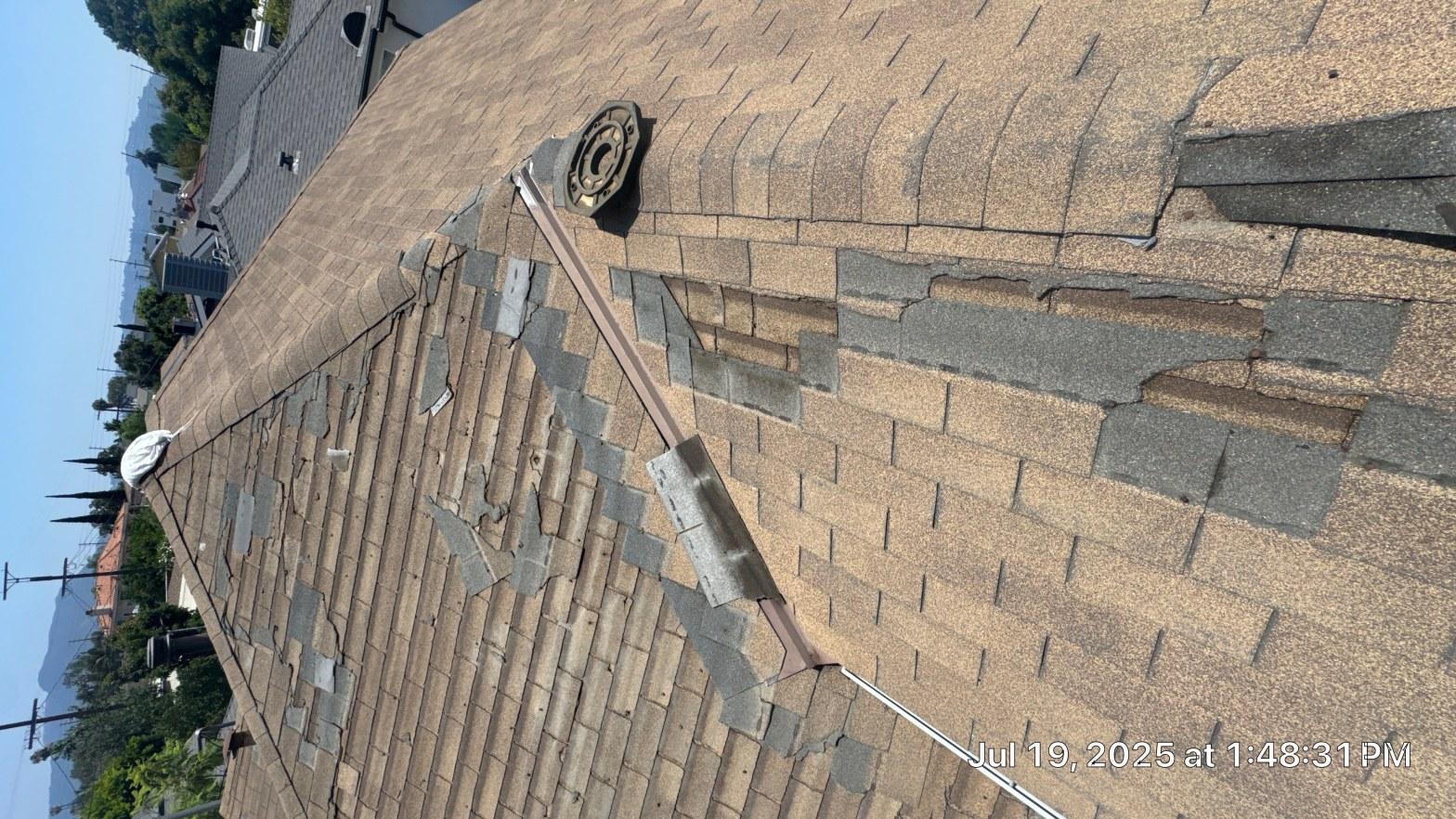
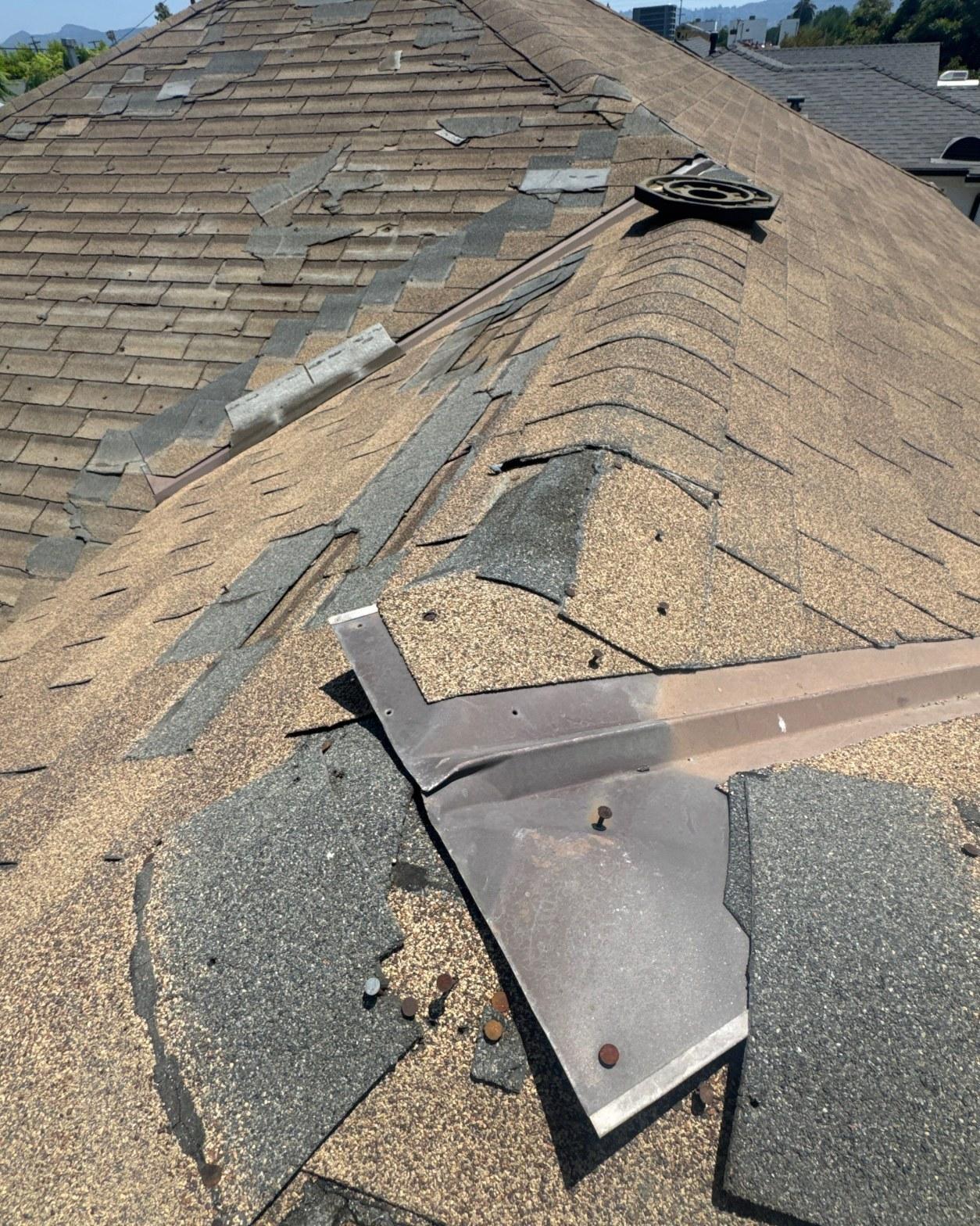
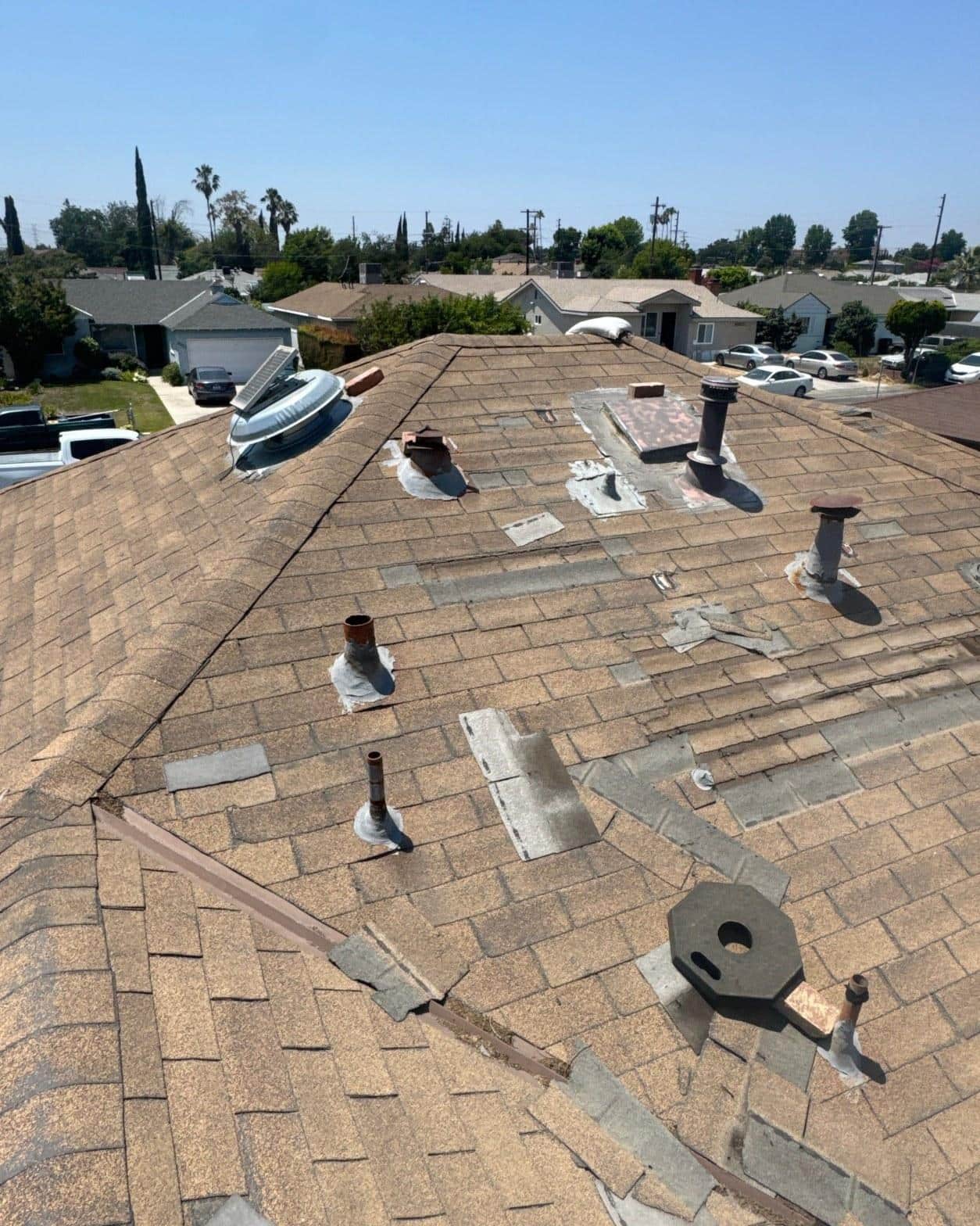
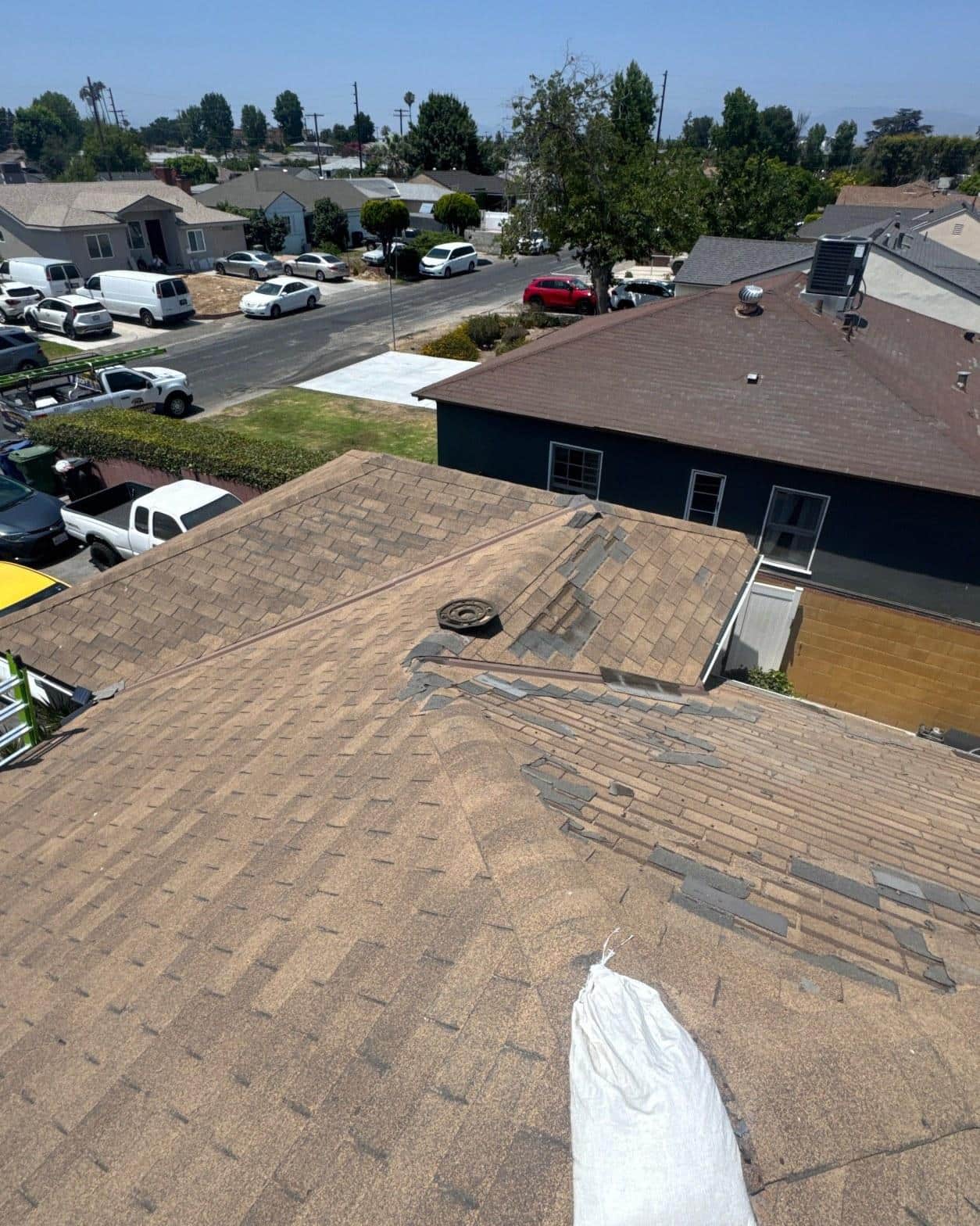
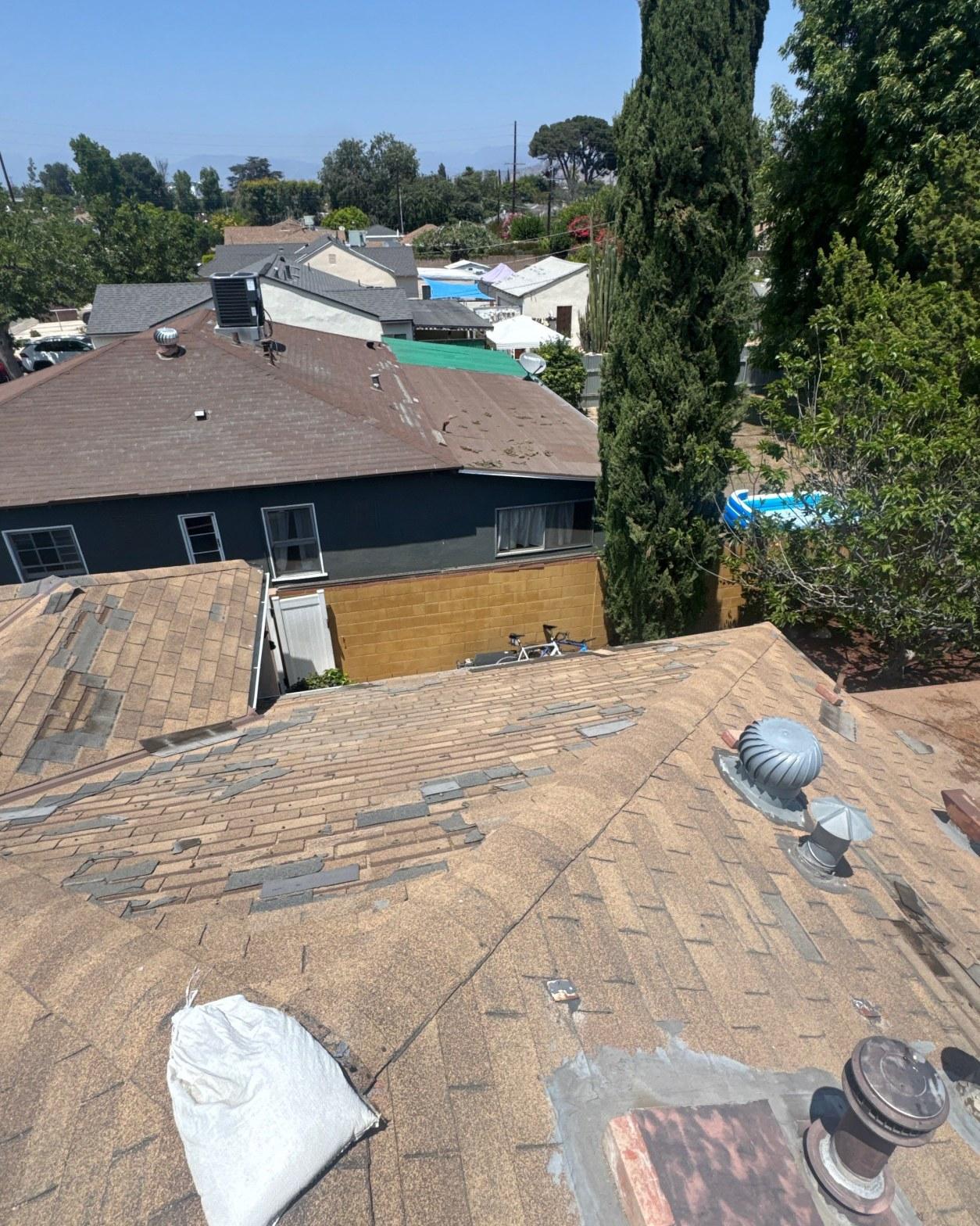
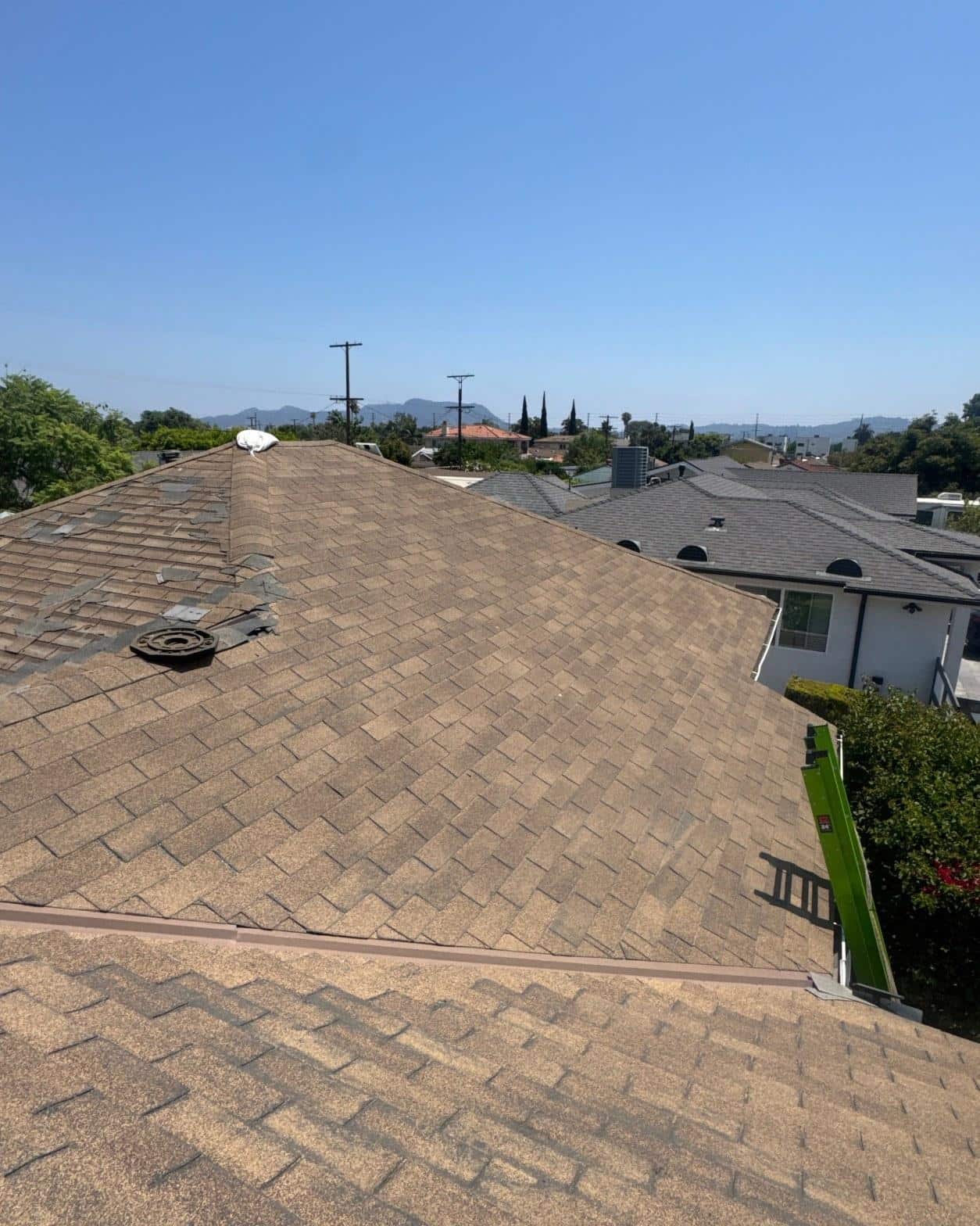
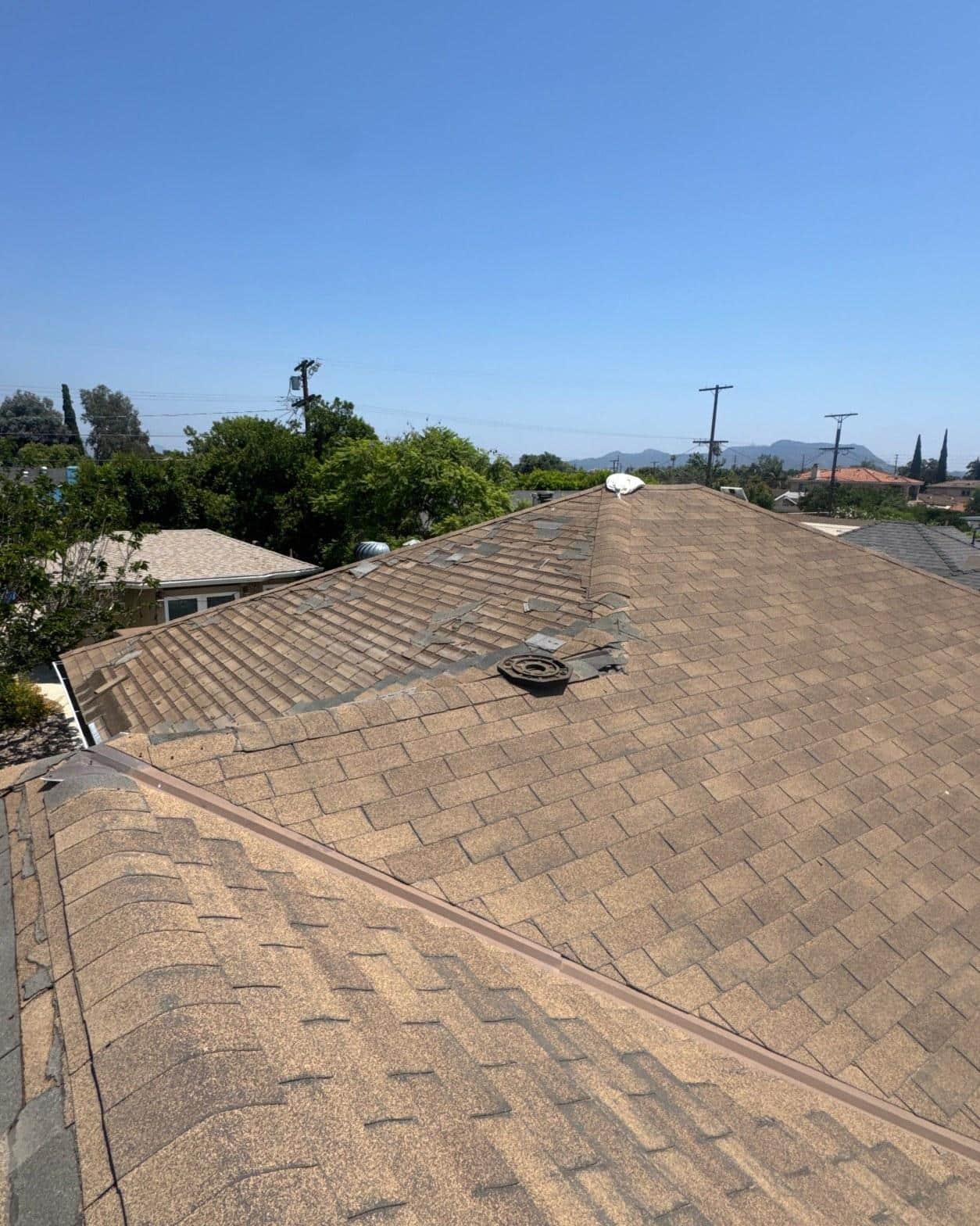
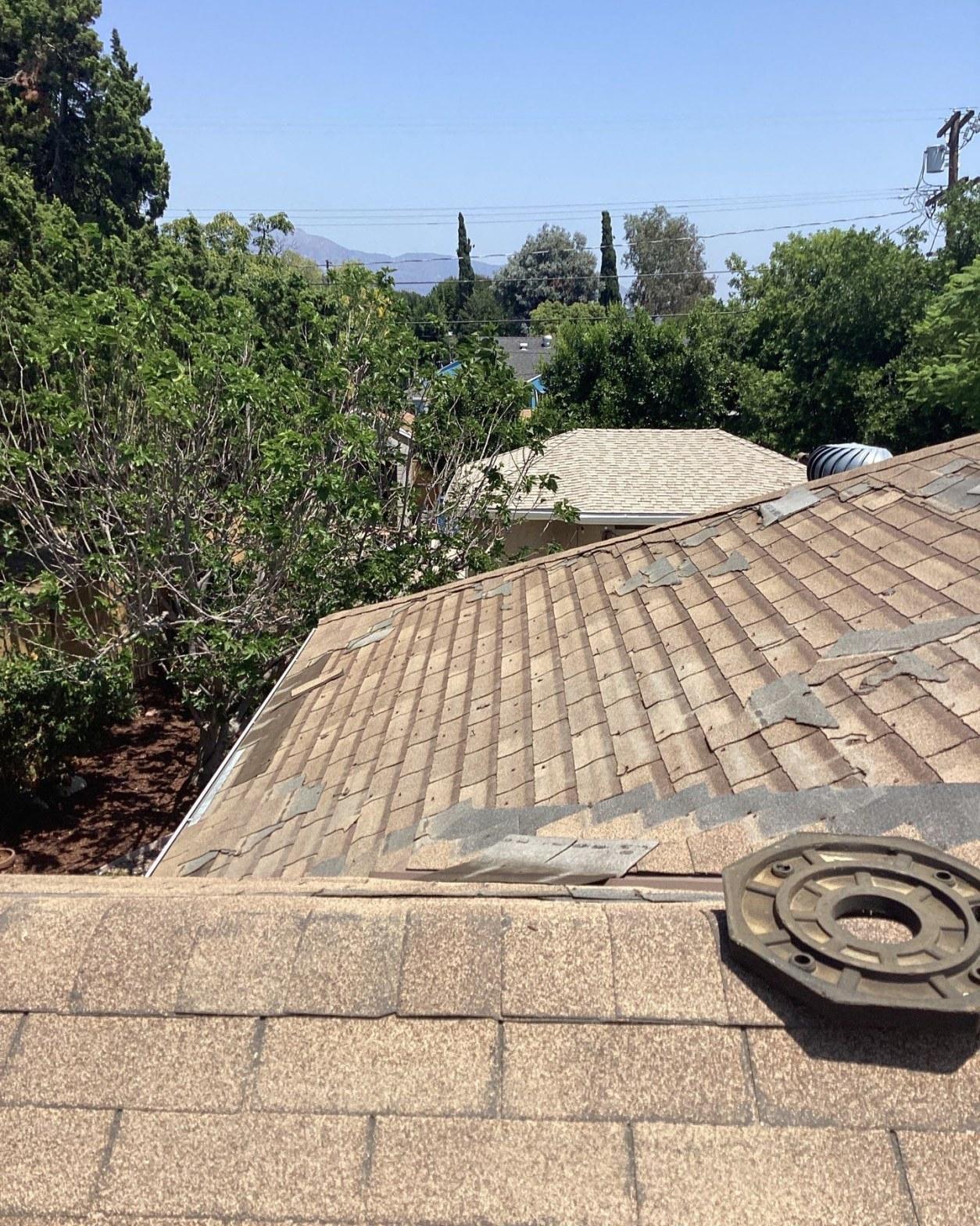
The existing shingle surface showed all the classic end-of-life markers: severe granule loss down to bare mat, widespread cracking across tabs, and flashing at penetrations that had separated and corroded. When granules shed at this scale, the asphalt mat beneath is exposed directly to Southern California’s intense UV radiation. NOAA climate data confirms the North Hollywood basin averages more than 280 sunny days per year, and that sustained sun exposure accelerates shingle degradation faster than in most other U.S. climates.
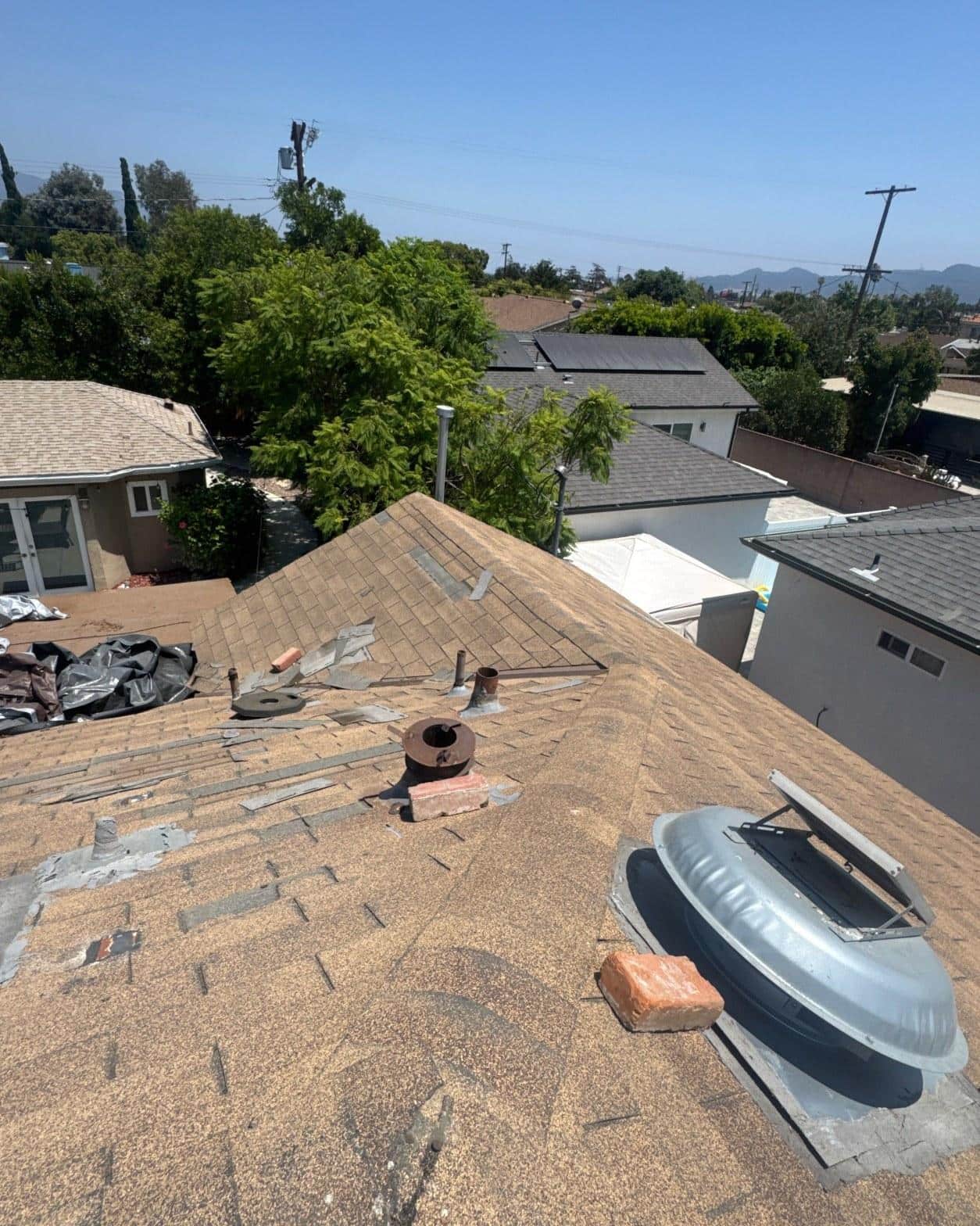
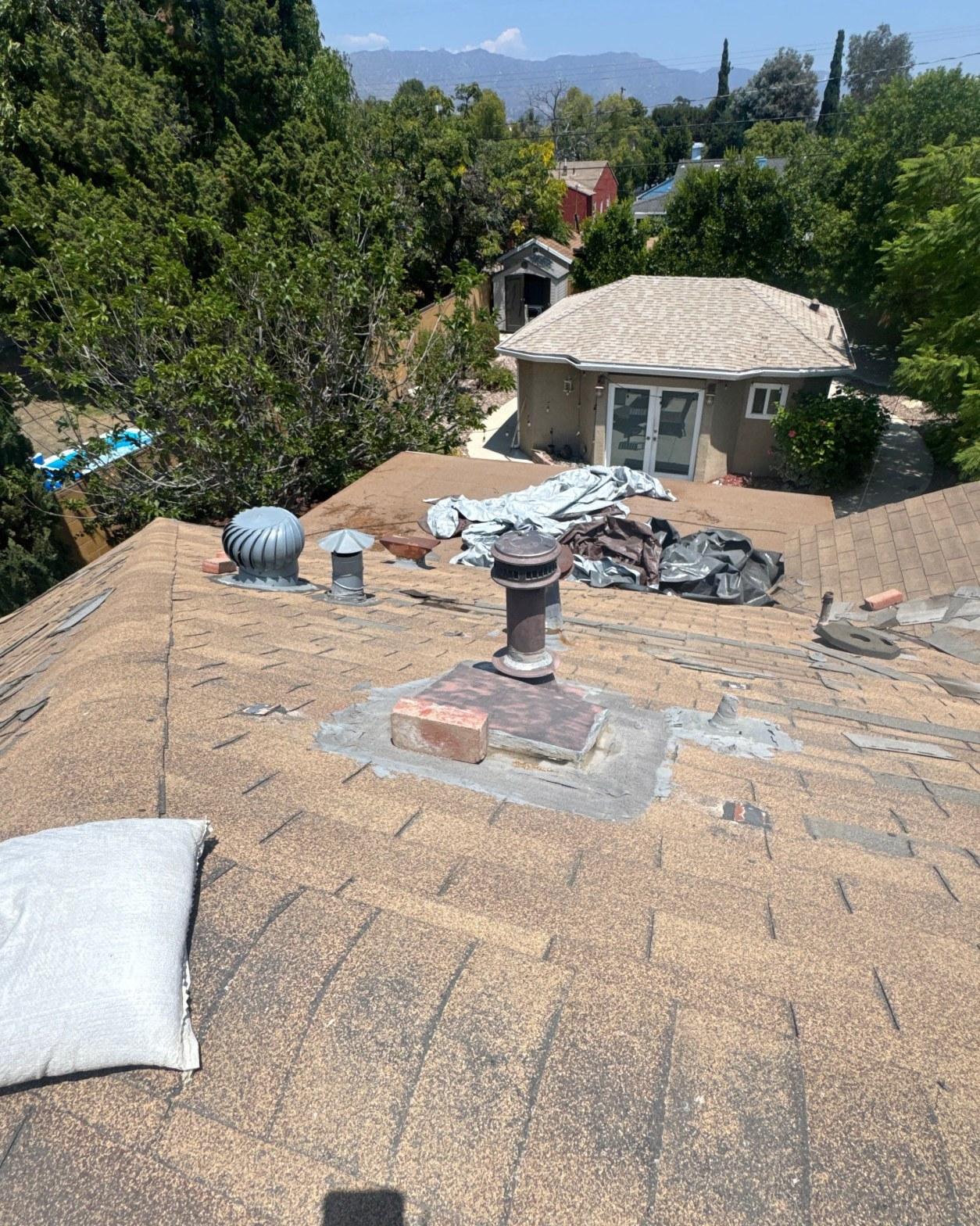
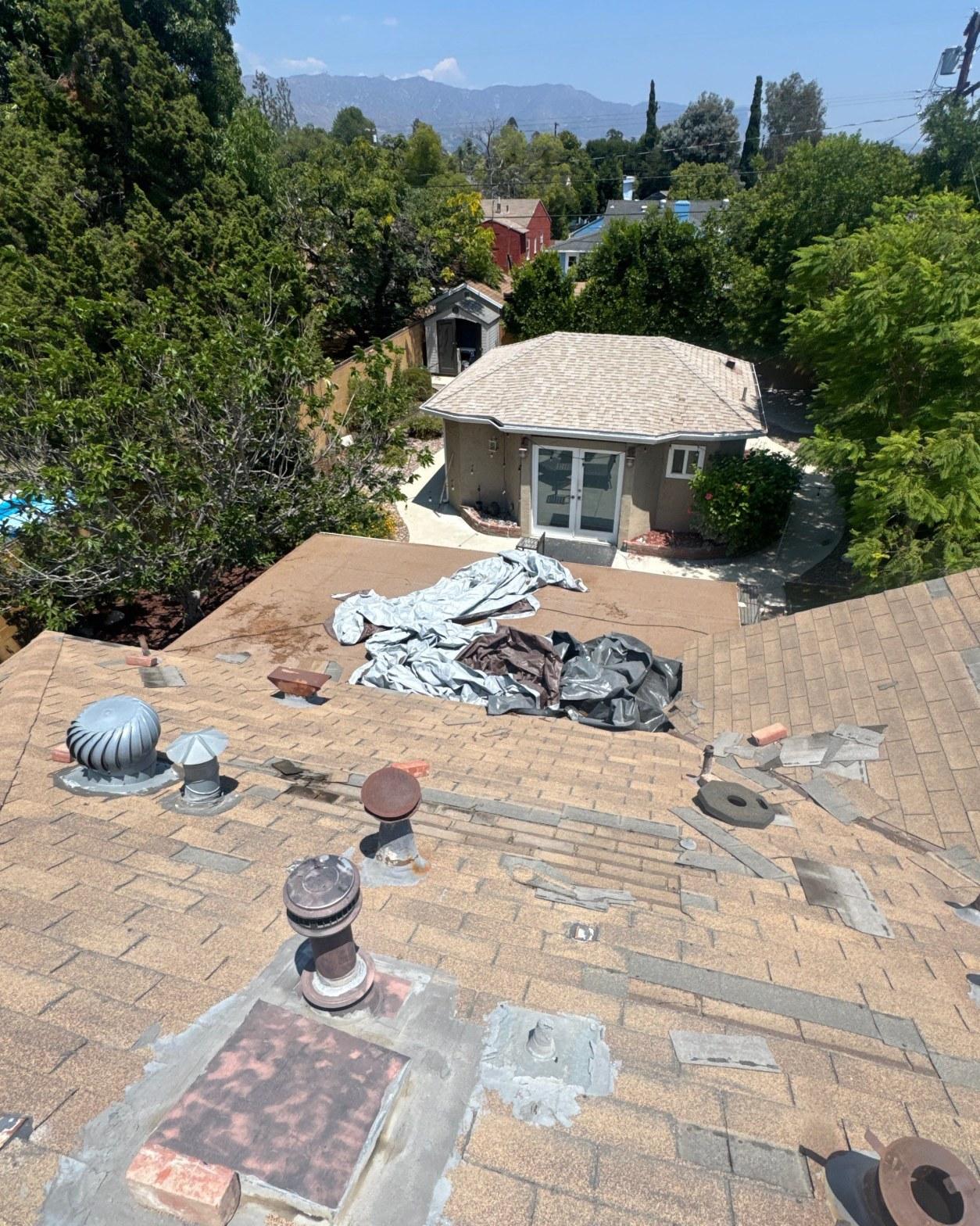
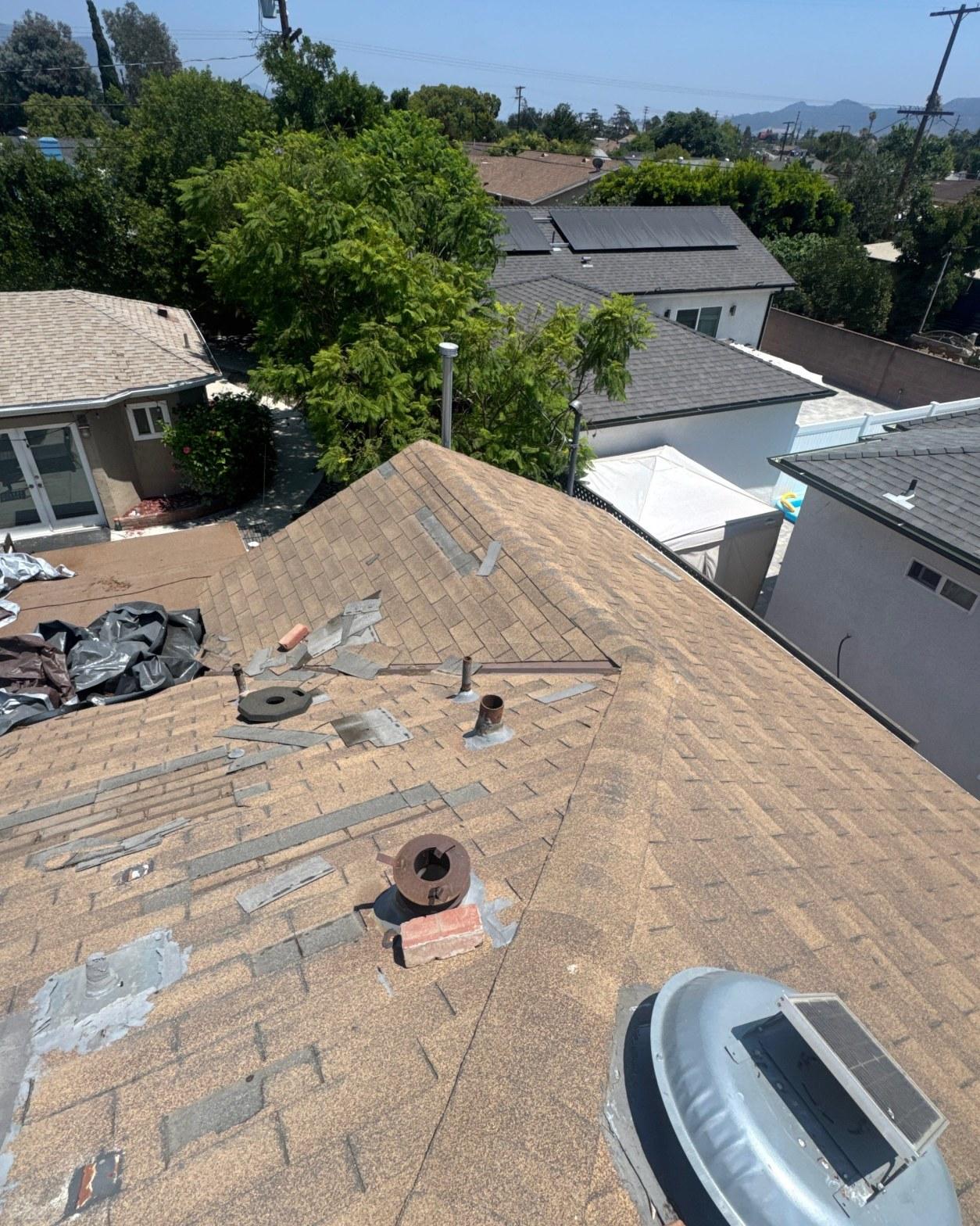
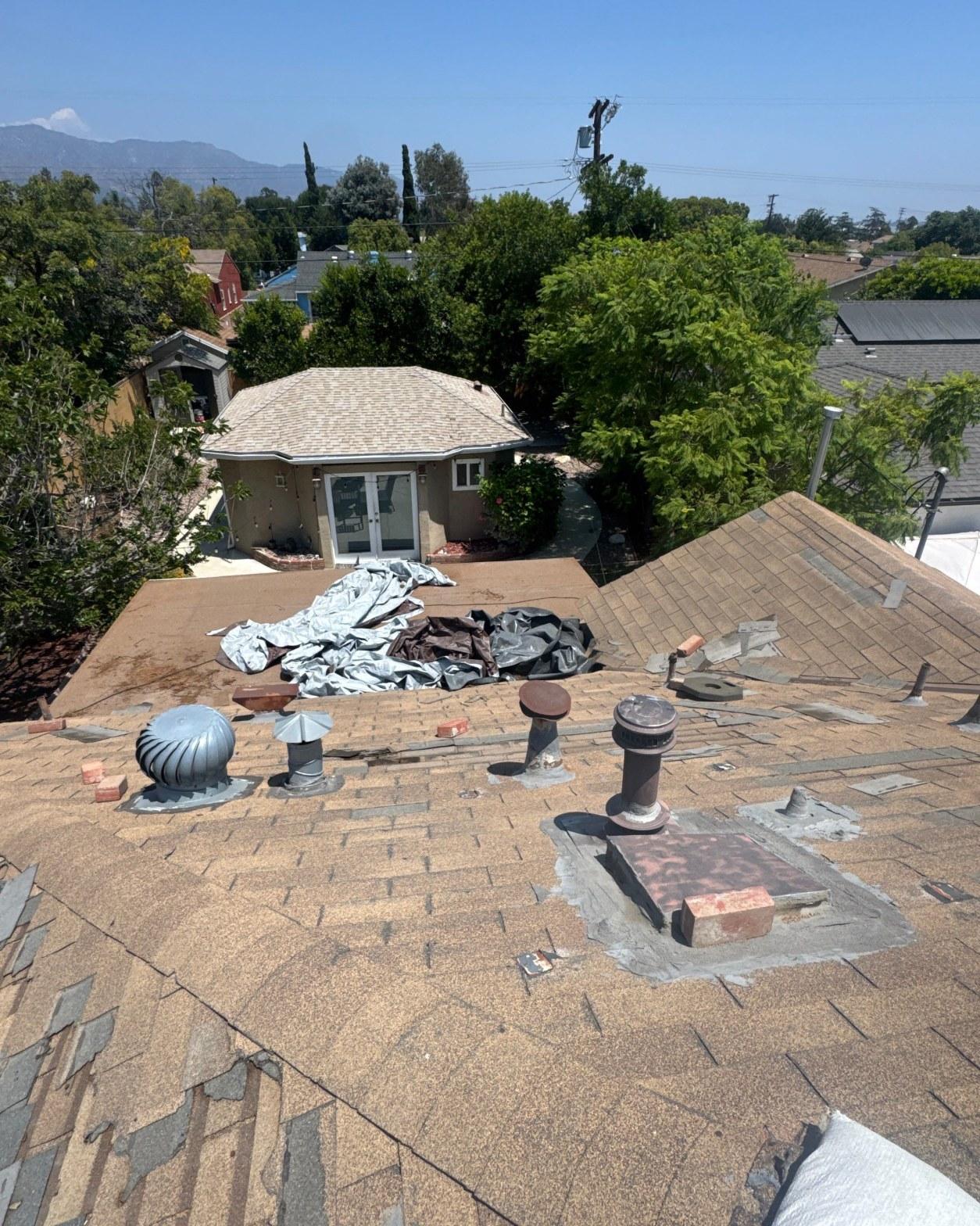
The inspection also turned up several failed pipe-boot flashings. As the photos show, at least 3 separate penetration boots had either cracked collars or missing caps, leaving open pathways for water to travel down into the roof deck. Old turbine vents and dome vents were still present but showed rust and loose seating. In a San Fernando Valley summer, where attic temperatures can exceed 140°F on a still day, non-functioning ventilation adds real heat stress to a roof system and to the living space below.
Project Gallery
Tear-Off: What We Pulled Off the Deck
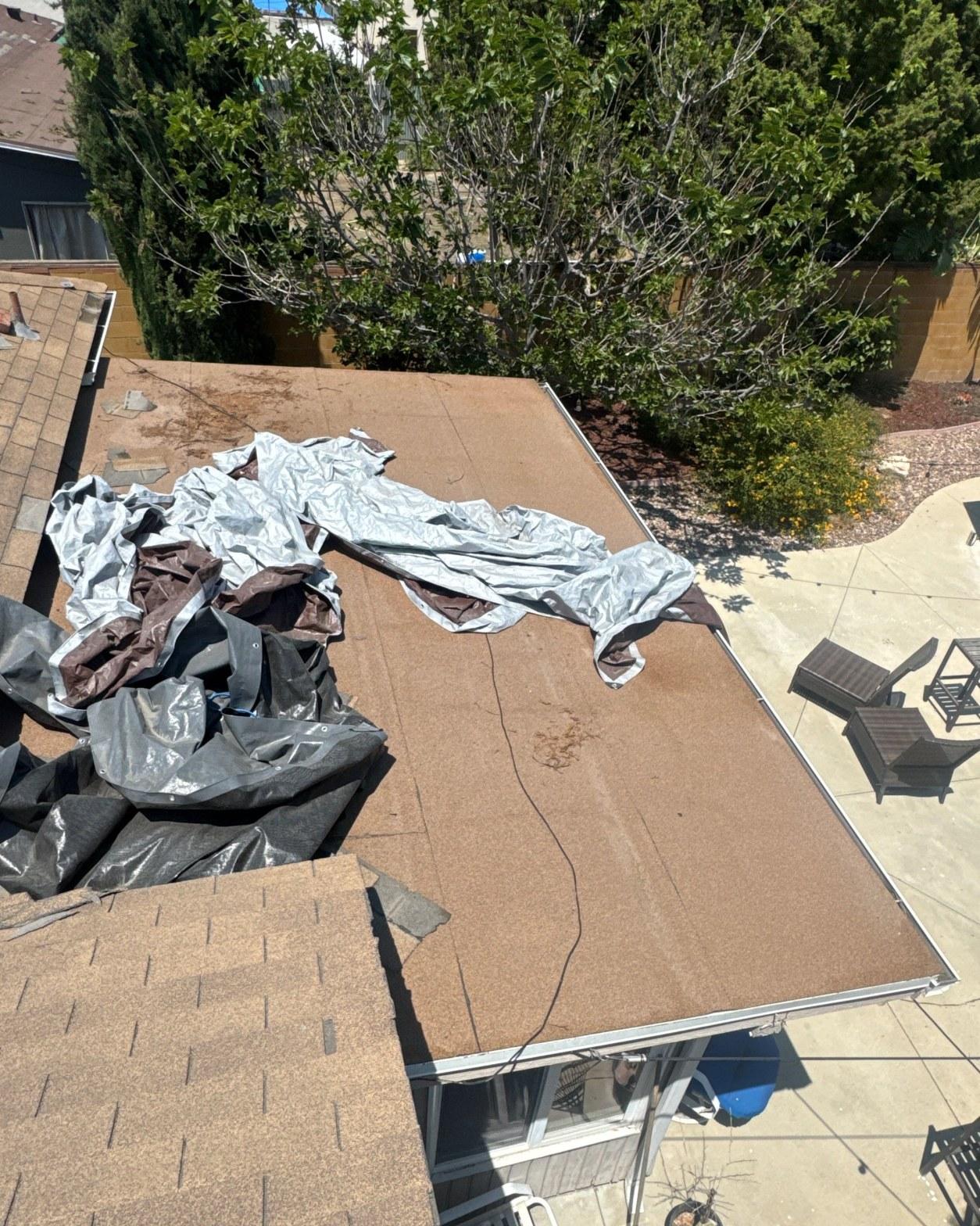
Stripping a roof to bare deck is the only way to confirm whether the plywood or OSB sheathing underneath is still solid, and on this project that inspection step mattered. The photos capture the mid-tear-off state clearly: old shingles, broken tabs, and deteriorated felt underlayment collected in tarps on the slope before removal. You can also see the old base flashing around the pipe penetrations pulled free from the deck, exposing the boot collars that had been the primary leak points.
Our crew pulled off every layer of the existing assembly. California’s Title 24 building standards, updated through the California Energy Commission, set ventilation and insulation minimums that apply to reroofs in addition to new construction, so the vent layout was re-evaluated before new materials went down. All 4 turbine vents and dome vents visible in the before photos were either repositioned or replaced with new units during this phase.
How Did We Handle the Vents and Flashing?
Every pipe boot and vent flashing was replaced as part of this reroof, not simply reused. Reusing old flashing hardware on a new shingle installation is one of the most common sources of callbacks in roofing; a fresh shingle field is only as watertight as its weakest penetration. The close-up photos taken on July 19, 2025 show the extent of the old flashing failure: cracked rubber collars, rust at the base plates, and tab shingles that had lifted away from the penetrations over time.
Skylight flashing was also addressed during this phase. Step flashing and counter-flashing around a skylight curb needs to integrate correctly with each new shingle course above it, which means it cannot simply be slipped back into place around existing shingles. The new flashing was set into the fresh underlayment and then shingled over in sequence so water sheds outward at every step. Roof Replacement Inc is licensed by the California Contractors State License Board (CSLB), and flashing work of this type falls within the scope of a C-39 roofing classification.
The Finished Composition Shingle System
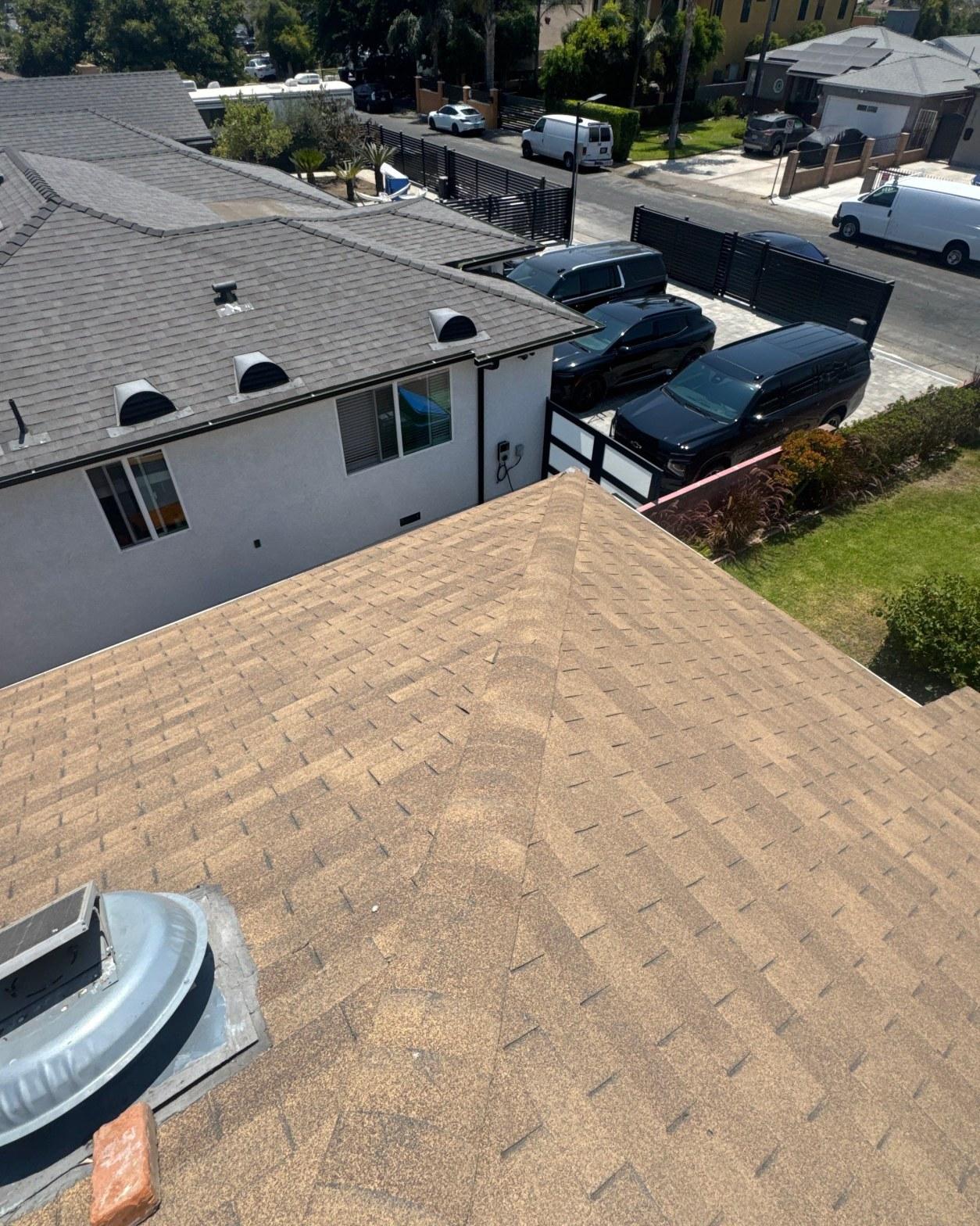
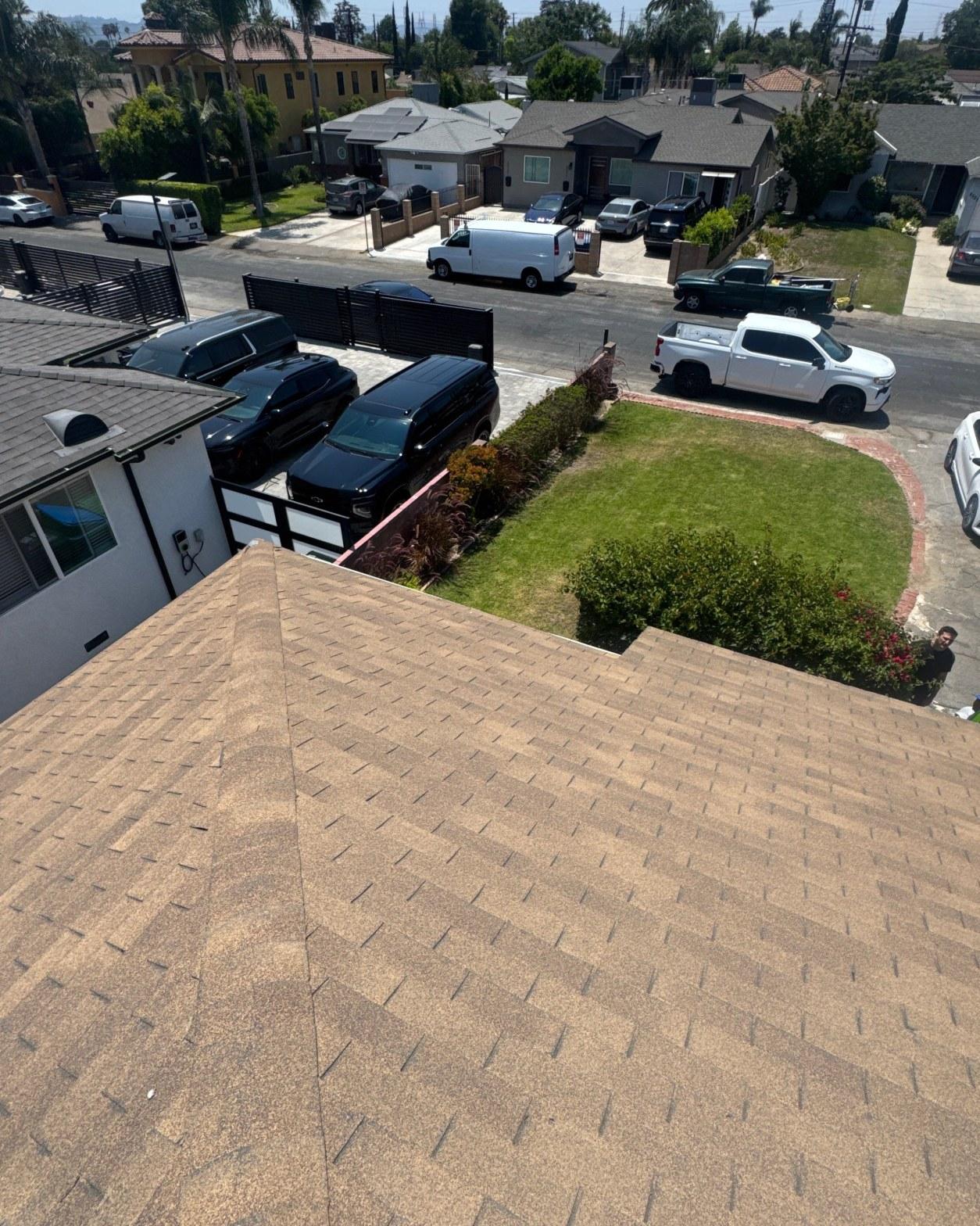
The completed roof shows a uniform new composition shingle field across all slopes, with properly seated vent bases and clean ridge lines. The new shingles replace a surface that had reached the end of a typical 20 to 25-year service life for a 3-tab or standard architectural shingle in Southern California’s climate zone.
The valley and hip intersections visible in the finished-roof photos confirm that all metal flashing at those transitions was renewed alongside the field shingles. Ridge caps were also installed new to seal the peak. The overall assembly, from fresh underlayment to capped ridge, is now a continuous water-shedding system with no legacy hardware creating early failure points.
As of 2025, the ENERGY STAR roofing products program recognizes cool-colored composition shingles that can meaningfully reduce attic heat gain in hot climates. Homeowners in the San Fernando Valley planning a tear-off should ask their contractor about available shingle options that carry that rating, since the climate and roof orientation on a project like this one make solar reflectance a worthwhile consideration.
Ready to Assess Your Own Roof?
If your composition shingles show cracking, heavy granule loss in the gutters, or flashing that has pulled away from penetrations, a full tear-off and reroof is worth pricing. Patch repairs on a shingle surface this far gone tend to last only one to two seasons before new leaks develop at adjacent zones. Call Roof Replacement Inc to schedule an inspection and get a written scope of work before any decisions are made.


