

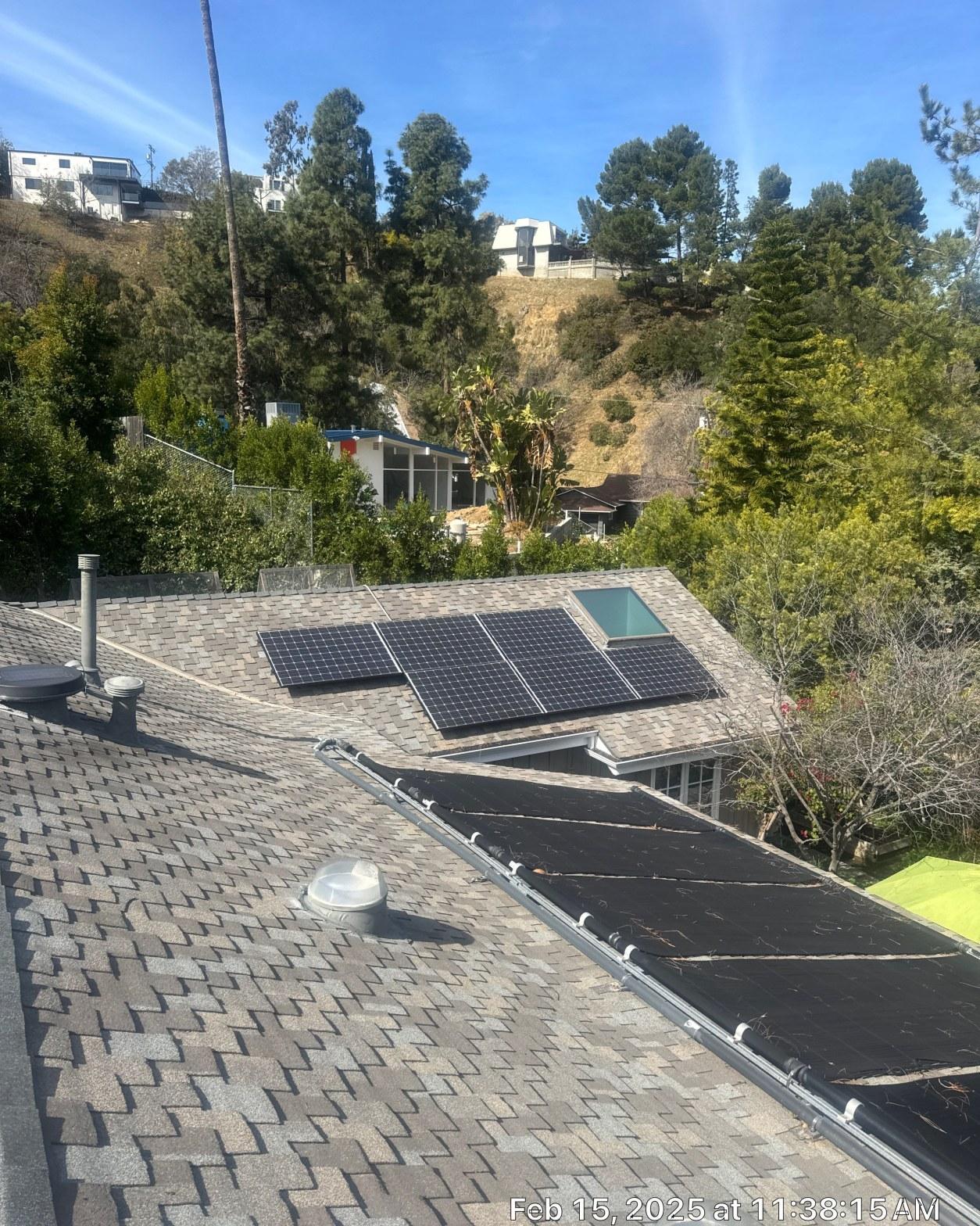
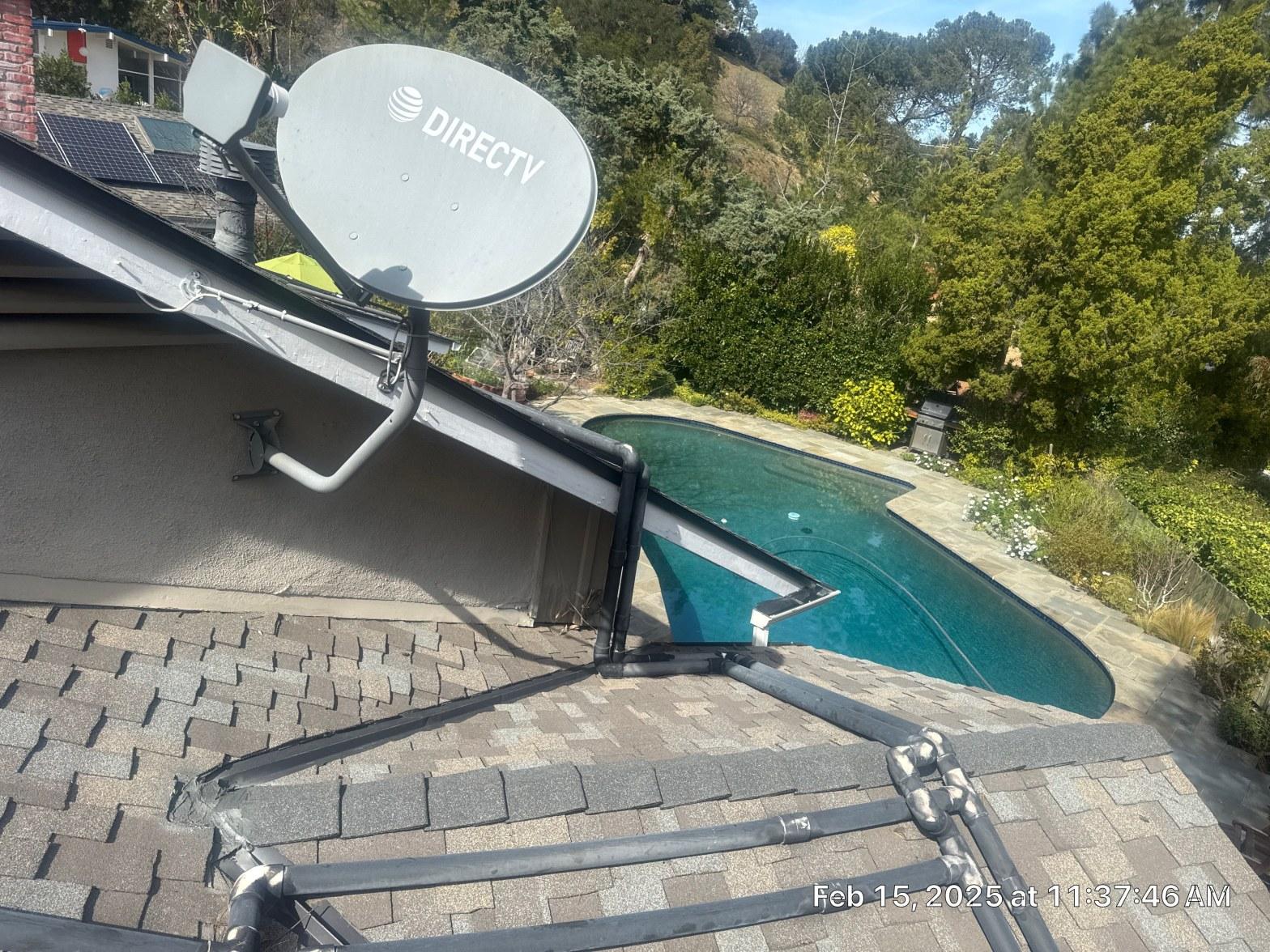
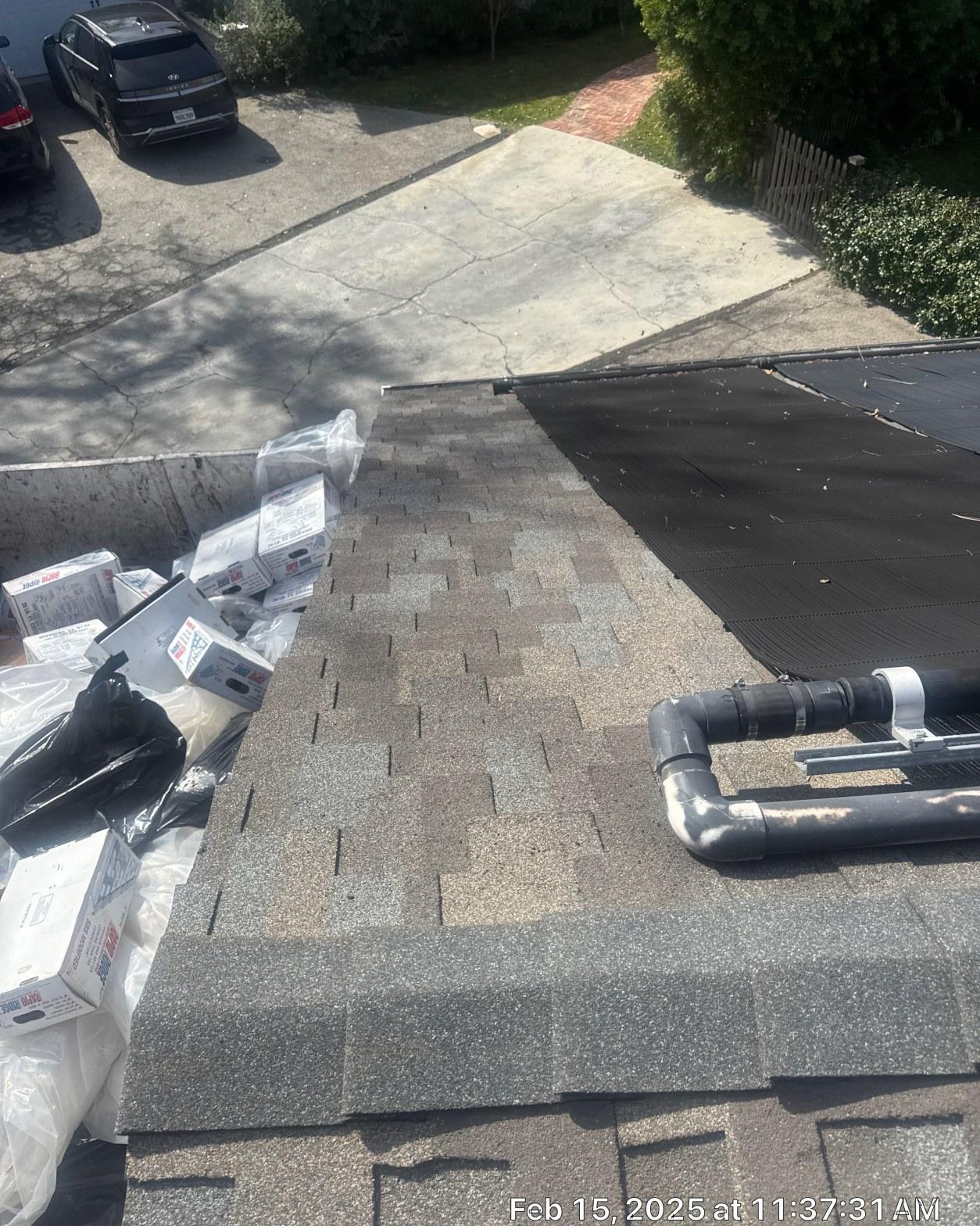
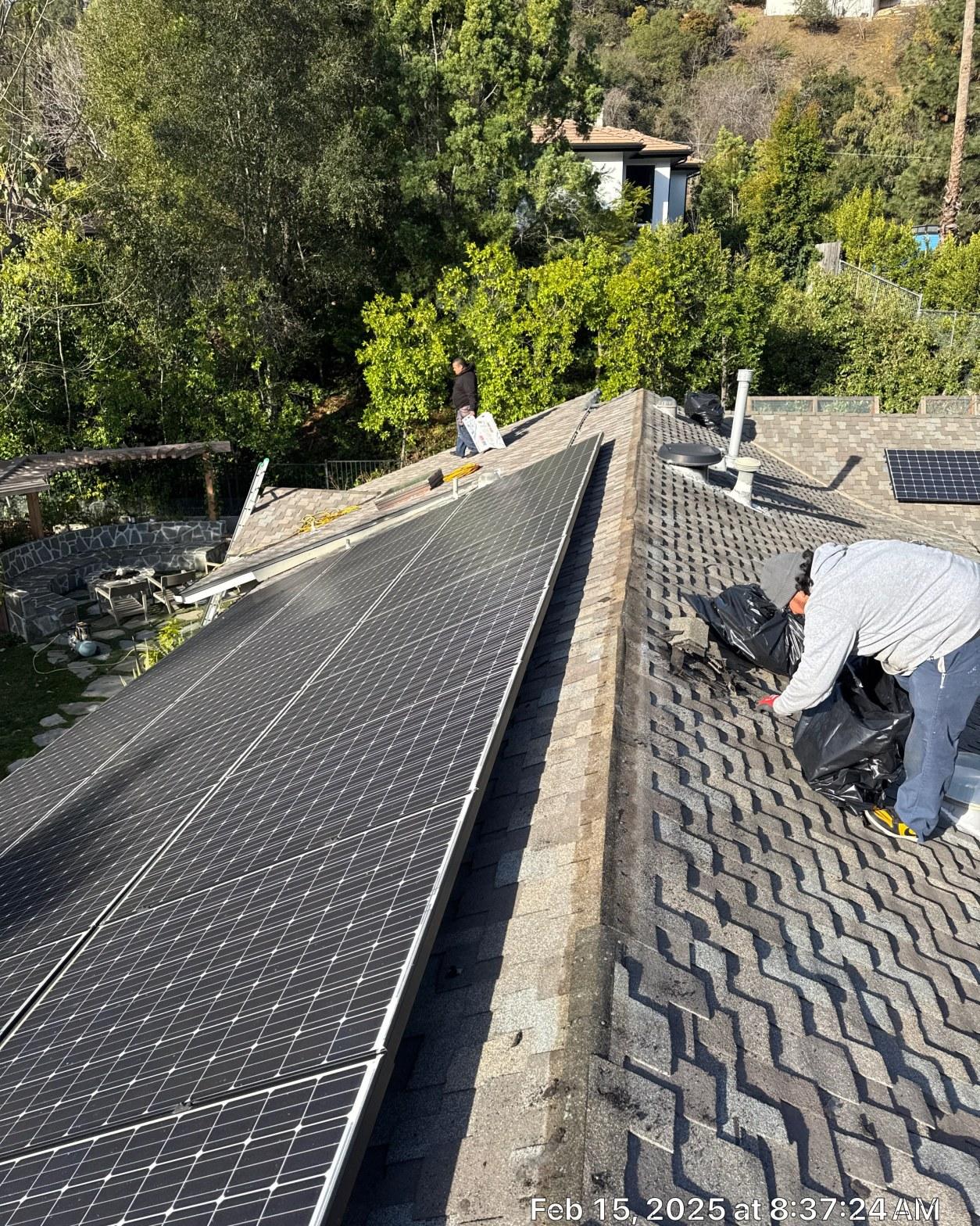
A hillside home in the San Fernando Valley region came to Roof Replacement Inc with a roof that was holding together in appearance but quietly failing at every transition point. The owner’s concern was interior water intrusion, and after getting on the roof on February 4, 2025, our crew found 4 distinct failure zones: the brick chimney’s apron and step flashing, two separate skylight penetrations, and a shingle field section that had shed so much granule that bare substrate was becoming exposed. Solar panels occupied two large planes of the roof, so sequencing the work around the racking system was part of the plan from the start.
What Did the Chimney Flashing Actually Look Like?
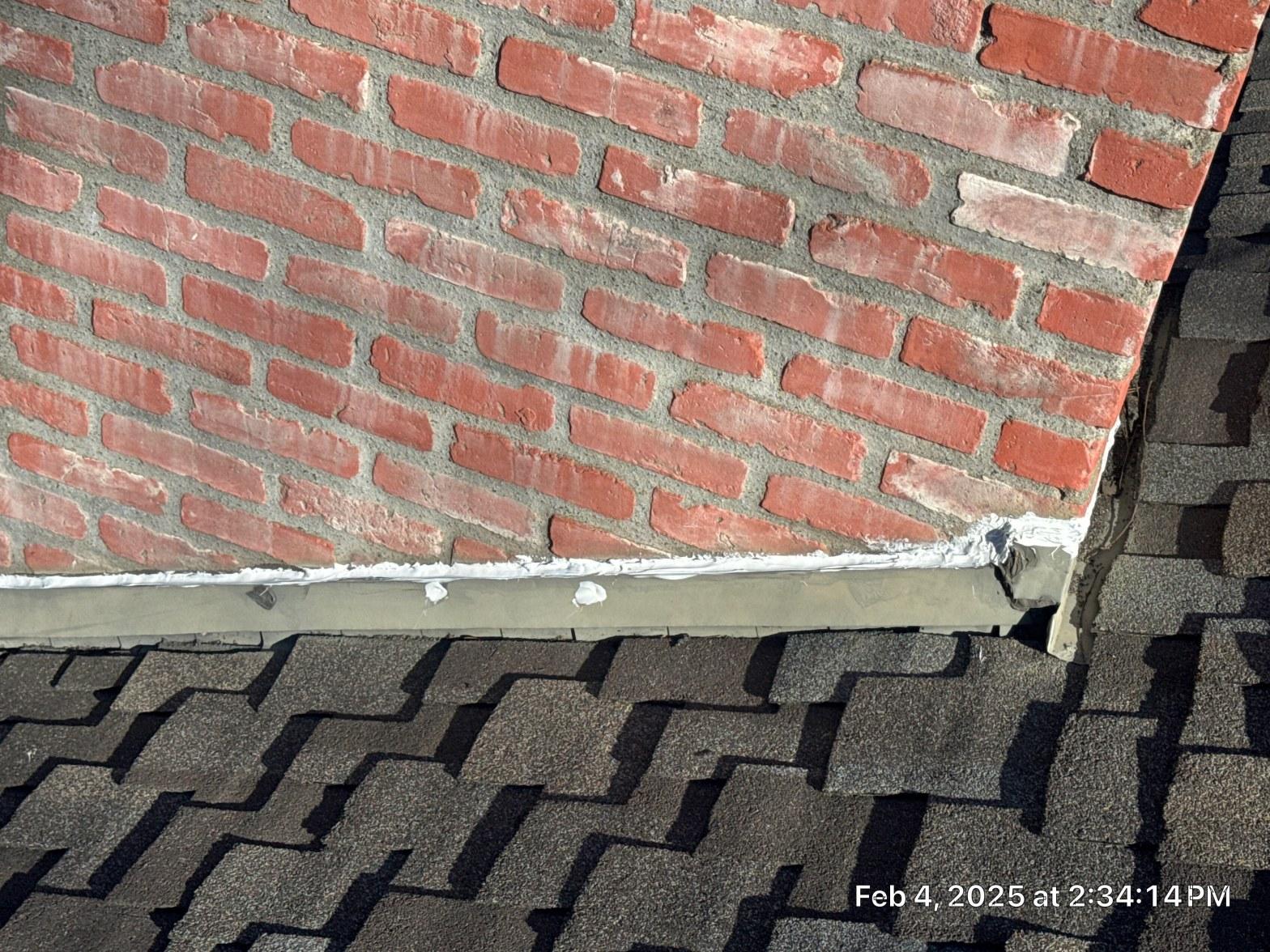
The chimney’s base flashing had been patched with caulk at least once before, and the sealant had split open along roughly 18 inches of the front apron, leaving a visible gap between the brick and the flashing pan. In Southern California, daily thermal cycling between overnight lows and afternoon highs that routinely reach into the 90s °F during summer means caulk-only chimney repairs rarely last more than 2 to 3 seasons before re-cracking. The National Weather Service Sherman Oaks forecast office documents this temperature swing clearly for the region.
Project Gallery
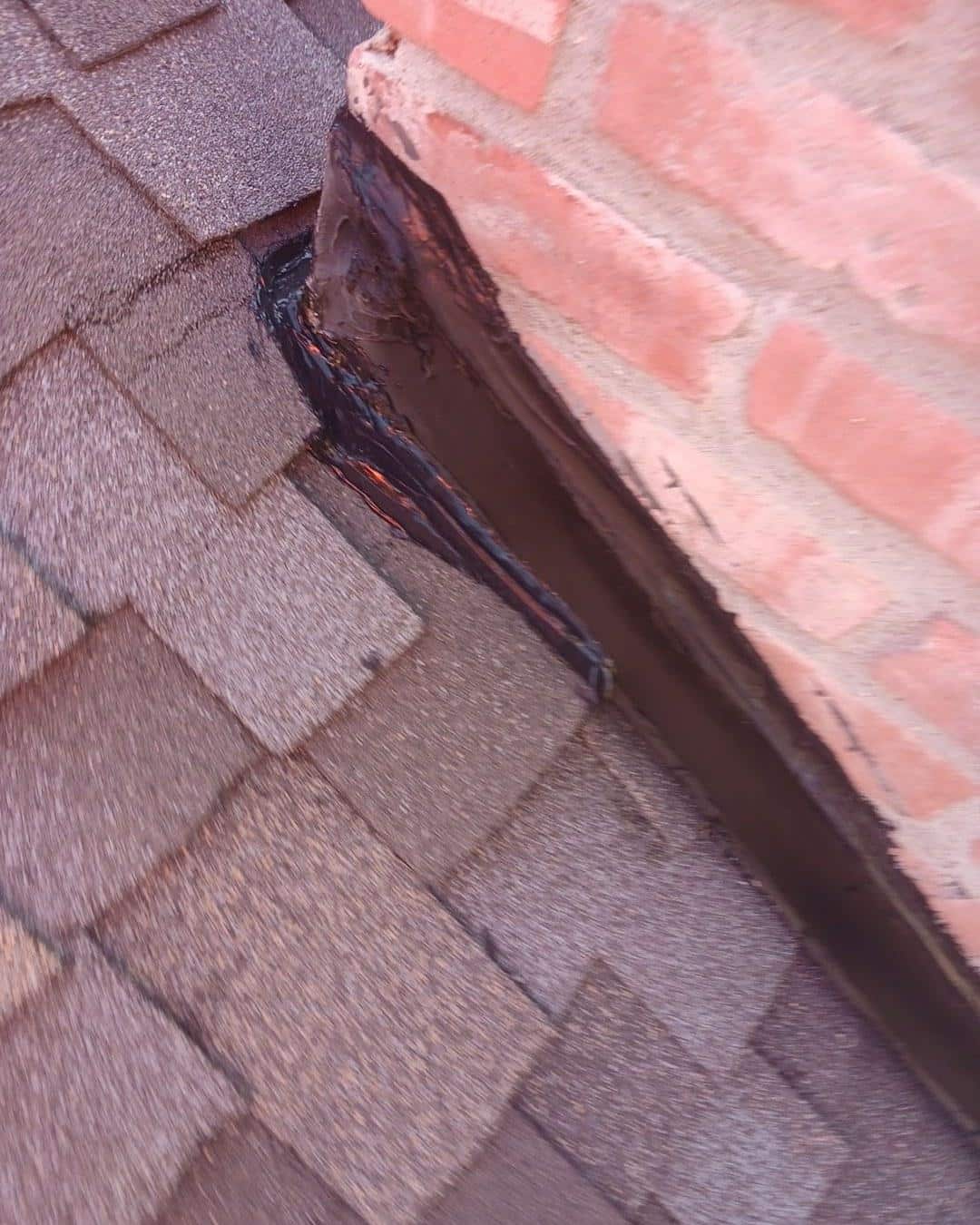
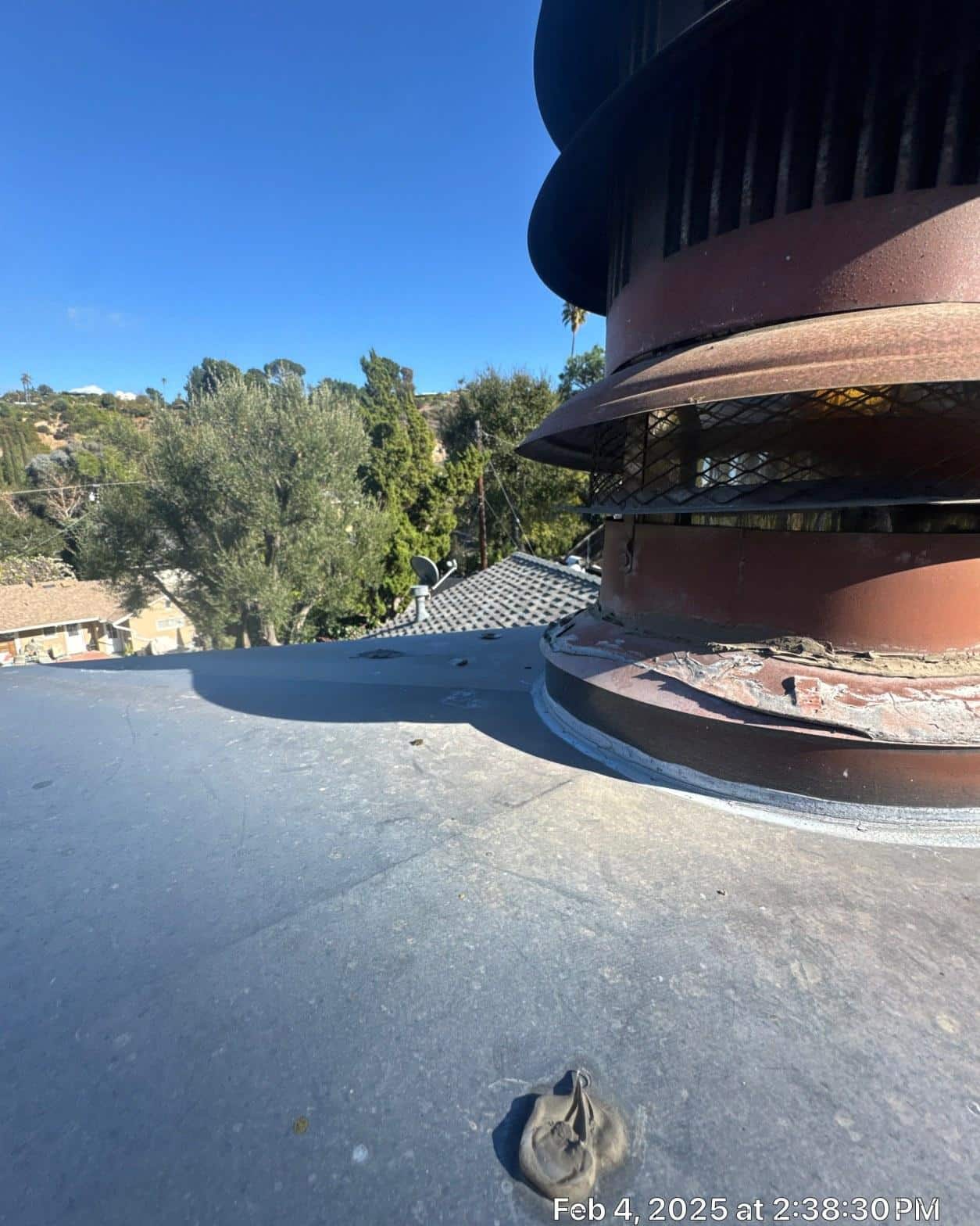
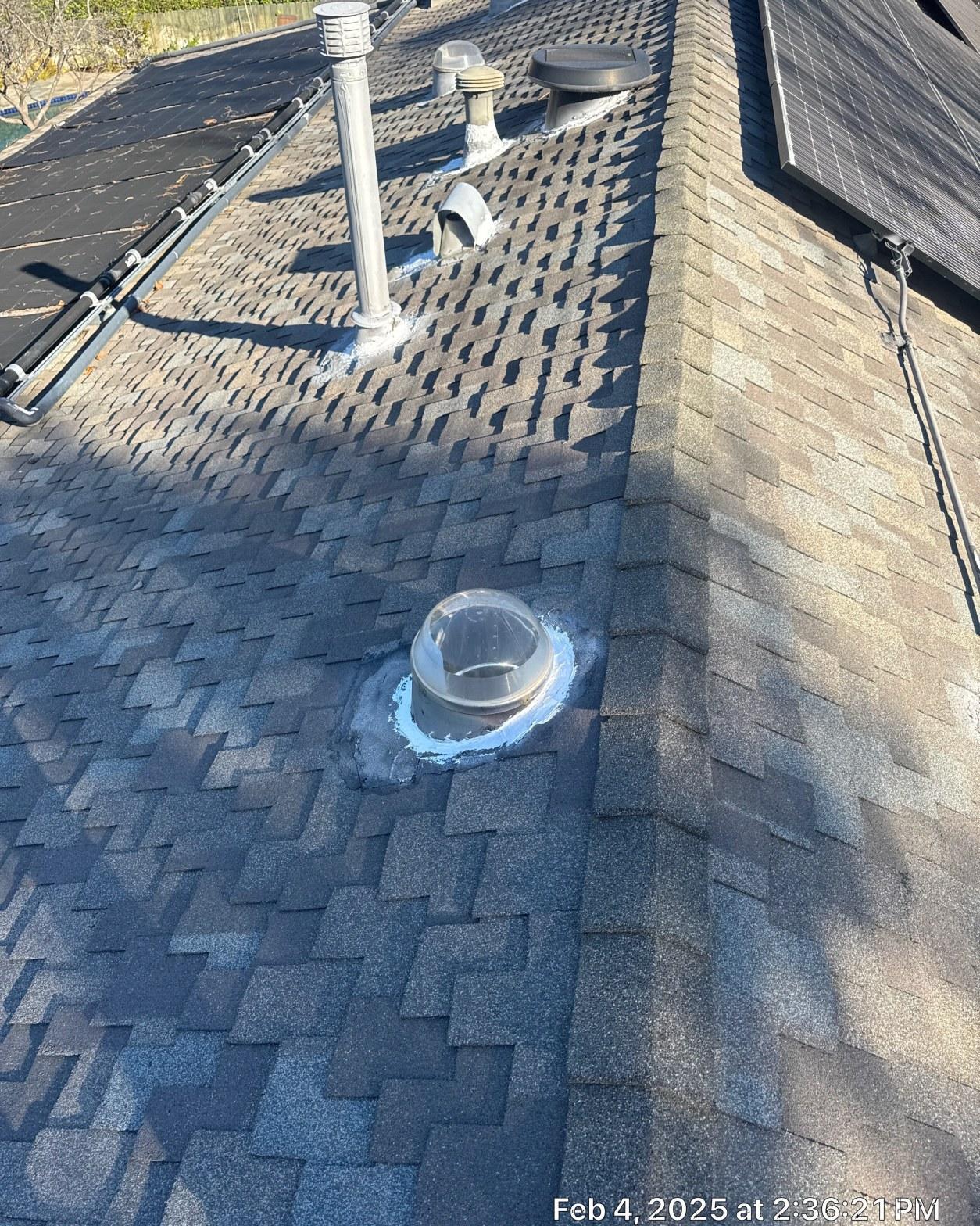
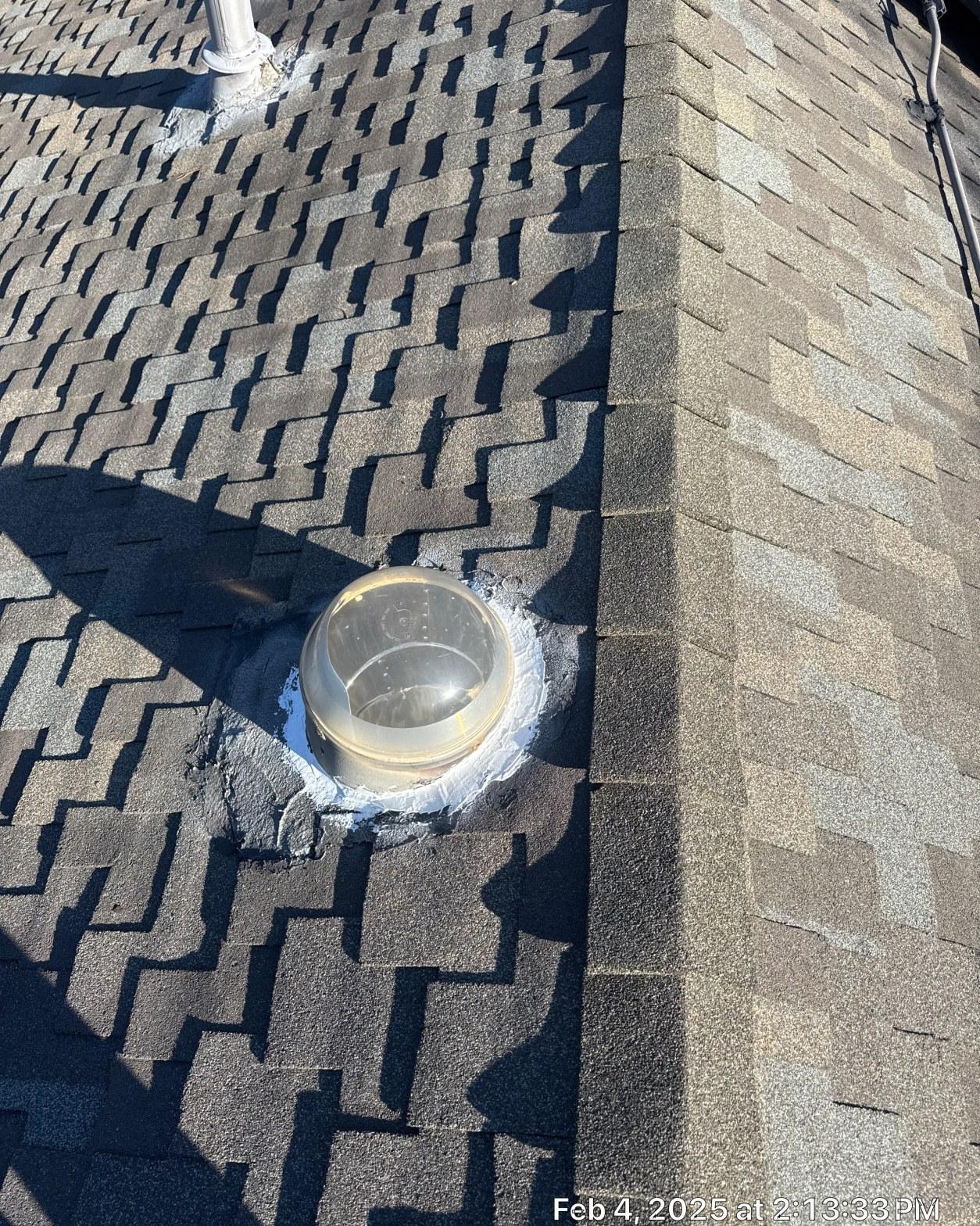
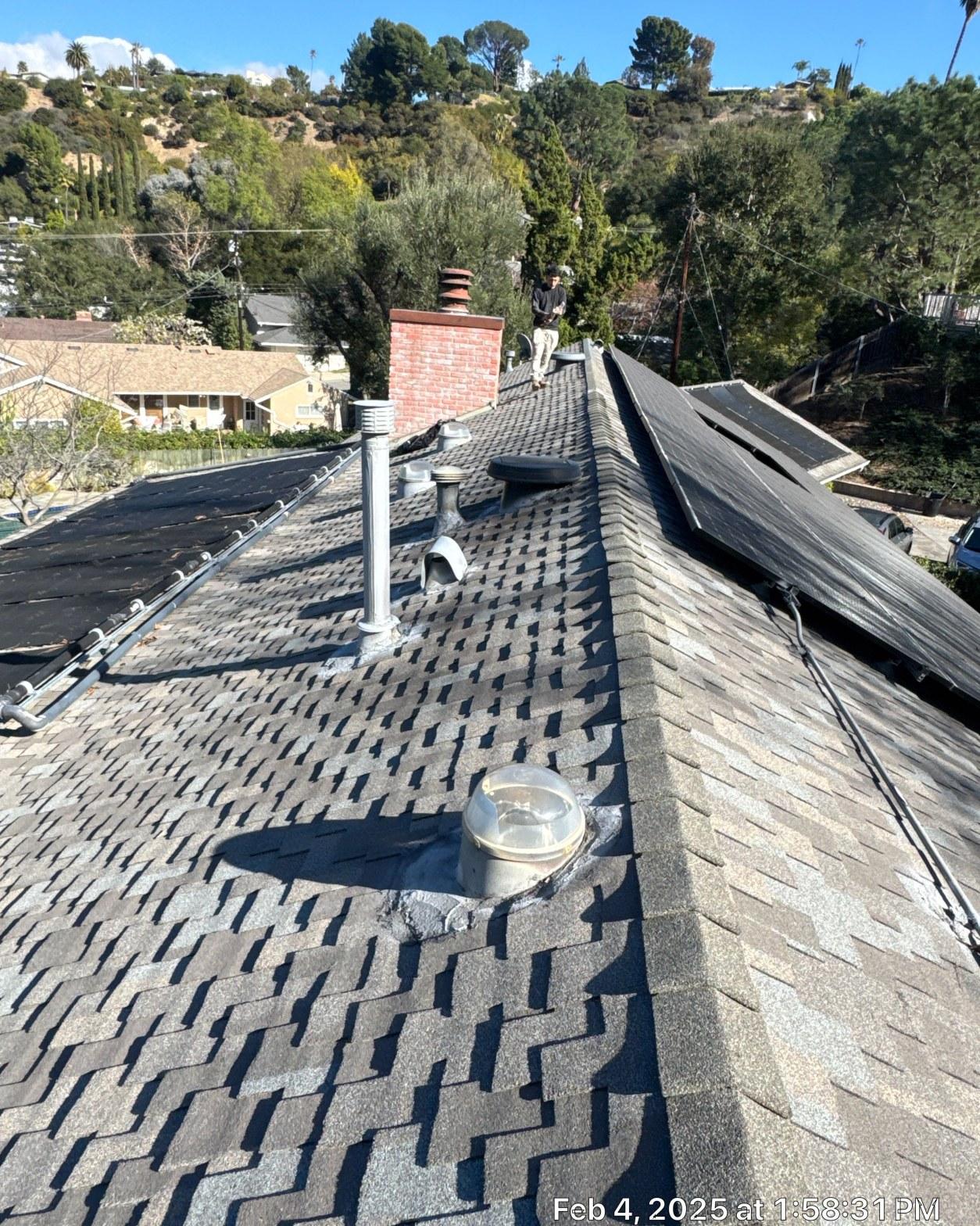
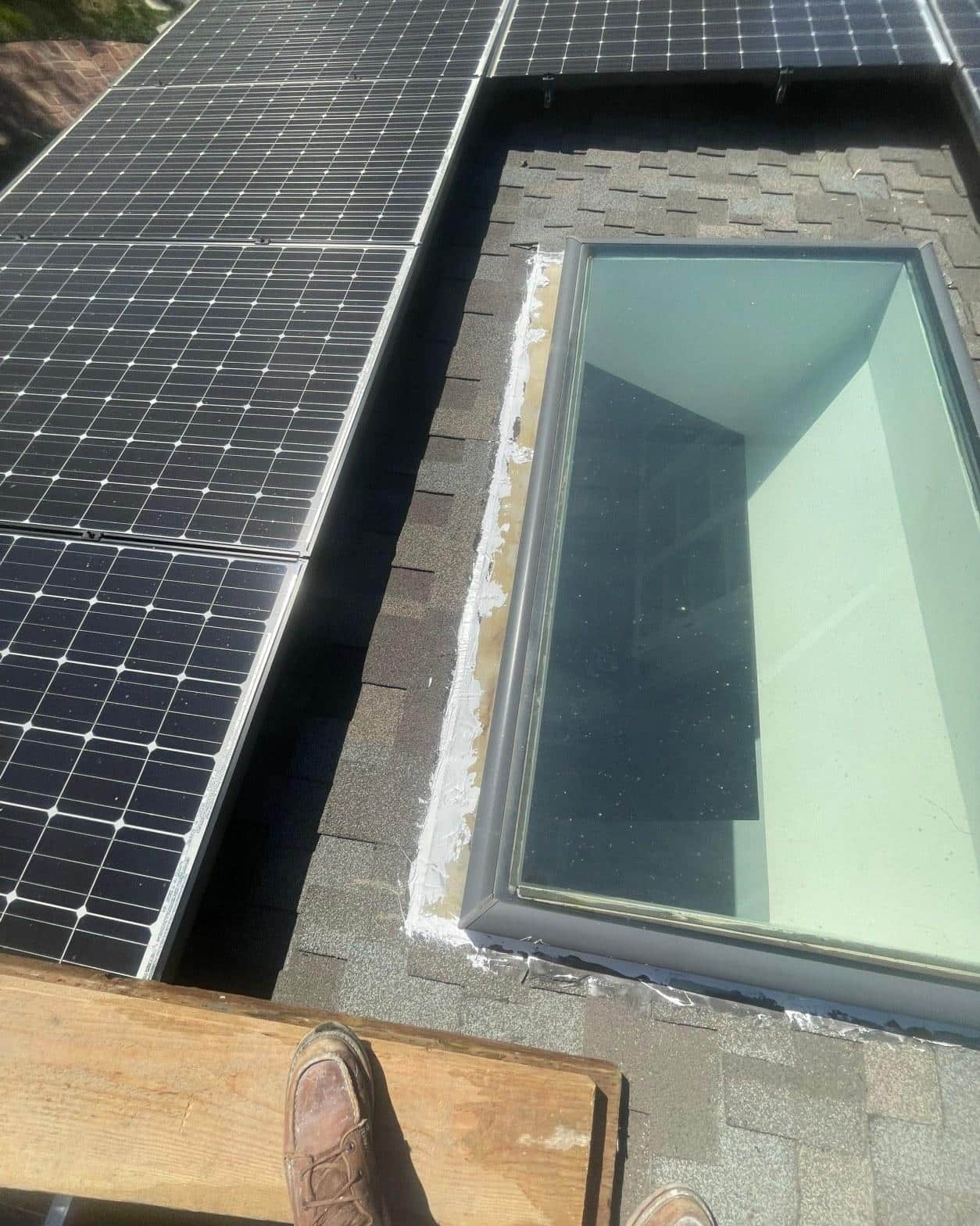
The apron in the photo shows the white caulk bead that had been the only thing bridging the gap between the brick course and the flashing pan. Once that bead split, every rain event sent water directly behind the flashing and onto the underlayment below. Our approach was to remove the compromised material entirely, dress the brick base, and install new sheet metal step flashing integrated with a properly formed apron rather than relying on sealant as a primary barrier.
What Was Hiding at the Flashing Corner?
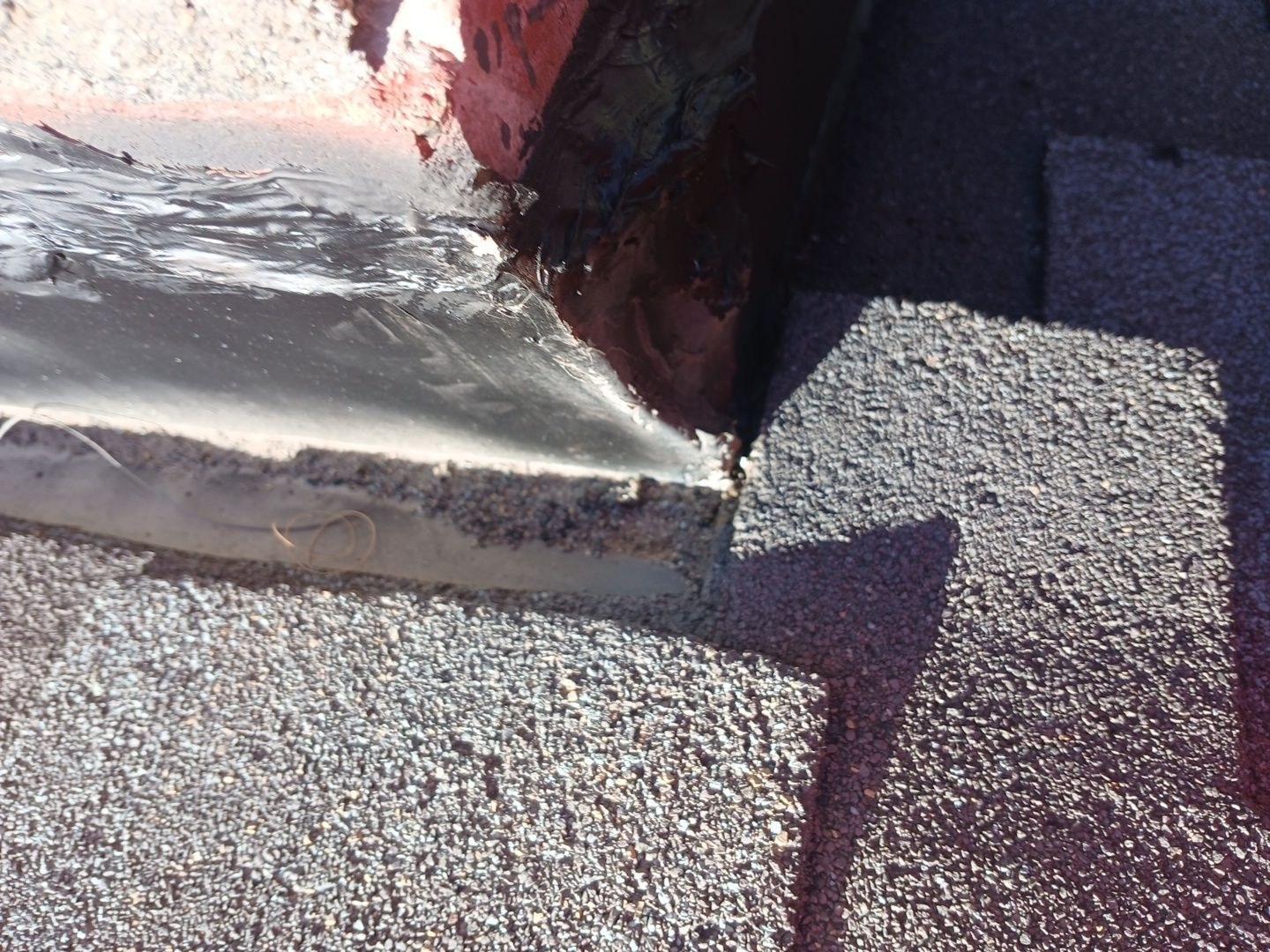
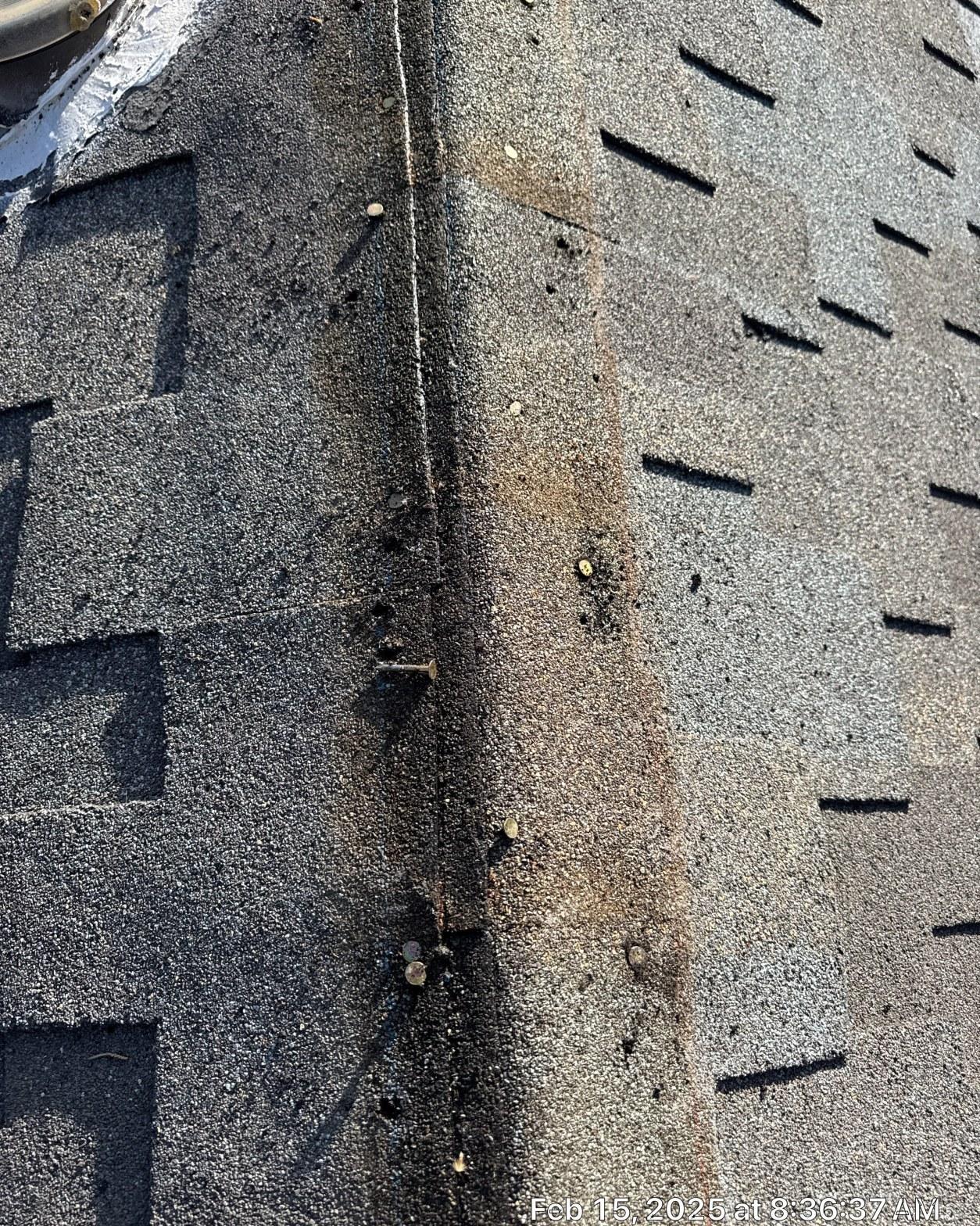
At the upper corner of the chimney, where the step flashing meets the apron, the original installation had used aluminum foil tape and roofing cement as the waterproofing layer, and both had failed. The roofing cement had pulled away from the brick face, and the foil tape beneath it had delaminated, leaving a half-inch open seam at the most vulnerable point on the entire chimney perimeter.
Corner transitions on brick chimneys are the single hardest geometry to seal on a shingle roof because three different planes meet at one point. Properly cut and soldered or lapped step flashing is the trade-standard solution, as outlined in ARMA’s residential asphalt roofing manual. Tape-and-cement approaches applied over existing flashing are a common short-cut that tends to fail within 3 to 5 years, particularly on sun-exposed southern and western faces.
How Bad Was the Shingle Wear?
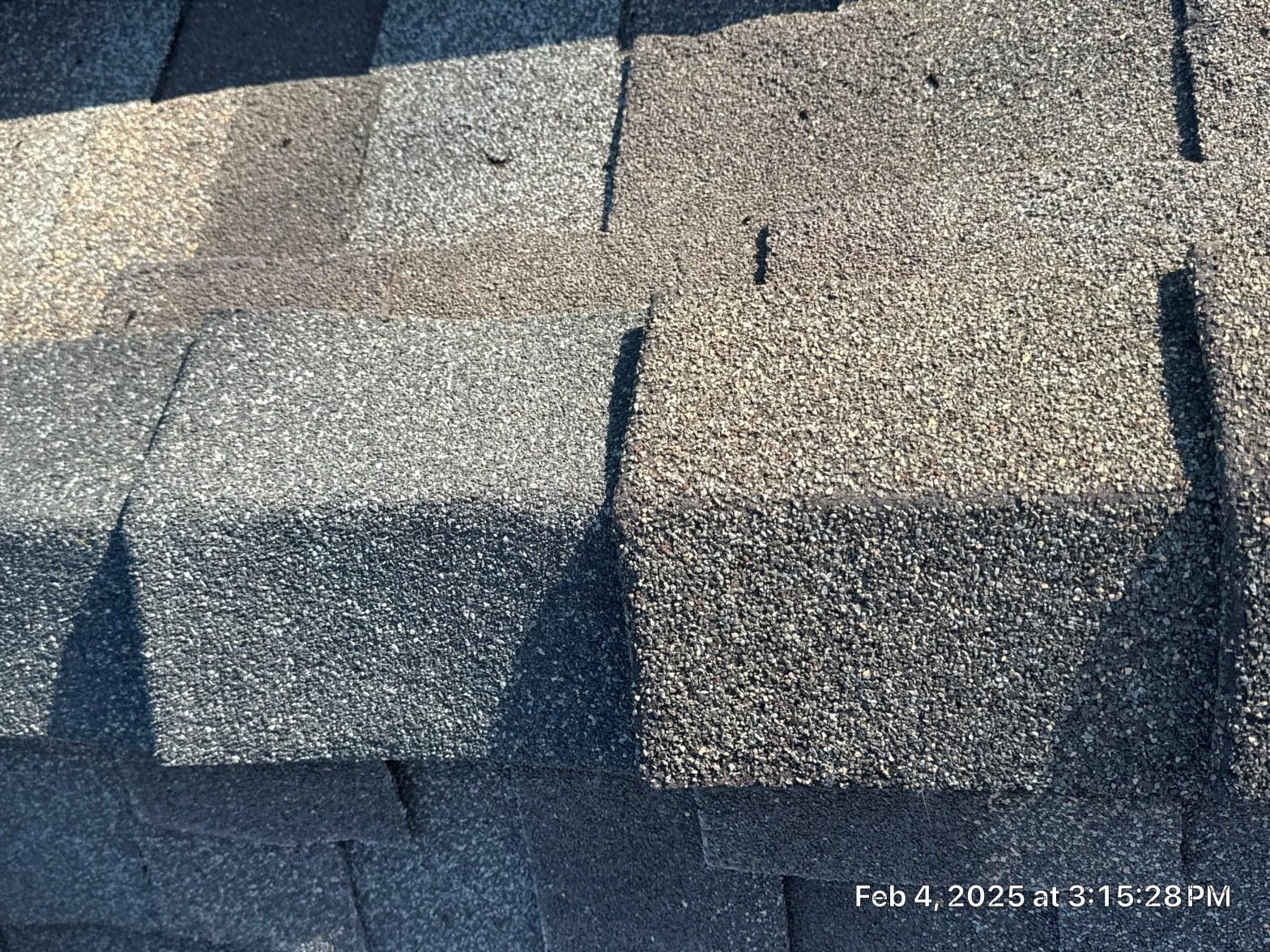
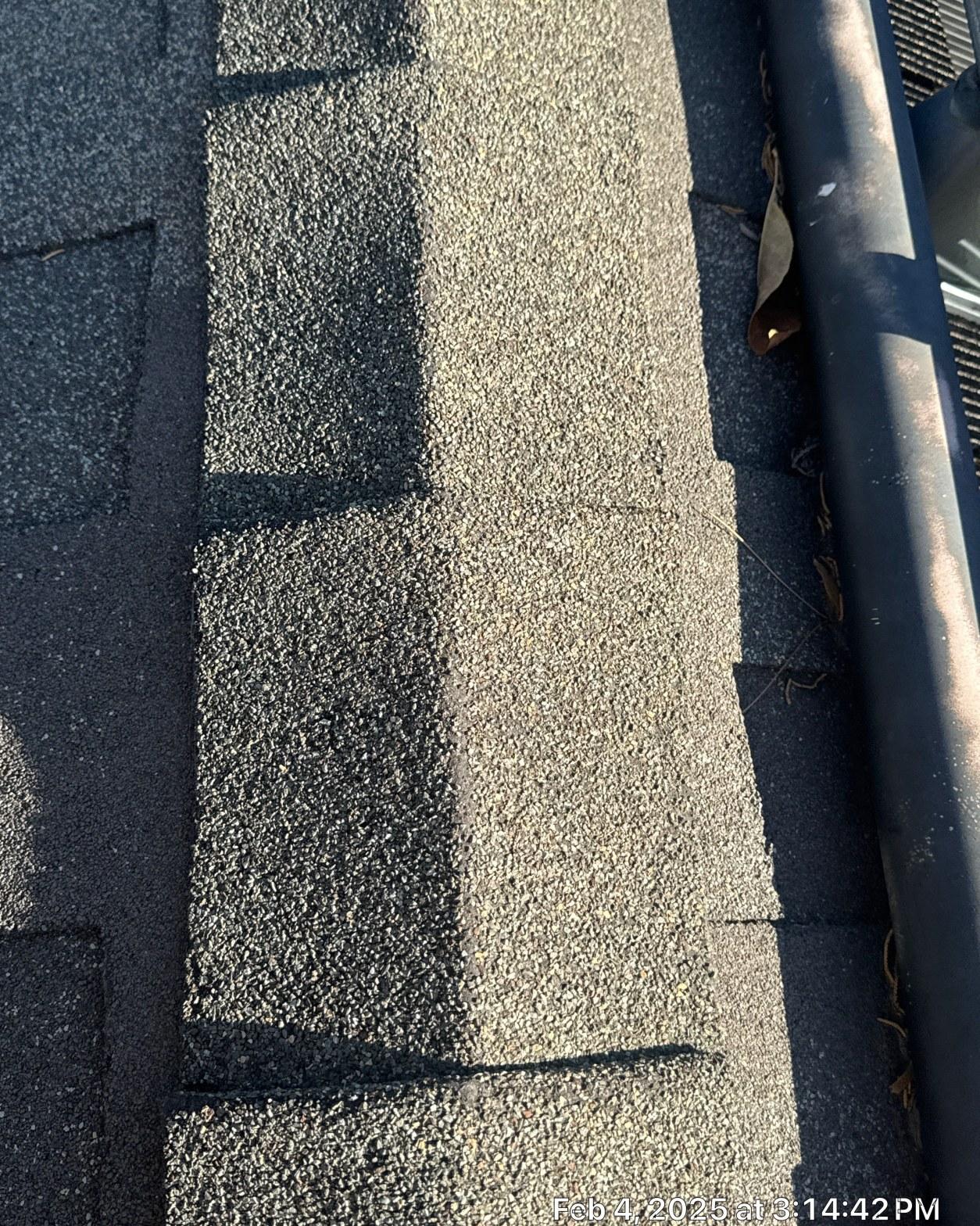
Several shingle tabs on the lower field had lost enough granule coating that the underlying asphalt mat was exposed to direct UV, and some tabs had developed surface cracks along their upper edges. Architectural shingles are rated to protect the mat under a granule layer of roughly 3 mm; once that layer thins to bare substrate, UV degradation accelerates sharply and the shingles can become brittle within 1 to 2 additional seasons. The ENERGY STAR roofing product guidelines note that granule integrity is a key indicator of remaining service life.
Our crew replaced the affected sections rather than coating over them. Coating a shingle that has already lost its granule layer addresses appearance but does not restore structural integrity or wind-uplift resistance. The replacement shingles were color-matched to the existing architectural shingle profile on the rest of the roof.
What Was Wrong With the Tubular Skylight?
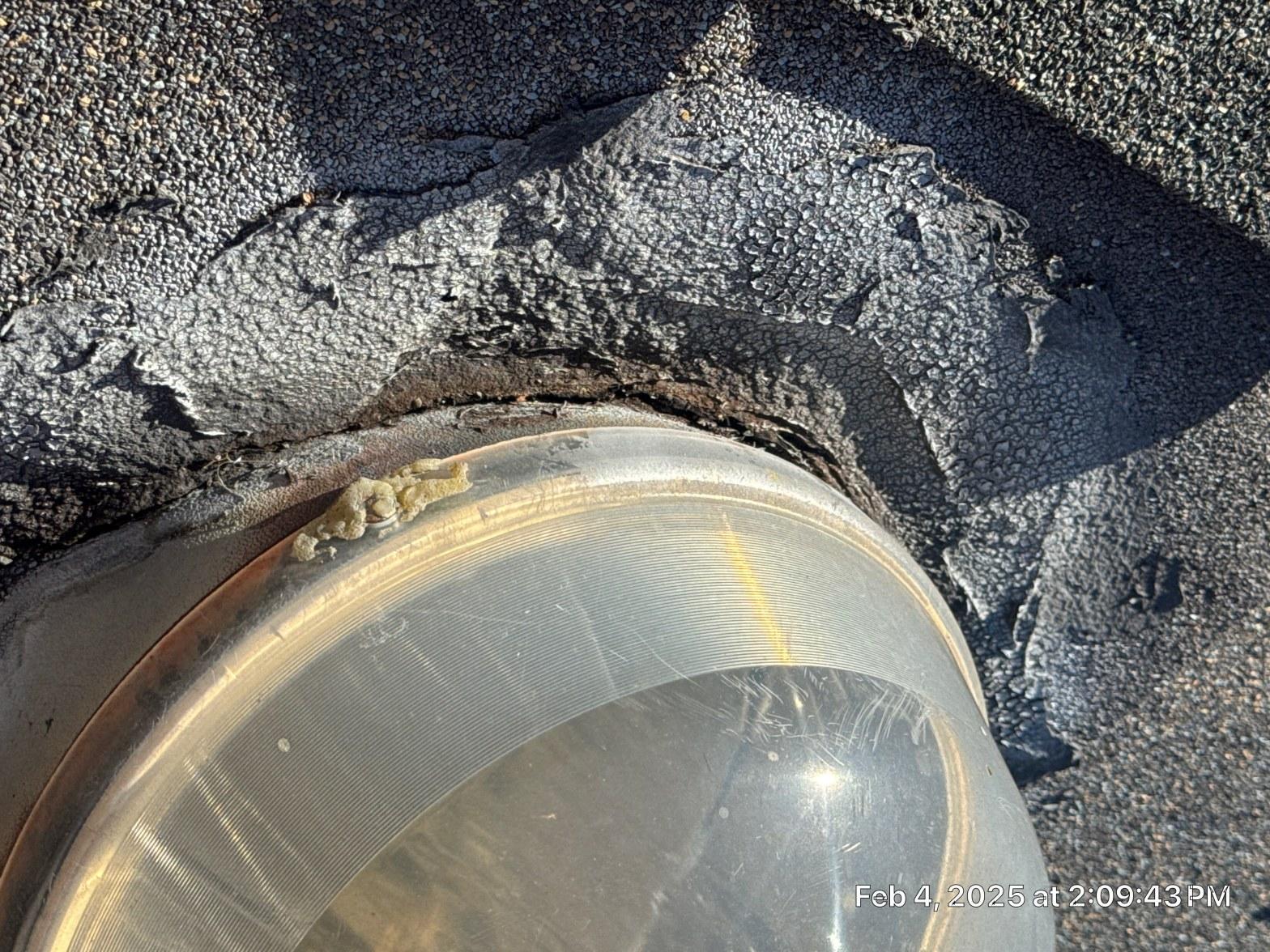
The tubular daylighting device had a cracked and separated boot where the dome’s flange meets the shingle field, with roofing cement applied over the gap that had since dried out and lifted in a large flap. Tubular skylight boots are typically EPDM or thermoplastic, and the roofing cement visible in the photo is not a compatible long-term adhesive for flexible boot materials.
The fix involved removing the old cement and lifting the boot cleanly, cleaning the deck surface, applying self-adhering flashing membrane around the penetration perimeter, and then re-setting the dome with a fresh sealant bead rated for UV exposure. This same methodology applied to the flat skylight visible in the gallery images, where the curb seal had also deteriorated and silicone had been used as a gap-filler against a wood curb frame.
As of February 15, 2025, all four penetrations and the chimney flashing had been completed, and the hillside property now has a continuous waterproofing layer from ridge to eave. The solar array remained in place throughout; only the immediately adjacent shingles required removal and replacement around the racking feet.
Schedule a Roof Inspection for Similar Issues
If your home has a masonry chimney, tubular skylights, or flat skylights alongside an aging shingle field, these transition points deserve a close look before the next rain season. Roof Replacement Inc is licensed by the California Contractors State License Board (CSLB) and carries insurance for residential roofing work throughout the San Fernando Valley region. Call or submit a contact form to arrange an on-roof inspection and written scope of work.